Busy skies, disappointing earnings
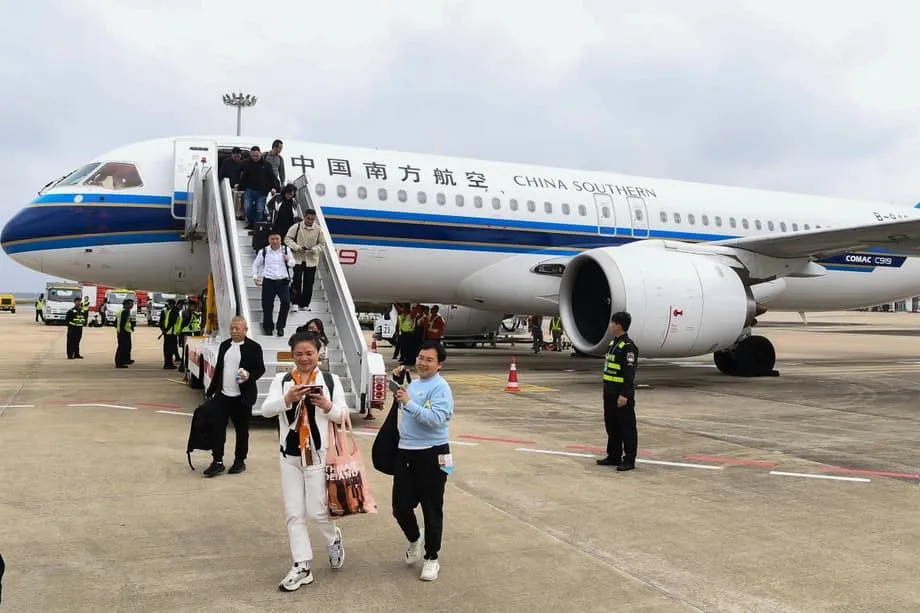
Air China lost about 1.8 billion yuan in the first six months of 2025. China Southern lost around 1.5 billion yuan, while China Eastern forecast a deficit of roughly 1.2 billion to 1.6 billion yuan. Those figures capture a difficult reality for China's biggest airlines: passenger traffic has surpassed levels before the pandemic, yet filling aircraft has not brought a steady return to profit.
Contents
- Busy skies, disappointing earnings
- Where trains have taken passengers from planes
- The morning battle for business travelers
- Why crowded routes keep fares low
- Large aircraft, smaller untapped markets
- Faster operations and a more useful cabin
- Hongqiao shortens the journey between train and plane
- Where flying keeps an advantage
- Scheduling and pricing need closer attention
- The financial test extends beyond a strong summer
- Highlights
As of November 20, 2025, the central problem is where airlines put their seats and how much passengers will pay for them. Carriers compete heavily on a limited group of busy routes, while the world's largest high speed rail network gives travelers another fast, frequent way to move between major cities. Discounts help keep aircraft full, but leave airlines with less money from each passenger.
Embraer, the aircraft manufacturer, says in an industry report that the government's target of 1.5 billion annual air travelers by 2035 is within reach. Its assessment also points to a crowded domestic network: more than 65 percent of flights and roughly three quarters of available seat kilometers are concentrated on routes with heavy traffic.
Available seat kilometers, usually shortened to ASK, measure the capacity an airline puts into the market. The figure multiplies the number of seats by the distance flown. Adding flights or using larger aircraft increases ASK, even when passenger demand does not rise enough to fill the extra capacity at profitable prices.
China's airlines therefore face two pressures at once. Rival carriers keep adding choices on the same corridors, while rail takes passengers who value convenient stations, predictable journeys and the ability to work throughout a trip. The response reaches beyond ticket prices to aircraft size, route planning, airport procedures and cabin services.
Where trains have taken passengers from planes
Academic studies tracking the expansion of high speed rail between 2001 and 2014 found that domestic air passenger numbers on affected routes fell by around 28 percent after new rail lines opened. Airlines reduced flights and seats by roughly one quarter. In simple terms, some travelers switched to trains, and carriers responded by offering fewer departures and less capacity.
Routes between 500 and 800 kilometers showed the strongest effect. A bullet train can cover such journeys in four to five hours, putting it within reach of a flight once travel to the airport, security checks and the transfer at the other end are included.
Wuhan to Guangzhou experienced an air demand decline of about 45 percent after its high speed rail connection opened. Beijing to Shanghai saw a reduction of around 34 percent after the two cities were connected by high speed rail. These route examples show how strongly a new rail service can alter an established air market.
Rail's appeal rests partly on the journey outside the vehicle. Frequent departures from stations serving city centers can make a train more convenient than a flight whose time in the air is shorter. Passengers can also use their phones and work during the rail journey, making travel time useful rather than simply time spent getting somewhere.
A traveler heading from central Shanghai to a meeting in Beijing may choose a train leaving Hongqiao station every few minutes and arriving in the capital's urban core. Flying can still be faster between departure and arrival gates on certain days, but road traffic, security queues and airport transfers can narrow that advantage. Airlines have responded on medium distance routes with cheaper fares, more departures outside peak periods and improvements to the onboard experience.
The morning battle for business travelers
Researchers comparing daily train and flight schedules identified a particularly competitive period between about 7 am and 9 am. Both modes pursue the same morning demand, sharpening the contest for business passengers who are willing to pay more for a convenient departure.
The schedule analysis grouped city pairs into four types: markets dominated by one mode, markets with full competition, those with partial competition, and those where services offer complementary coordination. The categories describe whether trains and aircraft largely replace each other or serve different travel needs and times.
Beijing to Shanghai falls into the full competition category. Guangzhou to Shanghai and Shanghai to Xi'an are also examples, with both trains and flights offering dozens of departures each day. On these corridors, the challenge is not simply that passengers have another way to travel. They have many alternatives at similar times.
Business travelers matter because airlines depend on a mix of passengers paying different fares. A leisure traveler may accept an inconvenient departure in exchange for a discount. Someone traveling for a meeting may pay more for a schedule that fits. When trains compete strongly for that morning business demand, airlines face pressure on some of their most valuable seats.
Why crowded routes keep fares low
Industry data show that 65 percent of capacity is concentrated in markets with more than 800 passengers traveling in one direction each day. More than half of domestic routes face competition from five or more airlines, a share far higher than in North America or Europe. Many busy corridors have three, four or more carriers chasing the same travelers.
Airlines often add departures to protect their share of a market, even when the additional flights barely cover their trip costs. This is known as a frequency war. Frequent service keeps an airline visible and gives customers more departure choices, but competing carriers can respond with still more flights, leaving everyone under pressure to lower fares.
Average domestic fares during the summer peak were about 788 yuan per ticket, lower than a year earlier and more than 10 percent below 2019 levels. Economy class fares fell nearly 13 percent from 2023, then declined a further 5.7 percent in the first nine months of 2025.
Leisure travelers have also become a larger part of the passenger mix. They tend to be more sensitive to price and more willing to travel outside peak hours. Airlines can fill seats by appealing to that demand, but a full cabin sold at low prices may produce little profit.
ASK growth has outpaced demand in many city pairs. Larger aircraft and extra departures both put more seats on sale. When passenger demand cannot absorb them at existing prices, average fares fall. The result is weaker yield, an airline term for the revenue earned from carrying passengers over a given distance.
Summer travel offered some relief in 2025, bringing the major airlines a rare profitable quarter. Low fares returned after schools reopened, however, while business travel failed to recover to its earlier levels. A strong holiday season can help cover quieter months, but seasonal demand has not resolved the pressure from too much capacity on crowded routes.
Large aircraft, smaller untapped markets
More than 80 percent of China's narrowbody jets are configured for operations carrying large numbers of passengers over short and medium distances. A narrowbody aircraft has a single aisle. These jets suit busy routes, but their capacity can make smaller markets difficult to serve profitably.
A jet with 180 seats flying between cities with modest demand faces an uncomfortable choice: leave many seats empty or cut prices enough to attract more passengers. That helps explain why airlines cluster on the biggest routes while some secondary markets receive too little service.
Embraer's report argues for expansion into what airline planners call blue ocean markets, meaning places where competition is less crowded. It identifies hundreds of city pairs with potential, including about 185 domestic pairs without high speed rail that could support at least three flights a week.
Those opportunities include links between Tier 2, Tier 3 and Tier 4 cities, routes without high speed rail, and domestic journeys where the train takes more than four and a half hours. The report also points to short international connections and direct links between secondary markets that could support one or two airlines, described as a monopoly or duopoly.
Aircraft carrying 100 to 140 passengers could better match these markets. Smaller capacity can allow an airline to maintain useful departure frequencies without relying on deep discounts to fill a much larger jet. The proposal is to fit the aircraft to the number of people likely to travel, rather than force a smaller market to absorb too many seats.
Huizhou, Dalian and Quanzhou are among the airports showing large numbers of routes that are unserved or receive too little service. Moving a portion of capacity from saturated hubs to such markets could give carriers more control over pricing while still bringing passengers into their main networks. Secondary and tertiary airports with room to grow offer another place to seek demand beyond the busiest corridors.
Faster operations and a more useful cabin
Research examining dozens of routes departing Beijing found that airline punctuality improved when high speed rail entered a market. Delays declined on affected routes, helped by faster aircraft turnarounds under airline control and shorter taxi times between landing and arrival at the destination gate.
Those findings show an operational response to competition. Airlines and airports have tightened processes as travelers gain another choice. A reliable flight becomes more valuable when a passenger can instead select a frequent train with a predictable arrival time.
China Eastern has introduced free basic Wi Fi across its widebody fleet on domestic routes. Widebody aircraft have more than one aisle. Air China and China Southern also offer the service on parts of their networks, seeking to appeal to business travelers who can already handle email, calls and video meetings on trains.
A China Eastern company representative, discussing customer feedback from the trial, described the service as a way for passengers to remain productive during their flight:
We've had 'work from home', and now a lot of business travelers are changing the phrase to 'work from the air'.
Connectivity gives airlines another way to compete beyond price. For a passenger traveling on business, the value of a journey includes whether work can continue along the way. Faster airport procedures and more useful time in the cabin address two different parts of that calculation.
Hongqiao shortens the journey between train and plane
Shanghai Hongqiao combines a busy domestic air terminal with a major rail station. Its layout makes it a practical example of how trains and aircraft can work together, as well as compete. Passengers arriving by rail can walk across to the terminal instead of making a separate journey across the city.
The airport has shortened the check in cutoff for passengers without checked baggage to 30 minutes before departure. At Terminal 1, Spring Airlines allows check in until 25 minutes before departure, including for passengers with baggage. These changes reduce how early travelers need to complete the airport's initial procedures.
Hongqiao has also removed a second security screen at the terminal entrance, retaining explosives checks there. That has improved passenger flow during busy periods. For many people arriving by train and walking to the terminal, the transfer from train to plane now takes less than an hour.
The changes address a weakness in air travel's convenience: time spent reaching the airport and completing procedures can erode the advantage of a short flight. At an integrated hub, quicker processing also makes a combined rail and air journey more workable.
Where flying keeps an advantage
Flights remain useful where distance or geography makes rail less competitive. For journeys above about 800 to 1,000 kilometers, a nonstop flight is usually faster from door to door even after including the journey to and from the airport.
Air services also reach places without a high speed rail connection, including parts of the far west, mountainous provinces and island destinations such as Hainan. Many routes crossing national borders remain another area where aviation provides connections that rail cannot yet match.
Early morning and late night flight schedules can suit some business journeys because trains often operate during daytime hours. The best option therefore depends on the destination, the departure time and the whole journey, rather than the time spent aboard a plane or train alone.
These strengths support a more balanced airline network. Large jets can remain on core domestic routes covering long distances and on international services, while smaller aircraft serve gaps in the map. Coordinated schedules and tickets combining a train segment with a flight can extend the reach of both networks without adding duplicate air capacity on every busy corridor.
Shared booking tools, baggage transfers between stations and terminals, and coordinated help when services are disrupted could make those mixed journeys easier. Integration offers a way to maintain mobility while avoiding a contest in which both modes repeatedly chase the same passengers on the same routes.
Scheduling and pricing need closer attention
Researchers have proposed a method that compares where and when train and flight services operate. By classifying city pairs according to the similarity of their schedules, planners can identify the most crowded periods and consider how departure times might be coordinated.
On routes where both modes concentrate services between 7 am and 9 am, managers of airport slots could encourage small shifts to either side of the peak. A slot is permission to use an airport for a departure or arrival at a particular time. Adjusting these windows could reduce direct competition for the same passengers and improve the number carried on each departure.
A study of Beijing to Shanghai found that the spread between different airfares widened after high speed rail began operating. Airlines offered larger discounts to travelers who were sensitive to price while retaining higher fares for those less likely to change plans because of cost.
After a safety incident on the rail network, that spread narrowed as airlines changed their pricing strategies. The finding illustrates how airlines adjust the range of fares they sell as the attractiveness of the competing service changes.
Transparent rules for buying tickets in advance and less excessive schedule churn could make shopping easier for passengers. They could also give carriers better information for yield management, the process of deciding how many seats to sell at different prices. Scheduling, pricing and connections all influence whether a busy route brings useful revenue or simply more passengers at thinner margins.
The financial test extends beyond a strong summer
The three largest state owned airlines narrowed their losses in the first half of 2025, but had not returned to consistent profit. Domestic capacity had moved above levels before the pandemic, while international capacity remained below 2019 on key routes covering long distances, particularly those to North America. That limited access to traffic paying higher fares that had previously helped balance domestic price pressure.
The latest summer brought a rare collective quarterly profit for the big three as leisure travel surged. After the National Day holidays, the market returned to a quieter seasonal pattern. Average domestic fares fell into the high seven hundreds in yuan, and airlines reduced frequencies.
Analysts expected progress while cautioning that excess capacity on short routes, a slow recovery in business travel and competition from rail would continue to squeeze yields until airline networks were rebalanced. The developments described across the period follow this sequence:
- 2001 to 2014: Research tracked high speed rail expansion and found falling air passenger numbers, flights and seats on affected routes.
- 2023 to 2025: Economy class fares fell nearly 13 percent from 2023, followed by another decline of 5.7 percent in the first nine months of 2025.
- First half of 2025: Air China and China Southern reported losses, while China Eastern forecast a deficit.
- Summer 2025: Strong leisure demand brought the big three a rare collective quarterly profit.
- After the National Day holidays in 2025: Domestic fares weakened again and flight frequencies were trimmed.
- 2035: The government targets 1.5 billion annual air travelers, a goal Embraer considers within reach.
Airlines have three practical areas to address: use aircraft sized for each market, expand in secondary and tertiary cities where rail is absent or slow, and improve the journey through faster ground procedures and better cabin connectivity. These measures target pricing power, new demand and customer loyalty rather than passenger volume alone.
Full flights can support a recovery, but sustained profit depends on what airlines earn from those seats and what it costs to provide them. China's carriers need to keep serving their strongest routes while finding markets where useful schedules and suitable aircraft can attract passengers without constant fare cutting.
Highlights
- China's passenger traffic has surpassed levels before the pandemic, but its largest airlines still face losses or slim margins.
- More than 65 percent of domestic flights and roughly three quarters of ASK are concentrated on busy trunk routes.
- Research found air passenger declines of around 28 percent after high speed rail opened on affected routes, with the strongest effect between 500 and 800 kilometers.
- Morning competition between about 7 am and 9 am puts pressure on valuable business traffic.
- Summer domestic fares averaged about 788 yuan, more than 10 percent below 2019 levels.
- Embraer identified about 185 domestic city pairs without high speed rail that could support at least three weekly flights.
- Free basic Wi Fi, improved punctuality and shorter check in cutoffs are among airline and airport responses.
- Longer journeys, remote destinations and international links remain areas of strength for aviation.
- A profitable summer quarter brought relief in 2025, but quieter periods exposed continuing pressure on fares and earnings.