A financial hub makes its case for science
Hong Kong has invested more than 1 billion dollars since 2020 in a network of research centers, while salaries for senior professors can reach about 14,000 dollars a month. A new astronomy institute plans to open a purpose built facility in 2026. Together, these commitments show how a city known for finance is trying to become a global research hub and a gateway into China's scientific system.
Contents
- A financial hub makes its case for science
- What researchers are being offered
- China's scientific scale strengthens the pitch
- Visa changes meet tighter international controls
- Medical research moves toward practical results
- Astronomy gives Hong Kong a larger stage
- Deep sea research opens another connection
- Tsinghua partnership adds training and funding
- Quality, laboratory culture and public trust
- Politics and living costs complicate recruitment
- The Essentials
At the Hong Kong Laureate Forum, an event linked to the Shaw Prize, laureates and young scientists from many countries exchanged ideas and toured laboratories. City leaders used the gathering to promote access to large grants, advanced equipment and ambitious projects in China, alongside the international working environment that many Western researchers expect.
The Shaw Prize was created by media entrepreneur Run Run Shaw and is often described as Asia's Nobel. Its connection to the forum gives Hong Kong a platform to bring established scientists together with researchers at the start of their careers. The city's invitation reaches beyond individual appointments: it asks scientists to help build institutes, train teams and connect local laboratories to major Chinese programs.
Hong Kong's position as a special administrative region is central to that appeal. Its legal environment and daily life feel different from those on the mainland. English is widely used in laboratories and classrooms, the internet is more open, and travel links across Asia are strong. For a researcher considering a move, the attraction is access to China's resources with a familiar international setting.
What researchers are being offered
Senior scientists considering Hong Kong can find expanding laboratories, predictable visa processing and straightforward travel for many passport holders. New science parks and university campuses are adding laboratory space. Foreign principal investigators, the scientists responsible for leading research groups, describe fewer administrative limits than in mainland institutions, including no formal retirement age in many contracts.
Older foreign scientists can therefore continue directing groups in several leading laboratories, extending careers that might otherwise be winding down in Europe or the United States. Younger researchers see an opportunity to lead teams earlier and help shape the direction of a new institute.
Biologists working with cryo electron tomography describe a concentration of instruments that would be difficult to match elsewhere, ranging from shared facilities to dedicated suites. The technique helps researchers examine biological structures in three dimensions. Having equipment nearby gives teams more opportunities to carry out the detailed observations their work requires.
Scientists also describe cases in which a microscope costing several million dollars could be ordered after a short approval meeting. Such experiences form part of Hong Kong's recruitment pitch: money, speed and scale can come together when a project fits national priorities. The appeal includes both access to an instrument and the ability to get a research program moving.
China's scientific scale strengthens the pitch
China's growing research capacity gives Hong Kong something substantial to connect with. The Five hundred meter Aperture Spherical Telescope, known as FAST, leads radio astronomy by collecting area. The Einstein Probe is producing valuable data for time domain astrophysics, the study of how objects and events in space change over time.
Biology and materials science are also benefiting from expensive research platforms spreading at a pace rarely seen in the West. China already publishes more scientific papers than the United States, and the quality gap has narrowed in many fields. The strongest Chinese work competes at the highest level.
Visiting scholars often find that a paper written in Beijing or Shanghai looks much like one written in Boston or Berlin. Peer review, the process in which other researchers assess a study, and transparency about data can look similar across continents. Working relationships inside laboratories may still differ, particularly in how decisions are made and how much authority rests with a group leader.
Hong Kong's own talent pool is growing. Its universities are steadily adding faculty to Clarivate's Highly Cited Researchers list, which recognizes researchers whose work ranks among the top 1 percent by citations over a decade. Faculty at Hong Kong Baptist University, the Hong Kong Polytechnic University and the Hong Kong University of Science and Technology are among those recognized.
Readers can examine the selection process through Clarivate's researcher methodology. Citation recognition offers an imperfect measure of scientific strength, but it shows the city's ability to recruit scholars who publish extensively and then train students and postdoctoral researchers.
Visa changes meet tighter international controls
China is widening routes for scientific recruitment as research relationships face greater scrutiny elsewhere. Its new K visa targets science and technology workers and offers an easier route than older visa categories. In some cases, applicants do not need a job offer before applying.
Government grants add incentives in artificial intelligence, quantum information, semiconductors and biotechnology. China recorded about 711,000 foreign workers in 2023. That remains a small share of its population, while indicating growing interest in employment there.
United States research agencies have tightened security reviews, and universities scrutinize Chinese collaborations closely. Several grant programs restrict cooperation with Chinese partners in sensitive areas. Export controls also complicate the movement of equipment, data and computer code across borders.
Senior scientists describe leaving laptops and storage devices at home when traveling to conferences in China to avoid compliance problems. Some funders require formal approval before researchers receiving their grants collaborate there. Even a conference visit can involve additional checks, making administrative requirements part of decisions about where to work.
Europe's tougher immigration rules can make extended research stays harder and slow the movement of students and postdoctoral researchers. Hong Kong adds its own attractions to China's recruitment effort, including familiar legal processes, English in academic settings and convenient regional travel. For some scientists, it offers a gentler introduction to working within China's research system.
Medical research moves toward practical results
Hong Kong's investment of more than 1 billion dollars since 2020 supports centers working across fields that include neurodegenerative disease and medical engineering. Leaders want those programs to deliver measurable improvements in patient care, alongside scientific publications.
One program is assembling a large biobank to identify the earliest signals of Alzheimer's disease, potentially years before symptoms appear. A biobank brings together biological samples for research. Scientists hope to find better biomarkers, measurable signs of disease, that could allow earlier diagnosis and create a longer window for prevention.
Projects of this kind carry scientific risk and can take a long time to produce results. Sustained funding matters because collecting samples, studying early disease signals and assessing their usefulness cannot be completed within a short research cycle.
Robotics teams are developing surgical machines for minimally invasive procedures, which aim to reduce the extent of surgery. Their work also supports remote collaboration, allowing a specialist in Hong Kong to work in real time with colleagues in Shanghai or London. Researchers are refining materials and control systems in anticipation of more medicine crossing borders.
Another group is testing tiny devices that behave like nanorobots to break up clots in arteries. Animal studies have been completed, and the next stage is aimed at safety. Traditional Chinese medicine is also part of the research portfolio: chemists and clinicians are taking purified compounds through preclinical validation and toward approvals from global regulators.
Cheng Shuk Han, who directs a major research and development center in Hong Kong, described the city's invitation to scientists in direct terms:
Besides finance and dim sum, we do excellent science. Our message is for everyone, regardless of nationality: if you're good, come.
Cheng's message reaches both senior investigators with established records and younger scientists seeking opportunities to run trials, use instruments and publish without long delays. Recruitment extends beyond the Greater Bay Area. Several institutes are already led by experts born abroad who divide their time between Hong Kong and partner laboratories overseas.
Astronomy gives Hong Kong a larger stage
The University of Hong Kong recently launched the Hong Kong Institute for Astronomy and Astrophysics under astronomer Bing Zhang, who moved from the United States to lead it. The institute plans to recruit more faculty, open a purpose built facility in 2026 and connect local research groups to major missions.
Researchers in Hong Kong have access to all Chinese telescopes, including instruments involved in international agreements. Several scientists are already contributing design ideas to future missions. Such access gives the city's astronomers a connection to projects much larger than any individual local laboratory.
The Chinese University of Hong Kong is also developing instruments. Its researchers built a submillimeter polarimeter camera to study star formation and are working with the Greenland telescope on joint observations. A polarimeter measures the polarization of light, a property that scientists can use when investigating astronomical objects.
The same group is advancing AMASE D, a project to build affordable spectroscopy instruments for mapping the interstellar medium in the Milky Way and nearby galaxies. Spectroscopy examines light to learn about the material that produces or interacts with it. The interstellar medium is the material between stars.
The Hong Kong Jockey Club supports STEM education and helps finance these tools through philanthropy. The aim is to develop specialist capabilities that complement China's giant platforms, including FAST, while giving local students and engineers a route into space science.
Deep sea research opens another connection
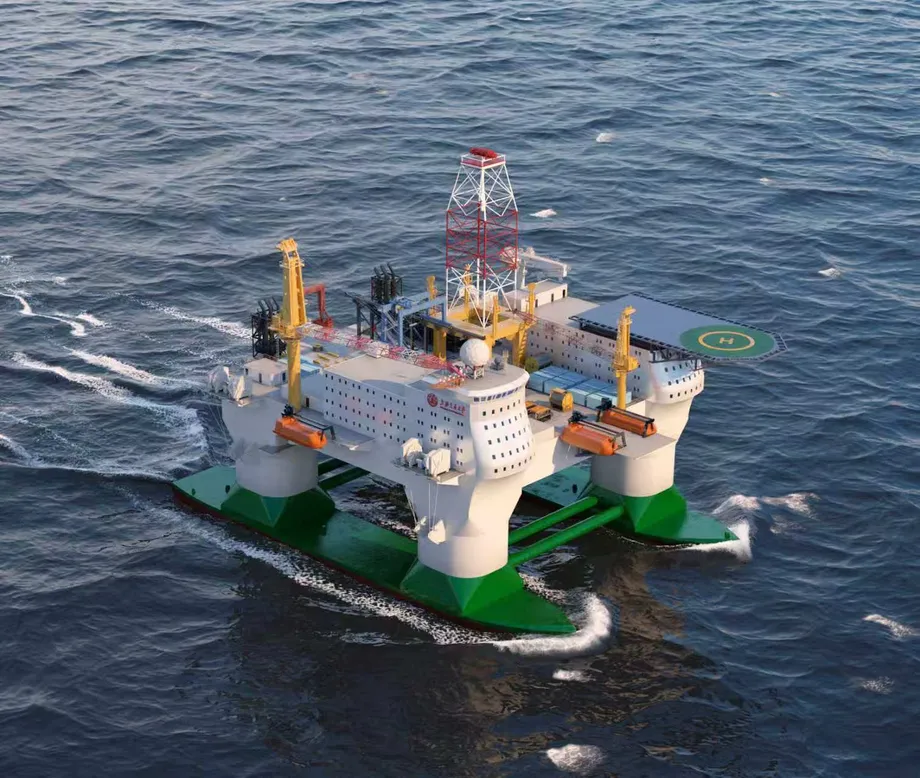
The Hong Kong University of Science and Technology, known as HKUST, hosted the research vessel Shenhai Yihao and the manned submersible Jiaolong in 2024 after a Western Pacific expedition. Their visit brought another part of China's scientific infrastructure into contact with Hong Kong researchers and the public.
The expedition belonged to Digital Deep sea Typical Habitats, or DEPTH, a deep sea metascience program aligned with the United Nations Decade of Ocean Science for Sustainable Development. For the first time, Jiaolong carried international scientists, who collected biological and ecological samples for later research.
HKUST described the visit and program in its research vessel announcement. Activities included open classes connecting students in Hong Kong and Qingdao with researchers at sea, together with public forums on marine conservation.
The visit shows how the city's scientific connections can extend beyond laboratory recruitment. Access to a research vessel and a submersible creates opportunities to collect samples, participate in international work and introduce students to investigations taking place far from a university campus.
Tsinghua partnership adds training and funding
HKUST is strengthening its ties with mainland universities through new agreements with Tsinghua University. A joint integrated Master and PhD track in electronic and computer engineering is scheduled to begin in the 2025 to 2026 academic year.
Each university will contribute one million a year in its local currency to a joint research fund for four years. The fund will support work across institutions in artificial intelligence, advanced materials, robotics, energy and environmental science, biomedical science, data science and financial technology.
An executive education track will combine technology, management and finance, building on earlier programs. These agreements give a more formal structure to established exchanges through seminars, internships and joint publications.
Hong Kong's recent research expansion and the next planned steps can be followed through several dates:
- After 2019: The national security law changed Hong Kong's political climate.
- Since 2020: The government has invested more than 1 billion dollars in new research centers.
- 2023: China recorded about 711,000 foreign workers.
- 2024: HKUST hosted Shenhai Yihao and Jiaolong following their Western Pacific expedition.
- 2025 to 2026 academic year: The HKUST and Tsinghua joint integrated Master and PhD track is scheduled to start.
- 2026: The Hong Kong Institute for Astronomy and Astrophysics plans to open its new facility.
Quality, laboratory culture and public trust
Hong Kong's universities consistently rank among the world's top one hundred. They recruit internationally, run graduate programs in English and produce research that holds up in leading journals. Those characteristics support the city's argument that researchers can work to international standards while connecting with China.
Chinese institutions often have stronger laboratory hierarchies, with the principal investigator at the center of decisions. Western laboratories may distribute decision making more broadly. Hong Kong sits between these approaches, and scientists moving between institutions may need to adapt their expectations about management and collaboration.
A large survey across multiple countries published in 2025 found moderately high public trust in scientists. Most respondents supported scientists taking part in policy debates. The authors called for greater openness and public engagement to help keep that trust resilient.
Hong Kong's science community has pursued laboratory open days, bilingual outreach and forums across the city linked to major events. Officials therefore promote visibility and education alongside research output. Activities such as the classes linked to Jiaolong give students and other residents a more direct connection to scientific work.
Politics and living costs complicate recruitment
Hong Kong's national security law, imposed after 2019, changed the city's political climate. University leaders say academic inquiry remains protected, while some visiting scholars worry about boundaries that are not always clear. Those concerns form part of the decision for scientists considering a move.
Western export controls limit which software, instruments and data can be shared with Chinese partners. Laboratories working across borders spend time on legal reviews and develop rules for handling data, accessing equipment and working remotely. Strong funding and advanced machinery operate alongside these administrative demands.
Hong Kong's high cost of living adds another pressure. Housing is expensive, families face school fees, and laboratories compete with private industry for technicians. Institutions have begun adjusting recruitment packages with housing support and relocation services.
Hiring managers must also balance recruitment from abroad with opportunities for local graduates. Mainland China has high youth unemployment, yet particular sectors still lack the skills they need. That helps explain why recruitment efforts target artificial intelligence, semiconductors and advanced biomedicine rather than treating every job category alike.
Hong Kong's bid will be judged by whether the funding, facilities and appointments create teams that last across grant cycles. Keeping promising researchers in the city matters as much as bringing them there. Its offer combines Chinese scientific scale with international academic habits, while leaving institutions to manage political concerns, compliance requirements and everyday costs.
The Essentials
- Hong Kong has invested more than 1 billion dollars since 2020 in research centers, with senior professor salaries reaching about 14,000 dollars a month.
- Medical programs include earlier Alzheimer's detection, surgical robotics, tiny devices to clear arterial clots and research on purified traditional Chinese medicine compounds.
- Bing Zhang leads the new Hong Kong Institute for Astronomy and Astrophysics, which plans to open a facility in 2026.
- HKUST hosted Shenhai Yihao and Jiaolong in 2024 and is expanding research and training partnerships with Tsinghua University.
- China's K visa targets science and technology workers, while restrictions in the United States and Europe complicate international research mobility.
- National security concerns, export controls, housing costs and competition for staff remain part of Hong Kong's recruitment challenge.