Plantation land becomes a new asset in Malaysia's AI expansion
Malaysia's data centers could need at least five gigawatts of electricity by 2035, close to 20 percent of the country's current generating capacity. That prospect is pushing some of its biggest palm oil companies to put plantation land to a different use: industrial parks that combine space for artificial intelligence computing with large solar installations.
Contents
- Plantation land becomes a new asset in Malaysia's AI expansion
- Why operators are looking north from Singapore
- SD Guthrie sets out its land and solar ambitions
- Other palm oil groups pursue a similar model
- Five gigawatts of demand puts the grid under pressure
- Solar and storage become part of the computing business
- Johor's connections attract capital, but utilities lag
- Heat, water and flooding shape the designs
- Green power plans face wider environmental scrutiny
- The targets extend from 2026 to 2035
- Key Points
As of November 19, 2025, Malaysia accounts for an estimated 40 percent of Southeast Asia's planned data center capacity, with roughly US$34 billion in commitments from global technology companies. The government has set a target of 81 operating data centers by 2035. For plantation owners, the expansion presents an opportunity to earn revenue from land development and electricity alongside agriculture.
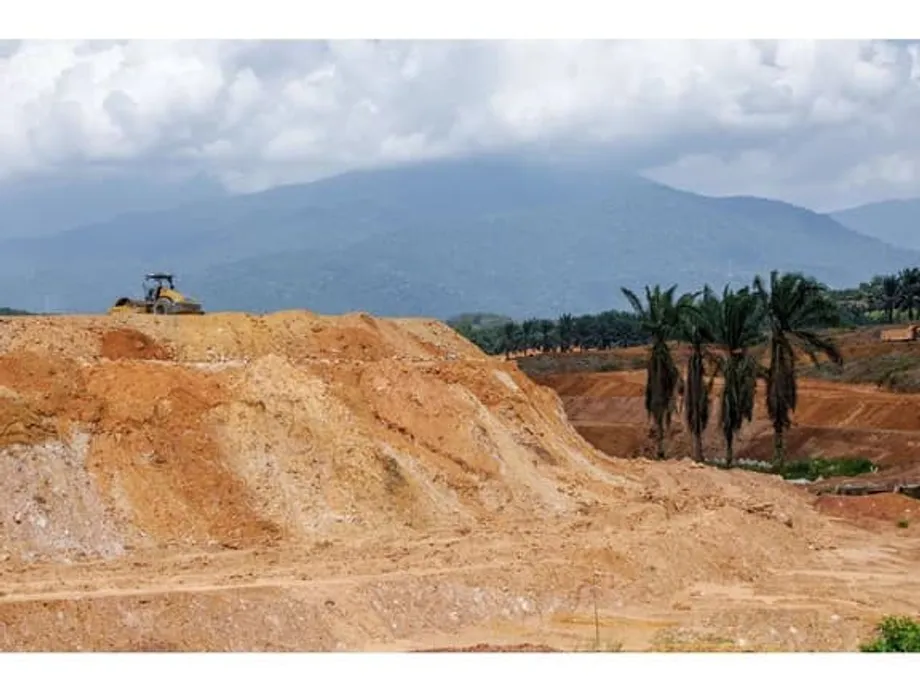
SD Guthrie, Kuala Lumpur Kepong and IOI Corporation are developing industrial parks on estate land and presenting themselves as both landlords and suppliers of green power. Their large, connected landholdings offer room for server buildings, solar panels, batteries and substations, the facilities that connect projects to the electricity network.
The attraction is straightforward. Cloud and AI operators need large sites, dependable electricity and the ability to begin operating quickly. Plantation groups have land that could accommodate those requirements together. Electricity and water connections, however, are lagging demand at some locations, with certain expansions delayed into 2026.
Malaysia's tropical heat also increases the energy needed to cool computing equipment. Environmental groups welcome additional solar generation while calling for continued action on deforestation, damage to peatland and the rights of plantation workers. The commercial opportunity therefore depends on more than replacing some trees with buildings and panels.
Why operators are looking north from Singapore
Singapore's moratorium on new data centers, which has since been partially relaxed, encouraged operators to consider Malaysia. Johor is particularly attractive because it sits next to Singapore and can connect to the island's cloud infrastructure through short fiber routes.
Those routes provide low latency, meaning information can travel between locations with very little delay. That matters for digital services that need a quick response and for operators seeking access to Singapore's established cloud zones and internet exchanges.
Additional dark fiber connections and the Johor–Singapore Special Economic Zone are strengthening industrial ties across the border. Dark fiber is installed fiber optic cable that operators can equip to carry their own data traffic. Together, the connections and economic zone are helping Johor absorb demand that Singapore's limited capacity cannot accommodate.
Malaysia also offers ample land and policies intended to attract investment. State agencies are promoting streamlined approvals for digital infrastructure, while Google, Microsoft and Amazon have announced programs worth billions of dollars. Hyperscalers, companies that operate computing infrastructure on a very large scale, are among the businesses expanding in the country.
Johor has attracted tens of billions of ringgit through announcements involving technology companies and specialist developers. Plantation estates in Johor, Perak, Negeri Sembilan and Kedah are being lined up for industrial parks and renewable energy projects. Malaysia is positioning itself as a regional base for AI computing, with plantation owners seeking a place in that expansion.
SD Guthrie sets out its land and solar ambitions
SD Guthrie, the world's largest oil palm planter by acreage, owns about 340,000 hectares in Malaysia. It plans to allocate roughly 10,000 hectares over the next decade to industrial parks and solar projects. That allocation represents about 2.9 percent of its Malaysian landholding, using the company's stated figures.
The group aims to have one gigawatt of solar capacity operating within three years. It has also signed an agreement with infrastructure partner Gamuda to develop, own and operate solar assets with a combined target of 1.2 gigawatts. The operating ambition and the partnership target are two parts of its push into electricity generation.
In Johor, SD Guthrie is planning a park powered by green energy in Kulai, including a site covering 259 hectares inside the Johor–Singapore Special Economic Zone. Its new industrial park and renewable energy businesses are expected to contribute about 30 percent of group earnings by 2030.
Mohamad Helmy Othman Basha, SD Guthrie's group managing director, has identified the location of the company's land as a central advantage in attracting data center development. Explaining the company's role in providing industrial sites, he said:
Data centres require land and it has to be strategic, and this is where we can play a role because now, we are in the business of providing the land for industrial parks.
SD Guthrie's plans illustrate how plantation owners are extending their businesses beyond growing and processing palm oil. The same land bank can support industrial tenants and power generation, giving the company potential earnings from activities with different commercial drivers.
Other palm oil groups pursue a similar model
Kuala Lumpur Kepong has launched a technology park covering 1,500 acres and is planning another park in Johor. IOI Corporation is also dedicating plantation land to digital parks and solar installations located alongside them.
The financial attraction includes the possibility of earning more from electricity than from cultivation on some land. Large solar projects can deliver margins exceeding those of palm oil production, particularly when supported by long term contracts under which large computing operators agree to buy their output.
Those purchase agreements, often called offtake contracts, give a power producer a customer for its electricity. For plantation groups, combining such contracts with industrial property development can create revenue that is less exposed to changes in commodity prices.
Location remains a major financial risk. An estate that appears suitable on a map may be far from a strong connection to the electricity grid. Bringing power to it can increase construction costs and slow development. Poor site choices can also leave operators paying more for cooling, flood protection or transmission upgrades.
Plantation groups entering this market therefore need to coordinate site selection, utility planning and power contracts lasting many years. Large landholdings provide an opening, but the value of an individual site depends on whether it can support reliable operations at a workable cost.
Five gigawatts of demand puts the grid under pressure
Malaysia's projected data center demand of at least five gigawatts by 2035 will require investment in both electricity generation and the networks that deliver it. Tenaga Nasional Berhad, the national utility, has outlined plans to strengthen transmission lines and substations after recent outages exposed weaknesses in the peninsular grid.
Developers are also calling for more dispatchable generation and faster connections. Dispatchable generation is electricity that can be supplied when needed. Data centers running demanding AI workloads draw large, steady amounts of power and need backup arrangements to keep services operating if part of their electricity supply fails.
Those arrangements help operators meet service level commitments, the promises they make to customers about the availability and reliability of computing services. A site needs more than enough electricity on an average day; it needs a dependable supply during disruptions as well.
Plantation companies are pursuing several energy options. Solar panels mounted on the ground can be installed across remote estate land. Malaysia's newer corporate power purchase programs allow data center operators to contract directly for solar output, while batteries can store electricity and help smooth changes in solar production.
Some developers are studying wheeling arrangements, under which renewable electricity moves across the existing network to reach customers at their industrial parks. Estate battery projects can also support local grids. These approaches connect the plantation companies' available land with the energy needs of computing facilities, even when generation and consumption occur in different places.
Solar and storage become part of the computing business
The International Energy Agency has flagged rising data center spending and the resulting pressure on electricity systems. Developers are responding with generation at their own sites, microgrids and new approaches to storage.
A microgrid is a local electricity system that brings together power sources, storage and users. Several projects are testing microgrids that reuse electric vehicle batteries. Many data center operators are also turning to solar because securing permission for it is typically faster than for other power sources.
Solar can reduce costs and emissions when combined with efficient computing hardware and intelligent power management. Batteries help manage the changing output of panels, while power management systems help operators control how electricity is used.
Data centers nevertheless need power throughout the day and night. Matching that constant demand with clean electricity requires storage, careful management of consumption and clean generation that can reliably supply power when needed, where available.
The business opportunity for plantation groups consequently extends beyond installing solar panels. Their parks may need to bring together generation, storage, network access and dependable power contracts so that computing tenants can operate continuously.
Johor's connections attract capital, but utilities lag
Johor has become the focus of Malaysia's data center expansion, with strong demand and little vacant capacity. State officials say it has attracted more than RM164 billion in investment related to data centers over roughly four years, including programs involving Microsoft, Nvidia and specialist operators.
Growth has outpaced utility upgrades at some sites. Sedenak Tech Park, one of Johor's flagship campuses, has experienced delays in delivering water and electricity for expansion phases. Certain connections have been pushed into 2026, although exact connection dates were not given.
For developers, those delays make early access to transmission capacity, substations and water supply a central part of planning. Available land can accommodate buildings, but facilities cannot operate until the necessary utilities are ready.
Johor's connectivity continues to strengthen its position. New dark fiber routes and links across the border provide low latency access to Singapore's internet exchanges and cloud zones. The emerging Digital Superhighway Network, a backbone spanning more than 1,000 kilometers, is designed to connect industrial clusters within Johor and improve resilience.
The Johor–Singapore Special Economic Zone aims to ease logistics and workforce movement across the boundary. Those changes support the continuing operation of businesses that handle large amounts of data. The combination of location, fiber connections and room for expansion has placed Johor on shortlists for large computing facilities serving both Malaysia and Singapore.
Heat, water and flooding shape the designs
Malaysia's hot, humid climate makes cooling a major part of a data center's electricity bill. Computing equipment produces heat, and cooling systems must remove it to keep servers working reliably.
Operators commonly assess efficiency through power usage effectiveness, which compares a facility's total electricity use with the electricity used by its IT equipment. Cooling and other support systems increase the total. In a tropical climate, keeping those additional requirements under control demands careful design.
Options include efficient chillers, systems that contain hot air in designated aisles, and liquid cooling for densely packed server racks. Direct to chip cooling removes heat at the computing components themselves. Humidity control, filtration and the way air moves through the building matter alongside the capacity of the cooling equipment.
Water creates another tradeoff. Evaporative cooling can improve energy efficiency but increase water consumption. Many designs therefore favor closed loop systems or hybrid arrangements that reduce water use while maintaining performance. Reliable access to water for uses other than drinking, together with storage at the site, can reduce exposure to dry spells.
Developers are also mapping flood plains, drainage conditions and exposure to rising sea levels. Raising critical equipment and protecting electrical rooms can reduce damage from flooding. Building orientation, reflective roofs and solar canopies that provide shade can reduce heat entering a facility. These choices affect both lifetime operating costs and the ability to meet sustainability targets.
Green power plans face wider environmental scrutiny
Environmental groups welcome more solar generation in Malaysia's electricity mix while calling for action on the existing environmental and labor concerns associated with palm oil. Many parcels being repurposed are mature estates cleared decades ago.
Using parts of those estates for solar farms and digital parks can reduce pressure to open new land. Restoration and protection of areas with high conservation value remain necessary for companies seeking to deliver environmental gains. Peatland protection and management are also part of that responsibility.
Plantation workers' wages, safety, housing and recruitment practices remain concerns for campaigners. The development of digital parks needs to be accompanied by continued improvements and reporting across agricultural operations. Independent audits, better traceability and transparent processes for handling complaints are central to that work.
The Malaysian Sustainable Palm Oil and Roundtable on Sustainable Palm Oil certification programs provide frameworks used by many producers, although critics say enforcement can be uneven. Companies moving into electricity and data infrastructure have an opportunity to publish detailed land use maps, peatland management plans and verified commitments against deforestation alongside their new projects.
Investors will also examine emissions accounting. Solar combined with batteries can replace fossil generation during the day and lower the carbon footprint of computing operations. The largest climate gains depend on matching reliable green electricity supply with demand throughout the day and night, using storage, smart demand management and dependable clean generation where available.
The targets extend from 2026 to 2035
Malaysia's expansion involves several different schedules, from delayed utility connections to earnings targets and national electricity demand. The main milestones described as of November 19, 2025, are:
- 2026: Certain delayed water and power connections for expansion phases at Sedenak Tech Park have been pushed into this year.
- Within three years: SD Guthrie aims to have one gigawatt of solar capacity operating.
- 2030: SD Guthrie expects industrial parks and renewable energy ventures to contribute about 30 percent of group earnings.
- Over the next decade: SD Guthrie plans to allocate roughly 10,000 hectares to industrial parks and solar projects.
- 2035: Malaysia targets 81 operating data centers, while their electricity demand could reach at least five gigawatts.
Plantation companies are building businesses around a combination of land, electricity and digital infrastructure. Their success will depend on bringing those elements together while controlling cooling costs, securing water supplies, managing flood exposure and addressing the environmental and labor responsibilities of their existing estates.
Key Points
- Malaysia holds an estimated 40 percent of Southeast Asia's planned data center capacity and has roughly US$34 billion in technology company commitments.
- Data centers could require at least five gigawatts of electricity by 2035, close to 20 percent of current national generating capacity.
- SD Guthrie, Kuala Lumpur Kepong and IOI Corporation are allocating plantation land to industrial parks and solar projects.
- SD Guthrie plans one gigawatt of operating solar capacity within three years and has a 1.2 gigawatt solar partnership target with Gamuda.
- Johor's proximity and fiber connections to Singapore are attracting investment, while some utility connections face delays into 2026.
- Grid upgrades, power purchase contracts, batteries and efficient cooling will help determine how quickly projects can operate.
- Environmental groups welcome solar expansion while seeking stronger protection for forests, peatland and plantation workers.