A five year warning from Korean manufacturers
Chinese competitors could move ahead of South Korean companies across all 10 of the country's leading export sectors by 2030, according to a Federation of Korean Industries (FKI) survey of 200 manufacturers drawn from the nation's 1,000 largest companies by sales. The warning, as of November 17, 2025, reaches beyond industries already under pressure to fields where Korea still holds an advantage, including semiconductors and shipbuilding.
Contents
- A five year warning from Korean manufacturers
- Where China already leads, and where Korea could lose ground
- The pressures inside Korean companies
- Semiconductors reveal a wider field of rivals
- Korean chip exports are taking different routes
- Why packaging has become a strategic concern
- China's advantage extends beyond low costs
- How Korean manufacturers are responding
- Factories and investment are moving closer to customers
- Policy choices span workers, equipment and cooperation
- The risks facing investment through 2030
- What to Know
Among the companies surveyed, 62.5 percent identify China as their main competitor in global markets, compared with 22.5 percent naming the United States and 9.5 percent Japan. Looking toward 2030, the share expecting China to be their leading rival rises to 68.5 percent. The corresponding figures fall to 22 percent for the United States and 5 percent for Japan.
The survey also asked companies to score foreign competitors against a fixed Korean benchmark of 100. Respondents put China at 102.2 today and expect it to reach 112.3 by 2030. They rate the United States at 107.2 today and 112.9 in 2030, bringing the two countries close together on that measure within five years.
Those scores express corporate assessments and expectations. Korea's competitiveness is held at 100 so respondents can describe how rivals compare with Korean businesses, rather than report the value of their sales or exports.
Korea faces pressure from two directions: Chinese companies are advancing in price, productivity and government support, while American businesses are stronger in brand power, key personnel and core technologies. For an economy where trade has long supported growth and financed innovation, the concern extends from cheaper competing products to the speed and scale at which rivals can improve them.
Where China already leads, and where Korea could lose ground
Chinese firms are already stronger than Korean peers in five sectors, according to respondents: steel, general machinery, secondary batteries, displays, and automobiles and parts. Secondary batteries are rechargeable batteries, including those used in electric vehicles.
Steelmakers face global oversupply and lower Chinese costs, while Chinese producers are investing in high strength and specialty grades. Machinery manufacturers face competitors offering lower prices and fast delivery, helping Chinese suppliers win orders in developing markets.
Battery competition reflects China's strength in materials, supply chains and manufacturing scale. Lithium iron phosphate chemistry, which helps reduce battery costs, is a particular advantage. Chinese display companies have expanded production capacity for liquid crystal panels while pushing into premium organic light emitting panels. In automobiles, growing Chinese exports and electric models are changing the prices customers expect to pay.
Korea retains a narrow lead in the other five sectors, but companies expect China to move ahead in every one by 2030. Against Korea's fixed score of 100, the projected changes are:
- Semiconductors: China rises from 99.3 today to 107.1 in 2030.
- Electronics and electromechanics: China rises from 99.0 to 113.0.
- Shipbuilding: China rises from 96.7 to 106.7.
- Petrochemicals and oil products: China rises from 96.5 to 106.2.
- Bio health: China rises from 89.2 to 100.4.
Five years is a short planning period for industries that commit money to factories, equipment and product development long before earning a return. Investments made while Korea still has an advantage may reach full production in a more difficult market.
American competition adds another challenge. Korean companies currently judge themselves ahead of US peers in steelmaking, shipbuilding and secondary batteries. By 2030, they expect American steelmakers to move ahead, leaving Korean exporters competing against Chinese cost and scale advantages alongside American strengths in talent, brands and research.
The pressures inside Korean companies
Korean manufacturers also identify constraints within their own businesses and domestic economy. Concerns about worsening product quality account for 21.9 percent of the growth obstacles cited, followed by rising global risks at 20.4 percent.
A shrinking domestic market associated with a falling population accounts for 19.6 percent, while shortages of skilled workers in fields such as artificial intelligence account for 18.5 percent. Together, these concerns describe a challenge that cannot be addressed through export sales alone: companies need reliable products, enough skilled employees and the ability to invest despite uncertain demand.
Brand strength is another potential pressure point. The FKI survey suggests Korea may no longer retain a clear brand advantage over China by 2030. Korean manufacturers have used that advantage to defend prices in premium markets. As perceptions of Chinese quality improve, maintaining higher prices becomes harder unless products offer a clear difference in performance, software or service.
Semiconductors reveal a wider field of rivals
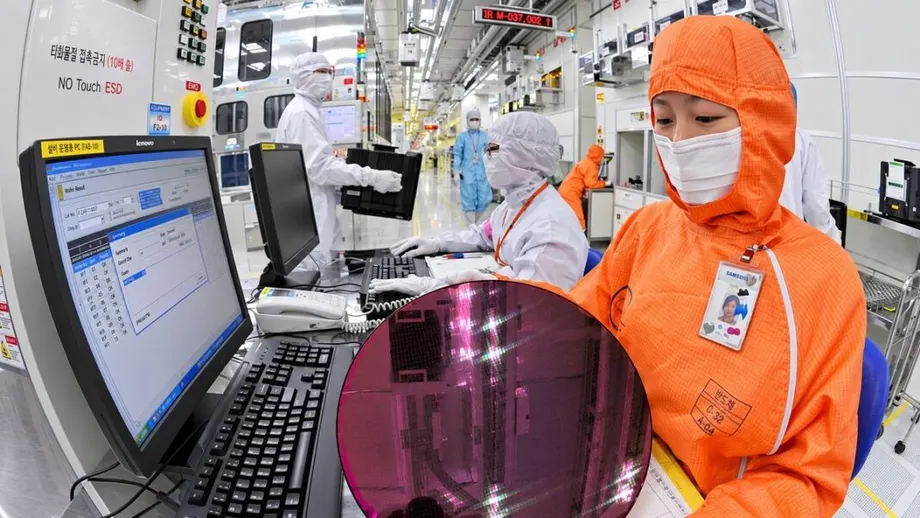
Semiconductors remain central to Korea's exports, but competition is spreading across the production chain. A study by the Korea Trade Investment Promotion Agency (KOTRA) identifies China as Korea's leading semiconductor competitor, with an export similarity index of 72.2 in the third quarter.
The index compares the overlap in countries' export patterns. In practical terms, it helps show how closely their exports compete. China leads that comparison, while Taiwan and Malaysia are also gaining ground.
Taiwan's index increased by 7.6 points over four years to 32.5. Malaysia's rose by 6 points to 50.5. Malaysia now handles about 13 percent of global semiconductor assembly, testing and packaging, giving it a substantial role in the steps that turn manufactured chips into usable components.
Advanced chips increasingly depend on complex stacking and precise connections between components. That makes the work performed after initial chip fabrication more valuable, and it broadens the competitive field beyond the factories that manufacture the chips themselves.
Korean chip exports are taking different routes
China and Hong Kong still receive more than half of Korean semiconductor exports, but their combined share has fallen from 61.6 percent in 2020 to 51.7 percent in 2024. China's individual share declined from 40.2 percent to 33.3 percent, while Hong Kong's dropped from 20.9 percent to 18.4 percent.
Taiwan moved in the opposite direction. Its share of Korean chip exports rose from 6.4 percent in 2020 to 14.5 percent in 2024, more than doubling. Direct exports to the United States remained broadly stable at about 7 percent, although the production route means American demand reaches Korea through other destinations too.
Korean high bandwidth memory (HBM) is packaged with graphics processors in Taiwan before final delivery to American customers. HBM supplies the rapid flow of data needed for demanding computing workloads, including artificial intelligence. Taiwan therefore serves as a production stage as well as a destination for Korean exports.
Vietnam's share also increased as electronics production shifted from China. Korean component manufacturers followed final assembly operations into Southeast Asia, placing suppliers closer to the factories using their products.
The main dates trace how commercial risk and production routes have changed:
- 2016: Economic retaliation after the THAAD deployment pushed Korean companies to diversify their exposure to China.
- 2020: China and Hong Kong received a combined 61.6 percent of Korean chip exports, while Taiwan received 6.4 percent.
- 2024: China and Hong Kong's combined share fell to 51.7 percent, while Taiwan's rose to 14.5 percent.
- 2030: Survey respondents expect Chinese competitors to be ahead across all 10 leading Korean export sectors.
Korean businesses are consequently managing several relationships at once. China remains a major market and competitor, Taiwan connects Korean memory to American customers, and Southeast Asian production networks are taking a larger role.
Why packaging has become a strategic concern
Assembly, testing and packaging were once easier to separate from discussion of the most advanced chipmaking processes. They now matter more because better performance depends on advanced packaging as well as front end lithography, the process used to form chip circuitry.
Packaging connects and arranges chips so they can work together effectively. Complex stacking and precision connections make this stage especially important for advanced products. Malaysia's growth into a major hub gives Korean companies access to capacity, while adding another location whose industrial capabilities matter to their competitiveness.
Outsourcing these steps can help Korean producers expand faster and lower costs. It also leaves them dependent on capacity outside Korea. Companies and policymakers are considering how to expand advanced packaging at home while continuing to use partner capacity elsewhere in Asia when demand surges.
Korea's semiconductor strategy therefore reaches beyond producing better memory chips. Materials, equipment, design, advanced packaging and testing all affect how quickly a finished product can reach customers.
China's advantage extends beyond low costs
Chinese manufacturers combine large production volumes, efficient logistics, a huge domestic market and strategic investment in technical knowledge. Rapid investment cycles and government support add to those advantages. Studies tracking innovation across advanced industries point to rising output from Chinese laboratories and factories.
China has moved ahead in some markets, including electric vehicles and batteries, and is catching up in others, such as robotics and chemicals. Factory operations are changing too. Software, automation and artificial intelligence systems manage inventory, check quality and guide robots.
Those tools can shorten production cycles and reduce defects. Lower costs and fewer faulty products leave more money available for the next product update, allowing improvements to follow each other more quickly.
Lithium iron phosphate battery cells have become cheaper and more reliable. Chinese vehicle exports are forcing competitors to reconsider designs and sourcing, while solar panels cost far less than a decade ago. Manufacturing scale and learning through repeated production help explain these changes alongside subsidies. Korean competitors must match costs or give customers a clear reason to pay more.
How Korean manufacturers are responding
Korean memory producers are investing heavily in HBM and other premium memory for artificial intelligence workloads. Display manufacturers are concentrating on premium panels for phones, tablets and televisions, where image quality and power consumption can help distinguish their products.
Shipbuilders are winning orders for liquefied gas carriers and complex offshore projects. These businesses depend on engineering depth and reliable delivery, giving Korean companies a way to compete beyond price alone.
Chemical companies are moving toward materials with greater value for batteries, advanced packaging and electronics. Automakers are developing software features, batteries using newer technologies and dependable global service networks to distinguish their electric vehicles from cheaper alternatives.
Competition can also push capable companies to improve. Research using patent data and measures of export competition at individual companies finds that productive Korean firms increase innovation when Chinese exporters challenge them in markets outside Korea and China. The improvements appear in product quality and technology upgrades.
Less productive companies face a more demanding adjustment. The same pressure that encourages stronger businesses to develop better products also increases the standard required to remain competitive.
Factories and investment are moving closer to customers
Korean firms are diversifying both their markets and production locations. Investments in the United States and Europe improve access to customers and can reduce exposure to sudden policy changes.
Battery joint ventures in North America and Europe help meet rules requiring local content and bring Korean suppliers closer to vehicle manufacturers. Consumer electronics and component production have expanded in Vietnam and other Southeast Asian economies, reducing reliance on a single country.
These decisions connect commercial needs with risk management. A factory near customers may improve access to a market, while a broader production network gives companies more options when trade rules or supply conditions change.
Dependence on China has also become more selective. Korean firms have reduced exposure where necessary, while Chinese businesses continue to depend on Korean technology in semiconductors, displays and industrial equipment. Korea consequently has more bargaining power in the relationship than it once did.
Policy choices span workers, equipment and cooperation
Korean executives' concerns point toward several policy priorities. Training and immigration policies can expand the supply of engineers and technicians in artificial intelligence, chip design, power electronics and advanced manufacturing. Results take time, making workforce planning part of the investment timetable.
Digital tools could improve productivity in services and smaller businesses, where adoption remains limited. Support programs can encourage competitive firms to grow and consolidate rather than protect every small company regardless of performance. Tax and regulatory changes that encourage purchases of equipment and software could help more businesses adopt better production methods.
Korea's Materials, Parts, and Equipment Strategy 2.0 already aims to reduce exposure to supply disruptions. In semiconductors, that requires attention to the full production chain, from materials and equipment through design, packaging and testing.
Pilot production lines and financing for expansion can help technologies move from laboratories into factories. Clear rules and predictable schedules matter alongside funding because companies must decide when to build, hire and order equipment.
Germany offers a potential cooperation partner because it faces similar pressure from protectionism and Chinese competition. Korea and Germany can share approaches to economic security, work on standards for semiconductors, batteries and artificial intelligence, and coordinate efforts to diversify supply chains.
Cooperation among countries with substantial industrial strength can help protect investment while keeping markets open. It also offers an alternative to heavy handed measures that could restrict innovation.
Korea's experience after the 2016 THAAD deployment helps explain its approach to China. Businesses are more assertive about managing risk while keeping trade channels open where continued exchange makes commercial sense.
The risks facing investment through 2030
Trade restrictions could complicate even carefully planned expansion. New tariffs and actions against subsidies in automobiles, batteries and clean energy may alter market access. Exporters must meet compliance requirements across several jurisdictions, each with its own rules.
Chinese price reductions combined with improving quality could squeeze Korean profit margins. Software, service and the ability to connect products with customers' systems will matter when manufacturers try to defend higher prices.
Steel, batteries and some commodity chemicals also face the risk of excess production capacity. When investment expands faster than demand, factories can enter volatile cycles of weak prices and uneven output. Flexible production plans and disciplined capital spending become more valuable under those conditions.
Shortages of engineers and technicians could slow product development in artificial intelligence, chip design and advanced manufacturing. Education, training and targeted immigration can help, but companies must account for the time needed to build those skills.
Tensions among major economies, export controls and sanctions can also change where Korean businesses manufacture and sell. Diversified sourcing and stronger relationships with several partners give companies more options when conditions shift.
The survey's 2030 outlook brings these pressures into a single investment window. Korean exporters are trying to preserve technological and service advantages while competitors improve costs, production speed and quality. Decisions about workers, factories, packaging capacity and overseas partnerships will shape how well individual sectors respond.
What to Know
- The FKI surveyed 200 manufacturers among Korea's 1,000 largest companies by sales. Respondents expect China to move ahead in all 10 leading export sectors by 2030.
- China is the main global rival for 62.5 percent of respondents today, rising to an expected 68.5 percent in 2030.
- With Korea fixed at 100, China's competitiveness score rises from 102.2 today to a projected 112.3 in 2030. The United States rises from 107.2 to 112.9.
- China already leads in steel, machinery, secondary batteries, displays, and automobiles and parts, according to the companies surveyed.
- Korean advantages in semiconductors, electronics and electromechanics, shipbuilding, petrochemicals and oil products, and bio health are expected to disappear by 2030.
- KOTRA identifies China as Korea's leading semiconductor competitor, while Taiwan and Malaysia are gaining ground. Malaysia handles about 13 percent of global chip assembly, testing and packaging.
- China and Hong Kong's combined share of Korean chip exports fell from 61.6 percent in 2020 to 51.7 percent in 2024. Taiwan's share rose from 6.4 percent to 14.5 percent.
- Korean companies are investing in premium products, advanced memory, overseas production and closer customer relationships while managing shortages of skilled workers.
- Policy priorities include workforce development, digital adoption, stronger semiconductor supply chains and cooperation with partners. Trade restrictions, price pressure, excess capacity and geopolitical disruption remain major risks.