A death sentence with consequences beyond Dhaka
Bangladesh's International Crimes Tribunal sentenced former prime minister Sheikh Hasina to death on November 17, 2025, for crimes against humanity linked to the suppression of the student uprising that brought down her government. The 78 year old was tried in her absence. She has lived in India since fleeing Bangladesh in August 2024.
Contents
- A death sentence with consequences beyond Dhaka
- What the judges found
- How a dispute over jobs became an uprising
- Why the judgment matters to victims' families
- A domestic court handling crimes against humanity
- Fairness concerns and the limits on appeal
- Dhaka tightens security as crowds gather
- Hasina rejects the court from exile
- India faces an extradition decision
- Why the decision matters for relations with India
- An election with the Awami League sidelined
- Factories and workers face the cost of renewed unrest
- What to Know
Former home minister Asaduzzaman Khan also received a death sentence. Former police chief Chowdhury Abdullah Al Mamun was sentenced to five years in prison after cooperating as a state witness. A United Nations fact finding effort estimates that up to 1,400 people were killed during the weeks of protests, most by gunfire from security forces.
Bangladesh's foreign ministry has asked India to hand over Hasina and Khan. New Delhi has said it will engage constructively, without promising extradition. The ruling therefore places two decisions before different authorities: Bangladesh's courts must handle the next legal steps, while India must consider whether to return a former leader with whom it maintained close ties.
Dhaka faced heightened security, street confrontations and sharply divided reactions as the judgment was delivered. Some victims' relatives welcomed the sentences with tears and prayers. Hasina rejected the tribunal's authority, while the interim administration led by Nobel Peace Prize laureate Muhammad Yunus called the ruling historic and urged calm.
National elections are planned for February, with the Awami League barred from participating. The verdict arrives as Bangladesh tries to hold former leaders accountable, contain political violence and prepare a vote that citizens can trust.
What the judges found
The three judge panel convicted Hasina of incitement, ordering killings and failing to prevent atrocities during the unrest in July and August 2024. It issued a single death sentence. Khan received the same punishment after conviction on parallel charges.
Prosecutors argued that security forces and groups supporting the government acted on instructions from senior leaders to clear streets using live ammunition and heavy force. The indictment included the shooting of university student Abu Sayeed, the killing of six unarmed protesters in central Dhaka and burnings in an industrial suburb.
The court heard that law enforcement units used lethal weapons during street operations, with drones and helicopters also deployed in some cases. Prosecutors presented documentary material and testimony that they said showed coordination from Hasina's office during the critical weeks when protests peaked and security forces opened fire.
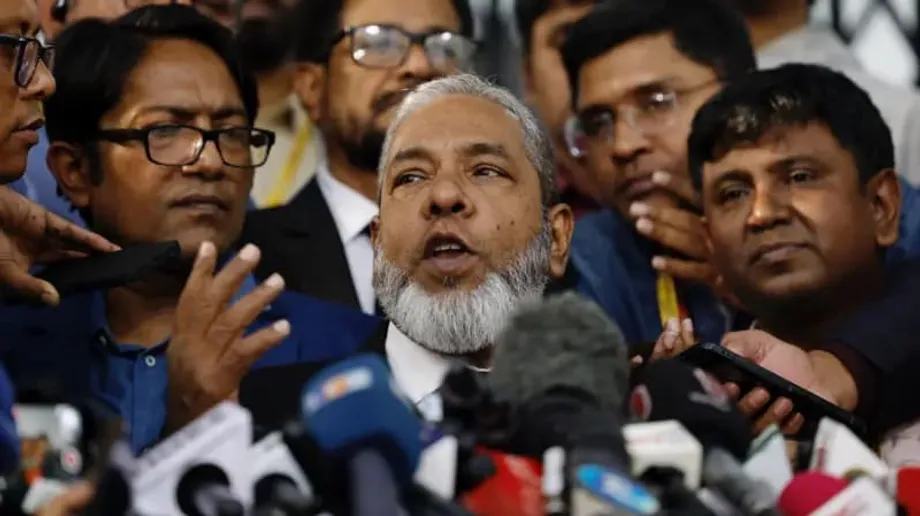
Chief Prosecutor Mohammad Tajul Islam described Hasina's alleged role in directing the repression:
As Bangladesh's chief prosecutor, I see Sheikh Hasina as the mastermind and principal architect of the atrocities unleashed on unarmed protesters last July and August.
Mamun, the former inspector general of police, was convicted on lesser counts. Judges cited his cooperation and testimony about chains of command and the use of lethal force against civilian crowds when imposing his five year sentence.
The proceedings were widely broadcast. Applause and prayers broke out in the packed courtroom after the death sentences were announced. Outside, riot police sealed streets and pushed back crowds awaiting the outcome.
How a dispute over jobs became an uprising
University students began protesting in July 2024 over a civil service quota system that had long reserved one third of government jobs for descendants of veterans of Bangladesh's 1971 war of independence. Students argued that the arrangement had become a route for political patronage and corruption, limiting opportunities for qualified applicants without connections.
Rallies spread from Dhaka's main campuses to other cities. Police efforts to clear marches intensified confrontations, and opposition groups joined the demonstrations. By the middle of July, a campaign about access to government jobs had become a national challenge to Hasina's long hold on power.
Security forces fired on crowds. Witnesses filmed the violence, and social media spread images of wounded students and grieving families. Human rights monitors accused the authorities of systematic abuses, including firing live ammunition at demonstrators and severely beating people during arrests.
On August 5, 2024, Hasina resigned and fled to India amid expanding protests and clashes. Protest leaders and the military backed Yunus to lead an interim government charged with stabilizing Bangladesh and preparing credible elections.
The main stages of the crisis and the court proceedings were:
- July 2024: Student protests over government job quotas spread and developed into a wider challenge to Hasina's government.
- August 5, 2024: Hasina resigned and fled to India.
- After the change of government: The reconstituted tribunal turned its attention to crimes linked to the uprising.
- Mid 2025: Formal charges were filed after investigators collected witness statements, official documents and video evidence.
- July 2025: Hasina received a short prison sentence for contempt of court over remarks about the proceedings.
- November 17, 2025: The tribunal sentenced Hasina and Khan to death and Mamun to five years in prison.
- February: National elections are planned, with the Awami League excluded from the ballot.
Why the judgment matters to victims' families
The deaths of young people gave the uprising its enduring name, the July revolution. Images of the violence helped mobilize public opinion, while relatives of those killed attended court hearings throughout the trial to seek accountability for family members who never returned home.
Golam Rahman, whose son Golam Nafis was shot during the unrest, explained before the verdict why he wanted the court to impose the strongest punishment:
For families of the martyrs, the death sentence is the only verdict that can tell future rulers there is a line they cannot cross.
Some relatives wept and prayed at the courthouse after the sentences were announced. Many students who helped lead the uprising viewed the judgment as confirmation that people who ordered lethal force would face punishment.
The caretaker administration moved to reduce the quota system after taking charge, easing some student grievances. The consequences of the violence continued, however. Survivors faced serious injuries and long hospital stays, and thousands of families continued seeking answers about the days when gunfire swept through crowds.
For those families, the case concerns both individual losses and responsibility for decisions made at the top of government. The court's findings connect the actions of security personnel on the streets with the officials who prosecutors said directed them.
A domestic court handling crimes against humanity
Bangladesh established the International Crimes Tribunal in 2009 to prosecute atrocities connected to the 1971 war of independence. Despite its name, it is a domestic court applying Bangladeshi law.
Its authority covers murder, persecution, torture and other inhumane acts committed as part of a widespread or systematic attack on civilians. In simple terms, the court examines violence against civilians as part of a broader pattern, including the role of those who organized or directed it.
After Hasina's government fell, the reconstituted tribunal began examining crimes linked to the uprising. Investigators gathered testimony, documents and video evidence before formal charges were filed in mid 2025. Prosecutors called 54 witnesses, and the charge sheet ran to thousands of pages.
Judges found that the evidence, including Mamun's cooperation, demonstrated command responsibility at the highest level. That principle concerns the responsibility of leaders for atrocities carried out under their authority, including their failure to prevent them.
Hasina's defense was led by a lawyer appointed by the state because she did not attend. Counsel argued that the charges were baseless and the tribunal lacked independence. Judges rejected those objections and delivered Bangladesh's most severe judgment against a former head of government since independence in 1971.
Fairness concerns and the limits on appeal
Rights organizations have criticized the tribunal's procedures over the years, raising concerns about political interference and weaknesses in due process. Its power to impose capital punishment also draws opposition from groups that reject the death penalty in all circumstances.
Bangladeshi tribunal rules allow a trial to proceed when an accused person fails to appear or is considered to have absconded. A court appointed lawyer must represent that person and be allowed to question witnesses and present arguments. A trial held without the accused attending is called a trial in absentia.
Supporters say this procedure prevents powerful defendants from blocking justice by remaining abroad. Critics argue that the defendant's absence makes it harder to challenge evidence and weakens confidence in the result. In Hasina's case, the judges concluded that she had adequate representation and that the evidence met the standard required for conviction.
An appeal to Bangladesh's Supreme Court is possible, but tribunal procedure typically requires a convicted person to surrender or be in custody before filing. Hasina's continued stay in India therefore leaves her without a practical route to appeal unless she returns or is detained.
Her July contempt sentence concerned remarks that the tribunal considered damaging to the proceedings. The death sentence now makes the question of access to appeal more urgent, alongside the continuing dispute about the court's independence.
Dhaka tightens security as crowds gather
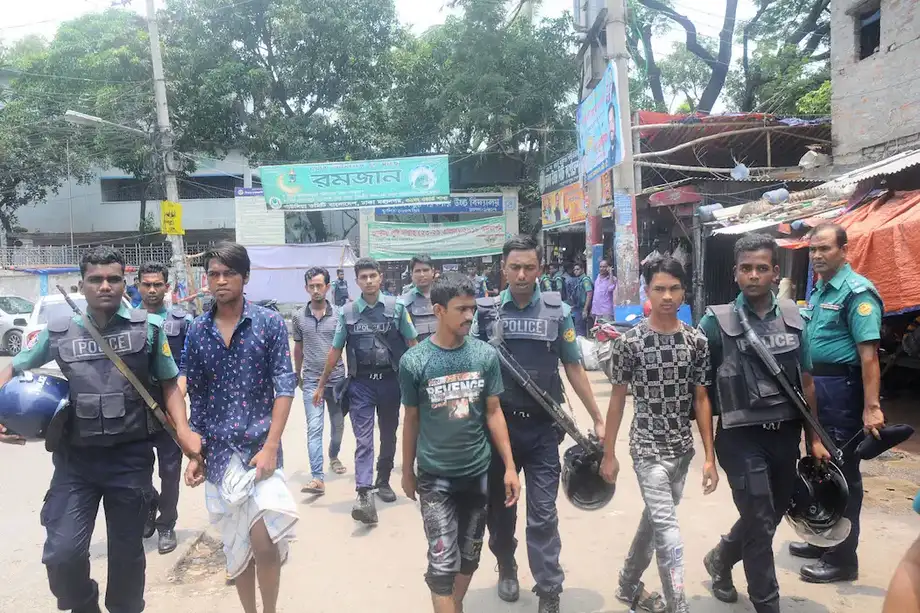
Police reported crude bomb explosions and vehicles being set on fire in the days before the verdict. Dhaka and other urban centers prepared for disorder, with security forces establishing cordons and restricting movement.
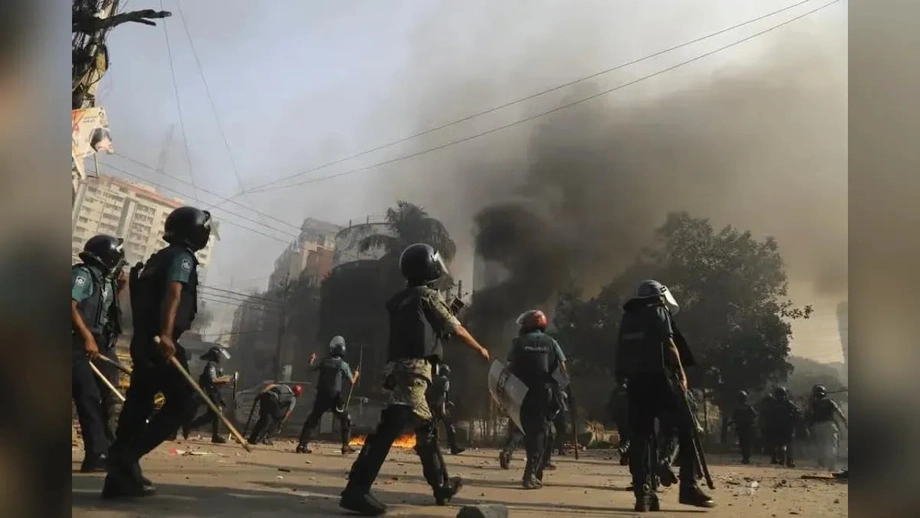
On Monday, crowds gathered near the tribunal and at symbolic locations in the capital. Police used tear gas and sound grenades against marchers trying to break through barricades. The Rapid Action Battalion and army units supported police at important intersections and government complexes.
The house of Bangabandhu Sheikh Mujibur Rahman became a flashpoint. Demonstrators brought construction equipment as they tried to damage the remains of the property, a place of deep national significance. Security personnel responded with baton charges and tear gas.
Shops closed and traffic stopped for hours along major routes, including Mirpur Road and Panthapath. Several protesters and officers were reported injured as demonstrators threw bricks and police advanced with shields and batons.
The interim government asked citizens to stay calm and avoid large gatherings. Authorities warned that attempts to incite violence or vandalize property would meet a firm response. The administration also cautioned against using the verdict to stir violent agitation.
Public reactions remained divided. Alongside demands for accountability, there were grief filled protests and concern that the judgment would deepen political divisions. The security measures reflected fears that rival groups could return the streets to the confrontations seen during the uprising.
Hasina rejects the court from exile
Hasina issued a statement from India rejecting the court's authority and accusing the interim leadership of staging a show trial to destroy the Awami League. Her party dominated Bangladeshi politics for more than a decade and a half.
The former prime minister portrayed herself as the last elected leader resisting an undemocratic caretaker administration. Describing the tribunal and the government behind it, she said:
This verdict comes from a rigged tribunal established and presided over by an unelected government with no democratic mandate.
Her son, Sajeeb Wazed, expressed confidence about her safety in India and said she intended to continue challenging the authorities in Dhaka:
My mother will remain safe in Delhi, but she will not sit back quietly. She is determined to fight back.
Awami League figures in exile have sought to challenge the tribunal's legitimacy and mobilize party loyalists. That political campaign runs alongside Hasina's legal difficulties: returning to Bangladesh or being extradited would bring immediate custody and likely prompt efforts to file an appeal quickly.
India faces an extradition decision
Bangladesh's request for the return of Hasina and Khan places pressure on India to respond to the tribunal's judgment. Extradition is the process through which one country hands a person to another country for prosecution or punishment.
India and Bangladesh have an extradition treaty. Such agreements often contain exceptions for offenses considered political, while the ties between Hasina and India's leadership add sensitivity to the request. New Delhi has signaled constructive engagement but has made no commitment to transfer either former official. No date for an extradition decision has been given.
Legal and political obstacles make a transfer doubtful in the near term. The Yunus administration is expected to keep pressing for cooperation as it seeks to enforce the court's decisions.
Prosecutors have also pursued assistance from Interpol, including efforts to obtain a red notice for prominent figures linked to the crackdown. Those efforts have moved slowly. A red notice seeks international cooperation in locating and arresting a wanted person; arrest and extradition still depend on action by the country where that person is staying.
Hasina's sentence cannot be carried out while she remains in India. Her location therefore connects the enforcement of a Bangladeshi court ruling directly to decisions by Indian authorities.
Why the decision matters for relations with India
Bangladesh is an important neighbor for India's trade, transport connections and border security. Indian leaders also have longstanding personal and political ties with Hasina, who helped build closer cooperation on security and economic matters during her years in office.
An outright rejection of Dhaka's request could damage relations with the interim government and strengthen criticism of Hasina inside Bangladesh. A rapid decision to hand her over could be viewed in India as abandoning a partner.
Public reactions on both sides of the border add another consideration. A hard line against Hasina could anger her supporters and affect Bangladeshi politics before the election. Leaving the decision open gives India room to maintain contact with the interim administration and whoever forms Bangladesh's next elected government.
For now, handling legal steps individually without committing to extradition appears the most likely approach. That leaves Dhaka seeking enforcement of the judgment while New Delhi weighs its legal obligations and relations with a close neighbor.
An election with the Awami League sidelined
The Awami League has been barred from contesting the planned February election. Many senior party figures are in custody, hiding or living abroad, although loyalists insist that the organization remains a political force.
The sentences will affect how those supporters act. They face choices between street mobilization and the risks of a security crackdown, including legal exposure for defying emergency rules. Large protests could bring renewed confrontations with forces already deployed to contain disorder.
Yunus's interim government is tasked with restoring stability and delivering a credible election. Officials point to reduced job quotas and promises of reform as responses to the grievances that helped drive the uprising.
Excluding an entire party from the ballot risks making political divisions harder to resolve. International attention is likely to focus on whether the election allows broad participation and whether authorities can prevent violence while leaving room for peaceful political activity.
Distrust of institutions makes that task difficult. Authorities have warned against arson, blockades and attacks on public property. Voters also need transparent campaigning, reliable election administration and the ability to assemble peacefully.
Factories and workers face the cost of renewed unrest
Bangladesh's economy depends heavily on apparel exports. It is among the world's largest garment producers, with international retailers relying on factories around Dhaka and Chittagong.
The 2024 unrest temporarily closed many factories, interrupted transport routes and strained logistics. Suppliers lost production, and buyers took notice. Another period of instability could disrupt schedules and wages for the millions of workers employed in the sector.
Factory owners are looking for signs that security will remain manageable. Workers face concerns about income and personal safety if rallies and clashes spread into industrial areas.
The interim finance team has focused on controlling inflation, maintaining fuel supplies and stabilizing the currency. Wider unrest could put those efforts under pressure, especially if international brands pause orders after fresh scenes of violence.
The judgment is the first major ruling on the 2024 crackdown, with further cases pending against other officials and operatives. Those proceedings will affect whether the caretaker administration builds confidence in accountability or faces deeper concern about selective justice. Meanwhile, the immediate tasks are to manage the legal process, maintain public order and prepare the February election.
What to Know
- On November 17, 2025, Bangladesh's tribunal sentenced Sheikh Hasina and former home minister Asaduzzaman Khan to death over the 2024 protest crackdown.
- Former police chief Chowdhury Abdullah Al Mamun received five years in prison after cooperating as a state witness.
- A United Nations fact finding effort estimates that up to 1,400 people died during the unrest, most from security force gunfire.
- Hasina was tried in her absence and remains in India. She rejects the tribunal's authority and calls the case politically motivated.
- Bangladesh has requested extradition. India has promised constructive engagement without committing to a transfer.
- Appeal procedures typically require surrender or custody, restricting Hasina's options while abroad.
- Police tightened security in Dhaka amid demonstrations, clashes, bomb explosions and vehicle burnings.
- Elections are planned for February, with the Awami League barred from participating.
- Further unrest could disrupt garment production, transport and workers' wages.