Billions in digital investment meet pressure at the tap
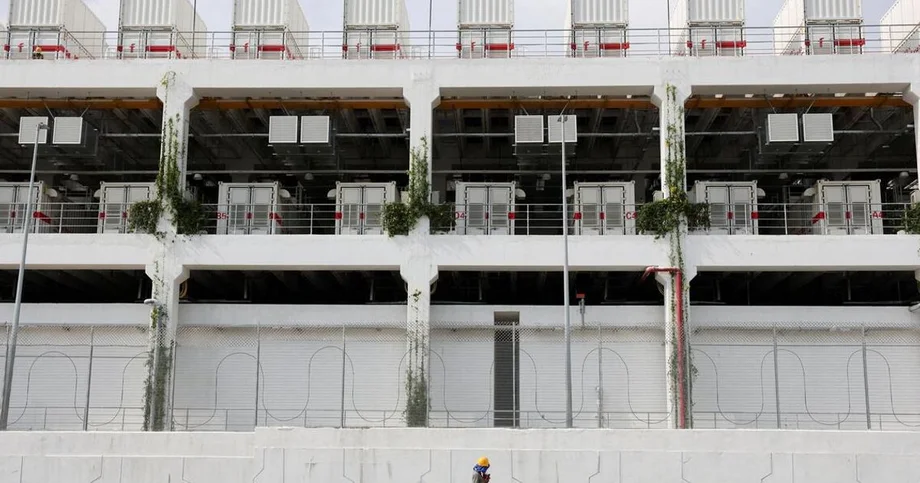
Johor's rush to become a major hub for artificial intelligence is running into a basic constraint: reliable water. As of November 17, 2025, the state has more than forty data center sites built or under way, planned computing capacity above 5 gigawatts, and major investments linked to Microsoft, Nvidia, ByteDance and other technology companies. Its water network is facing rising demand alongside pollution, drought risk and aging pipes.
Contents
- Billions in digital investment meet pressure at the tap
- Why servers need a steady water supply
- A rapid expansion meets limited utility capacity
- River pollution shuts down four treatment plants
- Stricter approvals and higher charges reshape plans
- Cooling technology offers ways to reduce demand
- Wastewater becomes a resource for new campuses
- Households and farms face questions about allocation
- Water risk changes the economics of expansion
- Keeping public supplies and computing facilities running
- Key Points
A recent pollution incident in the Johor River forced four treatment plants to stop operating and disrupted supply to more than one million customers at its peak. Households experienced dry taps or weak pressure while the network recovered. The disruption brought the state's investment ambitions into direct contact with concerns about an essential public service.
Muhammad Azrien Mohammad Ali, a Johor resident aged 35, described repeated interruptions and weaker supply in 2025:
This year I have experienced three water disruptions. The water supply is there but it is now low compared to before.
Data centers need continuous cooling to keep thousands of servers operating safely. Their demand arrives around the clock, adding pressure to networks that already serve homes, farms and other businesses. A facility with 100 megawatts of capacity can use roughly 4.2 million liters of water a day for cooling, comparable to the daily needs of a small city of about ten thousand people.
Johor's challenge is to support a new digital backbone for Southeast Asia while keeping everyday water supplies dependable. The response now includes stricter project reviews, higher water charges, new storage schemes and growing investment in recycled water. Whether those measures arrive quickly enough will help determine how far and how fast the state's data center expansion can proceed.
Why servers need a steady water supply
Thousands of processors inside a data center release heat as they perform calculations. Operators must remove that heat constantly to keep equipment within safe temperatures. Traditional cooling systems push cool air across servers, then expel or recirculate the warmed air using chillers and cooling towers.
Many large facilities use evaporative cooling because water absorbs heat effectively. Evaporation can reduce electricity use compared with systems relying entirely on air, but it consumes water. Artificial intelligence workloads make the challenge harder: hotter chips and more densely packed server racks require more heat to be removed from the same space.
Two efficiency measures help officials assess designs. Power usage effectiveness, or PUE, compares the electricity used by the entire facility with the electricity reaching its computing equipment. Water usage effectiveness, or WUE, measures water consumption in relation to computing activity. Together, they show how much extra energy and water a facility needs to support its servers.
Johor has introduced benchmarks including a PUE target of 1.4 and a WUE target of 1.8, reflecting best practice in nearby markets. The aim is to reduce demand on both electricity and water systems while encouraging designs that reuse cooling water or deliver cooling directly to hot components.
Water sourcing is equally important. Facilities drawing treated drinking water share infrastructure with households, making dry spells and treatment plant closures a concern for both. Reclaimed wastewater or river water treated at a facility can reduce demand on the public network and provide another source when public supplies are interrupted.
Closed loop cooling keeps fluid circulating through a system instead of continually replacing it. Liquid cooling targets heat more directly than moving chilled air around an entire server room. Those approaches, combined with alternative water supplies, are becoming central to the state's reviews of new projects.
A rapid expansion meets limited utility capacity
Johor has moved from a small data center footprint to dozens of developments within a few years. Market trackers count more than forty sites built or under way, with hundreds of additional megawatts in the pipeline. An industry assessment places planned capacity above 5 gigawatts, while several hundred megawatts are already operating.
Malaysia's National Water Services Commission, known as SPAN, has warned that water requirements from operational and planned data centers in Johor, Selangor and Negeri Sembilan exceed what local systems can currently deliver. These three states account for most of the activity across peninsular Malaysia.
SPAN's assessments show operators requesting hundreds of millions of liters a day across the three states. Existing infrastructure can reliably provide only a fraction of that amount. In Johor, a minority of projects have secured approval for their full water requirements, putting utility capacity at the center of decisions about further expansion.
Johor attracts developers because it offers more available land than Singapore, strong cross border connections and planned electricity grid upgrades. The state government has also prioritized faster approvals through a dedicated coordination committee. Investors are betting that growing demand for artificial intelligence will sustain a regional computing hub for years.
Singapore's pause on new data center projects earlier in the decade, while it reviewed sustainability requirements, helped direct builders north. Johor offered larger plots, lower costs, access to talent and network routes, and a government seeking to diversify its economy.
The rise of large language models accelerated that investment race. Training artificial intelligence systems can take place far from the people who eventually use them, giving builders flexibility to choose locations with land, electricity and supportive policies. Water availability is now another decisive requirement in that choice.
River pollution shuts down four treatment plants
A failed silt pond embankment at a sand mining site sent muddy runoff into the Johor River during the recent disruption. Turbidity, the amount of suspended material that makes water cloudy, rose far above normal levels. Four treatment plants along the river, including Linggiu and Semangar, halted operations.
More than one million customers were affected at the peak. When treatment resumed, tens of thousands of accounts still had to wait for normal pressure as the distribution network refilled. Restarting a plant was only the first step in returning water to homes and businesses.
A spokesperson for Johor's sole water operator explained the expected recovery period after the plants resumed operation:
We expect the recovery period to take at least 12 hours for water to be fully restored, hopefully by midnight.
State environmental officials took enforcement action against the operator of the site linked to the pollution. They also required remedial plans and monitoring to prevent another incident. The shutdown illustrated how activity near a river can interrupt supply even without a prolonged period of dry weather.
Data centers are designed with backup systems, including water stored at their premises. Repeated outages can nevertheless require larger storage tanks, additional water connections and emergency treatment equipment. Those investments raise costs while helping facilities maintain cooling through interruptions.
Ben Shane Lim, head of research at New Paradigm Securities, described how operators could respond if disruptions became more frequent:
It will be a cost of doing business. Generally, data centers have a high level of built in redundancy. They will have several days of water stored on site. If these events become more frequent, data centers will simply increase their on site storage requirements accordingly.
Water reliability therefore affects both daily operating expenses and the amount developers must spend before a facility opens. Storage offers a buffer, while alternative connections and treatment equipment give operators more ways to maintain supply when the public network is under pressure.
Stricter approvals and higher charges reshape plans
Johor has established a technical committee to examine data center proposals, focusing on water consumption, cooling design and environmental effects. Officials say applications without sustainable water plans face rejection, and the state has indicated that some proposals have already been turned away for failing water or electricity criteria.
State leaders are encouraging treated wastewater, groundwater and direct river intakes with treatment at the facility. They also promote closed loop systems that recycle cooling water repeatedly. These requirements bring the design of a project's utility supply into the approval process, alongside its land and computing needs.
From August, data center operators in Johor face a higher water tariff than other users outside the domestic sector, charged by state utility Ranhill. The rate is intended to reflect the industry's large volumes and need for dependable service, while encouraging alternatives to treated drinking water.
Political leaders say the state can serve investors and households together. They argue that reviews involving multiple agencies stop projects from advancing when utilities are insufficient. For developers, that means efficiency and reliable sourcing must be built into plans from the outset.
Johor is also designing three Off River Storage schemes for the Johor, Pontian and Sedili basins, supported by new treatment plants scheduled around the end of the decade. These schemes would create reserve pools capable of feeding treatment plants when river flows fall or contamination rises.
The broad sequence of policy and development is:
- Earlier in the decade, Singapore paused new data center projects to review sustainability, helping draw investment toward Johor.
- From August 2025, Johor's data center operators face a higher water tariff than other users outside the domestic sector.
- As of November 17, 2025, stricter project screening, alternative water projects and three storage schemes form part of Johor's response.
- Around the end of the decade, new treatment plants are scheduled to support the planned water buffers.
No precise completion dates were given for the three storage schemes. Until the additional capacity arrives, approvals, efficiency improvements and alternative supplies carry much of the immediate responsibility for managing growth.
Cooling technology offers ways to reduce demand
New cooling designs target the hottest parts of servers rather than relying only on chilled air moving around racks. Direct to chip cooling delivers liquid cooling to processors. Immersion cooling places servers in fluid that does not conduct electricity, while precision liquid cooling concentrates on selected components.
Advocates say these systems can lower electricity and water consumption together. Small pumps can replace energy hungry fans, and removing heat at its source can allow efficient operation in warmer surroundings. Proponents in Asia report energy savings per server of several tens of percent compared with racks cooled by air.
Closed loop liquid systems also use very little water because they recirculate their cooling fluid. That is attractive in Southeast Asia, where high temperatures create persistent cooling needs and water can become scarce or unreliable during dry periods.
Operators are adopting the technologies gradually. Facilities often combine older and newer systems because their workloads range from intensive artificial intelligence training to lighter computing tasks. Initial costs and the difficulty of modifying existing facilities also slow the transition.
Johor's largest builders are pairing cooling improvements with investment in alternative water sources and treatment at their premises. The two approaches address different parts of the same problem: efficient equipment reduces consumption, while another water source reduces dependence on the network supplying homes.
Wastewater becomes a resource for new campuses
A major operator has built a dedicated water reclamation plant near Ulu Tiram for an upcoming campus. Treated sewage effluent arrives through a pipe from a nearby treatment plant and undergoes multiple stages of reverse osmosis, a filtration process used to produce water suitable for cooling.
The reclamation facility currently processes five million liters a day and can expand to four times that volume, or twenty million liters a day. That potential increase gives the campus room to grow while using wastewater as its source.
Agreements with wastewater and special water agencies now deliver tens of millions of liters a day of water unsuitable for drinking to several data center projects. Another operator plans to use recycled water across two campuses in Johor Bahru. Elsewhere in the state, a developer will treat raw water from the Tebrau River at its next campus.
These projects reduce dependence on water treated to household standards. They also turn water sourcing into part of the campus infrastructure, alongside electricity connections, cooling equipment and backup systems.
Charles Santiago, former chairman of SPAN, welcomed efforts to expand alternative supplies:
Any effort that uses alternative water must be welcomed. It signals that there is strong public and private commitment.
Higher tariffs, stricter standards and public pressure are expected to accelerate the shift toward recycled water and more efficient cooling. New national guidelines also require operators to measure and reduce their environmental footprints, connecting local water decisions with wider industry sustainability goals.
Households and farms face questions about allocation
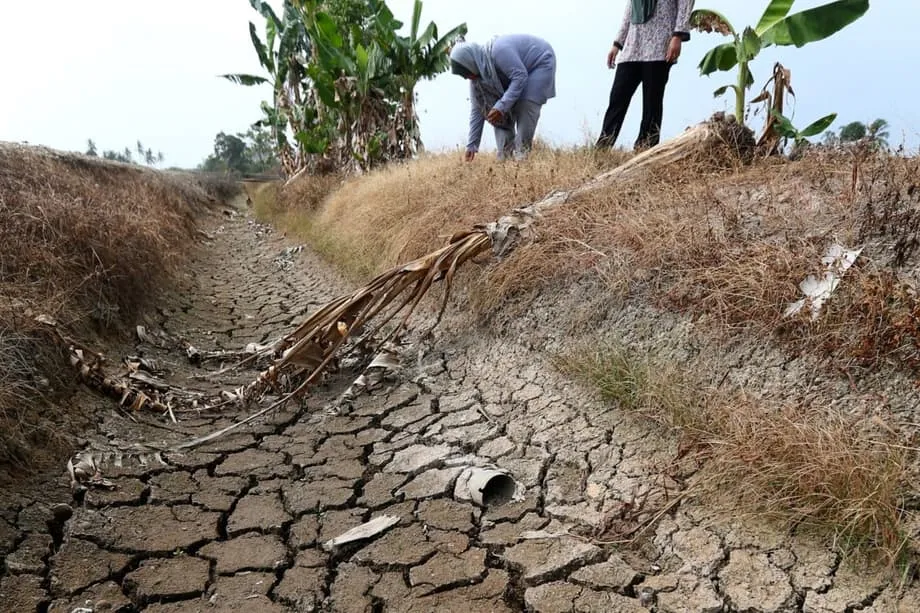
Families worry that industrial users might receive priority when supplies become tight. Farmers near technology parks rely on drains and groundwater for irrigation, making falling river flows and pollution related disruptions a concern beyond the household tap.
Some corporate links with utility operators have added to concerns about how water would be allocated during a shortage. Advocates want clear rules giving domestic needs priority in emergencies, with transparent criteria for rationing when necessary.
Communities also need stronger monitoring of water extraction and discharges along key rivers. Preventing contamination helps protect the same treatment plants on which households and businesses depend. The sand mining incident showed the reach of a failure at a site upstream.
The next dry season will test whether the new policies and projects can protect vulnerable parts of the network from failures spreading across the system. For residents already experiencing weak pressure or repeated interruptions, investment announcements matter alongside the practical question of whether water arrives reliably each day.
Water risk changes the economics of expansion
Developers must budget for storage tanks, multiple water feeds and treatment equipment when interruptions become a recurring risk. Sites without access to alternative supplies may face higher operating costs or delays while public infrastructure catches up.
A single outage may leave an operator's plans largely unchanged. A pattern of outages can make larger reserves and different cooling designs necessary across many facilities. Higher tariffs strengthen that financial pressure, while approval reviews increasingly examine whether a proposal has dependable alternative sources.
Electricity availability is affecting location decisions too. Constraints at popular areas such as Sedenak Tech Park have encouraged operators to consider other land where both water and power can be secured. Growth may spread toward places with more available resources rather than remaining concentrated in the earliest development areas.
Construction brings work, followed by roles for technicians, electricians and engineers. Staffing at each completed facility is modest compared with the construction phase. Johor's larger economic bet is that a concentration of data centers will attract other digital businesses and supporting services.
Developers also face the risk of building more capacity than customers need if demand weakens. Delays in solving water and electricity constraints could leave projects waiting longer than expected. The economics of both utilities will help determine which investments proceed and which stall.
Keeping public supplies and computing facilities running
Johor's planned storage pools and treatment plants need to arrive on schedule to provide a buffer when rivers become muddy or run low. Protecting catchments and enforcing discharge rules can reduce the frequency of sudden shutdowns while those projects are developed.
Reclaimed wastewater and river water treated at individual facilities offer primary supply options for new data centers. Giving communities and healthcare priority for drinking quality water would address household concerns, with pricing and project approvals helping shape that allocation.
Aging pipes also require attention. Repairing leaks and improving monitoring reduce water lost before it reaches customers, stretching existing supplies without necessarily building more dams or treatment plants. Measuring those losses helps identify where repairs can recover usable capacity.
Efficiency targets need audits and enforcement. Closed loop cooling, better containment of heat and designs that provide more computing capacity with less resource use can help operators meet the standards. Proposals that fall short need revised designs before proceeding.
Emergency planning must connect operators with the state utility. Adequate storage, backup treatment and multiple supply connections can support recovery, while communities need clear information about which areas would face rotating cuts and which critical services would be protected.
Key Points
- Johor has more than forty data center sites built or under way, with planned capacity above 5 gigawatts and several hundred megawatts already operating.
- A typical facility with 100 megawatts of capacity can consume roughly 4.2 million liters of water daily for cooling.
- Johor River pollution stopped four treatment plants and affected more than one million customers at the peak.
- SPAN says data center water requirements in Johor, Selangor and Negeri Sembilan exceed current supply capacity.
- Johor has tightened project reviews, introduced PUE and WUE benchmarks, and applied higher data center water tariffs from August.
- Three planned storage schemes and new treatment plants are intended to improve resilience, with treatment projects scheduled around the end of the decade.
- Recycled wastewater, treatment at campuses and liquid cooling offer ways to reduce pressure on household supplies.
- Household allocation rules, pollution prevention, pipe repairs and coordinated emergency plans remain central to keeping taps and servers running.