A weakened military finds room to survive
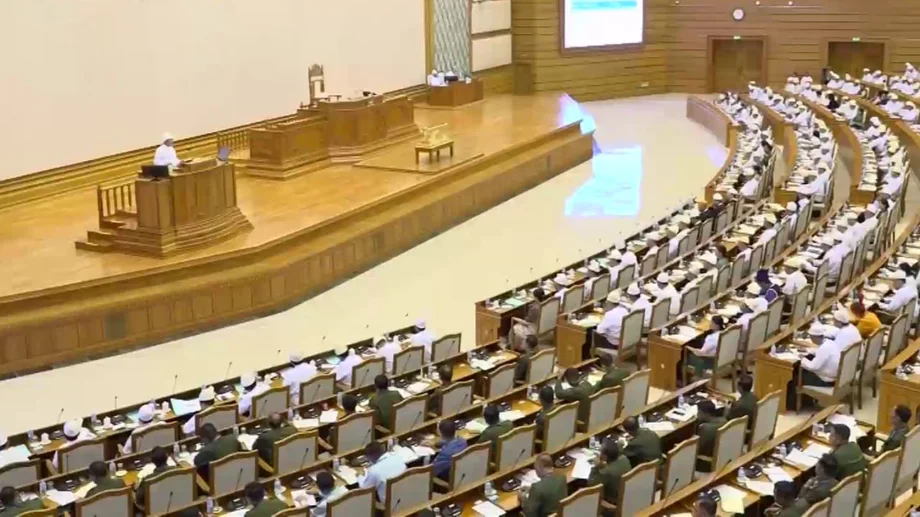
Myanmar's military is preparing for an election beginning on December 28, 2025, even as it fights to retain territory, more than three million people remain displaced and its opponents control large areas of the country. Four years after the February 2021 coup, the generals are finding greater acceptance abroad without securing a decisive victory at home.
Contents
- A weakened military finds room to survive
- Territorial gains meet pressure from China
- The dates behind the changing conflict
- China protects its interests on both sides
- Russia sustains an air war with limits
- Neighbors engage while collective pressure weakens
- An election under war and repression
- Earthquake relief meets continued attacks
- Accountability efforts reach the junta leader
- Rare earths and scams reshape the border economy
- Why taking major cities remains difficult
- Key Points
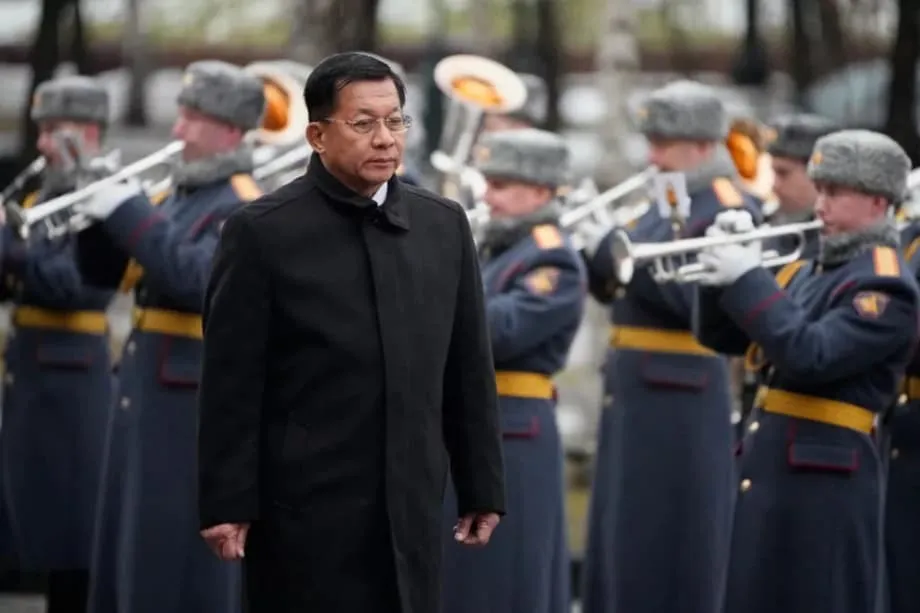
As of November 17, 2025, Senior General Min Aung Hlaing has secured invitations and meetings in Thailand, China and Russia and appeared at major regional gatherings, including a Shanghai Cooperation Organization summit. Chinese state media has shifted from describing him as Myanmar's leader to calling him acting president. These contacts give the military opportunities to present itself as the country's accepted authority.
The anti-junta coalition of ethnic armed organizations and People's Defense Forces still holds extensive borderlands and parts of the Bamar heartland. Independent conflict trackers estimate that the military fully controls only a small share of Myanmar, while large areas remain contested or under opposition control. Yet an opposition takeover of major cities looks distant.
China and Russia continue supplying aircraft, drones and spare parts that sustain the military's air campaign. Regional governments are pursuing their own trade and security priorities, while Washington's narrower focus and cuts to independent broadcasting in Burmese have reduced space for free media. A global shift toward hardline governance and a fragmented international response have given the junta more diplomatic room.
Myanmar's war is increasingly organized around zones of control and supply. Terrain, transport routes, foreign interests and local administration help determine where each side can operate. The army remains under pressure, but its opponents face growing obstacles to turning battlefield gains into national political change.
Territorial gains meet pressure from China
Northern Shan State illustrates how military victories can be reversed through diplomacy. Ethnic alliances advanced across parts of the state in 2024, briefly capturing Lashio and threatening the trade route connecting Mandalay with the Chinese border.
The Myanmar National Democratic Alliance Army, a member of the Three Brotherhood Alliance, returned Lashio to junta control in April 2025 under Chinese insistence. Beijing also pressed the United Wa State Army to step back from direct military support for its allies.
The military subsequently reclaimed several towns along the Mandalay-Muse corridor, including Nawnghkio, Kyaukme and Hsipaw. Control of these towns helps the army protect movement and supplies along a route important to trade with China. Its recovery has nevertheless been uneven. Forced conscription announced in 2024 prompted flight and anger, and morale among troops at the front remains fragile.
Rakhine State presents a different picture. The Arakan Army controls much of the state, while a junta garrison at Kyaukphyu has faced siege conditions. Kyaukphyu hosts oil and gas terminals central to Chinese energy projects. A serious threat to that infrastructure increases the risk of Chinese security involvement.
Across Myanmar, difficult ground, local support for resistance forces and changing drone tactics make military advances costly. Capturing a town, defending a transport corridor and governing the surrounding countryside require different resources, helping explain why battlefield gains have not produced a nationwide settlement.
The dates behind the changing conflict
Myanmar's present divisions developed through several rounds of fighting, foreign pressure and political decisions. The military's planned vote is the next scheduled step in a conflict that began with its seizure of power.
- February 2021: The military seized power in a coup.
- Late 2023 and 2024: The map of control shifted as ethnic alliances advanced across northern Shan and other fronts.
- 2024: The military announced forced conscription, prompting flight and anger.
- Late 2024: The Kachin Independence Army took two key rare earth mining towns near the Chinese frontier.
- November 2024: The International Criminal Court prosecutor requested an arrest warrant for Min Aung Hlaing over crimes against the Rohingya in 2017.
- Early 2025: The Kachin Independence Army negotiated arrangements allowing rare earth exports to China to resume.
- March 28, 2025: A deadly earthquake struck central Myanmar.
- April 2025: The Myanmar National Democratic Alliance Army returned Lashio to the junta under Chinese pressure.
- December 28, 2025: The junta plans to begin a phased election, with further stages scheduled in January 2026.
These events show how territorial control, economic bargaining and diplomatic engagement have developed together. The election timetable now runs alongside continued fighting and a deep humanitarian emergency.
China protects its interests on both sides
China's approach centers on preventing a collapse in Naypyidaw that would threaten trade, pipelines and border security. Beijing has increased engagement with the generals and stepped up material support. Analysts tracking arms and financing say recent Chinese assistance includes aircraft, drones, spare parts and money for state projects, including a census and the planned polls.
Chinese authorities have also tightened control over cross-border trade and technology with both civilian and military uses. Drone components are one example of equipment that can serve either purpose. Restrictions make it more expensive and difficult for resistance groups to obtain supplies abroad.
Beijing's apparent objective is to keep the central military from collapsing and protect Chinese interests in any eventual settlement. Its dealings with ethnic authorities show why its policy extends beyond support for the junta. Resistance forces control many rural transport routes and some important border crossings, while the Kachin Independence Army controls mining areas that supply China with critical minerals.
China has sometimes closed the border to pressure ethnic forces into negotiations, then reopened trade once agreements were reached. This combination of pressure and practical bargaining has constrained opposition momentum and helped the military strengthen certain corridors, without giving it a decisive nationwide advantage.
Chinese law enforcement cooperation with the generals has also expanded. Beijing pushed for action against border scam syndicates targeting Chinese nationals, and authorities celebrated repatriations and joint crackdowns. Many criminal networks continued operating by shifting toward foreign victims. State interests, protection from armed groups and international crime have become closely connected in areas where public security is weak.
Russia sustains an air war with limits
Russia remains the junta's most dependable source of weapons. In 2025, the military brought new Russian helicopters and Chinese transport aircraft into service, reflecting its reliance on movement by air to compensate for losses on the ground.
The air force uses heavy ordnance, including against civilian targets. Its attacks have slowed some resistance advances at a high human cost. Aircraft allow the military to strike, disrupt and punish opponents even where its ground forces struggle to operate.
Resistance units have developed local capacity to build and modify drones, combining them with intelligence gathering and small unit tactics. Both sides have adapted lessons from drone warfare in other conflicts. The junta has responded with imported equipment and technical assistance.
China's tighter restrictions on technology exports have made key components harder for opposition groups to acquire. Local ingenuity and networks operating across borders have nevertheless kept their drone campaigns active.
Myanmar's mountains, forests and river valleys limit what aircraft can achieve alone. Lasting control requires infantry to occupy territory, reliable supplies to keep troops operating and legitimacy among the population. The junta has shortages in all three beyond its core urban centers, so its ability to attack often exceeds its ability to govern.
Neighbors engage while collective pressure weakens
India, Thailand and other neighboring countries have adjusted their relationships with Myanmar's military. New Delhi seeks stable relations with whoever holds Naypyidaw while managing a frontier where anti-junta forces are active.
Indian officials have shown interest in rare earth supplies from northern Myanmar and engaged on election logistics. Moves toward Indian participation as observers in the planned polls risk giving democratic credibility to a process that critics say cannot be credible while opposition parties are banned and fighting continues.
Thailand has kept trade links open and expanded contact after years of disruptions across its border. At the regional level, the Association of Southeast Asian Nations' Five-Point Consensus remains the main diplomatic reference, but enforcement is weak.
Separate dealings between governments and the junta make coordinated pressure harder to maintain. The generals can present invitations, meetings and practical cooperation as evidence that their authority is being accepted, even while the war continues.
The United States has reduced its attention and trimmed support for public media broadcasting in Burmese. Reduced international broadcasting and the absence of a unified sanctions strategy give the regime more room to maneuver. Canada, the European Union and others continue imposing sanctions, but neighboring governments have not agreed on measures that would cut off the military's main suppliers.
An election under war and repression
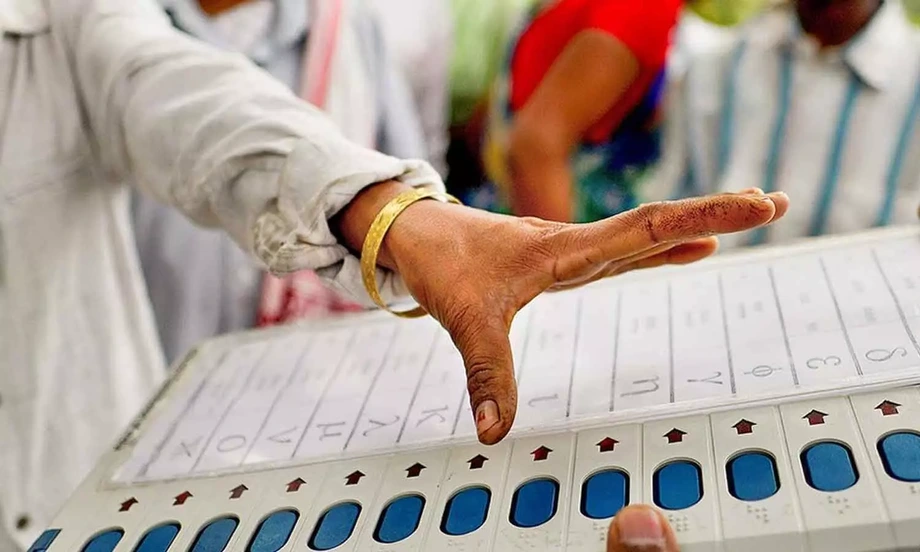
The junta plans a vote in several stages beginning on December 28, 2025, with further phases in January 2026. Voting will not take place nationwide, reflecting insecurity and the military's loss of control over substantial territory.
Authorities have banned dozens of political parties, imprisoned prominent opponents and introduced a law criminalizing a wide range of speech and activism connected with the polls. Human rights groups say these conditions prevent a free and fair election.
International election specialists have urged governments to withhold support from a military election while opponents remain jailed and violence continues. Their argument is straightforward: improvements to the mechanics of voting cannot replace basic rights, open competition and safety for voters and candidates.
Human Rights Watch has described the planned election as an attempt to dress up military rule for foreign audiences. The organization warned that diplomatic validation would come at the expense of rights and accountability. It stated:
Foreign governments should reject the Myanmar junta's plans to hold elections from late December 2025 through January 2026 because they will not be free, fair, or inclusive.
International IDEA, an intergovernmental organization focused on electoral integrity, delivered a similar warning through a joint declaration by democracy experts. After describing severe restrictions on opposition parties and media, the declaration stated:
We unequivocally reject plans by Myanmar's illegal military junta to hold a so called election in 2025.
UN Secretary General Antonio Guterres questioned the credibility of an election during war and repression at a regional gathering. His office connected that lack of confidence to the absence of a genuine route to civilian rule. His comments at an ASEAN gathering were summarized as:
Nobody believes those elections will be free and fair.
Earthquake relief meets continued attacks
More than three million people have been displaced by Myanmar's crisis. Humanitarian needs rose further after the March 28 earthquake caused mass casualties and destroyed important infrastructure in central regions, including parts of the Bamar heartland.
The military and some resistance groups announced temporary ceasefires to allow aid to move. Reports from affected areas nevertheless described continued air and artillery attacks in several places. The combined demands of war and earthquake recovery have strained local responders and pushed needs beyond the capacity of many aid agencies.
Australia increased assistance through vetted partners to avoid strengthening the regime. Foreign Minister Penny Wong condemned military strikes in earthquake zones and said Canberra would continue supporting relief without granting political recognition to the military. She stated:
We take proactive steps to ensure our assistance does not legitimise the military regime in Myanmar.
Canada imposed another round of sanctions against senior officers and entities linked to the military. The Canadian government called for a wider international effort to end the regime's financial and operational backing. Its statement said:
We call on the international community to suspend all operational and financial support to Myanmar's military regime.
Australia's approach connects emergency assistance with efforts to avoid political recognition, while Canada's sanctions target support for the military. Both measures operate in a regional environment where several governments continue practical engagement with the generals.
Accountability efforts reach the junta leader
The prosecutor at the International Criminal Court requested an arrest warrant for Min Aung Hlaing in November 2024 in connection with crimes against the Rohingya in 2017. That step placed the junta leader at the center of an international accountability effort.
Rights advocates want the court and the UN Security Council to broaden the scope of action to include atrocities committed since the February 2021 coup. Human rights monitors have documented thousands of killings, mass detentions and repeated attacks from the air on civilian targets, including schools, hospitals and places of worship.
Rights organizations say accountability is advancing slowly. The warrant request concerns the earlier campaign against the Rohingya, while advocates are also seeking action over the military's conduct during the present conflict. Those efforts continue alongside sanctions and diplomatic disputes over the proposed election.
Rare earths and scams reshape the border economy
The Kachin Independence Army captured rare earth mining hubs near the Chinese border, including two key mining towns taken in late 2024. In early 2025, it negotiated the resumption of exports to China under an arrangement charging a fixed levy per tonne of concentrate, the material prepared from mined ore.
The levy provides revenue while strengthening local control over extraction and regulation. Rare earth mining has become both an income source and a bargaining tool, giving ethnic authorities influence over a supply chain that China relies on even as Beijing supports the central military elsewhere.
India and the United States have expressed interest in diversifying rare earth supplies. Myanmar's conditions make that difficult: mines operate in contested areas, transport is unstable and environmental damage is severe. Any deal that bypasses local authorities risks disruption. Purchases can also finance armed actors and tie buyers to the conflict economy.
Criminal enterprises exploit the same gaps in state control. Border scam syndicates that once concentrated on Chinese nationals have shifted toward victims across Asia, North America and Europe. Crackdowns have forced some operators out of one area only for them to reappear elsewhere.
Mineral exports and scam operations connect Myanmar's divided borderlands to markets and victims far beyond the country. Their persistence shows how prolonged war can generate revenue for local power holders while allowing organized crime to spread internationally.
Why taking major cities remains difficult
Resistance units have proved effective at mobile warfare in difficult terrain, drawing on local communities and funding from the diaspora. Taking and holding major cities would require sustained supplies, defenses against aircraft, administrative capacity and the ability to deliver public services.
The military retains advantages in heavy weapons, aircraft and centralized command. Despite its losses, it can concentrate forces, sever supply routes and attack resistance units gathering around large urban areas.
Opposition administration has developed outside junta control. In some territories, schools, clinics and basic government functions operate under local authorities connected to ethnic movements or the National Unity Government. Those structures demonstrate governing capacity, but extending them into major cities remains difficult while the army holds urban strongholds and national institutions.
Regional diplomacy strengthens this stalemate. China is unlikely to accept a sudden opposition takeover of core cities that threatens strategic assets. Russia continues providing equipment for the air war, while India and Thailand prioritize stability along their borders.
A more unified international approach could alter those pressures. Under present conditions, however, a prolonged conflict with practical boundaries between rival authorities remains the most probable outcome. Myanmar is moving toward a fragmented state in which military positions, supply routes and local administrations determine everyday control.
Key Points
- The junta has gained diplomatic room despite limited full territorial control and continuing resistance advances in some areas.
- China has expanded support for the military while pressuring ethnic forces and bargaining over border trade and critical minerals.
- Russia supplies weapons that sustain the air campaign, but lasting territorial control still requires troops, supplies and local legitimacy.
- India, Thailand and other neighbors continue practical engagement, weakening coordinated international pressure.
- The military plans elections from December 28, 2025, through January 2026. Rights groups, democracy specialists and UN leadership challenge their credibility.
- More than three million people are displaced, and the March 28 earthquake deepened humanitarian needs.
- Australia increased relief through vetted partners, while Canada imposed further sanctions on officers and military-linked entities.
- The International Criminal Court prosecutor requested a warrant for Min Aung Hlaing over crimes against the Rohingya in 2017; advocates seek action on abuses since the coup.
- Rare earth revenues and international scam networks strengthen the conflict economy in divided borderlands.
- Opposition forces face major obstacles to capturing cities, leaving Myanmar exposed to prolonged war and fragmented administration.