Lower tariffs could open a market, but proof will decide access
Indonesia exported about 3.3 million tons of palm oil to the European Union in 2024 and wants to lift that figure toward 4 million tons a year. A trade agreement could help by cutting tariffs as early as 2027. Yet a separate European law will still require exporters to show where their oil came from and that its production met rules on forest protection and legality.
Contents
- Lower tariffs could open a market, but proof will decide access
- What must a shipment show?
- Indonesia's risk rating sets the level of checks
- Enforcement dates remain central to preparations
- Indonesia is building certification and tracing systems
- Small farmers face the greatest practical pressure
- Tariff savings depend on reliable market access
- Producer countries want a greater role in setting standards
- Forest protection and trade will depend on implementation
- Key Points
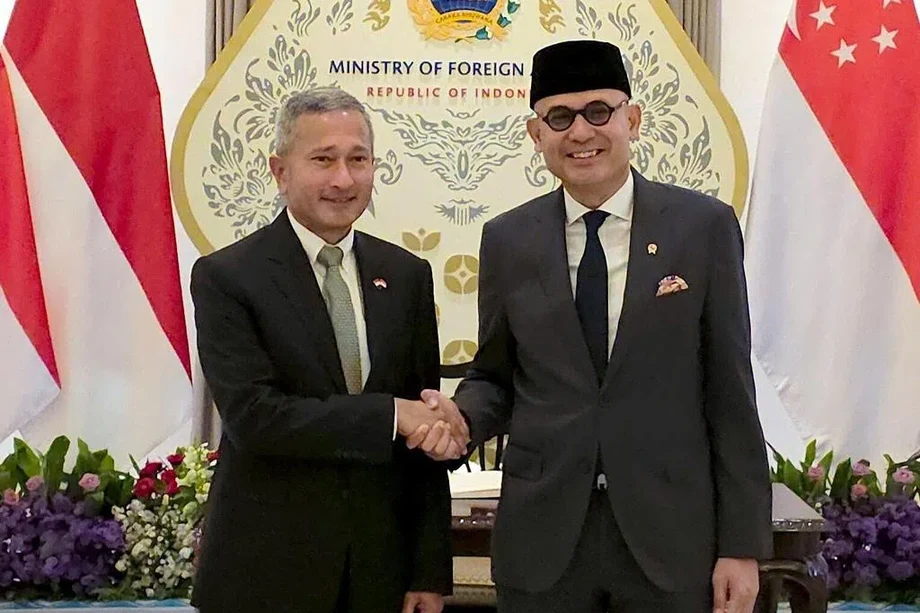
As of November 14, 2025, Indonesia and the EU have concluded the substantive part of their Comprehensive Economic Partnership Agreement. Legal reviews and ratification remain before the promised tariff reductions can take effect. For the world's largest palm oil producer, the agreement offers a chance to sell more crude and refined products into a wealthy market where import duties have long constrained trade.
The European Union Deforestation Regulation, known as the EUDR, presents a different test. Companies placing covered products on the European market must trace their supplies to the land where they were produced and demonstrate that no forest was cleared after the December 2020 cutoff. A lower tariff will reduce the tax on an eligible shipment. It will not secure entry for goods that fail those requirements.
Indonesia's commercial interest is substantial. Trade in goods between Indonesia and the EU reached $30.4 billion in 2024, with Jakarta recording a $4.5 billion surplus. By September 2025, Indonesia had produced more than 43 million tons of palm oil, exported at least 25 million tons and earned $27.3 billion in foreign exchange. Domestic use stood near 18.5 million tons.
Those figures explain why the trade agreement and the forest regulation matter together. Indonesian exporters are preparing for a possible tariff advantage while building the records needed to retain access to European buyers.
What must a shipment show?
The EUDR covers palm oil, soy, coffee, cocoa, timber, rubber and cattle, along with products derived from those supplies. For palm oil, its reach includes crude and refined oils, oleochemicals, biodiesel and a long list of food and consumer goods. Oleochemicals are chemicals made from oils and fats, so the compliance task extends beyond oil sold directly for cooking.
Companies placing these products on the EU market carry the legal responsibility. Before shipment, they must submit a due diligence statement containing precise geolocation for the producing plots and a risk assessment explaining why the goods meet the forest and legality requirements. Due diligence means collecting evidence, checking it and addressing risks before goods enter the market.
Importers need detailed information about origin, including plot locations and planting dates. They must map suppliers, retain records and be ready for audits. The documents must show that production was legal under the producing country's laws and that the relevant land was not cleared after the 2020 cutoff.
Voluntary sustainability certification can contribute information, but companies must still perform their own statutory checks. Auditors appointed by businesses cannot replace that duty. Declarations must enter the EU system, where authorities can verify them through document reviews, analysis of geographic data and inspections at production sites.
Failure can lead to detained shipments, removal of products from the market and penalties. European buyers therefore have a practical reason to demand complete tracing records from plantations, mills and traders. Suppliers able to deliver consistently documented oil are likely to become more attractive as buyers reorganize their purchasing.
Indonesia's risk rating sets the level of checks
The EU has placed Indonesia in the standard risk category of its country benchmarking system. The system has three levels, with checks described at about 1 percent for low risk origins, 3 percent for standard risk origins and 9 percent for high risk origins. Indonesia therefore faces more scrutiny than countries in the lowest category, but considerably less than those in the highest.
Russia, Belarus, North Korea and Myanmar are currently classified as high risk. The classification sets the intensity of controls and helps guide the support the EU says it will provide for compliance. Trade can continue from countries in each category when products meet the requirements.
Indonesia's designation can change over time in either direction. Businesses argue that moving into the low risk category would reduce compliance costs for smaller exporters and simplify logistics. For now, sellers are preparing for the standard risk obligations and working with buyers on recurring transactions between verified partners.
Maps present another difficulty. Indonesian and European agencies do not always use the same definition of forest cover. A difference in how land is classified can produce conflicting maps, making it harder for a company to assemble a consistent record of a plantation's history.
Officials in Jakarta have also questioned the practicality of requiring detailed geolocation from tropical producers while European privacy rules limit access to personal location data in other sectors. EU officials say guidance addresses privacy concerns and that the regulation's broad wording leaves room for technical updates. Exporters still need records that buyers and regulators can check against the same requirements.
Enforcement dates remain central to preparations
The EU first postponed the law's start to December 2025 for large and medium companies, with micro and small businesses expected to comply by June 30, 2026. European officials have since signaled another year of flexibility while complex data systems are finalized, including the portal that will receive company declarations.
As of November 14, the exact terms and dates of that additional flexibility had not been settled in the account of preparations. Exporters need clarity about how documents will be assessed and checks carried out at ports. Extra preparation time could help Indonesia and its buyers connect their tracing systems, while continued uncertainty complicates investment and shipping decisions.
The trade and regulatory timetable brings several dates together:
- December 2020: The forest clearance cutoff used by the EUDR.
- 2024: Indonesia exported about 3.3 million tons of palm oil to the EU, while bilateral goods trade reached $30.4 billion.
- September 2025: Indonesian palm oil production exceeded 43 million tons, with exports of at least 25 million tons.
- November 14, 2025: The trade agreement's substantive work was complete, while further EUDR flexibility had been signaled.
- December 2025: The previously postponed compliance start for large and medium companies.
- June 30, 2026: The corresponding compliance date for micro and small businesses.
- 2027: The earliest possible start for tariff cuts, subject to legal reviews and ratification.
Companies must prepare for both processes. The trade agreement determines the duties charged, while the EUDR determines whether covered goods satisfy the conditions for sale.
Indonesia is building certification and tracing systems
Indonesia's government and palm oil industry present the regulation as a challenge and an opportunity to improve governance. The Indonesian Sustainable Palm Oil scheme, or ISPO, is mandatory for growers and companies. It is being strengthened through tighter criteria, public reporting and new audit rules.
The Indonesian Palm Oil Association wants ISPO recognized as a credible route for buyers seeking sustainable palm oil. The association argues that certification should respect sovereignty over national standards and reflect pride in local good practice while delivering environmental and social safeguards. Recognition could make Indonesian certification more useful to buyers, although the EU due diligence duty would still apply.
Ground Truthed.id, a new field intelligence platform, adds evidence collected on the ground to satellite monitoring. It gathers reports with geolocation information on land clearing, illegal plantations, logging and social conflicts. Communities, civil society groups and authorities can contribute information about conditions that remote monitoring alone may not fully explain.
Reports are verified before publication and can be connected to cases so that enforcement follows. The platform's value lies in linking a mapped location with evidence about what is happening there. That can help companies and authorities investigate risks within a supply network.
The government is also building a national dashboard to connect maps and supply chain information across commodities. Its aim is to align land use data, licensing records and company disclosures so buyers receive consistent, verifiable information.
Senior Indonesian officials have proposed a Licensing Information Unit as a more direct verification channel with European regulators. The unit would confirm shipments' origin and sustainability status while keeping sensitive data stored in Indonesia. Connecting it to the EU declaration system could reduce repeated data entry and give smallholders and exporters an official route for validating documents and maps.
Small farmers face the greatest practical pressure
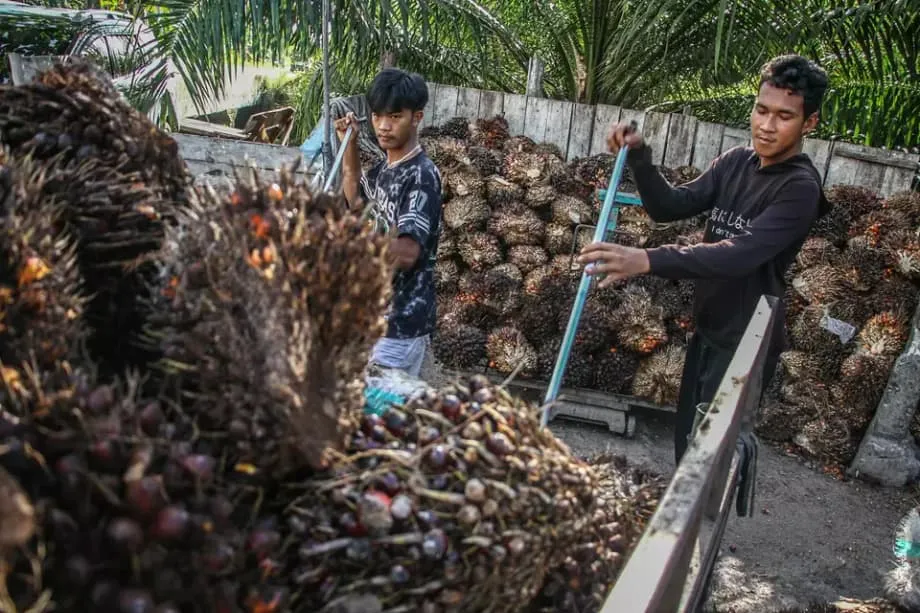
Smallholders manage around four in every ten hectares of Indonesia's palm oil area. Many lack formal land titles, clearly recorded farm boundaries, dependable internet access and the money for mapping with equipment precise enough for surveys. Those gaps make documentation difficult even for farmers whose land meets the forest protection requirements.
A mill may buy fruit from many small farms, creating a tracing task that extends well beyond its own premises. If mills and traders decide those suppliers are too difficult or costly to verify, farmers risk losing access to European supply chains. Industry leaders support reducing deforestation but warn that rigid requirements could divide supply networks and exclude producers who need help to comply.
Training can make the requirements more manageable by explaining plot mapping, record retention and the evidence buyers need. Affordable geolocation tools designed for use without an internet connection can help cooperatives record boundaries and follow harvests through the supply chain. Tests of tracing apps with farmer groups show that adoption improves when tools fit existing practices and extension workers support their introduction.
Financial incentives also matter. Farmers respond to clear price signals, affordable mapping and certification, and access to credit that rewards good practices. Practical support could include:
- Knowledge hubs explaining the EUDR in local languages and providing practical training.
- Simple mapping and data entry tools that work without an internet connection.
- Cooperatives and mill purchasing networks collecting and validating plot coordinates.
- Financial help with legal land documents and certification costs.
- Faster verification channels for recurring transactions between trusted partners.
Indonesian industry leaders want transitional support from Jakarta and Brussels to keep farmers included. Their argument is that compliance should improve across the supply chain, rather than depend on buyers replacing smaller suppliers with those already able to afford complete records.
Tariff savings depend on reliable market access
The trade agreement promises broad tariff relief for agricultural and industrial products on both sides. Some Indonesian goods currently face duties that reach double digits. Removing those charges could improve the price exporters can offer, provided the goods meet the EU's other entry conditions.
Indonesia's ambition to increase annual palm oil exports to Europe from about 3.3 million tons to around 4 million tons represents a gain of roughly 700,000 tons, or about 21 percent. The target depends on tariffs falling and compliance systems becoming dependable enough for regular trade.
European demand remains meaningful, but the opportunity requires more than a signed agreement. Mills and refiners need complete tracing records, documentation that can be checked and evidence that production complied with the forest clearance cutoff. Repeated transactions with verified partners could make those tasks more routine.
Indonesian sellers unable to provide that evidence may send more oil to other markets, leaving the European tariff advantage unused. Buyers could shift orders toward origins able to provide complete records at a lower cost. Suppliers with reliable systems would be better placed to retain access to European consumers.
Producer countries want a greater role in setting standards
Indonesia and Malaysia have coordinated their responses to new import rules through the Council of Palm Oil Producing Countries. Their discussions have expanded to vegetable oil standards across major producers, reflecting concern that trade requirements should account for conditions in producing countries.
Indonesian officials propose developing a global benchmark through multilateral forums and partnerships, including dialogue with international organizations and platforms where producer countries have substantial influence. They want standards that reflect tropical conditions, protect smallholder livelihoods and deliver verifiable results on preventing deforestation.
Jakarta also argues that sustainability rules should apply universally and without discrimination across commodities and regions. Officials point to earlier cooperation in timber, where licensing and verification arrangements helped Indonesia and the EU build trust and improve practices without overwhelming small suppliers. A comparable arrangement for palm oil could use an official Indonesian channel to confirm origin and compliance while retaining sensitive data in the country.
EU representatives in Jakarta say the EUDR targets deforestation rather than a particular country or commodity. They describe it as flexible about methods while strict about results, focusing on when forests were cleared and whether production was legal. The EU has delayed enforcement and published guidance on submitting and assessing due diligence statements.
The EU's stated objective is to help halt deforestation by 2030. That aim aligns with Indonesian commitments under the Paris Agreement, which have driven new protected areas, stronger fire control, restoration and agroforestry in recent years. Agroforestry combines trees with agricultural production. The practical diplomatic task is to turn shared environmental goals into verification arrangements that businesses and farmers can use.
Forest protection and trade will depend on implementation
Indonesia has made progress over the past decade in reducing forest loss linked to palm oil expansion. Government action, commitments by private companies, satellite monitoring and pressure from global buyers have helped separate growth in production from the clearing of forests.
Studies tracking land use show that annual clearing for new oil palm plantations in the late 2010s fell to a fraction of the peaks earlier in that decade. Recent price spikes did not trigger a fresh surge in clearing, suggesting better land governance and a growing share of expansion on land already cleared.
Analysts nevertheless estimate that millions of hectares of intact forest remain inside oil palm concessions. High commodity prices and local land conflicts could put some of that forest under pressure if enforcement and monitoring are weak. Satellite alerts, field reporting platforms and public dashboards can give mills and traders a more complete view of their suppliers, but they require investment and coordination.
Indonesia's next practical task is to connect accurate farm locations with licensing and land use records. Mills need systems capable of gathering data from small farms, while authorities need information that can be checked consistently. If those records become dependable, exporters can retain a foothold in Europe and pursue higher volumes when tariffs fall.
Patchy compliance would have a different commercial effect. Indonesia would continue to have large markets in Asia and the Middle East, but capturing the extra value associated with verified production without deforestation could become harder. European buyers would have an incentive to purchase from suppliers offering reliable documentation at lower cost.
Producers with credible compliance systems can gain more than market access. Better records can improve their reputation, support access to finance and reduce the risk of delayed or rejected shipments. Strong tracing performance can also strengthen Jakarta's position in trade discussions and reduce the chance of higher EU inspection levels. European buyers gain visibility over their suppliers and lower exposure to legal penalties.
Both sides therefore have reasons to invest in practical arrangements, from farmer training and affordable tools to clear verification channels between regulators. Tariff relief creates an opportunity. Whether Indonesian palm oil can make full use of it will depend on evidence that follows the product from the producing plot to the European market.
Key Points
- Indonesia and the EU have completed the substantive part of their trade agreement. Tariff cuts could begin as early as 2027 after legal reviews and ratification.
- The EUDR requires precise origin records, proof of legal production and evidence that covered goods are not linked to forest clearance after December 2020.
- Indonesia is classified as standard risk, with checks at about 3 percent, compared with 1 percent for low risk origins and 9 percent for high risk origins.
- December 2025 and June 30, 2026 were the postponed compliance dates for different company sizes. Further flexibility had been signaled by November 14, 2025.
- Indonesia exported about 3.3 million tons of palm oil to the EU in 2024 and aims for around 4 million tons annually, an increase of about 21 percent.
- ISPO reforms, Ground Truthed.id, a national dashboard and a proposed Licensing Information Unit are parts of Indonesia's compliance preparations.
- Smallholders manage about four in ten hectares of palm oil land and need support with mapping, documents, technology and costs.
- Lower tariffs cannot secure market access for shipments that fail the EU's forest protection and legality requirements.