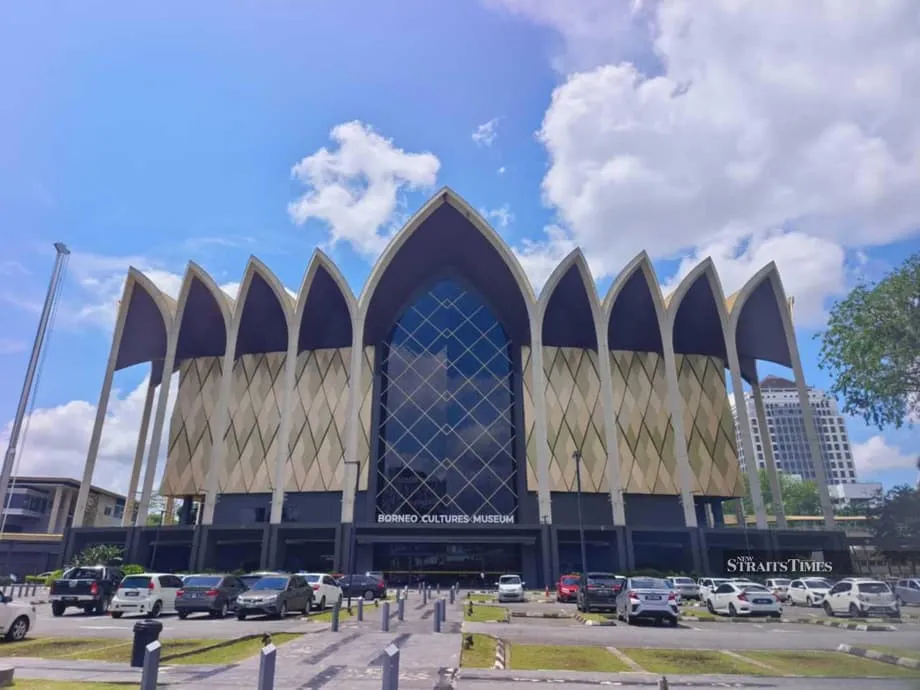
Kuching museum leads with 49,467 votes
Borneo Cultures Museum in Kuching has moved to first place on the Museum World Ranking public voting leaderboard, ahead of the Louvre in Paris. A Tuesday morning snapshot showed 49,467 votes for the Sarawak institution and 4,059 for the Louvre, a gap of 45,408 votes. The Malaysian museum had more than 12 times the French museum's tally at that moment.
Contents
- Kuching museum leads with 49,467 votes
- How the public voting board works
- A timeline from opening to online attention
- What fills Malaysia's largest museum
- A major investment in the Sarawak Museum Campus
- Why Sarawak sees museums as tourism anchors
- The other museums drawing public votes
- A visit built around stories and activities
- Natural history and air links form the next part
- What to Know
The lead widened rapidly over several days as people continued to vote online. The count changes continuously, so the figures describe a particular moment rather than a final result. As of November 5, 2025, the surge has put a museum that opened in March 2022 in front of an international online audience and made it a point of pride for Malaysians.
Borneo Cultures Museum, known as BCM, had already welcomed more than 1.35 million visitors from over 150 countries by mid 2025. Its exhibitions explore Borneo's cultural diversity through heritage objects, oral histories, immersive galleries and interactive displays. The voting success adds another form of visibility to that record of attendance.
For Sarawak, the attention arrives as the state seeks stronger recognition among international travelers ahead of Visit Malaysia 2026. The story connects three developments: public enthusiasm for the museum, investment in cultural attractions and efforts to improve travel connections. The immediate achievement is a lead in an online public vote, while the wider opportunity lies in introducing more people to Kuching and the cultural and natural attractions around it.
How the public voting board works
Museum World Ranking, or MWR, is a public portal listing hundreds of museums across continents. Its category labeled "By Voting" ranks institutions according to votes cast online. Anyone can vote, making the chart a continuously changing measure of public participation.
The latest totals can be viewed on the public voting leaderboard. Positions can change throughout the day as votes arrive. The Tuesday morning figures therefore give readers a clear reference point for the size of BCM's lead, while later visitors to the website may see different totals.
MWR also has a general table, where the Vatican Museums occupy first place and the Louvre appears second. BCM's first place position belongs to the public voting board. Readers looking at the website need to know which table they are viewing because the two displays serve different purposes: one records live voting activity, while the other provides a more stable general listing.
BCM first appeared on MWR in October at position 305 among 413 museums. That position was a separate data point from its subsequent rise in the live vote tally. It is one of three Malaysian museums listed on the platform, alongside the National Museum and the National Textile Museum, both in Kuala Lumpur.
A timeline from opening to online attention
Borneo Cultures Museum's rise follows more than three years of welcoming visitors to its galleries in the Sarawak capital. Its opening, attendance milestone and appearance on MWR help explain how a relatively new institution reached this moment of international attention.
- March 2022: Borneo Cultures Museum opened to the public in Kuching.
- By mid 2025: The museum had received more than 1.35 million visitors from over 150 countries.
- October 2025: BCM first appeared on MWR at position 305 out of 413 museums, separate from the live public voting tally.
- Tuesday morning before publication on November 5, 2025: The voting board showed BCM leading with 49,467 votes, compared with 4,059 for the Louvre.
The attendance figure and the online count describe different kinds of engagement. The first records visits to the museum; the second records participation on a website. Together, they show how BCM has attracted both people through its doors and attention beyond Kuching.
What fills Malaysia's largest museum
Borneo Cultures Museum is Malaysia's largest museum and among the largest in Southeast Asia. Its building has five storeys, with permanent and temporary galleries kept under controlled climate conditions. It also contains a Children Gallery, a function room, an auditorium, a restaurant and a souvenir shop.
The Arts and Crafts Gallery includes activity labs and a dance studio. These spaces extend the museum experience beyond looking at objects in display cases, allowing visitors to take part in activities and encounter cultural practices through movement, demonstrations and practical work.
BCM uses audio and visual storytelling, digital interactive displays and activities that visitors can try themselves. Heritage artifacts sit alongside modern presentation methods, helping people connect an object with the people who made it, the purpose it served and the stories attached to it.
The galleries cover indigenous arts and crafts, customary practices, regional trading networks and the natural world. Their approach is intended to support active learning and immersion. Families, students and researchers can explore stories rooted in Sarawak while also seeing their connections to Borneo's wider history.
That combination gives first time visitors an accessible introduction and repeat visitors more to explore. Oral histories bring people's experiences into the displays, while digital presentations help explain subjects that might otherwise require long written descriptions.
A major investment in the Sarawak Museum Campus
Borneo Cultures Museum is the centerpiece of the Sarawak Museum Campus, an initiative covering several sites that was delivered under the Eleventh Malaysia Plan. The project upgraded the state's cultural infrastructure and represents the largest development in the history of the Sarawak Museum since 1891.
The museum opened to the public in 2022 as part of that larger investment. Its themed floors help visitors find their way through the building and follow different strands of the exhibitions. Behind the public galleries, controlled conditions meet conservation standards for fragile objects.
BCM is also Malaysia's first museum certified as a Green Building under the Green Building Index, or GBI. Its certification reflects climate control, systems designed to use energy efficiently and sustainable design choices.
A museum has to serve both its visitors and its collections. Comfortable public spaces support a visit, while carefully managed conditions help preserve objects that can be damaged by unsuitable surroundings. BCM's building brings those needs together with galleries designed for modern forms of storytelling.
Why Sarawak sees museums as tourism anchors
Sarawak's leadership has positioned museums as anchor attractions for the state. Premier Abang Johari Tun Openg has described a vision for modern, interactive museums that appeal to local communities as well as international travelers. BCM's online popularity fits that effort to make cultural institutions more visible.
Visit Malaysia 2026 provides a wider setting for the state's push to raise awareness and increase arrivals. The voting surge gives Sarawak a timely subject for tourism promotion and introduces the museum to people who may have been more familiar with the institutions it now shares a leaderboard with.
Sarawak's tourism offer also extends beyond museum galleries. Bako National Park and Gunung Mulu National Park give travelers reasons to combine a stay in Kuching with visits to natural attractions. Culture, caves and rainforest can form parts of a single itinerary, with the city serving as a place to explore the region's history before or after travel farther afield.
Travel connections and the range of things to do help shape how long visitors stay and how much they spend. A museum can provide a strong reason to visit a city, while parks, food, historic streets and other attractions give travelers reasons to extend the trip.
The other museums drawing public votes
The upper part of the public voting board has included institutions from Europe, Asia and the Americas. BCM's rise places a Sarawak museum in a group that includes some of the world's most visited and most discussed cultural venues.
Recent snapshots have featured the following museums, with their exact order changing as votes come in:
- Borneo Cultures Museum, Malaysia.
- Louvre Museum, France.
- National Museum of Anthropology, Mexico.
- National Palace Museum, Chinese Taipei.
- Guggenheim Museum Bilbao, Spain.
- Getty Center, United States.
- Art Institute of Chicago, United States.
- Houston Museum of Natural Science, United States.
- Uffizi Galleries, Italy.
- Royal Ontario Museum, Canada.
The public voting format rewards participation. Outreach by museums, enthusiasm among visitors and the ability of staff, supporters and local communities to draw attention online all help explain how an institution can climb a live leaderboard.
Academic and industry evaluations assess museums through other measures, including conservation laboratories, scholarship, acquisitions and the breadth of collections. MWR's voting board instead captures engagement from people casting votes. Its general table, led by the Vatican Museums with the Louvre second, presents another view of the museum world.
A visit built around stories and activities
Visitors to BCM encounter galleries that invite them to listen, touch and move. Digital installations appear alongside traditional textiles, carvings and ceremonial objects. The displays explain how communities live with rivers and forests, how trade shaped towns and how traditions adapt as the world changes.
Labels and media place clarity, narrative and context ahead of technical language. That approach helps visitors understand why an object matters, rather than simply learning its name or age. It also connects cultural practices with the places and communities from which they come.
The Children Gallery is a particular draw for families. Workshops in the Arts and Crafts Gallery and activities in its labs introduce skills through participation. Performances and demonstrations take place on select days, while the auditorium hosts talks and film sessions.
The restaurant and shop allow visitors to extend a museum outing into the afternoon. BCM's central Kuching location, close to the historic Sarawak Museum building, also makes it easy to combine gallery time with a walk along the waterfront or through the old quarter.
A bowl of Sarawak laksa can be part of that outing, linking a day of cultural exploration with local food and river views. The museum's setting gives travelers a straightforward way to experience several aspects of Kuching without treating the gallery visit as an isolated stop.
Natural history and air links form the next part
Across the street from BCM, the Natural History Museum is being upgraded. Planned exhibitions will cover the theories of evolution associated with Charles Darwin and Alfred Russel Wallace, as well as the Sarawak Law linked to Wallace's time in the region.
Evolution explains how living things change across generations. Displays on that subject, together with exhibitions about Sarawak's wildlife and ecosystems, will connect the state's natural history with ideas associated with two major figures in the study of life. The biodiversity displays will offer another attraction for students and travelers interested in nature.
Sarawak is also exploring new routes and the prospect of AirBorneo to strengthen connections with key markets. The aim is to connect Kuching with more regional and intercontinental gateways and make the state's attractions accessible to a wider audience. A launch date for the proposed carrier and dates for the routes were not given.
Tour operators can build itineraries linking museums, caves and rainforest. Such trips would give people visiting Sarawak for the first time a clear sequence of places to explore and provide returning visitors with fresh reasons to come back.
BCM's place at the top of the voting board creates an opening for marketing, partnerships and event planning. Turning that attention into museum visits requires continued programming, outreach and good service, alongside travel options that make Kuching easier to include in a longer trip.
Sarawak's immediate opportunity is concrete: a museum with more than 1.35 million recorded visitors now has a prominent place in an international public voting chart. The cultural campus, nearby attractions and proposed transport improvements provide ways to carry that attention beyond the screen.
What to Know
- Borneo Cultures Museum led MWR's public voting board with 49,467 votes in a Tuesday morning snapshot, ahead of the Louvre's 4,059.
- The lead was 45,408 votes. Totals and positions change continuously as people vote.
- BCM opened in March 2022 and had welcomed more than 1.35 million visitors from over 150 countries by mid 2025.
- The museum first appeared on MWR in October at position 305 out of 413 museums, separate from the live voting tally.
- MWR's general table places the Vatican Museums first and the Louvre second.
- BCM is Malaysia's largest museum, among Southeast Asia's largest, and the country's first museum certified under the Green Building Index.
- Its facilities include galleries, activity labs, a dance studio, an auditorium, a function room, a restaurant and a souvenir shop.
- Sarawak is upgrading the Natural History Museum and exploring AirBorneo and new air connections as it seeks more visitors ahead of Visit Malaysia 2026.