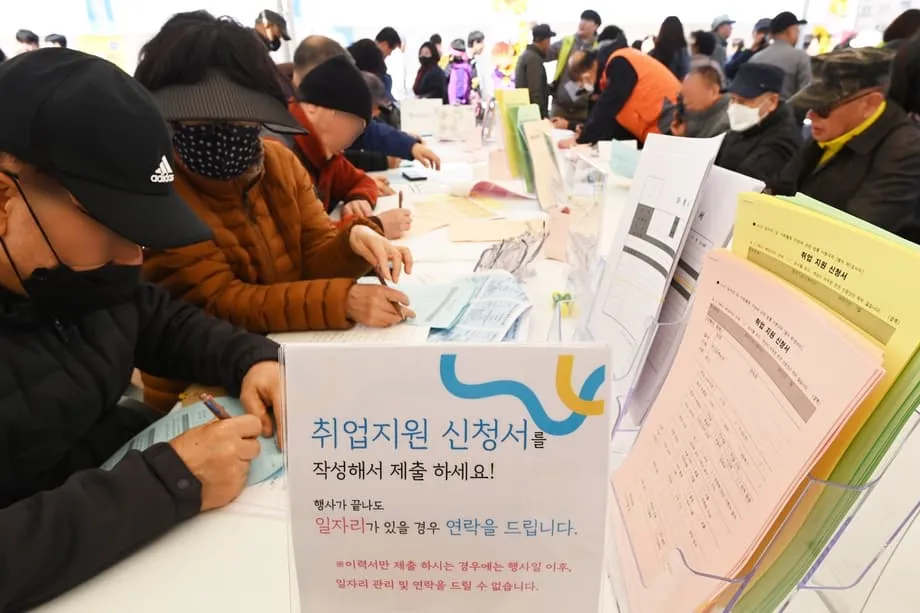
A 1.81 million won divide in monthly earnings
South Korea's regular employees earned an average of 3.90 million won a month between June and August, while nonregular workers received 2.09 million won. The difference of 1.81 million won was the largest since comparable records began in 2004, according to the Ministry of Data and Statistics.
Contents
- A 1.81 million won divide in monthly earnings
- Older workers and women reshape nonregular employment
- Why retirement can lead to a sharp fall in pay
- Care and welfare lead hiring, but wages lag
- Hours, benefits and company size shape the divide
- How the changes fit together
- An aging economy needs skills as well as workers
- Options for better pay and more secure work
- What to Know
The figures show how an aging population and the expansion of part time care and social service jobs are changing the workforce. More than 3 million nonregular workers were aged 60 or older for the first time, and health and social welfare became the largest employer of people in nonregular positions.
Nonregular employment in South Korea includes part time, temporary and fixed term work, along with many contract positions that lack the benefits and security commonly found on large corporate payrolls. In August, 8.57 million people held such jobs, an increase of about 110,000 from a year earlier. They represented 38.2 percent of all wage workers.
The monthly earnings gap combines two differences: how much people receive for each hour and how many hours they work. When part time jobs are excluded, average monthly earnings for nonregular workers rise to 3.04 million won. The remaining gap with regular staff is 859,000 won.
Shorter schedules therefore have a large effect on the headline figures, alongside lower hourly pay. At the same time, people in nonregular jobs can face weaker benefits and uncertain hours, making their household finances more difficult to manage even beyond the difference in wages.
The changes have consequences for workers and for a country that needs more care as its population ages. Many older people are finding work in services their communities need, but those jobs often offer limited hours and relatively little income.
Older workers and women reshape nonregular employment
Workers aged 60 and above accounted for 35.5 percent of nonregular employees, the highest share on record. Their number increased by 233,000 from a year earlier, taking the total above 3 million for the first time.
The increase among older workers was larger than the rise of about 110,000 in nonregular employment as a whole. That comparison shows how strongly the growth of this group is changing the age profile of people in less secure jobs.
People aged 70 and over numbered 1.21 million and, for the first time, outnumbered nonregular workers in their 40s. Workers in their 30s also increased their share, reaching about 13.3 percent, while the shares of those under 30 and those in their 40s and 50s declined.
Women held 57.4 percent of nonregular positions, another record. Flexible schedules can fit around family and caregiving duties, while some women face difficulties returning to regular employment after a career break. Those circumstances help explain why flexibility and limited employment choices can exist side by side.
About two thirds of nonregular workers said they had chosen their employment arrangements, citing flexibility or satisfaction with their working conditions. Another 32.2 percent said their status was not voluntary, most often because they urgently needed income or could not find jobs matching their skills.
The figures describe workers with different needs. Some want fewer hours, while others accept the work available because they need money. For older people leaving a main career, a part time position may also provide social contact alongside income.
Why retirement can lead to a sharp fall in pay
Many retired or soon to retire South Koreans return to work to supplement modest pensions, keep social ties and meet living costs. In larger companies, a mandatory retirement age of 60 is widely used. Workers may then seek a new job with lower pay and less security than the position they left.
Publicly funded employment programs have expanded opportunities for older residents, particularly in community care. The positions can provide useful work close to home, but they are typically part time and relatively poorly paid.
Many employees also face a reduction in earnings before retirement. Under wage peak arrangements, companies cut salaries for older workers, often in their late fifties, while keeping their duties largely unchanged. The intended purpose of the savings is to help finance the hiring of younger employees.
For workers approaching retirement, those cuts can leave fewer years in which to build savings. Leaving a primary employer and returning through a lower paid job can then extend the period of reduced earnings.
Human Rights Watch has described wage peak practices as age based discrimination that pushes older people into precarious employment. Bridget Sleap, a researcher on older people's rights at the organization, said rules intended to protect workers were undermining fair treatment.
These measures were designed to protect workers but they do the opposite. They deny older workers the opportunity to continue working in their main jobs, pay them less, and push them into lower paid, precarious work, all because of their age.
Some political leaders have proposed raising the mandatory retirement age to 65 to bring it closer to pension eligibility. The debate therefore concerns both how long people can remain in their main jobs and what they would earn during those additional years.
Labor lawyer Kim Ki duk warned that changing the retirement threshold alone would leave the way companies set wages unresolved.
Simply raising the retirement age to 65 would give companies more years to apply discriminatory wage cuts under the current system.
The choice facing policymakers is whether more older employees can stay in their main jobs for longer with fair pay, or whether a growing number will move into lower paid part time work that puts pressure on household budgets.
Care and welfare lead hiring, but wages lag
Health and social welfare accounted for 20.5 percent of nonregular employment, or roughly 1.76 million workers. The sector added about 210,000 nonregular jobs over the previous year, the largest increase of any industry.
That growth reflects rising demand for elder care and health services in a super aged society. Many positions are meaningful, close to home and suited to seniors seeking flexible hours. They are also frequently part time and among the lowest paid jobs in the economy.
The combination helps explain why nonregular wages have stagnated while the number of workers has risen. More people can enter employment without producing a similar increase in average monthly earnings when the new jobs offer short schedules and low pay.
Care providers often operate on tight margins. Public fee schedules, which set payments for services, can limit revenue growth. Many organizations also use short shifts to match the times when clients need help.
Employers report difficulty filling long and physically demanding roles, so schedules are split and hours compressed. Workers face substantial training requirements and emotional demands, yet earnings lag behind those in manufacturing or business services.
High turnover adds further costs for providers, placing more pressure on wages. Better funding, employment standards and clear routes to more skilled, better paid positions would be needed to change a pattern in which care services attract older workers while keeping average earnings low.
Hours, benefits and company size shape the divide
Average monthly wages reflect both the rate of pay and the amount of work available. Removing part time roles lifts the nonregular average from 2.09 million won to 3.04 million won, narrowing the difference with regular employees from 1.81 million won to 859,000 won.
A substantial earnings gap remains even after that adjustment. Workers also face differences in benefits and job security that monthly wage figures do not capture. Regular employees are more likely to receive bonuses, paid leave, stronger severance payments and employer pension contributions.
Nonregular staff often lack these protections and may see their hours change from week to week. A household trying to cover regular bills must then manage both a lower income and uncertainty about the next month's earnings.
Industry and employer size also affect the jobs available. Health and social services have recorded the fastest hiring, often supported by public employment programs for older residents. Nonregular employment has fallen in hospitality, construction and retail, sectors affected by weak domestic demand.
Larger corporations generally employ a smaller proportion of nonregular staff and pay more. Smaller employers, especially service businesses, depend more heavily on contracts and part time schedules.
The result is a dual labor market: workers can face very different pay and security depending on the type of employer and industry they enter. Those differences can matter as much as individual performance in shaping their working lives.
How the changes fit together
The wage figures sit within a longer shift in employment and population. The dates and stages help explain why the record gap involves retirement practices, the types of jobs being created and the growing number of older workers.
- Since 2004: Comparable wage data provide the record against which the latest gap is measured.
- In workers' late fifties: Wage peak arrangements can reduce salaries before employees leave their main jobs.
- At age 60: A mandatory retirement age widely used in larger firms can prompt workers to seek new employment.
- June to August 2025: Average monthly pay was 2.09 million won for nonregular staff and 3.90 million won for regular employees.
- August 2025: Nonregular employment reached 8.57 million, with more than 3 million workers aged 60 or above.
- By 2050: Global research projects that advanced economies will approach two people of working age for every senior.
The proposal to raise the mandatory retirement age to 65 was part of the political debate as of October 25, 2025. No date was given for introducing that change. For workers approaching retirement, the immediate issue remained the income available before and after leaving their primary employer.
An aging economy needs skills as well as workers
South Korea is aging at a speed matched by few countries. Fertility is far below the level needed to keep the population steady, while life expectancy is high. Older residents already account for a rising share of consumption, and public pension systems face growing pressure.
Global research shows that aging reduces the number of people of working age for each senior. In advanced economies, that ratio is on course to approach two working age adults per older person by 2050. With fewer workers relative to retirees, each worker must carry more of the costs of retirement and care.
Without faster productivity growth or more hours worked, economic growth per person is likely to slow. Productivity means how much useful work can be completed in a given amount of time. In a tight labor market, keeping experienced people in jobs that suit their abilities becomes especially valuable.
Training and changes to job design can help older workers remain employed. Digital tools can simplify routine tasks, while assistive equipment can reduce physical strain in care and manufacturing. Flexible schedules and phased retirement can allow people to keep contributing while managing their health or family duties.
Care deserves particular attention because it is hiring large numbers of older workers. Raising productivity in those services, while protecting quality and safety, is central to supporting living standards and limiting the wage divide.
Options for better pay and more secure work
The record gap has several connected drivers: more older people are entering nonregular part time work, care and welfare jobs often pay little, and retirement rules and wage practices can push employees out of their main careers in their late fifties.
A policy response would therefore need to address pay, hours, benefits and the move between jobs. The following measures focus on those pressures:
- Raise pay and standards in care by updating public fee schedules, setting minimum staffing ratios and funding training linked to clear career pathways.
- Promote equal pay for work of equal value across employment categories, so nonregular employees doing the same tasks receive comparable base pay and benefits.
- Move from pay based on seniority toward systems reflecting the value of a job and employee performance, reducing the need for wage peak cuts tied to age alone.
- Provide targeted training and certification for workers in the middle of their careers and older employees, especially in growing services and digital roles.
- Create flexible retirement arrangements, including phased schedules and partial pensions, to support steady income without an abrupt departure at 60.
- Review public employment programs for older residents so they complement private sector jobs, avoid crowding them out and lead to better quality work over time.
- Expand benefits that workers can retain when changing jobs, including access to paid leave, severance and pensions for people working part time or on contracts.
- Support technology adoption and better working processes in care to increase productivity while protecting service quality and safety.
- Reduce barriers preventing women from returning to regular employment after career breaks, including through affordable childcare and fair routes back into work.
No single measure would quickly erase the earnings difference. Together, changes to job quality, wage setting and retirement could raise the minimum standard of work and widen the choices available to older residents who want to stay employed.
South Korea increasingly depends on people providing care and support. Better pay for those workers, alongside fairer wage systems, would help bring employment conditions closer to the needs of an older population.
What to Know
- Regular workers earned 3.90 million won a month between June and August, compared with 2.09 million won for nonregular staff. The 1.81 million won gap was the largest since comparable records began in 2004.
- Excluding part time jobs, nonregular monthly earnings rose to 3.04 million won, leaving a gap of 859,000 won.
- Nonregular employment reached 8.57 million in August, up about 110,000 from a year earlier and equal to 38.2 percent of wage workers.
- Workers aged 60 and above exceeded 3 million and represented a record 35.5 percent of nonregular employees. Those aged 70 and above numbered 1.21 million, exceeding the number in their 40s.
- Women held a record 57.4 percent of nonregular jobs. About two thirds of workers said they chose their arrangements, while 32.2 percent said they did not.
- Health and social welfare employed roughly 1.76 million nonregular workers, or 20.5 percent of the total, after adding about 210,000 jobs over the year.
- Retirement practices, wage peak salary cuts, limited benefits and the expansion of low paid part time care work all contribute to the pressures facing older workers.