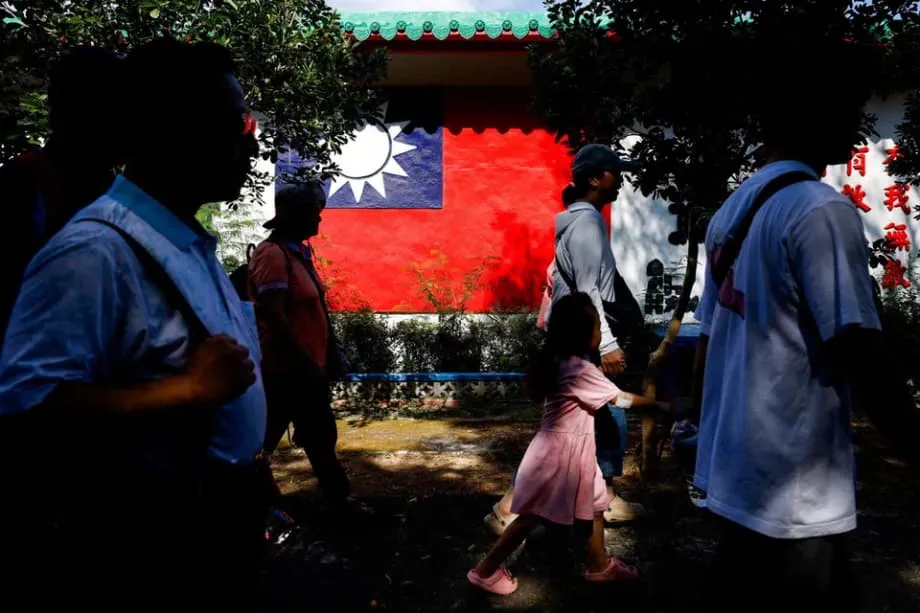
Pressure builds around Taiwan's closest islands to China
Taiwan is watching whether Beijing will name Kinmen in a new five year economic plan under discussion, as Chinese patrols, aviation changes and infrastructure proposals put renewed pressure on islands governed by Taipei just off China's Fujian coast.
Contents
- Pressure builds around Taiwan's closest islands to China
- Why these islands carry so much weight
- How patrols became a persistent challenge
- The fatal chase that sharpened tensions
- What the disputed water boundaries mean
- New flight routes and an airport close to Kinmen
- A bridge proposal meets a dispute over control
- Residents balance livelihoods and memories of shelling
- Taipei and Washington signal resolve
- How pressure could escalate without an invasion
- Which developments will show the direction of tensions?
- Key Points
As of October 23, 2025, a reference to Kinmen remains a possibility. It would carry weight because Beijing is already promoting closer integration with Fujian, advancing a bridge proposal from Xiamen that Taipei has not approved, and preparing to open a new international airport only a few kilometers from Kinmen's shore.
Kinmen and the Matsu archipelago lie much closer to the Chinese cities of Xiamen, Quanzhou and Fuzhou than to Taiwan's main island. Their geography makes everyday commerce convenient while putting Taiwan's troops, coast guard personnel, fishermen and civilian travelers close to Chinese government operations.
Chinese coast guard activity increased sharply in 2024. Taiwan's coast guard faced roughly a dozen reported incursions a week on average, and at times 10 or more Chinese government vessels operated near Kinmen simultaneously. Changes to civilian flight routes, drone activity and proposals for physical connections add pressure beyond the sea.
Residents have practical reasons to welcome easier travel and trade. Ferry services to the mainland began in 2001, businesses developed close connections with nearby Chinese cities, and Kinmen receives mainland water through a pipeline. Taipei's concern is how those links might combine with Chinese patrols and administrative claims to weaken its authority.
Why these islands carry so much weight
The Republic of China government retained several offshore islands when it retreated to Taiwan in 1949 at the end of the Chinese civil war. Most were later captured or evacuated. Kinmen and Matsu remained under its control.
Kinmen's closest point is only a few kilometers from the mainland. Its beaches, with old tank traps and pillboxes, face a coast that is both a trading partner and the source of past bombardment. Mainland artillery shelled the islands until 1979, and martial law on Kinmen and Matsu continued until 1992.
Robin Young, a Kinmen resident, described the island's vulnerability while pointing toward Xiamen's visible skyline from the west coast on a stormy day. He explained that Kinmen often feels changes in relations across the strait first.
If the Chinese attack Taiwan, the first assault will come here.
Taiwan maintains a significant military presence on the islands, alongside coast guard units and growing tourism. Residents share dialects, family and clan connections, and business interests with people in Fujian. Those relationships help explain why support for Taiwan's administration can coexist with a desire for steady mainland commerce.
The islands have become a measure of relations across the strait: fortified places where military history remains visible, but where daily life also depends on ferries, visitors and trade.
How patrols became a persistent challenge
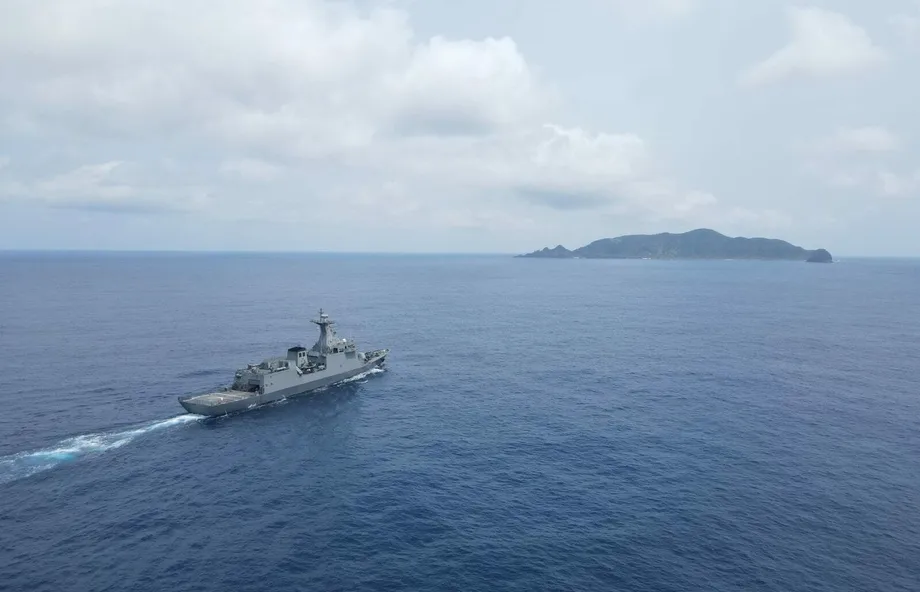
Chinese coast guard operations around Kinmen and Matsu grew in scale and complexity from early 2024. Ship tracking transmissions showed Chinese government vessels entering the islands' restricted and prohibited waters much more frequently during 2024 than in previous years, with activity reaching its highest level in the spring.
Taiwan's coast guard was handling an average of roughly 12 reported incursions each week that year. The presence of 10 or more Chinese government ships near Kinmen at the same time also created demands beyond dealing with a single vessel.
Matsu faced pressure during the autumn, when Chinese coast guard vessels entered restricted waters during larger military drills simulating a blockade of Taiwan. A blockade seeks to prevent ships or aircraft from reaching a place, making control of access a central part of the threat.
For years, a fragile, unwritten understanding had limited frequent probes into the closest offshore zones. The growing patrol presence erodes that practice, puts continuing strain on Taiwan's maritime patrol capacity and seeks to make Chinese law enforcement operations near the islands routine.
Frequent encounters leave crews less room for error. A pursuit, an inspection or a disagreement over a vessel's position can quickly become a dispute between governments, especially when each side contests who has authority in the same water.
The fatal chase that sharpened tensions
On February 14, 2024, a Chinese speedboat capsized while fleeing a Taiwan coast guard inspection inside Kinmen's prohibited waters. Two Chinese nationals died. Beijing then pledged to increase patrols nearby.
Chinese coast guard vessels operated more assertively around Kinmen in the following days. During one encounter, Chinese personnel boarded a Taiwanese tourist vessel for checks. The boat subsequently continued its journey under Taiwan coast guard escort.
Kuan Bi ling, Taiwan's Ocean Affairs Council minister, urged restraint and said the boarding frightened travelers and damaged public confidence.
The incident hurt the feelings of the people and created panic, not benefiting either side of the Taiwan Strait.
Chen Chien jen, Taiwan's premier, called for calm and practical cooperation to protect residents and fishermen as patrol activity increased on both sides.
We seek to lower tensions and keep the waters safe through a rational and cooperative approach.
The islands' history and the more recent escalation span several key dates:
- 1949: The Republic of China government retreated to Taiwan while retaining several offshore islands, including Kinmen and Matsu.
- 1958: The second Taiwan Strait crisis brought weeks of bombardment and sea and air battles around the islands.
- 1979: Mainland artillery shelling ended.
- 1992: Martial law ended on Kinmen and Matsu.
- 2001: Ferry links with the mainland began.
- February 14, 2024: Two Chinese nationals died in the speedboat capsizing near Kinmen, followed by stronger Chinese patrol activity.
- August 2024: President Lai Ching te visited Kinmen to mark the 66th anniversary of the 1958 crisis.
- Autumn 2024: Chinese coast guard vessels entered Matsu's restricted waters during military drills simulating a blockade of Taiwan.
What the disputed water boundaries mean
Taiwan's law establishes prohibited and restricted waters that mainland vessels may not enter without permission. Around Taiwan's main island, the boundaries follow distances of 12 and 24 nautical miles, matching international norms.
Kinmen and Matsu have much narrower buffers because of their proximity to the mainland. Taipei established zones in the early 1990s extending about 2.2 and 3.2 nautical miles from the low water line. Both sides largely respected those smaller boundaries for decades without a formal agreement. Beijing rejects them and now challenges them frequently.
Chinese operations use what is commonly called gray zone pressure: actions below the level of open warfare that repeatedly test another government's ability to maintain control. Around Matsu, large dredging fleets have appeared repeatedly, requiring Taiwan to send more patrol vessels. Around Kinmen, coast guard cutters and fishing boats enter the disputed zones more often.
Drone flights and the cutting of undersea communications cables have added further risks. Alongside these activities, legal arguments and information campaigns promote Beijing's claim that Chinese law enforcement has jurisdiction over the waters.
Repeated patrols and inspections can gradually change expectations about which authorities operate there. For Taipei, the challenge is maintaining predictable and safe island waters while resisting a Chinese presence presented as ordinary policing.
New flight routes and an airport close to Kinmen
China has opened new civilian flight routes close to Kinmen and Matsu without consulting Taipei. Taiwan's aviation and security officials warn that the changes reduce the time available for air traffic controllers and for rescue or security responses around the islands.
The routes run close to busy corridors used by aircraft landing at Kinmen and Matsu airports. If an emergency occurs, controllers and crews may have less time to coordinate a response in airspace where civilian operations and security concerns already sit close together.
Xiamen's planned international airport adds another layer of concern. The facility is only a few kilometers from Kinmen's shore. Its opening will place airport operations and coastal radar coverage almost side by side across the water.
Taipei fears miscommunication or aggressive maneuvers in crowded airspace. It also sees the airport's proximity as giving China greater capacity to monitor or pressure Kinmen from the air while presenting its activities as civilian flight management.
The practical issue for island travelers is coordination. Kinmen and Matsu need safe, dependable flights, while Taiwan's authorities must manage nearby routes introduced without their agreement.
A bridge proposal meets a dispute over control
Beijing has advanced plans for a bridge linking Xiamen and Kinmen without consulting Taipei. Taiwan's government has not approved the connection, and construction has not begun on the Kinmen side.
A bridge could change travel and trade by making movement between the island and mainland easier. It would also deepen the administrative and security connections between places governed by different authorities. Taipei therefore treats the proposal as more than a transport project.
Beijing's Fujian integration zone proposal and the possible inclusion of Kinmen in its new five year plan fit the same broader effort to draw the islands closer to mainland economic and administrative systems. Taiwan is watching whether the plan names Kinmen directly or advances integration through broader language about Fujian and relations across the strait.
For residents who commute or conduct business across the water, policies that bring more tourists or simplify travel can be attractive. Taipei's concern centers on authority: dependence on mainland connections could give Beijing more ways to apply pressure, particularly alongside stronger patrols and information operations.
The plan's wording, the airport opening timetable and any agreed arrangements for the bridge remain unsettled in this account of developments as of October 23, 2025. No next hearing, vote or implementation deadline was given.
Residents balance livelihoods and memories of shelling
Kinmen's mainland water pipeline is one example of how practical cooperation already shapes daily life. Language, family relationships and business ties also keep island communities connected to Xiamen, Quanzhou and Fuzhou.
Many residents want stable tourism and trade and prefer to keep political disputes away from their livelihoods. For people who remember the shelling, however, worsening relations bring back fears formed long before ferry services opened.
Ne Xie Wang, a Kinmen native who recalled childhood rushes to bomb shelters, described the change in relations.
The relationship has really soured quickly in recent years.
Kuan Lin Yu, a fisherman and former tour guide from Kinmen, focused on the value of commercial exchange even as politics pushes the two sides further apart.
I would much rather that the Chinese spend their money here than on their artillery ammunition.
Local politics reflect those competing pressures. Many leaders on Kinmen and Matsu favor stronger economic connections and more travel, while younger residents tend to identify more with Taiwan's civic life.
Some islanders see Fujian integration proposals and the bridge as ways to make life easier and more secure. Taipei warns that closer connections without security guarantees and political reciprocity could leave the islands exposed to pressure that would be difficult to reverse.
Taipei and Washington signal resolve
President Lai Ching te marked the islands' importance by visiting Kinmen in August 2024 for the 66th anniversary of the second Taiwan Strait crisis. Speaking in Taipei before the visit, he described Taiwan's position in the first island chain and the threat from China.
Located in the first island chain, Taiwan faces the immediate threat of China. But Taiwan will not be intimidated.
The 1958 crisis involved weeks of bombardment and fighting at sea and in the air around Kinmen and Matsu. Taiwan held its position with help from new US equipment, including Sidewinder missiles for air defense. Although shelling ended in 1979, the islands remain symbols of past resistance and present deterrence.
Taiwan is investing in coast guard capacity, awareness of activity at sea and rapid response around the islands. The United States continues to provide training and weapons to improve Taiwan's defenses while avoiding steps that could trigger a major confrontation.
Kinmen and Matsu occupy an uncertain place in external security commitments. Their proximity to China complicates planning for everyone involved. That uncertainty affects Beijing's calculations, Taipei's allocation of resources and the pace at which Chinese operations test control at sea and in the air.
How pressure could escalate without an invasion
Close encounters in narrow waters can turn dangerous quickly. Fast pursuits, contested inspections, drones near sensitive sites and crowded flight corridors all shorten the time officials have to assess an incident and respond.
A campaign combining coast guard operations, economic inducements, tighter control of access and information operations could weaken Taiwan's effective control without a direct military invasion. Possible steps include a quarantine of Kinmen's ports, restricting access through inspections, or making forceful checks of civilian vessels a routine practice.
Seizing the islands outright would carry different risks. Such an operation could undercut Beijing's message of peaceful unification, prove costly and produce a political backlash. The islands' symbolic value nevertheless makes them part of discussions about a limited move against Taiwan.
Chen Fang Yu, a political scientist at Soochow University in Taipei, described the appeal an island seizure might hold for Chinese leaders seeking a visible gain without a much larger war.
Seizing the largely demilitarized outlying islands could deliver a symbolic win without an all out assault, akin to what Russia did with Crimea in 2014.
The immediate risk remains the accumulation of encounters. As earlier informal understandings weaken, routine policing, fishing and passenger travel take place amid increasingly contested claims of authority.
Which developments will show the direction of tensions?
Patrol patterns will offer an immediate indication of whether pressure is easing or increasing. The frequency and depth of Chinese entries into prohibited and restricted waters matter, especially operations coordinated with fishing fleets.
Further boardings of civilian vessels, detentions of fishermen or drone flights near sensitive facilities would also affect the daily security of island residents. Taiwan's coast guard and military exercises, along with any new rules governing inspections and pursuits, will show how Taipei adjusts its response.
Aviation and construction decisions provide another set of signals. Implementation of the new civilian routes, the opening of Xiamen's airport and any coordination with Taiwan will shape conditions for local flights. Visible bridge construction on the mainland side, and the response of Kinmen's local government, would indicate how the proposed connection is progressing.
Beijing's economic plan will show how directly it places Kinmen within its ambitions for Fujian integration. Local support or resistance to travel policies and infrastructure proposals will help explain whether residents see closer links as reassurance or a new source of vulnerability.
Kinmen and Matsu face these decisions while maintaining both Taiwan's administration and close connections with the mainland. Their immediate challenge is preserving safe travel, fishing and commerce as military, legal and economic pressure converges around them.
Key Points
- As of October 23, 2025, Taiwan was watching whether Beijing's new five year economic plan would reference Kinmen.
- Chinese government vessel entries rose sharply in 2024, when Taiwan faced roughly a dozen reported incursions a week and sometimes 10 or more ships near Kinmen simultaneously.
- Two Chinese nationals died during a coast guard pursuit on February 14, 2024, followed by stronger Chinese patrols and the boarding of a Taiwanese tourist boat.
- Taipei says unilateral flight route changes and Xiamen's nearby airport create aviation and security concerns.
- Taiwan has not approved the proposed Xiamen to Kinmen bridge, and construction has not started on the Kinmen side.
- Residents value mainland tourism, trade and family connections while weighing memories of bombardment and fears of renewed confrontation.
- Taiwan is strengthening maritime readiness as repeated encounters and competing claims of authority increase the risk of escalation.