NT$10,000 payments move closer to a legislative decision
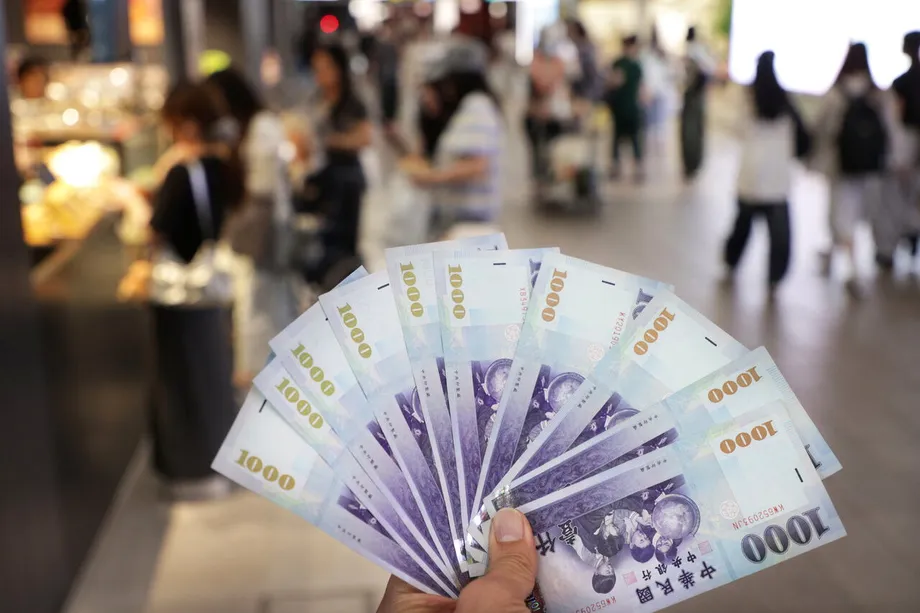
Taiwan's proposed 2027 central government budget moved to committee review on October 27, 2026, carrying NT$235.7 billion for cash payments of NT$10,000 per eligible person. The next stage will determine whether the government can meet its conditional timetable for starting payments before the Lunar New Year holiday begins on February 4.
Contents
- NT$10,000 payments move closer to a legislative decision
- Who would receive the money?
- When could payments begin?
- Why the government links cash to the technology boom
- How much extra revenue belongs to the central government?
- What would doubling the payment cost?
- Why a balanced budget still includes borrowing
- Other spending is part of the argument
- Political pressure meets the budget timetable
- Key Points
Legislative Speaker Han Kuo-yu referred the NT$3.9266 trillion budget to committees after Premier Cho Jung-tai presented the spending plan and answered questions throughout the day. The proposal sets government revenue and expenditure at the same amount, with spending rising 31.5 percent from the approved 2026 budget.
The Executive Yuan says additional tax revenue generated by technology industries would pay for the cash distribution. Its argument is that the public should share in economic growth driven by artificial intelligence, advanced computing and semiconductors, rather than leave those gains concentrated in the industries producing them.
The opposition Kuomintang, or KMT, wants payments of NT$20,000 instead. Government officials say doubling the amount would require borrowing or displacing existing spending. KMT lawmakers argue that cuts elsewhere, particularly to the supplementary budget, could provide the money.
For households, two decisions now matter: the amount lawmakers approve and how quickly they complete the budget. Committee referral begins detailed examination; final legislative approval is still needed before the proposed payments can proceed.
Who would receive the money?
The Executive Yuan's proposal covers several groups, extending eligibility beyond citizens with household registration in Taiwan. Household registration is the official record connecting a person to a registered household and address.
- Taiwanese citizens with household registration in Taiwan.
- Taiwanese nationals without household registration who hold residence permits.
- Foreign nationals who hold permanent residence permits.
- Spouses of Taiwanese nationals from China, Hong Kong, Macau or other countries who hold residence permits.
- Government personnel serving overseas and their dependents, where both hold Taiwanese nationality.
The residence categories matter for families whose members have different citizenship or immigration status. A foreign spouse with a residence permit would qualify under the proposal, while the category for other foreign nationals requires permanent residence.
The competing KMT bill calls for payments to eligible individuals but does not specify the eligibility criteria. The two proposals therefore differ in more than the amount: the government's plan also sets out who would be included.
When could payments begin?
Cho outlined a timetable on October 8 that depends on lawmakers approving the general budget by January 5, 2027. Under that schedule, President Lai Ching-te could promulgate the approved budget by January 20, completing the formal step needed to put it into effect.
Online registration would open on January 25, with the first payments following on January 26. People choosing an ATM or post office would wait longer, until after the Lunar New Year holiday begins.
- August 20, 2026: The Cabinet approved the proposed 2027 budget.
- October 27, 2026: The Legislative Yuan sent the budget to committees.
- November 3, 2026: Lawmakers are scheduled to hear the government explain the separate 2026 supplementary budget, after a postponement from October 23.
- January 5, 2027: The approval date needed for the government's proposed early payment schedule.
- January 20, 2027: Possible presidential promulgation under that schedule.
- January 25 and 26, 2027: Online registration and the first payments would begin, respectively.
- February 4, 2027: The Lunar New Year holiday begins.
- February 15 and 22, 2027: ATM and post office claims would begin, respectively.
The payment dates remain conditional on budget approval. Committee conveners will arrange their review schedules, while the Legislative Yuan's Finance Committee will distribute the budget documents according to an allocation table.
Why the government links cash to the technology boom
Cho cited economic growth of 8.76 percent in 2025 and 14.15 percent in the first half of 2026, describing the latter as the strongest performance in 39 years. The government's forecast puts growth for the whole of 2026 at 11.05 percent and for 2027 at 6.04 percent.
Artificial intelligence helps explain the government's revenue expectations. Building and operating AI services requires powerful chips, servers and other computing equipment. Taiwan's semiconductor and computing supply chains sell much of that equipment, bringing more export business and potentially higher taxable profits.
Cho also pointed to expanding factory and equipment investment, stronger corporate earnings and recovering exports from traditional industries. He said corporate dividends, company pay increases and higher salaries for military personnel, civil servants and teachers would help support household spending.
The NT$235.7 billion allocation represents about 6 percent of the proposed NT$3.9266 trillion expenditure total. That comparison shows the scale of the payment programme: it is a substantial national expense within a much larger budget, alongside spending on welfare, families and business support.
How much extra revenue belongs to the central government?
Finance Minister Chuang Tsui-yun challenged the idea that a large increase in nationwide tax receipts automatically leaves the central government with the same amount available to distribute.
Responding to arguments about tax collections exceeding expectations, Chuang described the phrase "excess revenue" as a comparison between receipts and budget estimates. She said:
There is no such thing as excess revenue.
Chuang gave a concrete breakdown. National revenue from January through September 2026 was NT$700 billion higher than in the same period a year earlier. Of that increase, NT$250 billion belonged to the central government and NT$450 billion to local governments.
Local governments therefore accounted for about 64 percent of the increase, compared with about 36 percent for the central government. Chuang said amendments to the Fiscal Revenues and Expenditures Allocation Act direct 95.5 percent of business tax revenue to local governments.
The distinction affects the cash debate because the central government cannot simply count the local share as money available for its own programme. Cities and counties have their own budgets and spending responsibilities.
Chuang also said actual central government revenue in 2025 fell NT$25.1 billion short of the budget estimate. KMT legislator Chang Chih-lun cited much larger nationwide gains while pressing for NT$20,000 payments, including a possible increase of NT$1 trillion for 2026.
The full 2026 revenue position was still pending. September provisional tax payments, which companies make ahead of final tax calculations, were expected to be fully recorded after late October. Chuang said a broader picture would be available by mid-November.
What would doubling the payment cost?
The KMT proposal would raise the payment from NT$10,000 to NT$20,000. Deputy Finance Minister Juan Ching-hwa put the resulting spending at more than NT$470 billion, roughly twice the government's NT$235.7 billion allocation.
Using the NT$3.9266 trillion budget now before lawmakers, NT$470 billion would equal about 12 percent of total expenditure. The additional cost would be approximately another NT$235 billion if the payment reached a similar number of people.
Juan said the government's NT$10,000 plan rests on balancing revenue and expenditure without borrowing for the payments or drawing on surpluses from the previous fiscal year. He warned that a larger payment would put other programmes under pressure.
"If you want to raise it from NT$10,000 to NT$20,000, borrowing will be necessary, and that will surely crowd out [funding for] existing projects, impacting fiscal stability," Juan warned.
KMT legislator Lai Shih-pao offered a different approach: cut more than NT$400 billion from the supplementary budget, including a proposed NT$230 billion capital injection into CPC Corporation, Taiwan, the state oil company. He argued that these reductions would provide funding for the larger payment.
Cho rejected that approach as impractical. The disagreement is about which spending should take priority: additional cash for households, the programmes the opposition proposes cutting, or borrowing to cover a larger bill.
Why a balanced budget still includes borrowing
The 2027 proposal lists revenue and expenditure of NT$3.9266 trillion each. It also includes NT$179 billion in debt principal repayments, with an equal amount of financing to be raised entirely through borrowing.
Principal is the original amount owed, rather than interest charged on it. Borrowing NT$179 billion while repaying NT$179 billion replaces debt coming due. This explains how the government can describe its annual revenue and expenditure as balanced while still planning to issue debt.
Cho's claim of effectively no new borrowing concerns that annual budget calculation. Lai Shih-pao challenged the presentation by pointing to borrowing associated with special budgets. Those budgets sit alongside the general budget and form part of the wider debate about government liabilities.
The government projects outstanding debt of NT$6.7579 trillion at the end of 2027, including the supplementary budget proposal. Cho put that at about 23 percent of the average nominal gross domestic product of the preceding three years. Nominal GDP measures the economy's output at current prices.
The budget presentation places the debt ratio 2.9 percentage points below the end of 2026 level and below the 40.6 percent limit cited under the Public Debt Act. Cho described the ratio as the lowest since provincial government streamlining. One description of his remarks instead expressed the decline as 2.9 percent; the detailed budget figures use percentage points for the debt ratio comparison.
A debt ratio compares what the government owes with the size of the economy. Strong economic growth can lower that ratio even when the government continues to carry a large amount of debt.
Other spending is part of the argument
The budget debate also covers social benefits and support for businesses. Cho said NT$171 billion would go to elderly farmers' welfare allowances, the national pension and six categories of social welfare allowances. That is NT$45.7 billion more than in 2026, an increase of about 36.4 percent.
A family support strategy has an allocation of NT$373 billion. Measures described by Cho include a monthly NT$5,000 allowance for children and adolescents, longer parental leave benefits and changes involving marriage, maternity and paternity leave.
Small businesses are another priority. The proposal provides NT$25 billion for measures helping small and micro enterprises change their operations and upgrade, an increase of NT$14.2 billion from 2026.
Military pay, police and firefighter compensation, and pension reductions affecting public employees remain part of the legislative negotiations. Cho said the Executive Yuan sent lawmakers its complete remedial proposals on September 24 and called for talks on measures both branches could implement.
For legislators considering cuts to fund a larger cash payment, these allocations make the tradeoffs concrete. Reductions would need to identify particular programmes and amounts, while leaving enough funding to carry out whichever commitments survive the review.
Political pressure meets the budget timetable
Democratic Progressive Party policy executive director Wu Szu-yao urged opposition lawmakers on October 26 to complete the general budget on time so the NT$10,000 payment could reach people before Lunar New Year. She argued that the government's proposal was funded without borrowing and criticised the push for a larger payment.
The KMT has pursued its NT$20,000 proposal through a separate bill. Its precise procedural position is unclear: the proposal was described earlier in October as referred to committee, while an October 26 description placed it at a second reading and negotiations between parties, bypassing committee review.
The broader dispute has intensified with local elections approaching. Wu accused the opposition of using the larger payment as an election measure, while KMT lawmakers have pressed the government to explain why strong revenue growth cannot support more generous payments.
The next concrete steps are committee scheduling, the November 3 supplementary budget hearing and the mid-November revenue update. Those developments will shape both the funding argument and the chance of meeting the January 5 approval target.
For eligible residents, the practical choice remains straightforward: the government's proposal offers NT$10,000 under specified eligibility rules and a conditional payment schedule. The opposition seeks twice that amount, with funding and eligibility still requiring legislative decisions.
Key Points
- Taiwan's NT$3.9266 trillion proposed 2027 central government budget entered committee review on October 27, 2026.
- The proposal allocates NT$235.7 billion for payments of NT$10,000 per eligible person.
- The KMT wants NT$20,000 payments, costing more than NT$470 billion.
- National revenue rose NT$700 billion in January through September 2026; NT$250 billion of the increase belonged to the central government.
- The government's early payment schedule depends on legislative approval by January 5, 2027.
- Online payments could begin January 26, while ATM and post office claims would begin February 15 and February 22.
- The separate supplementary budget hearing is scheduled for November 3, with a fuller revenue picture expected by mid-November.