From subway platforms to autumn forests
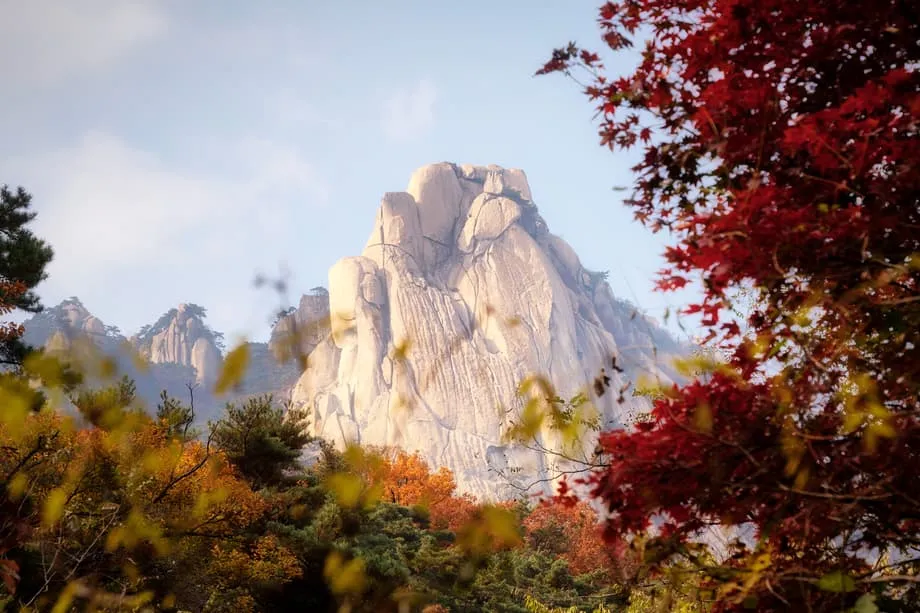
Seoul's autumn hiking season brings red maples, golden ginkgo trees and orange oak leaves within reach of the subway. From late October to early or mid November, mountains in and around the capital offer everything from paved walks beneath colorful branches to steep granite climbs overlooking the city.
Contents
- From subway platforms to autumn forests
- When to go and what to check first
- Mount Soyo: Valley walks and a foliage festival
- Dobongsan: Temples, granite and broad views
- Yongmunsan: A giant ginkgo and a longer climb
- Namsan: A paved foliage walk in central Seoul
- Geomdansan: Five routes above the Han River
- Gwanaksan: Southern Seoul's climb to Yeonjudae
- Cheonggyesan: Flexible distances and staircase climbs
- Namhansanseong: Autumn along historic fortress walls
- Bukhansan: Rocky trails and a reservation check
- Prepare for cold mornings and an early descent
- What to Know
As of October 22, 2025, one date for the calendar is October 26, when the Soyo Mountain Autumn Foliage Festival returns to an outdoor stage in Dongducheon. Mount Soyo's lower trails offer a relatively gentle outing, while its ridges provide a longer climb. Other choices include Namsan in central Seoul, the fortress paths at Namhansanseong and the rocky heights of Bukhansan National Park.
Seoul's geography makes these trips practical without a rental car. Granite peaks rise among neighborhoods and office towers, and many trailheads are a short walk from a station exit. Some destinations require a connecting bus, so choosing a route means checking both the walk and the journey home.
The first cold snap brings bands of red, tangerine and gold across the hills. Local hikers head out before breakfast, visitors join them later in the morning, and afternoon ridgelines draw photographers with tripods and walkers carrying thermoses of hot tea.
Autumn timing has shifted in recent years, with peak color around the capital often arriving later. Higher ridges and shaded valleys generally turn first, while lower paths and palace gardens hold their leaves longer. A T money card, a weather check and a route suited to your fitness can turn the season into a series of manageable outings.
When to go and what to check first
Late October through the first half of November is the main window for foliage around Seoul. Conditions still vary within a mountain: slopes facing west may change later than gullies facing north, and a storm can strip exposed maples while sheltered ravines remain colorful.
Check the local forecast the day before leaving, then look for recent photographs of the same mountain on navigation apps. Weekday mornings offer a quieter start. On weekends, arrive early, particularly at Namsan, Dobongsan and Namhansanseong, where queues can develop near temples, summits and other narrow points.
Subway signs and station exits are marked in English and Korean. Load or top up a T money card, and use Naver Map or Kakao Map to follow the route from the exit to the trailhead. For destinations requiring a bus, especially Yongmunsan, check the return schedule before beginning the walk.
Autumn mornings can be cold before temperatures rise around midday. Bring layers, shoes with good grip, water, a snack and a charged phone. Mountain paths lose daylight earlier than city streets, so pack a small light for a potentially late finish and check the last train on your line.
Mount Soyo: Valley walks and a foliage festival
Mount Soyo in Dongducheon is reached through Soyosan Station on Line 1, about five minutes from the mountain's foot. Recognized among Korea's 100 celebrated mountains, it has trails spreading from a support center into gentle valleys and steeper ridges.
Beginners can follow the lower course toward Jajaeam Temple and Seonyeotang near Wonhyo Daesa Rock. This shorter walk still passes broad stretches of scarlet and amber foliage. Stronger hikers can continue toward Gongjubong or Uisangdae for wider views. Consistent trail signs help walkers choose the forks leading to foliage stops rather than committing to a longer climb.
The mountain's long running autumn celebration returns on October 26. The Soyo Mountain Autumn Foliage Festival will feature performances and hands on activities at the outdoor stage.
After the walk, Dongducheon's classic budaejjigae near the station offers a warming meal. Its spicy broth combines sausage and kimchi, a hearty finish after a brisk descent.
Dobongsan: Temples, granite and broad views
Dobongsan, or Mount Dobong, is accessible from Dobongsan Station on Lines 1 and 7 in northern Seoul. Its combination of temple scenery and granite terrain suits hikers comfortable with a more demanding climb.
The ascent past Manwolam Temple passes gold and crimson foliage. On quiet mornings, a monk sometimes shares tea with hikers. Beyond the temple, photograph stops extend toward Podae Ridge, where the view takes in color spreading down the slopes.
Continue toward Jaunbong for one of the park's broadest outlooks. Near the top, trails become rockier and more technical, with sections requiring scrambling. Allow extra time for those passages and for other hikers moving through narrow points.
Sanarae Joomak, near the support center at the base, serves spicy mackerel stew and charcoal grilled bulgogi. A spread of side dishes makes it a substantial lunch after the climb.
Yongmunsan: A giant ginkgo and a longer climb
Mount Yongmun in Yangpyeong combines easy autumn sightseeing with more demanding mountain routes. Take the Jungang Line to Yongmun Station, then a short bus ride to the entrance and Yongmunsan Tourism Complex.
Paths lined with trees and gardens provide photograph stops before the hike begins. A walk of about 15 minutes leads to Yongmunsa Temple and its famous ginkgo, estimated to be about 1,100 years old. The tree stands roughly 42 meters tall, with a trunk measuring about 15 meters around, and is believed to be Asia's largest ginkgo.
Golden ginkgo leaves are the main attraction for many visitors, but hikers seeking a workout can continue from the temple toward the upper ridges. The shortest route to the peak takes three to four hours, while longer options take closer to five. Confirming the return bus schedule matters here, because the mountain outing can take much longer than the temple walk.
Water and wind are part of the experience in these valleys, where sound carries alongside hikers' conversations. Vendors near the entrance sell snacks such as gangjeong for quick fuel. Yongmunsan Sikdang serves grilled deodeok and bibimbap, with a terrace where visitors can eat in the crisp mountain air.
Namsan: A paved foliage walk in central Seoul
Namsan offers a straightforward autumn outing that first time visitors can enjoy in about an hour. From Chungmuro Station on Lines 3 and 4, enter through Namsangol Hanok Village and follow signs toward the northern section of the dulle trail.
The paved North Circular Road, often called the Foliage Road, passes through colorful trees without a steep grade. Continuing uphill brings walkers to Namsan Observatory, where autumn leaves frame the city panorama.
The Myeongdong Stairs route provides a more energetic alternative, with a 1.2 kilometer incline and skyline views. The Seoul City Wall Trail follows stones dating from the 14th century and offers long views toward Bukchon Hanok Village. A shuttle bus or cable car can save energy for the descent.
Travel blogger Audrey, who documented an autumn climb on Namsan, described the height, steps and views during the foliage season:
Autumn in Seoul is a spectacular time to explore outdoors, especially at Namsan. The climb is not daunting at 262 meters, but there are hundreds of steps, and the trees are at their most colorful from late October to early November. The observatory deck offers 360 degree views, especially beautiful at dusk.
Namsan Heukso near the base is known for top quality hanwoo beef, providing a dinner option after a short city hike.
Geomdansan: Five routes above the Han River
Mount Geomdan in Hanam is reached through Hanam Geomdansan Station on Line 5. From Exit 3, marked trails lead toward a summit about 90 minutes away.
The mountain overlooks the Han River and mixes easier grades with short, steep sections, making it an option for newer hikers or families. Five main routes provide different viewpoints and walking experiences.
The course from Hanam Memorial Tower to Hoguksa Temple is particularly popular for its long stretches of color and gentle slope. The final approach to the peak, at 657 meters, feels steeper. On a clear day, the river shines below and eastern ridges extend toward the horizon.
Spicy handmade sujaebi near the station is a hearty meal afterward. It suits the local idea of iyeolchiyeol, meeting the chill with heat.
Gwanaksan: Southern Seoul's climb to Yeonjudae
Mount Gwanak has several approaches across southern Seoul, with access through Sinlim, Seoul National University or Sadang using Lines 2 or 4. From Gwanaksan Station, signs lead toward the Autumn Foliage Road and into the park.
Sadang Station's Exit 4 serves a popular approach. From Seoul National University Station, use Exit 3 and transfer to a short bus ride for a more direct start. The choice of entrance shapes the outing, while Yeonjudae is the shared destination for many hikers.
Yeonjudae offers a dramatic viewpoint over red and golden slopes, with Seoul spreading beyond them. Starting from the Seoul National University entrance, expect about an hour to the top on a straightforward path. Large slabs beside the trail provide photograph stops, and clear weather can place a temple in the foreground against the skyline.
Deungmaru by Bongcheon Station is a long standing stop for pajeon and bowls of makgeolli. Many Korean hikers regard that pairing as part of the routine after a climb.
Cheonggyesan: Flexible distances and staircase climbs
Mount Cheonggye sits across Seoul's border with Gwacheon, Seongnam and Uiwang. Its proximity to the city, choice of distances and good signs make it an accessible autumn destination.
From Cheonggyesan Station's Exit 2 on the Shinbundang Line, the trail network begins quickly. Five main hiking courses range from about one hour to just over two hours. The most direct routes include long staircase sections, so a short journey to the trailhead still leads to a physical climb.
For less climbing, a custom loop through Wonteogol, Gilmajae and Maebong offers steady elevation and frequent views. Many visitors stop at Maebong Rock rather than the summit. From this photograph spot, Lotte World Tower rises above a rolling canopy.
Ggaldakgogae is another favored stop, with a lane lined by trees that glows in the middle of the morning. Afterward, Cheonggyesan Gondrejib near the station serves gondeurebap, rice steamed with mountain herbs, alongside charcoal grilled bulgogi.
Namhansanseong: Autumn along historic fortress walls
Mount Namhan and Namhansanseong Fortress combine a mountain park with a UNESCO World Heritage site. Take Line 8 to Sanseong Station, then a connecting bus to reach paths winding along stone ramparts and through groves that turn yellow and crimson in late October.
Courses 1 and 2 are common choices for first time visitors. Each is roughly a loop of one hour, tracing sections of the fortress walls. Course 1 begins at the North Gate, once used to launch a surprise attack during the Manchu invasion.
Jihwa Gate, Jeonseung Gate and Jwaik Gate are among the historic features along the way. At peak color, foliage frames the gates and adds another reason to pause along the route.
Near Sueojangdae Pavilion, tall trees drop golden leaves onto the paths. The pavilion is the last remaining command post of five that once stood here. Nearby, Namhansanseong Haenggung, a temporary palace used during wartime, offers a worthwhile detour.
Obok Sundubu near the main entrance serves tofu stew with mushrooms and soft curds, a warming meal before the trip back.
Bukhansan: Rocky trails and a reservation check
Bukhansan National Park stretches across Seoul's northern skyline. The city's only national park is known for granite domes, rushing streams and a mix of trees that gives it a long, photogenic autumn season.
Several subway approaches serve the park. Bukhansan Ui Station on the Ui Sinseol Line is near the Uiryeong trailhead. Uiryeong uses a reservation system and daily visitor limits to protect its pristine ecosystem, so check the booking requirement before traveling.
The main trail network also connects through stations such as Gupabal. A quiet path from that approach leads to Guknyeong Temple, whose seated Golden Buddha stands 24 meters tall, surrounded by rows of small golden statues.
Bukhansan's paths can be steeper and rockier than newcomers expect. A member of a Seoul travel community who hiked from the Jeongneung entrance around this time last year recommended proper footwear and trekking poles, describing the route this way:
It was supposed to be a level 2 trail, but there were lots of rock stairs up and rocky terrain down. Sometimes we had to scramble. We saw many Korean seniors in snappy hiking gear navigating like it was their backyard. The foliage and the views were spectacular.
Two other hikers who explored less traveled routes into Sapaesan and Angol Valley described boulders, ropes and a colorful descent:
The trail was steep and rocky, with boulders to climb and ropes to help at the summit. The views from the top were expansive, and the descent into Angol Valley was filled with vibrant autumn leaves.
For an easier northern option without reservations, consider the Obong viewpoint reached from the Uiryeong area. It provides substantial scenery without committing to a full summit. Bring snacks, carry out rubbish and allow time to move at a patient pace.
Prepare for cold mornings and an early descent
A base layer, a light insulated layer and a wind shell cover most autumn days. Gloves make cold rocks and metal railings more comfortable. Shoes with tread help on stone covered by leaves, while simple hiking poles can reduce strain on long stair sections.
For a hike lasting half a day, pack one and a half liters of water, a snack containing salt and a small light in case the return takes longer than expected. Download an offline map segment for a less familiar route. Anyone walking alone should share the plan with a friend or their hotel.
On staircases, keep right. Give way to climbers on narrow rocky sections, and keep voices low near temples. Smoking is banned in parks. Carry out all rubbish and move aside after taking photographs so others can pass through busy viewpoints.
For an emergency, dial 119. Rangers and rescue teams coordinate quickly in the Seoul area. Planning the descent before daylight fades and leaving a buffer before the last train make the return journey easier to manage.
Namsan and Namhansanseong reward an early start when gates and cable cars are busy. Check reservations for Uiryeong in Bukhansan. For a shorter alternative on the eastern side of Seoul, Yongmasan and neighboring Achasan, accessible by Line 7, offer easy ridge walks, sunrise views and reliable autumn color.
What to Know
- Seoul's foliage generally peaks from late October to early or mid November. Higher ridges turn first; lower paths and palace gardens retain color longer.
- Mount Soyo is about five minutes from Soyosan Station on Line 1. Its foliage festival takes place on October 26.
- Dobongsan Station on Lines 1 and 7 serves temple walks and rocky climbs toward Podae Ridge and Jaunbong.
- Yongmunsan requires a bus from Yongmun Station. Yongmunsa's ginkgo is estimated at 1,100 years old, and summit routes take three to five hours.
- Namsan offers a paved foliage road, stairs, city wall paths and views from the observatory, with shuttle bus and cable car alternatives.
- Geomdansan has five main routes and a summit at 657 meters. Cheonggyesan's five courses take about one hour to just over two hours.
- Gwanaksan has several southern approaches leading toward Yeonjudae, with city views beyond the autumn slopes.
- Namhansanseong combines fortress walls, historic gates, a wartime palace and loops of roughly one hour.
- Bukhansan has multiple subway approaches, rocky terrain and a reservation system with daily limits on the Uiryeong route.
- Bring layers, water, footwear with good grip and a light. Check weather, return buses and last trains; dial 119 in an emergency.
- Meals near the trails include Dongducheon's budaejjigae, Dobongsan's mackerel stew and bulgogi, Yongmunsan's grilled deodeok, Namsan's hanwoo, Geomdansan's sujaebi and Namhansanseong's tofu stew.