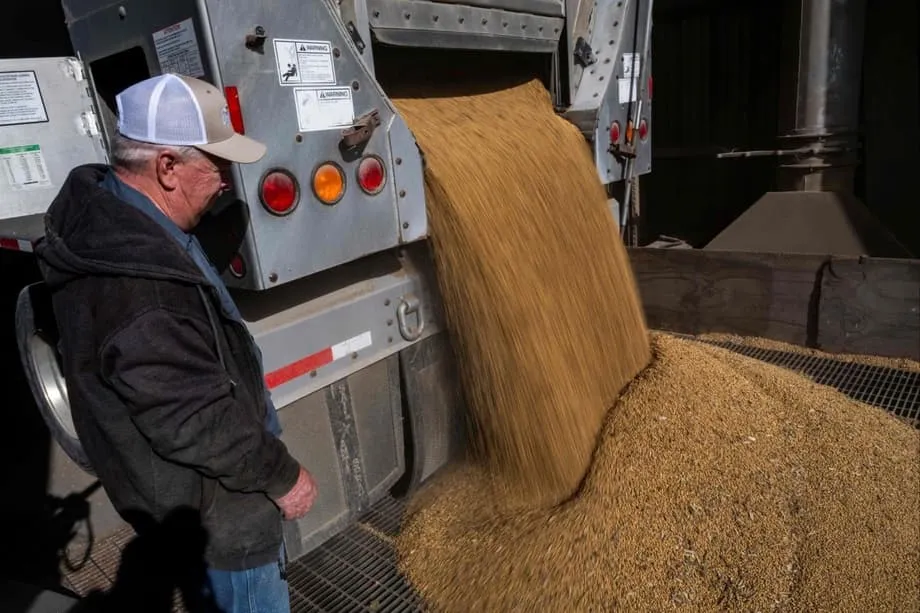
Record arrivals leave American suppliers out
China imported no soybeans from the United States in September 2025, the first month without American arrivals since November 2018, even as total imports reached 12.87 million metric tons. That was the second highest monthly volume on record, showing how extensively the world's largest soybean buyer has shifted purchases toward South America.
Contents
- Record arrivals leave American suppliers out
- Tariffs close a familiar seasonal route
- Price and timing favor South American sellers
- Brazil builds on scale and transport investment
- Argentina and Uruguay provide additional supplies
- American farmers lose part of their main sales window
- A possible supply gap looms before Brazil's next harvest
- Beijing seeks more domestic beans and less soymeal use
- Environmental scrutiny and weather add pressure
- Trade talks could redirect purchases again
- Key Points
Brazil supplied about 10.96 million tons, roughly 85 percent of the total. Argentina delivered around 1.17 million tons, close to 9 percent. Together, the two countries accounted for about 94 percent of September arrivals, leaving American exporters outside a market that normally becomes especially important during the US autumn harvest.
Chinese customs figures showed September imports rising about 13 percent from a year earlier and about 5 percent from August. China uses the beans to produce meal for hog and poultry feed and oil for cooking. Heavy arrivals have kept those industries supplied while tariffs and stalled negotiations have discouraged purchases from the United States.
Chinese crushers, the businesses that process soybeans into meal and oil, and state companies have responded by diversifying suppliers and securing large quantities from Brazil and, to a lesser extent, Argentina. Their purchases reflect a combination of trade policy, competitive South American prices and concern about reliable deliveries.
The consequences extend beyond one month's shipping figures. Chinese buyers had not booked cargoes from the new US harvest for shipment in the fourth quarter. South American purchases stretching through November are shortening the September to January period when American exporters usually sell heavily to China, before Brazil's next crop reaches ports.
Tariffs close a familiar seasonal route
Wan Chengzhi, an analyst at Capital Jingdu Futures in Beijing, identified tariffs as the central reason for September's halt in US arrivals. He explained why the absence was unusual even before shipments from the new American harvest accelerated:
This is mainly due to tariffs. In a typical year some old crop beans would still enter the market.
Old crop beans are soybeans from the previous harvest. Traders said those US supplies had already moved, thinning the cargo flow that can bridge the gap before the next harvest begins shipping in larger quantities. Tariffs remained the decisive policy barrier, according to analysts in Beijing.
Brazil's large harvest earlier in the year also kept its beans competitively priced into late summer. Argentina briefly suspended export taxes, creating an opportunity to buy discounted supplies. These developments gave Chinese importers alternatives during a period that would normally bring increasing American sales.
The main stages of the shift show how purchasing decisions and harvest timing have combined:
- November 2018: China last recorded a month without soybean imports from the United States before September 2025.
- Earlier in 2025: Brazil harvested a large crop, adding supplies and keeping export prices competitive into late summer.
- August 2025: China imported about 12.2 million tons, including 10.49 million tons from Brazil.
- September 2025: Total arrivals reached 12.87 million tons, with no US soybeans and about 10.96 million tons from Brazil.
- As of October 20, 2025: Chinese buyers had not booked new US harvest cargoes for fourth quarter shipment and had secured South American supplies through November.
Price and timing favor South American sellers
Brazil's bumper harvest increased stocks and pressured export prices. A relatively soft Brazilian real also helped its competitiveness in sales priced in dollars. More efficient and competitive freight from northern Brazilian ports strengthened the case for Chinese importers seeking predictable deliveries, making Brazil their default supplier for much of 2025.
Traders in Brazil estimated that Chinese companies had secured roughly 8 million tons from South American sellers for September and nearly 4 million tons for October. Those purchases covered about half of projected demand across the two months, taking business during a period normally important to American farmers.
Chicago soybean futures hovered near their lowest levels in five years as markets accounted for weaker Chinese buying. For American exporters, each additional South American cargo booked for autumn delivery reduced the space available during their traditional selling season.
China's wider agricultural trade has shifted over several years. The US share of Chinese agricultural imports fell from about 20 percent in 2016 to nearly 12 percent in 2024, while Brazil's share rose to around 22 percent. Those figures cover agricultural imports rather than soybeans alone, placing the current soybean shift within a broader change in suppliers.
Argentina and Uruguay give China further purchasing options. Buying from more South American origins allows importers to meet demand while reducing exposure to a single seller during a period of political tension with Washington.
Brazil builds on scale and transport investment
Brazil supplied more than 85 percent of China's soybean imports in August, when 10.49 million of approximately 12.2 million tons came from Brazilian ports. September maintained that pattern at a larger volume, with Brazilian deliveries reaching about 10.96 million tons.
Brazil has been the world's largest soybean exporter for most of the past decade. In 2023, it shipped a record crop and accounted for more than half of global exports. Studies tracking the past two decades show Brazilian exports rising more than fourfold, with roughly seven in every ten bushels exported in recent years going to China.
New acreage in frontier regions and improvements to ports and river transport corridors have supported that growth. Exporters expanded loading capacity at Santos, Paranagua and northern arc terminals along the Amazon corridor, helping move crops from farms to overseas customers.
Chinese commodity companies and financial institutions have participated in logistics investments and supply agreements covering extended periods. Those arrangements reduce uncertainty for Chinese crushers when demand is strong and help keep Brazilian beans moving through the supply chain.
Even with a smaller Brazilian crop expected in the current season, projections still put the country's share of global soybean exports above 50 percent. Its scale, competitive prices and established transport network keep it at the center of China's purchasing strategy.
Argentina and Uruguay provide additional supplies
Argentina, usually a major exporter of processed soybean meal and oil, sold more whole beans to China as domestic supplies improved and its brief export tax suspension made sales attractive. Chinese arrivals from Argentina rose about 91 percent from a year earlier to roughly 1.17 million tons in September.
Uruguay's smaller soybean industry also became a useful additional source. Its 2024 to 2025 harvest reached about 4.2 million tons, an increase from the previous year. That larger crop expanded the supplies Chinese buyers could draw on outside Brazil.
Trade sources counted 2.43 million tons already booked from Argentina and Uruguay for shipment between September and May. They estimated that Chinese processors could purchase as much as 10 million tons from the two countries combined during the 2025 to 2026 marketing year if prices remained favorable.
Chinese customs tallies showed almost 5 million tons arriving from Argentina and Uruguay combined between September 2024 and July 2025. Further purchases help fill the space left by absent American shipments and give crushers more flexibility in managing processing costs.
A wave of South American supply typically puts downward pressure on global soybean prices. Cheaper beans can improve crushing margins, the difference between the cost of buying and processing soybeans and the revenue from selling their meal and oil. Better margins can encourage plants to operate at higher rates, supporting feed supplies for China's still large hog herd after cycles of contraction and rebuilding.
American farmers lose part of their main sales window
China imported about 105 million tons of soybeans in 2024, including roughly 22.13 million tons from the United States. Much of the American volume is normally sold during autumn, before Brazil's next harvest brings renewed competition.
Chinese buyers' early purchases for September and October have compressed that opportunity. For farmers and grain elevators in the American Midwest, the timing matters because storage and sales plans are built around expected export demand during the early part of the marketing year.
Weaker Chinese demand puts pressure on futures prices and on basis, the difference between a local cash price and the futures price. When basis weakens, farmers can receive less for their beans relative to the exchange price, adding to difficult decisions about whether to sell or pay to keep crops in storage.
American processors are absorbing some of the lost export demand. Renewable diesel targets and investment in processing plants have increased US demand for soybean oil since 2021. More domestic crushing also produces additional soybean meal for livestock industries in North America.
Analysts expected the US share of global soybean exports to remain below 30 percent in the 2024 to 2025 cycle, compared with nearly 40 percent a decade earlier. Exporters were also developing other markets, including Mexico, Egypt, Japan and parts of Southeast Asia, as they sought buyers beyond China.
A possible supply gap looms before Brazil's next harvest
China's heavy arrivals in late summer and autumn provide supplies now, but inventories could face a test early in 2026. Slower Brazilian loadings or tighter stocks than expected could leave crushers short between February and April, before the next Brazilian crop ships in volume.
Johnny Xiang, founder of the Beijing consultancy AgRadar, warned that failure to reach a trade agreement could leave China exposed during that period:
A soybean supply gap may emerge in China between February and April if there is no trade deal. Brazil has shipped a huge volume, and the size of old crop stocks is uncertain.
Brazil's remaining stocks from the previous harvest are a key unknown. The weather, shipping costs and speed of the next Brazilian harvest will help determine how easily Chinese buyers can bridge the interval.
China could respond by releasing reserve stocks, adjusting the amount of soymeal used in animal feed or making targeted purchases of immediately available US supplies if prices and political conditions permit. Each option would address a different part of the problem: stored beans could cover immediate needs, feed changes could reduce consumption, and American cargoes could add another supply route.
Beijing seeks more domestic beans and less soymeal use
Beijing regards heavy reliance on imported soybeans as a food security weakness. Documents in the current Five Year Agricultural Plan put greater weight on producing more grains and oilseeds domestically, including soybeans.
Authorities have expanded incentives for soybean cultivation and encouraged crop rotations in northeastern provinces. Limits on land and water, together with lower yields, constrain how quickly domestic production can rise.
The agriculture ministry has also issued an action plan to reduce soymeal's share of animal feed from about 14.5 percent to below 13 percent by 2025. Feed mills are trying alternatives including rapeseed meal, peanut meal and sunflower meal, aiming to meet livestock protein needs while using less soybean meal.
Changes in feed formulas could slow soybean import growth if they last. Several analysts argue that imports may already have peaked in recent years because of these adjustments and because hog production has returned to more normal levels following disease outbreaks.
China's domestic production still falls far short of consumption. Imports exceeded 85 million tons from January through September 2025, demonstrating the continuing importance of foreign supplies to the country's animal feed and cooking oil industries.
Environmental scrutiny and weather add pressure
South America's expanding soybean production faces environmental scrutiny. Land clearing in Brazil's Cerrado and pressure along Amazon transport corridors have drawn concern from regulators and international buyers.
Major food companies and importers are tightening monitoring and traceability, which means tracking where beans were grown and how they moved through the supply chain. New European rules restrict products linked to deforestation. Meeting such requirements adds costs but may encourage investment in verified supply chains that satisfy international customers' sustainability standards.
Weather creates another source of uncertainty. Argentina's severe drought in 2022 to 2023 roughly halved its soybean output, while parts of Brazil face alternating dry spells and heavy rain.
Purchasing from several countries gives China alternatives when bad weather hits one producer. Short periods of price volatility and supply disruption remain difficult to avoid, especially when buyers are relying heavily on harvests and transport networks within the same broad region.
Trade talks could redirect purchases again
Officials from Beijing and Washington had been in contact in recent weeks, with meetings planned. Lower tariffs or a commitment to buy American crops could quickly redirect trade flows during the remaining US selling season.
Leaders in Washington indicated that renewed Chinese purchases would help unlock concessions on other issues. Beijing signaled that buying decisions would reflect domestic needs and diplomatic priorities.
Market participants were watching Chicago futures, Chinese crushing margins, the condition of China's hog herd and the pace of South American shipments. Those measures help show whether beans are affordable, processing is profitable and animal feed demand is rising or falling.
A sudden round of US sales in late winter would signal that the expected supply gap was emerging. Continued heavy Brazilian shipments would instead leave South America carrying most of China's demand into spring. The balance depends on trade negotiations, remaining stocks and the arrival of Brazil's next crop.
Key Points
- China imported 12.87 million metric tons of soybeans in September 2025, the second highest monthly total on record, with none from the United States.
- Brazil supplied about 10.96 million tons, roughly 85 percent, and Argentina supplied around 1.17 million tons, close to 9 percent.
- Total arrivals rose about 13 percent from a year earlier and about 5 percent from August.
- Tariffs, competitive South American supplies and early purchasing reduced the usual autumn opening for US exporters.
- Argentina's temporary export tax suspension and Uruguay's larger harvest provided additional buying opportunities.
- American farmers faced weaker prices and storage decisions, while expanding domestic crushing absorbed some demand.
- China could face a supply gap between February and April 2026 if trade talks fail and Brazilian supplies tighten.
- Beijing is encouraging domestic production and targeting soymeal use below 13 percent of animal feed by 2025.
- Trade negotiations, weather, remaining Brazilian stocks and the next harvest will shape purchases into spring.