A Licensing System With Global Reach
China has expanded export controls to cover 12 of the world's 17 rare earth elements, along with related technology and equipment, in a move that could reach factories far beyond its borders. Most of the new rules take effect on December 1. Companies may need Beijing's permission to export products in which Chinese processed rare earth materials account for as little as 0.1 percent of their value.
Contents
- A Licensing System With Global Reach
- Which Materials and Activities Are Covered?
- The Dates Behind the Confrontation
- Why Processing Matters More Than Deposits
- How a Factory Outside China Can Be Affected
- Governments Seek a Pause as Markets Swing
- Military Production Faces a Particular Risk
- Cars, Chips and Energy Equipment Share the Exposure
- Alternative Supplies Take Time to Build
- Businesses Rework Sourcing and Delivery Plans
- The Bottom Line
As of October 16, 2025, the measures have opened a new confrontation ahead of a planned meeting between President Donald Trump and President Xi Jinping. Washington has threatened tariffs of 100 percent on Chinese imports from November 1 unless Beijing backs away. Europe and Japan have voiced alarm, while manufacturers are preparing for possible shipment delays, shortages and higher costs.
The materials involved help electric vehicles move, wind turbines generate power and military guidance systems work accurately. They also appear in smartphones, displays, radar and semiconductor production. China produces roughly 60 percent of the world's rare earth ore and handles more than 90 percent of processing, giving it control over a stage of production that many industries share.
Henry Farrell, a political scientist at the Johns Hopkins School of Advanced International Studies, described the increasingly sensitive relationship between the two economies:
"The United States and China are now very clearly in a much more delicate stage of mutual interdependence," he said.
Beijing's approach resembles the controls Washington uses to restrict access to advanced semiconductors. Its reach across industrial inputs could reshape trade flows within weeks. Companies assembling goods outside China must now examine where their materials were refined, what technology produced them and who will eventually use the finished product.
Which Materials and Activities Are Covered?
China's Ministry of Commerce has expanded the restrictions in stages this year. The first measures required special export licenses for seven rare earth elements used widely in magnets and phosphors: samarium, gadolinium, terbium, dysprosium, lutetium, scandium and yttrium. Phosphors are materials used to produce light in applications such as lighting and displays.
The latest expansion adds holmium, erbium, thulium, europium and ytterbium, bringing the controlled total to 12 of the 17 rare earth elements. Authorities have also restricted technology, specialized equipment and know how used in mining, smelting, separation, magnet manufacturing and recycling.
The 0.1 percent threshold, according to guidance referenced by industry groups, concerns the value of Chinese rare earth content in a product. Licensing can also apply to rare earths produced outside China using Chinese technology. Foreign manufacturers therefore face requirements that extend beyond goods shipped directly from a Chinese factory.
Officials describe the measures as a licensing system, rather than a blanket ban. Applications involving foreign military end uses will be denied, while exceptions exist for emergency needs involving public health or disaster relief. Companies expect shipments to pause while applications are assessed and new compliance systems are built.
Applicants will need to explain intended uses and identify supply chain partners in detail. That has raised concerns about commercial confidentiality in North America, Europe and Japan, where businesses may have to disclose sensitive information to obtain approval.
The Dates Behind the Confrontation
The restrictions arrive amid a wider dispute over trade, technology and shipping. Washington's threatened tariff date falls a month before most of the new Chinese rules are scheduled to begin, creating pressure for negotiations before businesses face both measures.
- Earlier in 2025: China introduced licensing requirements for seven rare earth elements.
- By October 16, 2025: Beijing had expanded the controlled list to 12 elements and added restrictions on related technology and equipment.
- November 1: Washington has proposed introducing tariffs of 100 percent on Chinese imports unless Beijing backs away.
- December 1: Most of China's new rare earth rules are due to take effect.
A meeting between Trump and Xi is planned, but no date was given. Businesses must prepare for the announced deadlines while governments continue to signal that dialogue is possible.
Lin Jian, a spokesperson for China's Ministry of Foreign Affairs, defended Beijing's response while criticizing Washington's trade and technology restrictions:
"The United States talks about engagement on one hand while resorting to threats and intimidation on the other, imposing steep tariffs and introducing new restrictive measures. This is not the right way to engage with China," Lin said.
Chinese officials present the controls as a national security measure intended to prevent sensitive transfers. Beijing has also introduced countersteps involving new port fees and a tighter licensing system for rare earths and related technology.
Why Processing Matters More Than Deposits
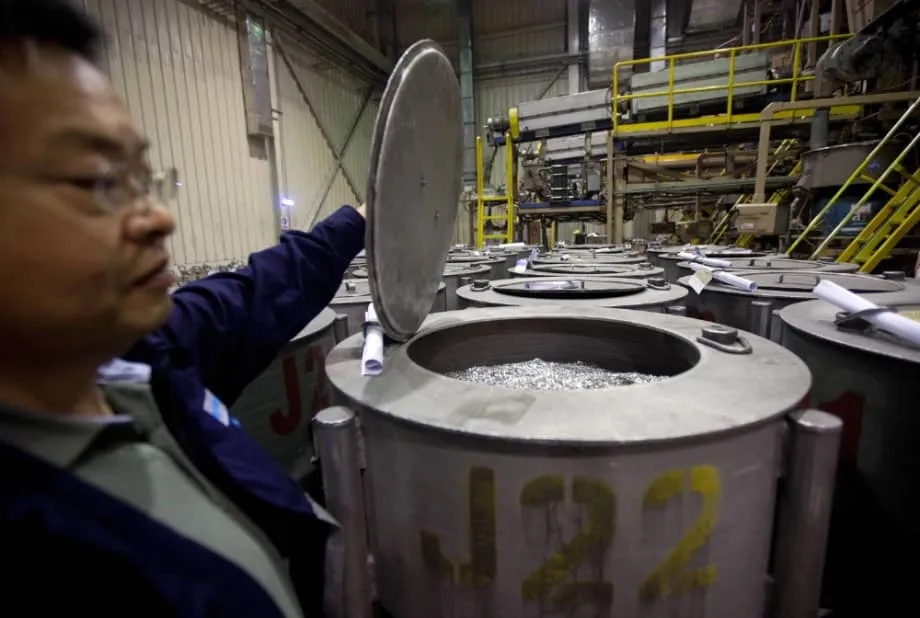
Rare earths are not especially scarce in the Earth's crust. The difficulty is finding deposits concentrated enough to extract economically, then separating and refining the elements. Mining and processing require substantial investment and can create serious environmental challenges.
The International Energy Agency estimates that China produces about 61 percent of rare earth ore but processes roughly 90 to 92 percent of global supply. It also dominates magnet production. China's share of processing is therefore much larger than its share of mining, which explains why opening mines elsewhere addresses only part of the dependence.
Rico Luman, a sector economist at ING, identified refining as the central pressure point:
"China controls 90 percent of global refinery capacity, making it a bottleneck in the supply chain," he said.
Heavy rare earth elements, including dysprosium, terbium and holmium, help permanent magnets retain their performance at high temperatures. Those magnets are used in electric vehicle motors, drones, guidance systems and radar. Even tiny additions can determine whether a magnet performs reliably in a jet engine bay or a fast electric drivetrain. Europium and yttrium are important in phosphors for lighting and displays.
The United States depends on China for about 70 percent of its rare earth imports, according to recent US Geological Survey data. Projects supported by the US Department of Defense aim to rebuild production from mining through magnet manufacturing by the middle of the decade, although output will still trail China for years. Heavy rare earth separation remains a particular gap in North America and Europe.
How a Factory Outside China Can Be Affected
A product assembled in Europe or Southeast Asia can contain rare earth materials refined in China. Permanent magnet production illustrates the connection: powders and alloys processed in China are shipped abroad, then cut to shape closer to customers.
Under the expanded rules, an exporter may need Beijing's approval to ship a motor, sensor or semiconductor polishing compound containing Chinese refined rare earths, even when the shipment leaves a factory outside China. Manufacturers must trace the origins of powders and other materials used earlier in production. Suppliers are already seeking written assurances from customers, while companies examine their bills of materials, the lists of parts and inputs used in each product.
Analysts compare the approach with Washington's foreign direct product rule, which has been used to restrict advanced chips reaching Chinese firms. China's restrictions reach materials used across automotive drivetrains, wind turbines, precision machine tools and electronics. Chris Miller, a technology historian and author, described the potential breadth:
"The effects could be extraordinarily broad, touching almost all semiconductor supply chains," he said.
Licensing also creates a demand for information. Manufacturers protective of their formulas, customer lists and production methods may face delays while deciding what they can disclose. Even an approved application can involve additional work and waiting.
Xiaomeng Lu, a director at Eurasia Group, described the reaction among businesses and governments that had expected rare earth trade to continue despite political tensions:
"It scares the rest of the world how far China is willing to go in upending the global supply chain," she said.
Governments Seek a Pause as Markets Swing
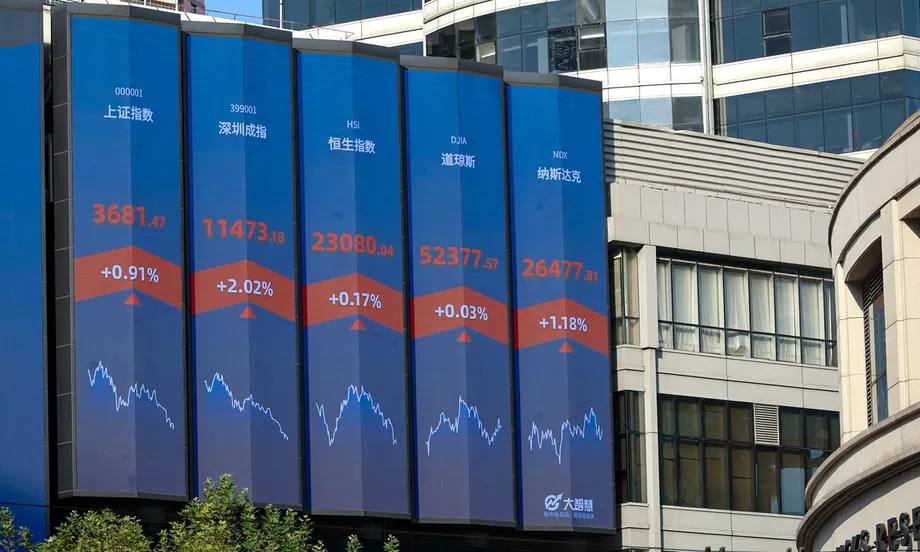
Equity markets swung sharply after the announcements as investors reassessed the exposure of automakers, defense contractors and chipmakers. Businesses are preparing for scarce supply and volatile prices while weighing the possibility of further negotiations.
Jamieson Greer, the United States Trade Representative, described the licensing expansion as an unacceptable assertion of control over global supply lines. He called for a pause while talks continue and said the aim was to avoid a cycle of retaliation:
"Our expectation is that this never goes into effect," he said.
European officials have voiced concern, with the European Union's trade chief describing the measures as a critical challenge for industry in the bloc. Japan has urged a coordinated response through the Group of Seven. Their concerns reflect the same practical problem: manufacturers outside the United States and China also depend on materials passing through Chinese processing plants.
Jeremy Siegel, professor emeritus of finance at the University of Pennsylvania, argued that the United States needs protection against interruptions in critical inputs:
"It is scandalous that we do not have a rare earths strategic reserve, that we let China monopolize 90 percent of refining," he said.
Beijing's dominance gives it a way to seek concessions in trade negotiations and control uses it considers sensitive. Washington's tariff threat adds another source of uncertainty for companies already examining the origin of their materials and the destinations of their products.
Military Production Faces a Particular Risk
Defense manufacturers face a more direct restriction because Beijing has said it will deny licenses linked to foreign military use. Rare earth magnets and alloys are embedded in equipment that cannot easily be redesigned, including the F35 fighter jet, Virginia-class and Columbia-class submarines, Predator drones and Tomahawk cruise missiles.
Phased array radar and the Joint Direct Attack Munition series of guidance kits also rely on these materials. A shortage involving only a few magnets can stop assembly, creating risks for new production as well as maintenance across allied arsenals.
Gracelin Baskaran, a critical minerals expert, explained why the military licensing provisions matter:
"What this essentially means is that [China] will deny licenses to foreign militaries and companies that are producing military use end goods. It undermines the development of the defense industrial base at a time when there is rising global tension. It is a very powerful negotiating tactic because it undermines national security," she said.
The US Department of Defense has supported separation and magnet manufacturing investments, including a framework agreement with MP Materials containing price floors and an equity component. Those arrangements support the effort to rebuild domestic capacity, but heavy rare earth separation lines are complex chemical systems that can take years to construct and bring into reliable operation.
Procurement officers are preparing contingency plans, and contractors are reviewing supplies of magnets and phosphors made without Chinese inputs. Alicia Garcia Herrero, an economist who studies global supply chains, said defense, semiconductors and electric vehicles would face the greatest strain under stringent licensing. Their exposure is concentrated in a relatively small number of components without immediate substitutes.
Cars, Chips and Energy Equipment Share the Exposure
Automakers in the United States and Europe are warning about delivery risks. The German Association of the Automotive Industry said restrictions introduced earlier this year had already tightened supplies for motors and battery components. The latest measures extend that pressure. Italian automotive parts manufacturers report that inventories of particular rare earths could run out if license approvals are delayed.
Electric vehicle traction motors often use permanent magnets based on neodymium and praseodymium, with dysprosium or terbium added to help them withstand heat. Restrictions on those additives can increase costs or reduce performance. Some manufacturers can use ferrite magnets in selected models, although that generally means greater weight or lower efficiency.
Semiconductor production has several points of exposure. Rare earths appear in slurries used to polish wafers, certain lasers and lithography components, and filters operating at high frequencies. Licensing requirements for Chinese inputs in polishing compounds or specialty ceramics could delay work at chip fabrication plants.
Wind turbines, industrial robots, magnetic resonance imaging scanners and premium audio equipment also use powerful magnets that are difficult to replace quickly. The same processing dependence therefore connects transport, energy, medicine and factory automation, even though their finished products look very different.
Alternative Supplies Take Time to Build
Australia's Lynas has long been the only significant producer of separated rare earths outside China and is investing in capacity in Texas for North American customers. The United States is supporting new separation and magnet plants, while Canada is advancing mining projects.
Vietnam, Brazil and South Africa have promising deposits. Japan has invested in projects and recycling, and Saudi Arabia has expressed interest in critical minerals as part of its industrial strategy. Together, these efforts offer ways to reduce dependence, but the production stages must connect: a mine needs processing capacity, and processed materials need manufacturers able to turn them into usable components.
Heavy rare earth separation plants take years to design, obtain permits for and bring into operation. Solvent extraction, a chemical process used to separate materials, requires specialized experience, as does controlling impurities. Environmental safeguards add substantial costs.
Recycling and substitution can reduce some demand. Automakers are developing motors that use fewer heavy rare earths, some wind turbine makers use direct drive systems with fewer rare earths, and researchers are exploring different magnet chemistries. Those efforts take time and will not replace supplies suddenly interrupted by licensing delays.
Customers accustomed to receiving materials just before production are building extra inventories where possible. Some are rewriting contracts to require powders and alloys from sources outside China. Yeling Tan, a professor at Oxford University, said Beijing also faces a risk if trading partners come to regard its supplies as unpredictable:
"This threatens to undermine China's credibility as a reliable trading nation. It is an incredibly delicate balance to strike," she said.
Businesses Rework Sourcing and Delivery Plans
Compliance teams face the task of tracing powders, alloys, magnets and phosphors back to their refiners. Supplier assurances about origin are becoming more important, while applications may require companies to submit sensitive commercial information to Chinese authorities.
Exporters involved in defense, aerospace or technology with both civilian and military uses are preparing for denials or lengthy processing. Delivery schedules may need to change. Some companies may also need separate product lines, one using Chinese processed materials and another avoiding them, to maintain access to markets.
Procurement and finance teams are considering contracts lasting several years with producers and magnet manufacturers outside China. Other options include financing separation projects and forming joint ventures that place new capacity close to final assembly plants. Some businesses are evaluating inventories sufficient to cover several months of demand for critical parts.
Legal teams are reviewing the threatened US tariffs and possible European responses. Boards are treating rare earth dependence alongside energy security and semiconductor supply, testing how stricter licensing could affect costs, production and delivery under different scenarios. The immediate challenge is to keep existing factories supplied while investments in alternative processing and manufacturing capacity move through a much slower timetable.
The Bottom Line
- China has expanded controls from seven to 12 rare earth elements and restricted related technology and equipment. Most new rules begin on December 1.
- Licensing can reach products made abroad when Chinese rare earth content represents as little as 0.1 percent of their value, or when production uses Chinese technology.
- Beijing says applications involving foreign military end uses will be denied, putting defense production and maintenance at particular risk.
- China produces about 61 percent of rare earth ore and processes roughly 90 to 92 percent of global supply. About 70 percent of US rare earth imports come from China.
- Washington has threatened tariffs of 100 percent from November 1. Europe has expressed concern, and Japan is seeking a coordinated Group of Seven response.
- Automakers, chipmakers and energy equipment suppliers face possible shortages, higher costs and delayed deliveries if approvals slow.
- Alternative projects, recycling and new designs could reduce dependence, but heavy rare earth separation capacity takes years to build.