Regulators turn to funding tools as shares slide
China's financial regulators plan to hold two meetings on November 2, 2026, to discuss putting existing stock market support tools to greater use after an October selloff pushed the Shanghai Composite below 3,600 points and sent two technology and growth indexes down more than 20% for the month.
Contents
- Regulators turn to funding tools as shares slide
- October losses were deepest in growth shares
- Two tools reach the market through different routes
- How the programme developed since 2024
- Longer loans and smaller cash contributions
- Company announcements point to 78.1 billion yuan
- Large state investment groups could gain more capacity
- Support talks accompany a wider policy shift
- Stronger profits provide another part of the picture
- Key Points
The People's Bank of China and the China Securities Regulatory Commission (CSRC) are expected to meet selected securities firms and fund managers at the central bank, with discussions expected to begin around 9 a.m. Some firms have received meeting notices.
A second meeting will bring together the central bank, the National Financial Regulatory Administration, the CSRC and major banks to examine changes to a lending programme that helps listed companies and major shareholders buy shares.
The discussions concern two tools introduced in 2024: a swap facility for securities firms, fund managers and insurers, and central bank refinancing for bank loans used in share repurchases and purchases by major shareholders. Their combined funding ceiling has been 800 billion yuan since May 2025.
The practical issue is how much of that capacity can move through financial institutions into stock purchases. Companies have already announced substantial borrowing arrangements, while a large state bank is reportedly considering new lending limits of up to 100 billion yuan each for two state capital investment groups.
No decisions from the November 2 meetings have been announced. Changes to funding limits, borrowing costs or eligibility therefore remain matters for discussion rather than measures investors can already use.
October losses were deepest in growth shares
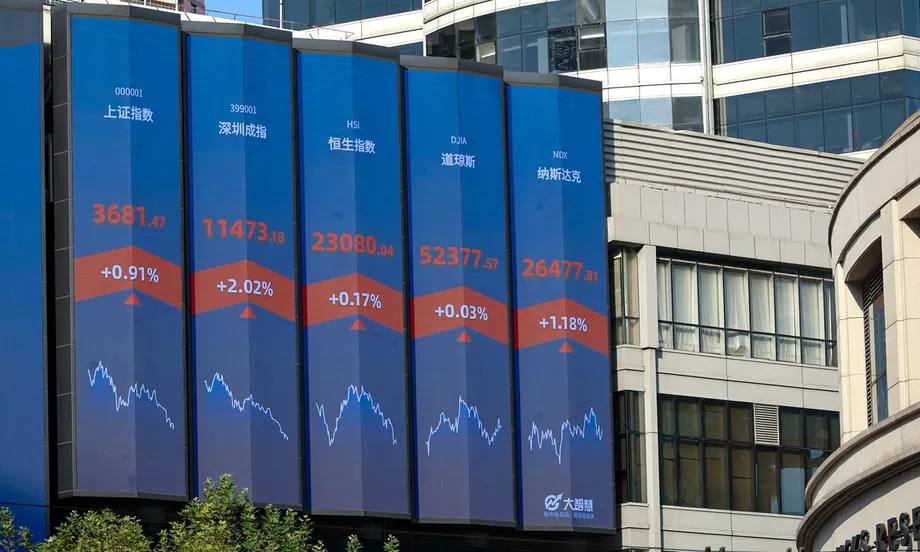
The Shanghai Composite closed at 3,599.02 on October 30, taking its October decline to 6.33%. The Shenzhen Component fell 15.94% during the month, while the ChiNext index and the STAR Composite each lost more than 20%.
The Shenzhen Component's monthly percentage decline was about two and a half times the Shanghai Composite's. The losses of more than 20% in ChiNext and the STAR Composite were more than three times Shanghai's decline, showing how unevenly the selling pressure fell across the market.
The Shenzhen Component, ChiNext and STAR Composite also reached recent lows on October 30. For companies and shareholders considering purchases, the proposed meetings bring attention back to financing arrangements designed specifically to support buying during periods of market stress.
International technology shares were also under pressure. On October 30, the Nasdaq Composite fell 2.86% and the Philadelphia Semiconductor Index dropped 7.2%. Those declines formed part of the trading environment facing Chinese investors ahead of the November meetings.
Two tools reach the market through different routes
The Securities, Funds and Insurance Companies Swap Facility, known as SFISF, serves eligible financial institutions. It allows them to pledge assets and obtain more readily usable liquidity through the central bank arrangement, improving their capacity to finance stock investments.
Liquidity means money, or assets that can quickly be turned into money, to meet payments or make purchases. An institution may own valuable investments yet still need financing before it can buy additional shares.
The share repurchase and shareholding increase programme works through banks. Banks lend to eligible listed companies and major shareholders, and the central bank provides refinancing to support that lending. A repurchase occurs when a company buys its own shares. A shareholding increase occurs when an existing shareholder buys more.
The two November 2 meetings address these different routes. Securities firms and fund managers will discuss using capital market support tools, while banks will examine the terms of the repurchase and shareholding increase programme.
For investors, the route matters because the funding reaches different buyers. One tool supports financial institutions investing in shares; the other helps companies and major shareholders finance purchases of particular listed stocks.
How the programme developed since 2024
People's Bank of China Governor Pan Gongsheng announced plans for both tools at a State Council Information Office briefing on September 24, 2024. Detailed implementation arrangements followed less than a month later.
The repurchase refinancing programme began with a ceiling of 300 billion yuan, a central bank lending rate of 1.75% a year and an initial term of one year, with extensions possible. The 1.75% figure was the central bank's initial refinancing rate; banks separately provide the loans that companies and shareholders use.
- September 24, 2024: Pan announced the creation of the two stock market support tools.
- October 18, 2024: Regulators issued implementation notices for the repurchase refinancing programme and SFISF.
- May 2025: The 500 billion yuan swap facility ceiling and the 300 billion yuan refinancing ceiling became available for combined use.
- October 30, 2026: Wu Qing chaired a CSRC meeting calling for market stability, while the central bank announced changes to its money market operations.
- November 2, 2026: Regulators plan separate discussions with securities firms, fund managers and banks.
The May 2025 adjustment created flexibility within a combined 800 billion yuan ceiling. Previously, 500 billion yuan was assigned to the swap facility and 300 billion yuan to refinancing. Allowing combined use made it easier to accommodate demand from different types of institutions without increasing those two original amounts in total.
Longer loans and smaller cash contributions
Regulators have already changed several terms to encourage participation. The maximum term of bank loans for repurchases and shareholding increases was extended from one year to three years, bringing repayment schedules closer to the longer periods over which companies may carry out share purchases.
The required contribution from a borrower's own funds was reduced from 30% to 10%. In a simplified purchase costing 100 yuan, that means the borrower would contribute 10 yuan rather than 30 yuan, with borrowing able to cover a larger share, subject to the programme's rules and bank approval.
Banks have also been encouraged to assess companies on their financial strength and creditworthiness rather than relying as heavily on pledged assets. That can make borrowing more accessible to a business with a sound balance sheet but fewer assets suitable for use as security.
State capital operating platforms were added to the eligible borrowers. These organisations manage state investment holdings, giving the programme another route through which large shareholders can finance stock purchases.
The November meetings therefore follow several rounds of adjustments. Their focus on use and loan terms puts attention on the practical decisions banks and borrowers make: whether financing is affordable, whether repayment periods fit purchase plans and whether institutions are willing to take on additional commitments.
Company announcements point to 78.1 billion yuan
More than 300 A share companies disclosed announcements involving repurchase or shareholding increase loans during the first ten months of 2026. A compilation using Wind data put their combined maximum announced loan amounts at 78.1 billion yuan.
Haier Smart Home's special loan amount reached 5 billion yuan. BOE Technology secured two special loans totalling 5.9 billion yuan. Together, those amounts equal 10.9 billion yuan, or about 14% of the 78.1 billion yuan announced total.
The 78.1 billion yuan figure adds up the upper limits in company announcements. Actual borrowing and share purchases depend on how companies implement their plans, so money can move into the market over time rather than on the announcement date.
Demand has previously increased when share prices came under pressure. Applications for repurchase and shareholding increase financing rose during market stress in April 2025. In July 2026, greater use by state capital operating platforms helped lift the month's business volume during another period of volatility.
Those episodes help explain the timing of the planned talks. Regulators are revisiting tools that institutions have already used during market declines, with the aim of improving their use as selling pressure returns.
Large state investment groups could gain more capacity
An unnamed very large state bank is reportedly planning additional repurchase and shareholding increase loan limits for China Reform Holdings and China Chengtong Holdings. Each group could receive a new limit of up to 100 billion yuan.
If both limits reach that level, they would total 200 billion yuan. A lending limit gives an organisation room to borrow; the amount eventually drawn depends on borrowing decisions, bank requirements and investment plans.
The potential expansion brings the role of state capital operating platforms into sharper focus. Their inclusion in the programme allows banks to finance purchases by major state investment groups as well as listed companies and other eligible major shareholders.
Li Daxiao, a former chief economist at a securities firm, has argued that the support tools should be adapted to the market's current size. His suggestions include more attractive interest rates, longer periods of use and incentives encouraging securities firms and fund managers to participate. Those are proposals from a market commentator, rather than announced regulatory changes.
Support talks accompany a wider policy shift
CSRC Chairman Wu Qing chaired an expanded meeting of the regulator's Party committee on October 30. The meeting called for efforts to stabilise the market and expectations, deepen reforms affecting investment and financing, and improve supervision across the market.
The same day, the People's Bank of China announced changes to its routine money market operations, effective November 2. It said it would conduct overnight reverse repurchase operations every working day at a fixed rate, currently 1.25%, with institutions bidding for amounts.
A reverse repurchase operation is a way for the central bank to provide short term cash to the financial system against securities. The overnight rate will become the main policy interest rate, the central bank's principal signal for the cost of short term money.
Operations lasting seven days will move to auctions with a fixed total amount and bids at different interest rates, mainly around tax payment periods and month ends. Other specified facilities will calculate their rates relative to the overnight rate, keeping their existing margins above or below the benchmark.
These money market changes concern the price and supply of cash across the financial system. The stock market tools target financing for eligible institutions, companies and shareholders. November 2 therefore brings both a change in routine monetary operations and discussions about more targeted support for equities.
Stronger profits provide another part of the picture
By October 31, 5,224 companies listed in Shanghai and Shenzhen had disclosed results for the first nine months of 2026. Their combined revenue reached 56.6 trillion yuan and net profit reached 5.1 trillion yuan, increases of 5.8% and 8.5% from a year earlier.
Both the scale and growth rates were the highest since 2022, while 73% of the companies were profitable. Among 614 STAR Market companies that had completed disclosures, revenue rose 41.88% to about 1.515 trillion yuan and net profit rose 474.56% to 223.52 billion yuan. Three companies listed in multiple markets were scheduled to publish in November.
GF Securities chief strategy analyst Liu Chenming has attributed the recent adjustment mainly to sentiment and funding pressures, while arguing that corporate fundamentals had not undergone a reversal. The earnings figures show why investors are assessing company performance alongside the availability of market support financing.
Tian Lihui, director of Nankai University's Institute of Finance and Development, has previously explained that repurchase refinancing can add liquidity and lower financing costs, encouraging listed companies and major shareholders to buy shares. That creates a concrete channel for support: cheaper or more accessible financing can help willing buyers carry out purchases.
The next scheduled step is the November 2 discussions. For companies, banks and fund managers, the consequential details will be the terms under which financing can be obtained and the commitments institutions make to use it.
Key Points
- China plans two November 2 meetings on capital market support tools and loans for share purchases.
- The Shanghai Composite fell 6.33% in October; ChiNext and the STAR Composite each lost more than 20%.
- The swap facility and repurchase refinancing programme have a combined ceiling of 800 billion yuan.
- More than 300 companies announced related loan arrangements with maximum amounts totalling 78.1 billion yuan in January through October.
- A large state bank is considering new lending limits of up to 100 billion yuan each for China Reform and China Chengtong.
- Daily overnight central bank reverse repurchase operations at a current rate of 1.25% are also scheduled to begin November 2.