A Scottish boarding school heads to Wakayama
Gordonstoun, the Scottish boarding school whose former pupils include King Charles III and the late Prince Philip, plans to open a campus in Wakayama city in September 2027. The school is designed to bring British boarding education to Japan's Kansai region, with lessons taught in English and more than half of its students expected to come from outside Japan.
Contents
- A Scottish boarding school heads to Wakayama
- Why the partners chose Wakayama
- Turning an office complex into a campus
- What Gordonstoun wants students to learn
- Seven grades, English lessons and boarding life
- Who will build and operate the school
- British boarding education gains ground in Japan
- What the campus could mean for the city
- Staffing, affordability and the opening deadline
- At a Glance
The campus will cover seven grade levels, corresponding to Japan's sixth grade through the third year of high school. Project plans describe space for around 700 students and about 200 staff when the school is fully developed. Those figures describe the intended scale of the completed campus, rather than an announced intake for its opening year.
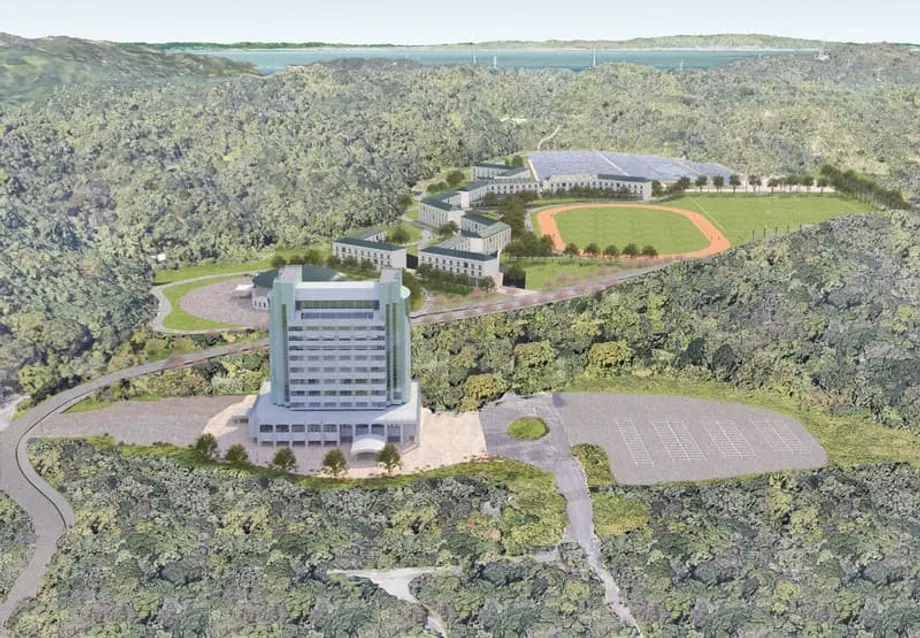
The former Noritsu Koki Center Building, a disused office complex near Nankai Electric Railway's Wakayamadaigakumae Station, will be renovated for classrooms and shared facilities. A new dormitory on the same site will support the residential community central to Gordonstoun's approach.
Wakayama's coastline is a major part of the plan. Sailing, other water activities and outdoor learning fit the school's tradition of combining academic study with practical challenges, teamwork and service. Access to Osaka and Kansai International Airport also makes the location convenient for families, visiting staff and international recruitment.
The school corporation OCC, property developer Sanyo Homes, Nankai Electric Railway and the Wakayama Municipal Government signed an agreement to advance the project at Wakayama City Hall in August 2025. Their task is to bring together building work, school registration and recruitment in time for the planned opening two years later.
Why the partners chose Wakayama
Wakayama offers two things the organizers consider central to the project: a natural setting suited to outdoor education and transport links that connect it with a much larger region. The Kii Peninsula's coast provides access to open water, beaches and marinas for sailing, rowing, paddle sports and coastal expeditions.
These activities are intended to be part of the education itself. Students taking a boat onto the water must plan their journey, understand navigation and work together. Camps and hikes can build resourcefulness while teaching care for the environment. The surrounding coast and hills would become places where students practise skills beyond their classroom lessons.
The site is a short walk from Wakayamadaigakumae Station, which serves Wakayama University. Its position on the Nankai Electric Railway corridor offers straightforward travel toward central Osaka and access by rail to Kansai International Airport, across the bay.
For families living overseas, those connections matter alongside the landscape. Education scholar Yumiko Hada has observed growing demand among affluent families in Japan for schooling that meets international standards. She also sees Wakayama's combination of natural surroundings and strong transport links as attractive to parents abroad.
Turning an office complex into a campus
The former Noritsu Koki Center Building will form the center of the school. Plans call for modern classrooms, science laboratories, arts and music rooms, dining areas, shared spaces and areas for pastoral care, meaning the daily support students receive for their welfare and personal development.
Dedicated facilities for watersports and outdoor education are also planned. The new dormitory will place boarders close to daily activities, weekend expeditions and the staff responsible for their care. Together, the converted building and new accommodation are intended to support a residential school community.
Reusing an existing building reduces the need for an entirely new campus and can shorten the development schedule. The conversion still has to meet modern standards for safety, accessibility and comfort. Japan's building codes require resilience against earthquakes and typhoons, while boarding facilities bring additional requirements for fire safety, staffing and student supervision.
What Gordonstoun wants students to learn
Educator Kurt Hahn founded Gordonstoun in 1934. His approach held that young people develop through service, physical challenge, teamwork and responsibility. Hahn also inspired the creation of the Duke of Edinburgh's Award and helped start Outward Bound.
Those ideas continue to shape the Scottish school's daily life. Seamanship, mountain and coastal expeditions, community service and leadership training sit alongside academic study. The aim is to build confidence, resilience and a lasting habit of helping other people.
At Wakayama, the local landscape would give that approach a distinctive setting. Sailing requires students to share tasks and respond to changing conditions. Hiking and camping require preparation and practical decisions. These experiences connect responsibility to something students can see and do, whether that means helping a group complete a journey or caring for equipment others will use.
The coastal location also creates scope for community service connected with maritime safety and shoreline conservation. Beach cleanup and coastal stewardship would fit the school's focus on service and leadership, while linking students with the place where they live.
Safety underpins this model. Outdoor learning depends on trained instructors, clear procedures and appropriate equipment. Marine activities also require weather protocols suited to local conditions. These arrangements are part of delivering the educational program, alongside the activities themselves.
Seven grades, English lessons and boarding life
The planned seven grade levels will span the period from the equivalent of Japan's sixth grade to the final year of high school. Gordonstoun is coeducational, and boarding is central to its school culture. At Wakayama, more than half of the student body is expected to be international.
Teaching will be in English through a British style academic program leading to internationally recognized qualifications accepted by universities around the world. This approach commonly combines a strong core of academic subjects with arts, design, sport and service learning.
Marine and outdoor activities are intended to have a structured place in that education. Students progress through skills, take on leadership roles and learn to work in teams through graded programs. The activities therefore extend beyond recreation, with learning goals that develop as students gain experience.
Many families see this combination of academic work and character education as preparation for leading universities, including Oxford and Cambridge, and for careers that require initiative and collaboration. The attraction lies in the combination of study, practical responsibility and experience working with others.
The dormitory is intended to provide a safe, structured environment for academic work, enrichment activities and everyday routines. Boarding staff, tutors and house teams will be central to student welfare and mentoring. Their work includes helping students manage school life while living away from their families.
For parents, residential schooling offers a daily structure, time for activities beyond lessons and close relationships between staff and students. For the operators, it also means establishing clear communication with families, strong safeguarding arrangements and dependable health and wellness support.
Who will build and operate the school
OCC will operate the school, while Sanyo Homes will handle land and building development. The developer's responsibilities include renovating the former Noritsu Koki Center Building and constructing the new dormitory.
Nankai Electric Railway brought the proposal to the city and is a key participant because of the nearby station and rail corridor. The Wakayama Municipal Government is supporting planning and permissions. Their August 2025 agreement formalized cooperation among organizations with different responsibilities for making the campus possible.
The partners aim to complete renovation, new construction, recruitment and registration before September 2027. Establishing a school with a foreign curriculum in Japan requires registration, inspections and coordination with prefectural authorities, alongside the physical work on the site.
The milestones place Wakayama within a wider sequence of British school openings in Japan:
- 2022: Harrow opened a school offering full boarding at Appi Kogen in Iwate.
- 2023: Rugby School Japan opened in Kashiwa, Chiba.
- August 2025: OCC, Sanyo Homes, Nankai Electric Railway and the municipal government signed the Wakayama project agreement at City Hall.
- September 2027: Gordonstoun's Wakayama campus is scheduled to open.
British boarding education gains ground in Japan
Gordonstoun's arrival follows a growing interest in British independent education in Japan. In Britain, the term public school refers to historic independent schools that charge fees. Several have established campuses in Asia through partnerships and agreements lasting many years.
Harrow Appi and Rugby School Japan are earlier examples of this expansion. Harrow and Rugby belong to The Nine, a group that also includes Eton College. Their students often aim for leading universities in Britain, the United States and other countries.
Families in Japan may choose these schools to obtain an education in English without relocating overseas. Boarding also offers a particular daily rhythm, with lessons, enrichment and residential life organized within one school community.
Wakayama combines those educational ambitions with a location outside Japan's biggest urban centers. Its coast supports Gordonstoun's outdoor traditions, while connections to Osaka and the airport help make the school accessible to families based elsewhere in Japan or abroad.
Local governments and railway companies have their own reasons to support such projects. An international school can bring jobs, reuse an underused site and establish a community with links to many countries. In Wakayama, the redevelopment of the vacant office complex connects those local goals with the school's expansion.
What the campus could mean for the city
A campus planned for around 700 students and about 200 staff would create a substantial presence in the local economy once fully developed. Employment would include teaching, counseling, facilities work and administration, with skilled positions needed across school operations.
Purchases by the school and visiting families could benefit local suppliers, food services, transport businesses and retailers. An international residential community would also bring demand for everyday goods and services throughout the school year.
Students and staff from different countries could contribute international events, sports fixtures and arts performances that also serve local residents. The school's emphasis on community service offers another route for contact between the campus and its neighbors.
Nearby Wakayama University could provide opportunities for shared projects in marine science, environmental studies and language exchange. The coast offers a practical setting for student service involving beach cleanup and care for the shoreline. These are possibilities for community links as the school develops.
The transport network supports these local connections as well as international travel. Rail access can simplify parental visits, weekend journeys for boarders and recruitment of staff from overseas. Proximity to Kansai International Airport should also help visiting staff and global partners reach the campus.
Staffing, affordability and the opening deadline
Recruiting experienced teachers and boarding staff will be a major task before opening. Schools across Asia compete for such employees, and a residential campus needs people who can support students beyond the classroom as well as teach their subjects.
The planned marine and outdoor program adds specific operational needs. Instructors must be trained, equipment must meet appropriate standards and decisions about activities must reflect local weather. Student supervision, safeguarding and health support must work across lessons, residential life and excursions.
Construction schedules, supply chains and currency movements can affect project budgets. Renovation and new building work also have to be coordinated with recruitment, inspections and registration. The September 2027 target brings these tasks onto the same timetable.
Affordability will attract attention because British boarding schools charge high fees and operating costs in Japan are substantial. Communities often welcome scholarship programs that help local students participate. Fees and scholarship arrangements have not been specified in the project details described here.
The partners also face a cultural task: carrying the values of the Scottish school into a Japanese setting while respecting local customs and community expectations. For students, the intended result is a school where academic study, shared residential life, service and outdoor challenges form parts of the same education.
At a Glance
- Gordonstoun plans to open in Wakayama city in September 2027.
- The school will teach in English across seven grades, equivalent to Japan's sixth grade through the final year of high school.
- More than half of students are expected to come from outside Japan.
- The completed campus is designed for around 700 students and about 200 staff.
- The former Noritsu Koki Center Building near Wakayamadaigakumae Station will be renovated, with a new dormitory built on site.
- OCC will operate the school, Sanyo Homes will handle development, and Nankai Electric Railway and the municipal government are project partners.
- The August 2025 agreement set the project toward an opening that requires construction, recruitment, registration and inspections.
- Sailing, outdoor learning, community service and leadership training will accompany academic study.
- The project follows Harrow Appi's opening in 2022 and Rugby School Japan's opening in 2023.