Koto Ward moves earlier as data centers rise beside homes
Tokyo's Koto Ward has extended advance notification for data center projects to at least 120 days before building certification applications, up from 90 days, as residents question how facilities near their homes will handle noise and hot exhaust. The ward has also asked developers to show exactly where outdoor compressor units will stand.
Contents
- Koto Ward moves earlier as data centers rise beside homes
- Why operators want to stay close to Tokyo
- Where the heat and noise come from
- What cooling research and Japanese designs show
- Power demand brings another debate
- Local notice rules and an industry response
- Investment expands beyond the capital
- GX 2040 links industrial locations to cleaner power
- What a practical neighborhood agreement could include
- What to Know
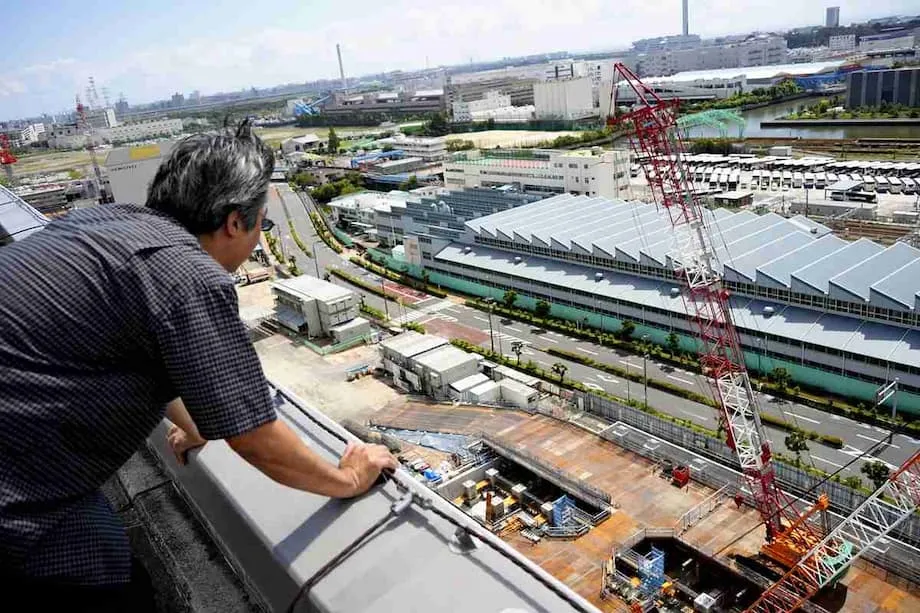
In the ward's Shiohama district, people living beside construction sites worry about a persistent hum from rooftop machinery and warm air blowing toward nearby buildings. Similar friction has emerged in Hino and Akishima, where residents want more information about equipment placement, exhaust routes and maintenance schedules.
As of October 10, 2025, Japan has no specific national law regulating heat discharged by data centers. Local governments and communities are pressing companies for protections while construction accelerates to meet demand for cloud computing and artificial intelligence.
An estimated 63 percent of Japan's data centers are in the Kanto region, which includes Tokyo. The domestic market is valued in the trillions of yen, and investment plans include more than two gigawatts of power capacity planned or under construction nationwide. That makes decisions about individual building sites part of a much larger question: how to expand essential digital infrastructure without making neighboring homes less comfortable.
Data centers promise faster services and economic activity. Their servers also require substantial electricity, continuous cooling and operation at all hours. For residents accustomed to quieter streets or warehouse activity, the prospect of machinery running through the night has brought demands for earlier explanations and measurable safeguards.
Why operators want to stay close to Tokyo
Central Tokyo offers connections that are difficult for operators to give up. Data centers need access to major communications networks, internet exchanges and corporate campuses. Otemachi is a particularly important network hub, helping facilities provide low latency connections, meaning information travels with very little delay.
Bank trading desks, video services and AI inference systems, which use trained models to produce answers or predictions, depend on those quick connections. Operators say an urban location also helps them meet strict uptime targets, the amount of time services must remain available, while avoiding long fiber connections.
Tokyo also puts equipment suppliers, construction teams and operations specialists nearby, reducing costs and speeding maintenance. In some locations, short connections to high voltage substations can reduce electricity lost during transmission.
Dense development complicates those advantages. Industrial land and residential blocks often sit close together, sometimes leaving a data center and homes separated by little more than a boundary wall. Residents argue that constant noise and warm exhaust can reduce daily comfort even when a facility meets existing rules. They also worry about additional heat during summer.
Finance, manufacturing, media and logistics all rely on digital infrastructure, alongside the expanding use of AI. The challenge for Tokyo is therefore practical: facilities serving these activities need suitable locations, while the people next door want a clear account of what operating them will mean.
Where the heat and noise come from
Every watt of electricity consumed by a server eventually becomes heat. Cooling systems must move that heat away from the equipment and release it outside. Depending on the design, a facility may use air moving across hot components, chilled water circulating through coils, or a combination of methods.
Dry coolers, chillers, cooling towers and air handling units help transfer the heat outdoors. Fans, compressors and pumps produce sound while doing that work. At night, when traffic and other background noise fade, the machinery can become easier to hear.
Low frequency sound is a particular concern because it can travel farther and pass through walls more easily. A steady drone can also feel more intrusive than brief construction noise because it continues without a clear stopping point. Silencers and acoustic treatment can help, but their effectiveness depends on equipment selection, operating load and distance from homes.
Residents also describe fears of a local heat island effect, with concentrated warm exhaust making the surrounding area hotter. The experience at a particular building depends partly on where its exhaust goes. Rooftop equipment, upward airflow and distance from neighboring windows can change who encounters the warm air plume.
Some cities use district energy networks to send data center waste heat to nearby buildings or swimming pools. Tokyo does not yet have broad heat reuse networks connected to data centers, leaving equipment layout and heat management at individual sites especially important.
What cooling research and Japanese designs show
Many urban data centers use cooling systems that release heat into outside air. Others rely on electrically powered chillers to produce chilled water. When outdoor conditions allow, fresh air or free cooling can reduce the need for mechanical refrigeration and lower electricity use.
Research on a compact container data center in a Tokyo suburb recorded annual energy savings of about 20 percent compared with conventional air conditioning. The system used direct fresh air cooling, evaporative cooling and careful control of temperature and humidity. Its reported power usage effectiveness was near 1.06.
Power usage effectiveness, or PUE, is total facility energy divided by the energy used by its IT equipment. A lower figure means less electricity goes to supporting functions such as cooling and lighting. Reducing that overhead can also reduce waste heat and operating noise when fans and pumps can run more slowly for longer periods.
Another Tokyo facility that opened in the previous decade had a design PUE of around 1.28. Its approach separated the server floor from the facilities floor, improved airflow control and used free cooling and higher temperature chilled water when weather conditions allowed.
That operator also adopted an environmental management system and expanded renewable energy use across its portfolio. Landscaping, wall greening and rooftop gardens helped the building fit into its surroundings. The facility received awards for energy efficient design and certification as a top level facility under Tokyo's cap and trade program.
These examples show why design decisions matter before construction is complete. Direct fresh air cooling supported by evaporation can work in greater Tokyo during parts of the year. Higher temperature chilled water and free cooling can keep compressors off during cooler months, while variable speed fans and pumps can avoid abrupt changes in noise.
Space permitting, vertical thermal storage tanks can move cooling demand to off peak hours. That can reduce pressure on the electricity grid and may lower noise during quiet periods. Each option still needs to fit the site's weather conditions, available space and operating needs.
Power demand brings another debate
Modern data centers draw large amounts of electricity at relatively steady rates. Overseas, research using devices inside homes has raised concerns about electrical harmonics near clusters of large facilities. Harmonics are distortions in an electrical waveform; at levels above standards, they can stress appliances and sensitive electronics.
Bob Marshall, chief executive of a major residential power quality monitoring company, described harmonics as an early warning of grid stress. His assessment drew on a large network of household sensors, with a stronger pattern appearing in areas containing facilities that draw continuous loads.
Harmonics are a pretty good canary in the coal mine for early signs of stress and problems.
Utilities dispute parts of that assessment, saying measurements inside homes do not directly capture conditions on the distribution grid and that measured levels often remain within industry standards. John Schoen, a spokesperson for ComEd, a large utility in the US Midwest, challenged the monitoring company's approach.
ComEd strongly questions the accuracy and underlying assumptions of Whisker Labs claims. Ting devices are installed in the home and do not directly measure harmonics on the grid.
Another major utility said its measurements had not found distortion above standards. It also said isolated problems associated with new equipment configurations were resolved quickly.
Tokyo's circumstances differ, but the debate points to the need to coordinate large new electricity loads with upgrades to local lines and transformers. Planning capacity before demand peaks and placing power quality monitors near new facilities are possible responses. Where unusual readings appear, operators and utilities can adjust equipment settings, install filters or spread demand across feeders, the lines carrying power through the local network.
Local notice rules and an industry response
Koto Ward's longer notification period gives residents more time to examine projects before building certification applications. Its request for precise outdoor equipment locations also brings attention to the parts of a facility most likely to affect nearby homes.
Information science experts warn that disputes will increase as construction continues. They have called for environmental guidelines that reduce uncertainty and set clear expectations for operators and communities.
The Japan Data Center Council, whose membership includes operators and construction companies, plans to publish a guideline addressing nearby environments and resident concerns. Naohiro Masunaga, head of the council's secretariat, acknowledged shortcomings in communication with people affected by projects.
It cannot be denied that explanations to residents who may be affected were insufficient in some cases and that a process must be created to seek the understanding of nearby residents.
No publication date was given for the council's guideline. The proposed approach comes as local authorities seek more detailed site plans and communities expect consultation earlier in the development process.
Possible standards include separate noise thresholds for daytime and nighttime, modeling of hot exhaust during design, continuous sound monitoring and public reporting. Other proposals include limits on fan speeds after certain hours, limits on exhaust temperatures at property boundaries and deadlines for responding to complaints.
Heat management measures could include directing exhaust away from neighboring windows, scheduling maintenance during cooler periods and using vegetation barriers. Clear requirements would give companies a common baseline and residents a more concrete way to assess what is promised.
Investment expands beyond the capital
Japan's data center market is measured in billions of dollars and is expected to grow through the end of the decade. New submarine cable projects are expanding the national communications backbone, providing faster international connections for cloud providers and content platforms.
Domestic operators include NTT Communications, AT TOKYO, KDDI's Telehouse, Fujitsu and IDC Frontier. Global companies such as Equinix and Digital Realty are also active, while new entrants are planning advanced facilities tailored to AI.
Large projects from major cloud companies are changing the mix of capacity between colocation facilities, where customers rent space for their equipment, and dedicated campuses. Forecasts point to continued growth in Tokyo and Osaka, with regional operators investing in both markets.
The Kansai region is gaining ground alongside Kanto. A planned campus in the greater Osaka Kyoto area aims to provide more than 200 megawatts of capacity by 2027, with designs intended for dense AI and high performance computing workloads. Analysts project that Osaka's colocation market will more than double by 2030.
Tokyo nevertheless remains important for facilities needing strong network connections close to enterprise customers. TYO7, a new data center in Nihonbashi near the Otemachi network core, illustrates that demand. Developed by a data center platform working with a major real estate company, it targets energy efficient operations and aims for LEED Silver certification.
Partnerships between property companies and digital infrastructure operators are helping fit secure buildings with large power requirements into tight urban sites. Their environmental commitments sit alongside the neighborhood questions that follow from placing such facilities within the city.
GX 2040 links industrial locations to cleaner power
The government's GX 2040 Vision calls for moving some industries with heavy electricity needs, including data centers and semiconductor plants, closer to energy hubs with lower carbon emissions. Offshore wind and nuclear sites are among the locations identified.
The aim is to match major electricity demand with cleaner generation, strengthen energy security and keep industry competitive. For Tokyo, more construction outside the capital could reduce pressure on dense neighborhoods while spreading investment to other regions. Existing and future facilities that remain in and around the city still need local protections.
Operators are also setting broader sustainability targets. KDDI's Telehouse arm has near term milestones for renewable energy use and net zero operations. NTT has pledged net zero emissions across its data center business in the 2040 time frame. Global operators report high renewable electricity coverage and improving efficiency figures from year to year.
Residents face more immediate questions about nighttime sound and summer exhaust at their property boundaries. Equipment choices, building layout and enforceable operating standards determine those conditions, alongside the wider effort to reduce emissions.
What a practical neighborhood agreement could include
Residents are asking for earlier notice, understandable site diagrams and dependable contacts. A practical response could combine a construction and operations hotline with a project website showing equipment locations and sound modeling. Briefings for neighborhood associations at key stages would give people opportunities to raise concerns before designs become difficult to change.
After opening, operators could publish real time readings of noise and exhaust temperatures at property boundaries. Agreed alert thresholds could trigger action, with a public log recording complaints, responses and resolution dates. Such arrangements would turn general assurances into information residents can check.
Mechanical design offers several ways to reduce disturbance. Loud equipment can be placed on the side farthest from homes, while acoustic enclosures, screens, baffles and louvers can target troublesome sound frequencies. Setbacks and barriers can redirect airflow upward, and variable speed drives can reduce tonal noise and sudden changes at night.
Lower fan settings at night may be possible where cooling needs allow. Routing exhaust away from windows and sidewalks can reduce contact with warm air, while keeping truck deliveries and routine maintenance to daylight hours can limit disruption. Trees and shrubs can help absorb sound and redirect exhaust. These measures need to be chosen for each site rather than applied as a single package everywhere.
Communities also expect local benefits. Rooftop gardens, pocket parks and better sidewalks could be included in site plans. Internships and training programs could connect residents with data center jobs.
On the energy side, solar generation where space allows, battery storage and agreements to buy clean electricity can reduce emissions and, in some circumstances, support grid stability. City and ward governments could require power quality monitoring near new facilities and establish clear procedures with utilities for responding to unusual readings.
Tokyo's building boom makes those decisions urgent. Earlier notice, detailed operating plans and reliable responses give residents a way to understand the changes arriving next door, while giving operators clearer expectations before expensive equipment is installed.
What to Know
- Koto Ward extended advance notification for data center projects from 90 to at least 120 days before building certification applications and requested clearer outdoor equipment plans.
- Residents in Shiohama, Hino and Akishima have raised concerns about continuous noise, warm exhaust and project transparency.
- Japan has no specific national law regulating data center heat discharge.
- An estimated 63 percent of Japan's data centers are in Kanto, while more than two gigawatts of capacity is planned or under construction nationwide.
- The Japan Data Center Council plans environmental guidance and has acknowledged insufficient explanations to residents in some cases.
- A campus in the greater Osaka Kyoto area targets more than 200 megawatts by 2027. Osaka's colocation market is projected to more than double by 2030.
- The GX 2040 Vision encourages some data centers and semiconductor plants to locate closer to energy hubs with lower carbon emissions.
- Cooling efficiency, acoustic treatment, exhaust placement, monitoring and clear complaint procedures are central to reducing neighborhood disruption.