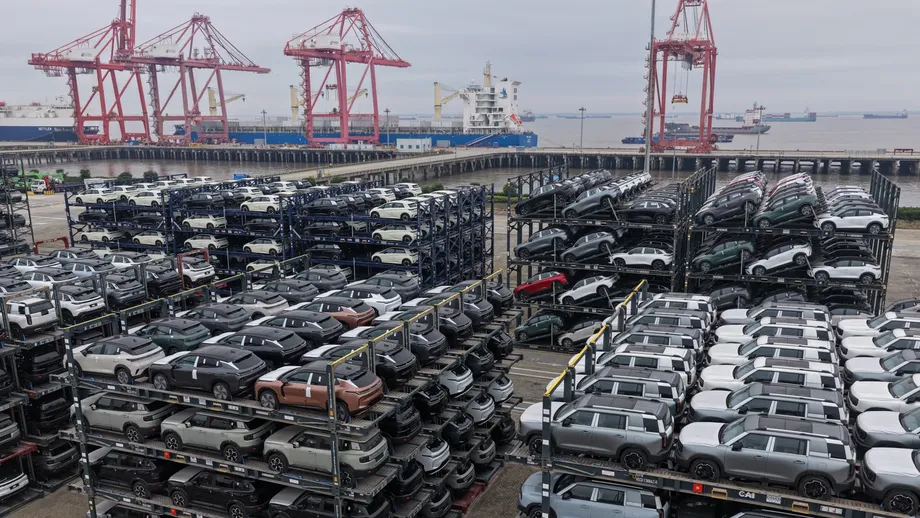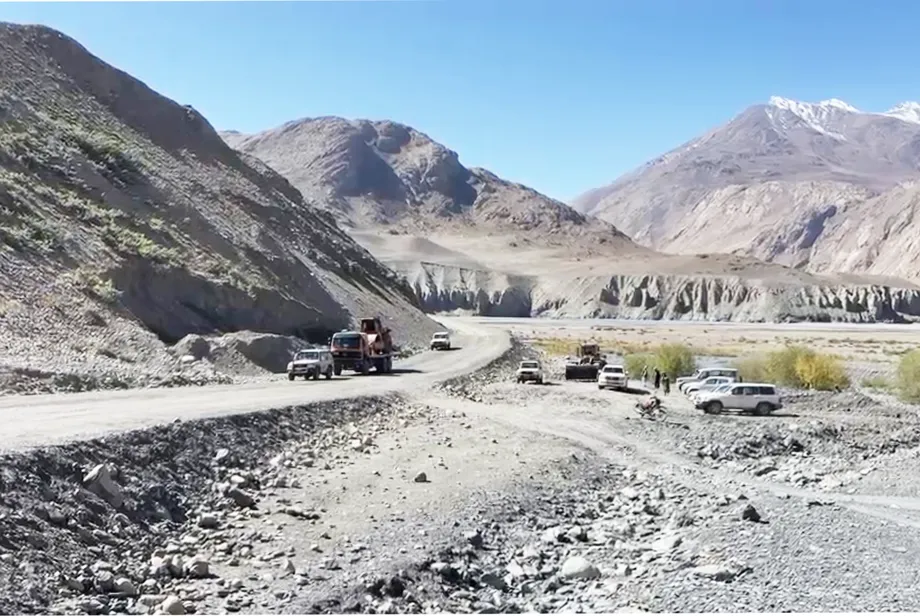
Less Chinese lending, but a lasting construction presence
Chinese funders committed close to $50 billion to African transport projects between 2000 and 2019, compared with about $6 billion since 2019. Yet Chinese construction companies continue to win major contracts in Kenya, Ethiopia, Ghana and other African markets. Their ability to stay busy rests increasingly on competitive bidding, international partnerships and relationships built inside the countries where they work.
Contents
- Less Chinese lending, but a lasting construction presence
- How the financing model changed
- State connections open doors in Kenya and Ghana
- International partners and local relationships broaden the market
- Railways turn construction into a longer commitment
- Ports bring trade opportunities and security questions
- Local employment is substantial, but benefits are uneven
- Critical minerals intensify competition over transport routes
- How governments can secure better terms
- At a Glance
By October 10, 2025, the business model had widened beyond large infrastructure packages backed by Chinese policy banks, the lenders that support government priorities. Chinese builders were pursuing projects financed by a broader range of institutions, developing ties with local decision makers and working with international companies and multilateral funders, which are institutions supported by several countries.
Field research in China, Kenya and Ghana identifies three recurring strategies. Companies use connections to the Chinese state to enter markets and establish credibility. They develop commercial relationships based on trust with other multinationals, regional organizations and international financiers. They also cultivate everyday ties with politicians, officials, business figures and intermediaries who help them understand local priorities and prepare projects before tenders appear.
Successful firms move between these approaches as circumstances change. State support can provide an opening, but continued growth depends on securing customers, managing costs and delivering infrastructure under different financing arrangements. That flexibility helps explain why a sharp reduction in Chinese lending has not produced an equivalent retreat by Chinese contractors.
African governments face a more varied market as a result. Chinese companies still bring equipment, technical experience and established networks, but many now compete for contracts under rules set by host governments and international financiers. The practical issue is how governments turn that competition into affordable infrastructure, reliable services and benefits for local workers and businesses.
How the financing model changed
Beijing has rebalanced its overseas lending, while debt distress in African countries and a tougher risk environment have made new sovereign borrowing more selective. Sovereign borrowing means a government takes on debt and accepts responsibility for repayment. The period of abundant infrastructure packages backed by governments has cooled.
Chinese contractors still bid for highways, ports and power plants. Financing increasingly involves commercial loans, public private partnerships and blended finance from development banks and export credit agencies. A public private partnership shares responsibilities between a government and a business. Blended finance combines different sources of money, while export credit agencies support transactions involving goods or services supplied abroad.
Companies that previously relied on turnkey deals tied to Chinese lenders now face procurement rules established by host authorities and multilateral funders. A turnkey deal places responsibility for delivering a completed project with the contractor. Under the newer arrangements, winning work requires firms to satisfy a wider range of financial, technical and contractual requirements.
Some builders offer contracts covering the full life cycle of an asset, from design and construction to operations and maintenance over many years. Others take minority equity stakes, buying a smaller ownership share so that their returns depend partly on the project's success. Both approaches deepen their involvement beyond the construction stage and can align their interests with those of host governments.
Contractors also move machinery and experienced crews between countries to reduce costs. Local supplier networks help them meet tender requirements. In East African rail projects, standard gauge tracks and Chinese specifications for signaling and rolling stock allow firms to use systems they already know. Rolling stock means locomotives and railway carriages or wagons. Familiar equipment and standards can simplify operations and lower costs.
State connections open doors in Kenya and Ghana
China Road and Bridge Corporation established a base in Kenya in the 1980s, initially working as a subcontractor. Decades later, it became the lead contractor for the Nairobi to Mombasa Standard Gauge Railway. Loans backed by sovereign commitments gave the company access to major projects and helped establish its reputation for handling complex construction.
China Harbour Engineering Company entered Ghana through a package financed by China in the 2010s. That initial project helped it develop relationships across ministries and the private sector. It then used those networks to pursue work that did not depend on Chinese lenders.
Large railway schemes in East Africa show how these relationships can extend across an entire project. Chinese firms handled design, construction and early operations on the Addis Ababa to Djibouti railway and Kenya's standard gauge railway. They trained local employees, brought in equipment and technical standards familiar to their teams, and sought management rights to stabilize operations.
Financing arrangements changed over time as well, moving from state loans carrying no interest toward commercial loans backed by export credit. Chinese state connections helped companies enter these markets, while the work increasingly demanded commercial discipline. Contractors had to manage costs and operations as well as complete construction.
International partners and local relationships broaden the market
China Harbour Engineering Company joined Western multinationals to win port projects in Ghana. Those partnerships showed that it could work under international standards and arrangements in which partners share governance. For an established contractor, such alliances open access to projects financed outside China's lending system.
China Road and Bridge Corporation pursued international tenders in Kenya beyond projects funded by China. Equipment and skilled teams already stationed in the region helped it reduce costs. A company with a working regional base can deploy those resources again instead of assembling every project from the beginning.
Survey evidence puts the wider commercial presence at more than 10,000 Chinese owned firms in Africa. Most are privately owned and focused on local demand. They operate in construction, manufacturing, services and real estate, often profitably. Their activity extends well beyond the largest state connected infrastructure companies.
Company directors also meet regularly with politicians and senior officials to understand priorities, including industrial parks, housing and roads linking ports to surrounding transport networks. Some companies undertake feasibility studies before tenders are announced. These studies examine whether a proposed project is workable, giving the firms early insight into design choices and costs.
Local consultants and intermediaries help companies navigate procurement, licenses and environmental approvals. Such relationships can speed project preparation and delivery. They also make transparent procedures and oversight essential, because early access to decision makers can create opportunities for favoritism or weak compliance with standards.
The three strategies often work together. State ties provide an initial opening, international partnerships widen financing opportunities, and local relationships help firms understand what governments want built. Companies that can combine these approaches have more options when one source of funding becomes less available.
Railways turn construction into a longer commitment
The Mombasa to Nairobi railway opened in 2017 and illustrates what follows the building phase. Its operator has reported long stretches of safe service. Passenger and freight volumes have grown, and the project has been credited with employment and skills transfer, including training thousands of people in standard gauge railway technology.
Chinese technology, equipment and management models support the railway's operations. For companies familiar with those systems, a common technical platform helps manage maintenance and upgrades. Kenya's experience shows how contractors can become operators and maintenance providers, strengthening their relationships with public agencies while taking on an obligation to deliver dependable service.
The Tanzania Zambia Railway represents another form of extended involvement. Built in the 1970s, the line is slated for a major overhaul and new operating arrangements involving a Chinese construction company. Its 1,860 kilometer route connects Zambia's Copperbelt with the port of Dar es Salaam.
The plan includes rehabilitating tracks and workshops and supplying new locomotives, passenger coaches and freight wagons. The upgrade would provide a faster route for copper and cobalt exports to the Indian Ocean and reduce pressure on congested transport routes in southern Africa. A timetable for the overhaul was not given.
Key stages in the railway story show how the relationship has developed:
- 1970s: The Tanzania Zambia Railway was built, connecting the Copperbelt with Dar es Salaam.
- 1980s: China Road and Bridge Corporation established its Kenyan base as a subcontractor.
- 2010s: China Harbour Engineering Company entered Ghana through a package financed by China.
- 2017: The Mombasa to Nairobi railway opened.
- Since 2019: Chinese infrastructure lending became more selective, while contractors broadened their ways of securing work.
The Tanzania Zambia route also competes with other corridors crossing national borders that are backed by the United States, Europe and Japan. For the Chinese company, the project is both a construction contract and an operating investment. Its commercial prospects depend on attracting cargo that could travel along rival routes.
Ports bring trade opportunities and security questions
Chinese builders have constructed or expanded dozens of African ports, including facilities in West Africa designed for deep water vessels and hubs on the Indian Ocean. Port projects often include logistics systems, industrial zones or railway connections, linking maritime trade with production and inland transport.
Security analysts have pointed to specifications at some ports that could accommodate military support if future policy allowed it. China already maintains a support base in Djibouti and docks naval vessels around Africa for exercises and visits. Decisions about access remain in the hands of host governments.
Port concessions therefore involve both commercial infrastructure and national security responsibilities. Transparent contracts, clear rules on access and use, and independent oversight help governments manage facilities that serve trade while retaining authority over who uses them.
Security services have expanded alongside Chinese investments in settings with greater risks. Chinese security companies operate in multiple African countries, protecting hydropower plants, mines, railway lines and housing sites. Their duties range from guarding perimeters and escorting convoys to responding to incidents.
Many of these companies recruit former military personnel and maintain close ties with Chinese state bodies. In some countries, their expansion has moved faster than regulatory clarification, creating concerns about accountability and the use of force at sites owned by foreign companies.
Host governments retain responsibility for security. They can require licenses, vetting and training standards for foreign contractors, set rules on carrying weapons and require coordination with local police. Incident reporting and community engagement processes are particularly relevant where projects change land use or restrict access. Clear requirements protect communities and investors and reduce the risk that a serious incident damages public support for infrastructure partners.
Local employment is substantial, but benefits are uneven
Nearly nine in ten employees at Chinese firms in Africa are local, according to survey evidence. Many companies provide apprenticeships and training at work, particularly in sectors requiring skilled labor. New equipment, techniques and management practices can improve productivity, while large transport projects have trained thousands of African technicians and managers.
Local purchasing and management representation have not reached the same level as employment. About half of inputs at surveyed firms are sourced locally, and African representation in management remains below half. Governments seek to increase those shares through procurement rules, industrial policy, local content targets, supplier development and managerial training.
Local content requirements aim to keep more project spending and employment within the host economy. Their success depends partly on whether local businesses can meet quality and safety requirements. Supplier development programs can help those businesses qualify for work rather than leaving targets unmet.
Research on communities near Chinese operated mines presents a mixed picture. Residents report better access to paved roads and piped water, reflecting company investment and public works associated with mining. The same areas also report higher unemployment and stronger sentiment against Chinese companies.
Those findings place project design, the distribution of benefits and environmental management at the center of the development question. New roads or water connections can improve daily life, while communities can still experience employment problems or dissatisfaction with the companies operating nearby.
A global monitoring group recorded hundreds of allegations against Chinese companies operating abroad between 2013 and 2020. Africa accounted for more than a quarter of the claims. The most frequently cited issues were loss of livelihoods, weak environmental impact assessment and labor disputes, especially in mining, energy and construction.
Only a small share of companies provided detailed responses. Many referred to compliance with local laws, which can be weakly enforced. Stronger transparency and disclosure policies, continuing risk assessment before and during projects, and effective procedures for handling complaints at individual sites can help address problems early and build community trust.
Critical minerals intensify competition over transport routes
Demand for minerals used in electric vehicles, electricity storage and renewable energy technologies has drawn Africa into a wider contest for cobalt, lithium, nickel, copper and rare earths. Chinese companies control an expanding share of extraction in key countries and an even larger share of processing capacity.
Chinese ownership dominates cobalt and copper assets in the Democratic Republic of Congo, where several cobalt processing plants operate alongside mines. Much of the refining that adds greater value still takes place in China. Those supply chains serve Chinese manufacturers and companies elsewhere that make batteries and technology products.
The United States and its partners are trying to establish alternative supply routes. Their initiatives finance railway and port upgrades along corridors moving copper and cobalt out of southern Africa. Government backed lenders provide private companies with loans and guarantees, while agreements with countries rich in minerals aim to attract investment.
These efforts remain smaller than China's presence, but they are changing financing and governance choices. Environmental and social standards receive prominent attention in competing proposals, which can influence the requirements governments include in tenders and contracts covering many years.
Deals exchanging resources for infrastructure remain under scrutiny. Some earlier arrangements tied loans to extraction rights and allowed repayment in minerals. They prompted debate about transparency, value for money and environmental safeguards. Their terms matter because they connect today's infrastructure spending with future resource income.
Zimbabwe and Namibia have restricted exports of unprocessed lithium to encourage companies to build processing plants locally. Several governments have tightened rules to retain more value within their economies. Enforcement can be uneven, and powerful interests do not always adjust quickly.
African states increasingly want investment that connects extraction with local processing and wider industrial activity. More transparent contracts and incentives for integrated production can help them pursue that objective while competing for capital and infrastructure.
How governments can secure better terms
Chinese companies increasingly operate in ways familiar from their Western competitors: bidding in open tenders, forming international partnerships and pursuing public private partnerships. African governments have more scope to shape results when they establish clear rules and apply them consistently, regardless of a contractor's nationality.
The objective is better projects on better terms that support industrial strategy and public welfare, rather than choosing a geopolitical side. Procurement, debt management, labor policy and oversight all influence whether a completed asset delivers lasting public value.
- Run open tenders with standardized documents. Publish contracts, beneficial owners, bid evaluations and reasons for awards so the public can see who ultimately owns participating companies and why a bid won.
- Compare costs across the full life of an asset, including operations, maintenance and decommissioning, rather than selecting on the construction price alone.
- Set measurable targets for local purchasing, apprenticeships, skills training and advancement into management. Help local suppliers meet quality and safety standards.
- Require independent environmental and social assessments, community consultation and effective complaint procedures. Tie payments to compliance milestones.
- Strengthen debt management through credible project appraisal and stress testing, which examines whether repayment remains manageable under difficult conditions. Where suitable, use project finance structures that contain risks within the project.
- License foreign security providers, establish training and conduct standards, require coordination with police and publish incident reports.
- Coordinate regional standards for ports, railways and power connections. Align access rules and tariffs with neighboring countries so corridors compete on service quality and efficiency.
- Encourage mining joint ventures that transfer technology and build local processing capacity. Reward commitments to further processing plants and research partnerships.
- Invest in procurement agencies, independent regulators and audit institutions so contractual requirements are enforced consistently.
Governments also need to judge construction and future operation together. A lower initial price may be attractive, while maintenance arrangements, management capacity and financing commitments determine what the public pays and receives over the asset's working life. The shift in Chinese contracting makes those choices more central to negotiations.
At a Glance
- Chinese transport finance totaled close to $50 billion in 2000 to 2019, compared with about $6 billion since 2019.
- Chinese contractors remain active through state connections, international partnerships and relationships with local decision makers.
- Kenya's railway and the planned Tanzania Zambia Railway overhaul show companies moving beyond construction into operations and maintenance.
- Port investments and expanding private security services require clear access rules, transparent concessions and host government oversight.
- Nearly nine in ten employees at surveyed Chinese firms are local, while local sourcing is about half and African management representation remains below half.
- Mining communities report infrastructure gains alongside higher unemployment and stronger sentiment against Chinese companies.
- Human rights allegations focus on livelihoods, environmental assessments and labor disputes, with few detailed company responses.
- Critical minerals are driving competition over extraction, processing and transport corridors.
- Open procurement, careful debt appraisal, enforceable safeguards and local skills development can help African governments retain more value.