Faster trains, a growing bill and plans for more
Indonesia is pursuing a roughly 60 kilometer subway in Bali and a possible high speed rail extension toward Surabaya while negotiating how to manage the debt of Whoosh, its first high speed railway. The Jakarta to Bandung project cost around US$7.27 billion, and its Indonesian shareholder consortium recorded an estimated 4.2 trillion rupiah loss in 2024, followed by about 1.6 trillion rupiah in the first half of 2025.
Contents
- Faster trains, a growing bill and plans for more
- How the cost reached US$7.27 billion
- More passengers have not closed the financial gap
- What Indonesia is negotiating with China
- Why Danantara is expected to carry the responsibility
- Bali's subway promise meets everyday congestion
- Debt trap fears and the costs behind them
- How stations and connections could improve the finances
- Surabaya expansion requires decisions before construction
- At a Glance
As of October 10, 2025, the government is looking to its sovereign investment manager, Danantara, to lead a financial restructuring with Chinese counterparts and lenders. Officials want to ease pressure on the railway and its shareholders without adding obligations to the national budget.
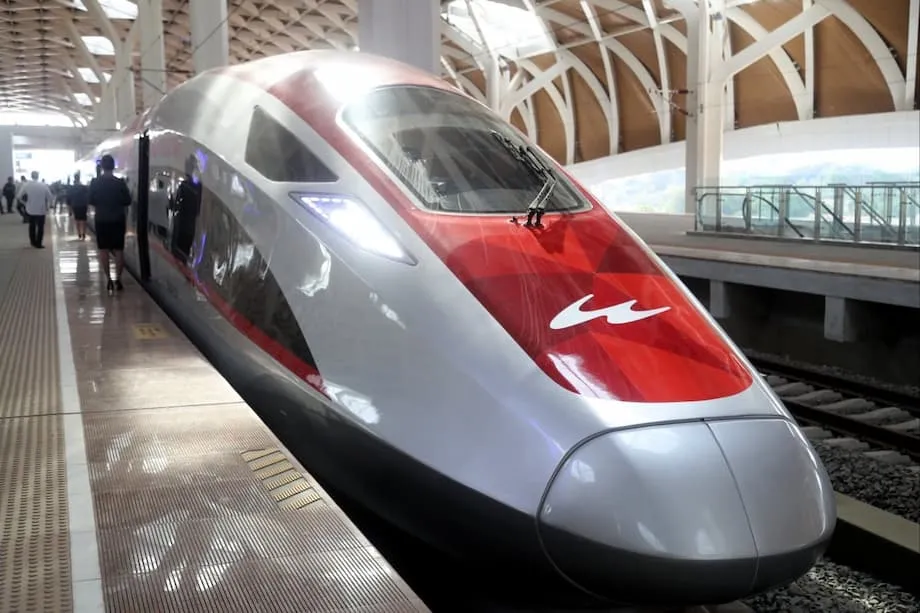
Whoosh began commercial service in October 2023. It covers the 142 kilometer corridor between Jakarta and Bandung in around 40 to 45 minutes, compared with three hours or more by car. In its first two years, it has carried millions of passengers and operated without major technical incidents.
Passengers have gained a much faster journey. The financial challenge is that ticket revenue has not kept pace with operating costs and debt payments. Growing demand, concern about affordable fares and the cost of borrowing now sit together at the center of Indonesia's rail decisions.
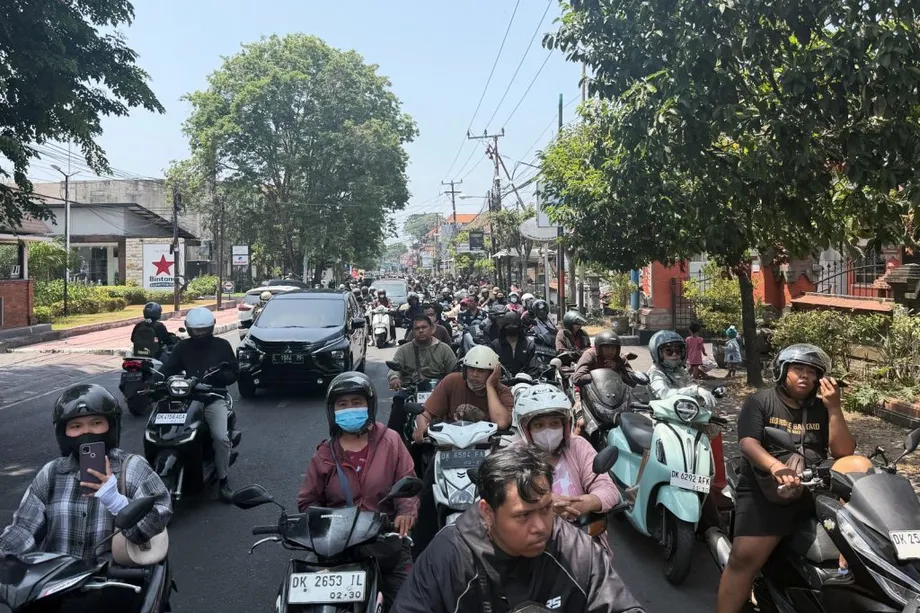
Bali's proposed subway shows why the appetite for more rail remains strong. Traffic crowds narrow streets from Kuta to Denpasar, slowing residents, tourists and deliveries. Many Indonesians expect China, which helped deliver Whoosh, to play a central role in the next projects. The outcome of the debt negotiations will help determine what gets built and who pays.
How the cost reached US$7.27 billion
Indonesia selected China's proposal for the Jakarta to Bandung railway over a Japanese bid in 2015. Financing and delivery promises helped decide the competition. China agreed to finance most construction through the government owned China Development Bank, while Indonesian and Chinese state companies formed a company to build and operate the line.
The initial construction estimate of roughly US$6 billion rose as land acquisition obstacles and pandemic delays slowed the project. By 2023, Indonesia and China had agreed on a final cost increase of about US$1.2 billion, taking the total project value to around US$7.27 billion.
About 75 percent of the original cost was financed through a loan package of approximately US$4.5 billion to US$4.6 billion, with annual interest close to 2 percent. Additional borrowing for the cost increase carried a higher rate of around 3.4 percent. Interest is the price paid for borrowing money, so the higher rate added pressure to future payments.
PT Kereta Cepat Indonesia China, known as KCIC, owns and operates the railway. The Jakarta based joint venture manages its trains, stations and daily service. An Indonesian consortium, PT Pilar Sinergi BUMN Indonesia, holds 60 percent, while a Chinese group holds 40 percent.
The Indonesian shareholders include state railway operator Kereta Api Indonesia, construction company Wijaya Karya, toll road operator Jasa Marga and plantation company PTPN VIII. China Railway International heads the Chinese group, which also includes companies working in rail construction, rolling stock and signaling.
The project's main milestones show how quickly construction ambitions have turned into questions about repayment:
- 2015: Indonesia chose the Chinese proposal over the Japanese bid.
- 2023: Indonesia and China agreed on a cost increase of about US$1.2 billion.
- October 2023: Whoosh began commercial service.
- 2024: The Indonesian consortium recorded an estimated loss of 4.2 trillion rupiah.
- First half of 2025: KCIC carried about 2.9 million passengers, while the Indonesian consortium recorded about 1.6 trillion rupiah in further losses.
- August 2025: Kereta Api Indonesia's president director warned lawmakers about the financial strain.
- October 2025: Debt negotiations are proceeding alongside preparations for possible rail expansion.
More passengers have not closed the financial gap
KCIC carried about 2.9 million passengers in the first half of 2025, an increase from the same period a year earlier. Daily volumes typically run between 20,000 and 30,000 riders. Demand is substantial for a new premium service, but remains below the most optimistic forecasts used to estimate early revenue.
Kereta Api Indonesia, the largest shareholder on the Indonesian side, absorbed roughly 951 billion rupiah of the consortium's deficit in the first half of 2025. The losses have made the railway's financing a concern for the national operator's wider business, as well as for KCIC.
Bobby Rasyidin, president director of Kereta Api Indonesia, warned the House of Representatives in August that urgent action was needed. Speaking before the commission overseeing state companies and investment policy, he called for coordination with Danantara to address the debt and protect the railway's broader portfolio.
The issue with Whoosh is a ticking time bomb. We will coordinate with Danantara to restructure KCIC debts and rebalance our portfolio.
Some lawmakers said early ridership had fallen short of both optimistic and conservative planning cases, increasing the financial pressure. Others urged the government to separate public service obligations from operating companies' finances so the national railway would not carry prolonged losses from a strategic project.
The practical problem is straightforward: a train can be useful and popular while still earning too little to meet all its bills. KCIC must pay to run the service while also meeting the obligations created by its construction loans. Executives and lawmakers say the current financial structure leaves too little room for the passenger numbers achieved so far.
What Indonesia is negotiating with China
Danantara is leading talks with China's National Development and Reform Commission in Beijing and with lenders, including China Development Bank. The aim is a comprehensive restructuring that eases pressure over the short and medium term on KCIC and its Indonesian shareholders without transferring the burden to the state budget.
Two main options are under consideration. One is a capital injection, giving KCIC more equity and reducing its dependence on ticket receipts to meet debt payments. Equity means money invested by owners, rather than money borrowed under a repayment schedule.
The other option would transfer the railway infrastructure to the state while leaving train operations under a concession. Under that arrangement, an operator would run the service under agreed terms while the state owned the infrastructure. The proposal would remove high fixed infrastructure costs from the project company's books and bring Whoosh closer to the way other public railway assets are managed.
Investment Minister Rosan Roeslani described the effort as broader than rescheduling payments. He said the intended solution would reduce default risk and repair the project's finances so it could support service growth and future extensions.
The goal is comprehensive reform so that after restructuring there will be no more risks such as the possibility of default in the future.
Default means failing to meet a required debt payment. Other options in the negotiations include reducing interest on the loan for the cost increase, extending the grace period before payments become due, allowing more years for repayment and matching payment schedules more closely to seasonal passenger demand.
Indonesia is also seeking clearer governance and operating rules. KCIC's management and Indonesian shareholders need greater certainty about responsibilities and decisions as they work through the railway's financial difficulties. No final restructuring terms or completion date have been announced.
Why Danantara is expected to carry the responsibility
Finance Minister Purbaya Yudhi Sadewa has said the responsibility for resolving Whoosh's debt rests with Danantara, rather than the state treasury. Danantara brings together state enterprise holdings and receives substantial annual dividends that can be used to support strategic assets.
Purbaya said those resources and cash flows should allow the investment manager to address the liabilities without placing additional obligations on the national budget.
KCIC is under Danantara and they have their own management and dividend streams. The issue can be resolved through Danantara's dividends without burdening the state fiscally.
The choice between new equity and state ownership of infrastructure matters because it determines where costs sit. A capital injection would strengthen KCIC directly. An infrastructure transfer would change who owns major assets and how their costs appear in the operator's finances.
Officials are trying to give the railway enough financial space to build its business while protecting other state railway activities. Indonesia's moderate national debt compared with many peers, supported by legal limits on budget deficits, provides room to manage large projects if they are kept off the central government's balance sheet and supervised through a disciplined investment manager. The approach places Danantara and negotiations with lenders at the center of that effort.
Bali's subway promise meets everyday congestion
Bali's leaders are working with Chinese partners on an urban subway concept stretching roughly 60 kilometers. Planning and initial works are valued at about US$20 million, with a first line expected in the early 2030s if the timetable holds. The project remains at an early stage.
Residents have practical reasons to welcome movement toward rail. Tourism, logistics and everyday errands all compete for limited road space. A subway promises an alternative to journeys whose duration changes with the traffic.
Surfing instructor Amri Anjulius has spent 16 years navigating Bali's bottlenecks. He says the island needs the subway as much as tourists need its beaches and sees Chinese involvement as an almost expected outcome of Indonesia's experience on Java. Describing how such projects are decided, he said:
You ask the government and if they say it is China, then it is China. I think these projects are for China.
Bali's challenge is to turn that expectation into a railway that opens on time and charges a usable fare. Decision makers say they want to carry over what worked technically on Java while establishing a more durable financial model before construction in Bali.
Debt trap fears and the costs behind them
China's participation in major infrastructure has prompted debate about so called debt traps, a phrase associated with concerns about opaque contracts and the seizure of assets pledged as security. Sri Lanka's Hambantota Port and financing for Uganda's airport expansion are often cited in those arguments.
Many independent researchers argue that this account oversimplifies complicated local decisions and fiscal management problems. Large projects still carry real financial risks when construction costs are high and expected demand fails to arrive.
Whoosh's immediate difficulties involve sizable loans, material interest costs and early passenger revenue that has not filled the gap between operating expenses and debt service. Indonesia's task is to rebalance the mix of debt and investment, allow ridership time to grow and develop income beyond tickets.
Those measures are common in high speed railway systems, where fare income rarely covers every cost in the early years. For Indonesia, the central decisions concern repayment terms, ownership, operating income and the amount of support that can be provided through Danantara.
How stations and connections could improve the finances
Whoosh's long term business depends on more than the speed of its trains. Smooth connections with airports, metros, commuter trains and buses can make a short rail journey useful for an entire trip. Frequent shuttle buses and straightforward transfers to Jakarta's LRT, MRT and commuter rail would help passengers save time from door to door.
Reliable schedules and easy navigation at Halim and Tegalluar stations can also build passenger confidence. Pricing options, including discounts outside busy periods and combined tickets with commuter services, could fill more seats without increasing average subsidies.
Stations can support housing, offices, universities and shopping districts nearby. This approach, called transit oriented development, puts places people use close to public transport. Whoosh has begun to encourage development around stations in Bandung and on Jakarta's outskirts, although the scale remains modest.
Regional governments could support denser development with a mixture of uses near platforms and invite private developers to invest alongside railway partners. Better access can make nearby land more valuable, creating a possible source of income beyond fares.
Railway owners can capture part of that value through ventures around stations, long leases of state land or agreements to share tax receipts. Indonesia has used versions of these arrangements in urban rail. Wider use around Whoosh would spread the financial burden beyond passengers while following practices used elsewhere.
A revised mix of cheaper borrowing and fresh equity would also leave KCIC more money for service quality and growth instead of interest payments. Currency hedges, financial arrangements used to limit exchange rate exposure, could reduce risk where revenue arrives in rupiah but some debt remains in dollars or yuan.
Clear decision rules between Indonesian and Chinese partners could reduce delays and help control further cost increases. Financing, connections and development around stations therefore need to work together: each affects how many people use the service and how much money the railway can retain.
Surabaya expansion requires decisions before construction
President Prabowo Subianto has signaled support for extending high speed rail from Jakarta toward Surabaya, Indonesia's second largest city. Legal preparations are under way. A longer corridor could connect several growth centers along Java and attract more passengers than the shorter Jakarta to Bandung section.
The expansion also carries financial risks if it advances faster than the repair of Whoosh's finances. Negotiators say governance, funding and arrangements for development around stations should be settled before groundbreaking.
Those decisions include who pays each cost, the balance between loans and equity, applicable interest rates and which bodies have authority to plan development and capture increased land value near stations. The negotiations under way in October are intended to address those issues while maintaining constructive relations with China as a lender and technical partner.
A stable operator and clear ownership would strengthen Indonesia's position. Technical planning also needs attention: some Whoosh stations opened in stages, signaling systems required adjustments and connections with surrounding urban areas lagged behind the railway's opening.
A larger corridor would magnify those difficulties if they were left unresolved during planning. Applying the lessons could deliver shorter journeys, greater mobility and new development along the route. Indonesia's immediate task is to put the first line on firmer financial ground while deciding how future railways will be funded and managed.
At a Glance
- Whoosh opened in October 2023 and covers the 142 kilometer Jakarta to Bandung corridor in about 40 to 45 minutes.
- The project cost around US$7.27 billion after an agreed increase of about US$1.2 billion.
- About 75 percent of the original cost was financed by China Development Bank loans. Borrowing for the cost increase carried a higher interest rate.
- KCIC carried about 2.9 million passengers in the first half of 2025, while its Indonesian shareholder consortium recorded about 1.6 trillion rupiah in losses.
- Danantara is leading restructuring talks involving possible new equity, changes to repayment terms or state ownership of infrastructure with operations under concession.
- Finance officials want Danantara to resolve the liabilities without adding obligations to the national budget.
- Bali's proposed subway would stretch roughly 60 kilometers, with a first line expected in the early 2030s if plans hold.
- A possible extension toward Surabaya requires decisions on financing, governance, station development and technical integration before construction.