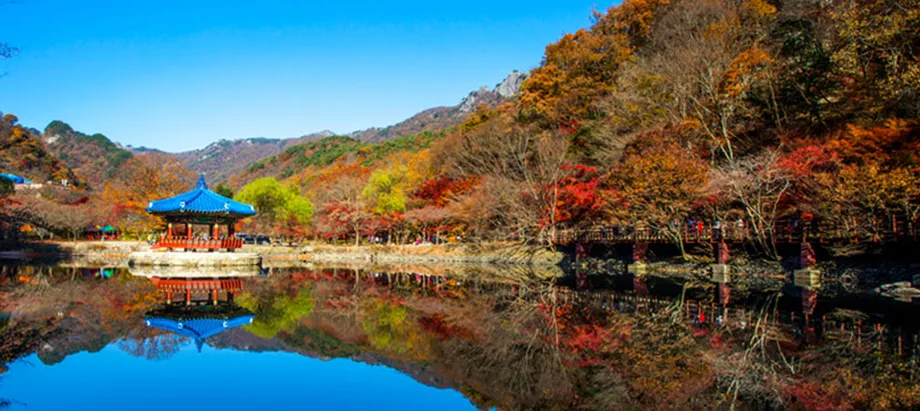
Autumn Color Arrives Later, With Peaks From October Into November
Seoraksan is forecast to reach peak autumn color on October 23, Bukhansan on November 4 and Naejangsan on November 11, giving travelers several weeks to follow Korea's changing leaves across mountains, temple grounds and city parks. As of September 30, the outlook for 2025 points to a slightly later peak than in recent years, following warmer conditions in September and early October.
Contents
- Autumn Color Arrives Later, With Peaks From October Into November
- The 2025 Forecast, Mountain by Mountain
- Naejangsan's Maple Paths and Temple Views
- Piagol Valley Combines Autumn Reflections With a Festival
- A Reserved Forest Walk Within Reach of Seoul
- Hwadam Garden Sets Festival Dates and Entry Limits
- Seoraksan, Odaesan and Hallasan Offer Different Mountain Days
- Cliffs, Temples and Reflecting Pools Beyond the Main Stops
- Palaces, Parks and Easy Trips Around Seoul
- Forests and Regional Events Spread the Autumn Choices
- Plan Around Reservations, Weather and the Return Journey
- Key Points
Korea's foliage season usually runs from October to November. The main planning window this year stretches from mid October into early November, although Naejangsan's forecast extends further into the month. For travelers with just one or two days available for autumn scenery, the difference between an early mountain visit and a later valley walk can shape the whole itinerary.
Gangwon Province generally shows the first changes. Color then spreads from the northeast toward the southwest, with higher elevations turning before lower ground. Seoul reaches its strongest autumn display later in October, while southern mountains and Jeju Island often retain bright leaves into early November.
Korea's largely mountainous landscape concentrates red, gold and amber foliage along ridges, streams and forested temple grounds. Maple and ginkgo trees provide much of the color, but the season also brings pampas grass at Haneul Park, cosmos meadows at Olympic Park and silver grass on exposed peaks. Those places offer alternatives to a mountain hike without losing the autumn atmosphere.
September temperatures average around 20 degrees Celsius, falling to about 5 degrees in November. Weather is typically stable, but mornings and evenings are cooler, and temperatures can change substantially during a single day. Layers, a light insulated jacket and a compact umbrella suit a trip that moves between city streets and mountain paths.
The 2025 Forecast, Mountain by Mountain
Seoraksan, Odaesan and Jirisan are among the earlier destinations in the forecast, while Bukhansan, Mudeungsan and Naejangsan offer later targets. The following timeline gives the expected first color and peak date for each mountain, arranged by the date when leaves are forecast to begin changing.
- September 30: Seoraksan in Gangwon begins changing, with peak color forecast for October 23.
- October 6: Odaesan in Gangwon begins changing, with its peak forecast for October 17.
- October 13: Jirisan, spanning South Jeolla, North Jeolla and South Gyeongsang, begins changing, with its peak forecast for October 23.
- October 14: Hallasan on Jeju begins changing, with its peak forecast for October 30.
- October 16: Gyeryongsan in South Chungcheong begins changing, with its peak forecast for November 1.
- October 17: Bukhansan in Seoul and Gyeonggi begins changing, with its peak forecast for November 4.
- October 18: Palgongsan in Daegu begins changing, with its peak forecast for November 3. Woraksan in North Chungcheong also begins changing, with its peak forecast for October 28.
- October 21: Mudeungsan in Gwangju begins changing, with its peak forecast for November 4.
- October 22: Songnisan in North Chungcheong begins changing, with its peak forecast for November 3.
- October 23: Naejangsan in North and South Jeolla begins changing, with its peak forecast for November 11.
Peak color generally comes roughly two weeks after the first changes and often lasts one to two weeks, depending on weather and wind. The individual forecasts give different intervals, so travelers should use the date for their chosen destination when planning.
Sheltered valleys can retain leaves beyond the forecast peak. Strong winds or an early cold snap can shorten the display. These dates remain forecasts; checking park updates during the week before a visit and leaving some room to change plans will help travelers find the strongest color.
Naejangsan's Maple Paths and Temple Views
Naejangsan National Park is one of Korea's classic autumn destinations, with crimson maples covering slopes and lining the entrance roads. Footbridges, pavilions and still pools provide views even on short walks. Naejangsa, the temple complex at the heart of the park, dates to the seventh century, and its courtyards sit beneath ridges that deepen in red as late October gives way to November.
Naejangsa's approach path is a main attraction in its own right. Maple canopies form tunnels above the route, with mountain scenery beyond. Dodeok Falls and Geumseon Falls offer gentle walks, while nearby Baegyangsa temple, outside the main valley, provides quieter views of water, stone and red leaves reflected in its pond.
Naejangsan Maple Ecology Park lies just beyond the national park boundary. It explains native species and maintains maple tunnels, making it an easy option for families, particularly when crowds build inside the main park.
Naejangsan's strongest color often falls in early to mid November, consistent with the November 11 forecast for 2025. An early arrival helps with parking and quieter paths, and weekdays are worth considering. Scenic park roads and viewpoints near shuttle stops also give visitors options when they want to limit walking.
Jeongeup offers a convenient meal stop alongside a park visit. The city is known for Korean beef restaurants, which often attract weekend diners. Travelers combining lunch with foliage viewing should account for crowds at both the restaurants and the park.
Piagol Valley Combines Autumn Reflections With a Festival
Piagolgyegok in Jirisan is known for sam hong, or the three reds: color on the mountains, color reflected in the water and color in visitors' clothing. Pools and wooded slopes make the valley a place for a slower walk, with repeated opportunities to stop beside the stream.
The route from the entrance to Samhongso Pond runs about 6 kilometers on a gentle grade suited to families and casual hikers. It passes Yeongoksa temple and pools including Yeonjudam, with natural stopping places for photographs and snacks. Hikers seeking wider valley views can continue another 2 kilometers to Imgeollyeong Pass.
Piagol's name has connections first to millet fields and later to memories of conflict. Today, the valley provides a setting for reflection and calm. The annual Piagol Maple Festival adds forest concerts, traditional ceremonies and cultural programs during the foliage season.
The 2025 festival is scheduled for November 1 and 2, a period expected to suit the valley's vivid autumn scenes. Jirisan's mountain forecast gives October 23 as its peak date, while the valley festival provides a later date around which visitors can plan a cultural stop.
A Reserved Forest Walk Within Reach of Seoul
Bukhansan's Uiryeong Trail brings granite peaks, narrow valleys and dense forest within reach of downtown Seoul. Once a corridor restricted by the military, it reopened to the public in 2009 and remains one of the national park's most preserved areas.
Uiryeong offers a moderate walk of about two hours round trip, with forest cover and frequent canopies of changing leaves in late October and early November. The route exits in the Jangheung area of Gyeonggi, where a short bus or taxi journey connects visitors back to the subway.
Reservations control access, and daily visitor limits help protect the corridor and keep the walking experience relaxed. After booking online, visitors receive a QR code, typically through KakaoTalk, for scanning at the entry point. Reserving this walk belongs on the planning list before departure.
Comfortable shoes are sufficient for most walkers, and heavy equipment is unnecessary. The Obong viewpoint looks toward granite domes surrounded by autumn color. With Bukhansan's peak forecast for November 4, the trail offers a mountain option for travelers staying in Seoul during the later part of the season.
Hwadam Garden Sets Festival Dates and Entry Limits
Hwadam Botanic Garden in Gwangju, Gyeonggi Province, offers a carefully planted alternative to a national park. Part of Konjiam Resort, it was developed as an ecological project focused on forest restoration and education, with attention to biodiversity and habitat health.
More than 4,300 species grow across 17 themed zones. Wooden deck paths pass ponds, streams and hillside viewpoints, while the plantings combine domestic and imported species. The garden's autumn display includes more than 400 maple varieties.
The 2025 Fall Festival runs from October 24 to November 16. Entry is limited by hourly and daily caps, and reservations are required. Booking a date and time well ahead is advisable during the busiest foliage period.
Visitors can walk the garden loop or use the eco monorail that circles the grounds. The monorail provides an option for families and people with limited mobility, while the paths allow those walking to pause beside water features and inspect different trees.
Seoraksan, Odaesan and Hallasan Offer Different Mountain Days
Seoraksan is usually the first major mountain to change color. Granite spires rise above deep valleys, and its routes range from paved paths near the entrance to steep stair climbs toward high viewpoints. That variety allows visitors to choose between a short scenic outing and a more demanding day.
The cable car to Gwongeumseong gives easier access to broad views near the ridge. Hikers often combine Biseondae and Ulsanbawi Rock for a full day among cliffs and patches of foliage in the gullies. Seoraksan's forecast starts with first color on September 30 and reaches its peak on October 23.
Odaesan offers a quieter contrast, with evergreen stands beside red maples in mid October. The mostly flat Woljeongsa temple walk is lined with ginkgo trees, combining a stream, boardwalks and temple architecture framed by yellow and red leaves. It suits visitors who want photographs and forest scenery without a long climb.
Odaesan's forecast peak of October 17 makes it an earlier target than Seoraksan's October 23 date. Travelers visiting Gangwon should therefore choose their route according to the mountain's forecast rather than assuming every destination in the province will peak together.
Hallasan, Jeju Island's highest peak, changes quickly once colder nights arrive. Eorimok and Yeongsil trails lead to views across volcanic slopes brushed with crimson and gold, often accompanied by silver grass moving in the wind. The October 30 forecast peak fits a shorter island stay, with Jeju's waterfalls and lava fields adding variety to the visit.
Cliffs, Temples and Reflecting Pools Beyond the Main Stops
Palgongsan near Daegu combines scenic drives with temple visits, particularly Donghwasa. Roads around the mountain allow travelers to stop at pullouts and photograph slopes covered in autumn tones. Its forecast peak is November 3.
Daedunsan in the central region offers a more rugged setting. Staircases cross its cliffs, and a suspension bridge forms part of the mountain experience. Maple trees beside the steep approaches bring bright color into views dominated by rock walls.
Juwangsan is known for rocky valleys, waterfalls and ponds. Jusanji is one of the places where still water reflects red and gold foliage, giving visitors a different view from an exposed ridge or a temple courtyard.
Songnisan pairs forest scenery with cultural stops around Beopjusa and its large Buddha statue. Its gentle forest trail suits groups with different walking abilities. With peak color forecast for November 3, it is another option for an itinerary extending into the start of that month.
These mountains offer different combinations of rock formations, waterfalls, temples and ridge walks. Choosing among them according to walking ability and travel base can keep a foliage trip manageable while providing variety from one day to the next.
Palaces, Parks and Easy Trips Around Seoul
Seoul's palaces and parks provide autumn outings with shorter transfers. Changdeokgung and its Secret Garden, Gyeongbokgung and Deoksugung Stone Wall Road are classic places to see foliage beside traditional eaves, courtyards and walls.
Seoul Forest Park and Olympic Park offer open spaces, grassy meadows and quiet benches. Olympic Park also brings cosmos into the seasonal display. Haneul Park, built on a former landfill, combines wide views with shimmering pampas grass. River parks and forested hills provide further access to ginkgo groves and maple clusters.
Nami Island is known for avenues of metasequoias turning orange and rows of ginkgo trees forming a golden tunnel. A short ferry ride or a zipline transfer adds to the journey. The Garden of Morning Calm offers themed plantings, bridges and ponds, with maples hanging over water features. A relaxed loop of its highlights takes about one or two hours.
Asan Ginkgo Tree Road is reachable by public transport in about two and a half hours. Its long double row of ginkgos is especially striking in afternoon light. Incheon Grand Park offers a maple tunnel against a mountain backdrop and works as an outing lasting half a day.
These destinations give travelers ways to mix mountain walks with less demanding days. Palace grounds, gardens and urban parks also make it easier to keep a flexible day in a Seoul itinerary while watching for the latest foliage updates.
Forests and Regional Events Spread the Autumn Choices
Local tourism teams have been encouraging travelers to look beyond the best known foliage destinations. Visiting smaller forests and regional attractions spreads travel across more places and can provide quieter walks than the busiest national parks.
The Korea National Arboretum in Pocheon, often called Gwangneung Forest, has lake loops and fir forest paths rich in phytoncides. Its decked Forest Ecology Observation Trail provides an easy route even for people new to hiking.
Jangtaesan Recreational Forest near Daejeon is known for metasequoia and cypress groves. A skyway and lookout tower provide views above trees turning orange and copper. Hamyang Sangnim Forest in South Gyeongsang is a historic forest created by people, with a straight walkway through dense trees that become colorful in late October.
In Naju, Jeollanamdo's Forest Resources Research Institute opens a healing forest with guided wellness programs among more than a thousand plant species. It adds another kind of forest visit to a trip built around changing leaves.
Gyeongnam Province's seasonal attractions combine scenery and culture. They include the Namgang Yudeung Lantern Festival in Jinju, air shows in Sacheon and a German Village beer celebration in Namhae. The Geoje panoramic cable car offers views of islands and hills, while Hwawangsan has silver grass fields moving in the autumn wind.
Adding one of these stops can bring variety to a foliage itinerary and reduce time spent queuing at the most famous parks. The choice depends on whether travelers prefer forest paths, views from above or a cultural event alongside their autumn scenery.
Plan Around Reservations, Weather and the Return Journey
Gangwon Province leads the seasonal progression in early to mid October. Seoul, central regions and most national parks reach their strongest color between late October and early November, while southern mountains and Jeju often remain colorful through early November. A schedule following that progression offers a practical starting point.
For a trip lasting a week, combine one mountain day, one garden or palace day, one day for city parks and neighborhoods, and one flexible day. Park updates a few days before departure can guide the flexible outing. Reserve controlled entry in advance, particularly for Bukhansan's Uiryeong corridor and Hwadam Garden.
Weekend visitors should aim to reach trailheads before 9 a.m. Weekday mornings generally offer quieter paths. Follow park signs, carry out all rubbish and keep voices low on temple grounds. Watch for restrictions on photography, and check drone rules, as many parks limit their use.
Sturdy walking shoes, water and simple snacks are enough for most day routes. Pack a base layer, another warm layer and a light insulated jacket, along with a compact rain jacket, a hat and light gloves for early or late outings. On most popular paths, comfortable footwear matters more than heavy boots.
Public transport reaches most foliage destinations. KTX or ITX trains provide quick connections to Gangwon and the southeast, while frequent intercity buses link Jeolla and Chungcheong. A rental car helps when visiting several smaller parks and gardens in one day, particularly in Jeolla, where attractions can be widely spaced.
Check buses or taxis from the trail exit before starting a walk, especially when the route ends somewhere other than the starting point. Offline maps are useful in mountain valleys where mobile data may be weak. Those practical arrangements leave more time for the scenery and make the return journey easier.
Key Points
- The September 30 outlook forecasts slightly later autumn peaks in 2025 after warmer conditions in September and early October.
- Forecast peaks include Odaesan on October 17, Seoraksan and Jirisan on October 23, Hallasan on October 30, Bukhansan on November 4 and Naejangsan on November 11.
- Naejangsan, Jirisan's Piagol Valley, Bukhansan's Uiryeong Trail and Hwadam Garden offer contrasting autumn experiences.
- The Piagol Maple Festival is scheduled for November 1 and 2. Hwadam's Fall Festival runs from October 24 to November 16.
- Reservations are required for Uiryeong access and Hwadam Garden entry.
- Seoul's palaces, Olympic Park, Haneul Park and Seoul Forest Park provide alternatives to mountain outings.
- Regional choices include the Korea National Arboretum, Jangtaesan Recreational Forest, Hamyang Sangnim Forest and Gyeongnam's seasonal attractions.
- Check recent park updates, dress in layers, arrive early and arrange transport from the trail exit.