395,375 arrivals mark a recovery still short of its former strength
Hong Kong welcomed 395,375 visitors from Japan between January and July 2025, a rise of 32.2 percent from the same period in 2024. The increase is giving the city a lift after the long effects of pandemic travel restrictions, even as a weak yen makes overseas holidays more expensive for Japanese households.
Contents
- 395,375 arrivals mark a recovery still short of its former strength
- Why growth has not yet brought a full recovery
- A film set turns Hong Kong nostalgia into an experience
- Chiikawa brings kawaii culture onto the streets
- Domestic holidays and expired passports slow demand
- Tourism promotion moves from photographs to bookings
- Why travel from Hong Kong to Japan dipped
- Japanese officials respond to earthquake rumors
- What fits into a short Hong Kong holiday
- Practical choices for Japanese travelers
- The Bottom Line
Japanese arrivals nevertheless remain more than 46 percent below their level in 2018. Before the pandemic, Hong Kong received more than one million visitors from Japan annually. The latest growth shows renewed interest from a historically loyal tourism market, while leaving a substantial gap to close.
As of September 28, 2025, Hong Kong's appeal in Japan rests on a combination of familiarity and discovery. Neon streets, narrow alleyways, busy food neighborhoods and harbor views sit alongside modern galleries and new attractions. Tourism campaigns bring those contrasts together through nostalgia and kawaii, the Japanese culture of cuteness expressed through characters, collectibles and playful displays.
The weak yen creates different incentives on each side of the relationship. It helps make Japan more affordable for visitors arriving from abroad, while raising the cost of foreign travel for Japanese residents. Many Japanese households have favored domestic holidays, and some people have delayed renewing passports that expired during border closures.
Hong Kong is presenting itself as a close, familiar destination where a short stay can contain plenty of experiences. Flights are more affordable than longer journeys to Europe or North America, and the city's compact layout allows visitors to combine food, shopping, art and sightseeing without spending much of their holiday moving between places.
Why growth has not yet brought a full recovery
The 32.2 percent increase in Japanese arrivals matters because it comes despite financial and practical pressures on outbound travel. Exchange rates, flight capacity and changes in holiday habits all affect how quickly the market can recover. Growth from 2024 and the remaining shortfall against 2018 describe two different parts of that recovery.
Japanese travelers face a more expensive overseas trip when their currency buys less abroad. Airfares, hotels, meals and shopping each become part of a closer calculation. Hong Kong's response is to promote a holiday that delivers variety in fewer days, with short flights, efficient transport and experiences at different prices.
Seoul, Taipei and Bangkok compete for the same weekend breaks and longer weekends. Hong Kong's advantage in that contest is the concentration of things to do: a visitor can move between museums, markets, restaurants and waterfront views without planning a long journey between each stop.
Japan's own tourism boom puts this challenge in perspective. According to the Japan National Tourism Organization (JNTO), the country received more than 21.5 million visitors in the first half of 2025. Arrivals and visitor spending both reached records for that period, and July also recorded its highest visitor total.
Japan is attracting large numbers of international tourists at the same time that Japanese residents face higher costs when traveling overseas. Hong Kong's campaign therefore centers on making a trip short, memorable and easy to book, rather than relying on the appeal of shopping alone.
A film set turns Hong Kong nostalgia into an experience
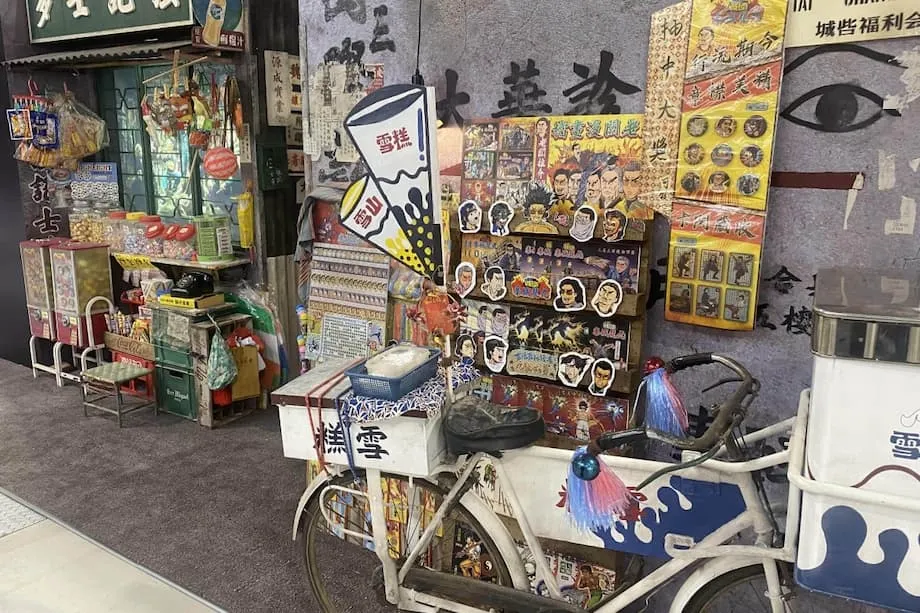
At Tourism EXPO Japan 2025 in Aichi, the Hong Kong Tourism Board built its booth around a set from the recent hit film Twilight of the Warriors: Walled In. The installation recreated the Kowloon Walled City as it might have appeared in the 1980s, with small eateries, a candy shop and a barbershop.
The Walled City has long since disappeared and its site is now a park. Its extraordinary density and layered daily life still fascinate audiences in Japan. Recreating its streets gives potential travelers a place to step inside, take photographs and imagine a setting they may know through cinema.
Hong Kong's action films are part of the attraction for people who grew up watching stories set in backstreets and markets. Younger travelers can approach the same display through character art, collectible culture and carefully arranged photo spots. The booth connects those different interests through a scene that feels old yet newly accessible.
The wider presentation contrasted glass towers and polished city scenes with weathered shopfronts and cinematic alleyways. Video walls showed harbor panoramas and festival footage. Visitors praised the booth's striking appearance, helping the tourism board create a memory that could influence a later booking decision.
Chiikawa brings kawaii culture onto the streets
Hong Kong's summer events gave the campaign another attraction through Chiikawa, the Japanese manga trio whose wide eyed characters have become popular across Asia. Chiikawa Days drew more than 100,000 visitors and helped its host mall record its busiest month for footfall since opening in 2019.
Footfall means the number of visits to a place. For the mall, the record month showed how a character event could bring crowds into a shopping destination. For tourism promoters, it offered a visible example of the city's appeal to people who enjoy cute characters, themed experiences and collectibles.
Installations appeared along tram lines, at ferry piers and in malls. Brands introduced themed menus and limited collectibles, extending the experience beyond one venue. Labubu, a character loved locally, also featured in the city's displays, while panda imagery remained a dependable attraction.
Residents and visitors both take part in these events. For Japanese travelers considering a short holiday, character displays and places suited to photographs give a trip an extra purpose. A limited collection or temporary installation can become a reason to visit a particular neighborhood and share the experience online.
Hong Kong's promotion combines those playful attractions with food searches and toy shop visits. Cute, collectible objects sit alongside familiar harbor views, while nostalgic streets offer a different visual experience. Together, they present the city as somewhere to enjoy through its atmosphere and small discoveries as well as its main sights.
Domestic holidays and expired passports slow demand
Japanese holiday habits changed during the pandemic. Many residents switched to domestic trips and have continued choosing them, finding value and comfort in onsen towns, regional food destinations and theme parks. Onsen are hot springs, often associated with places where visitors can stay, bathe and relax.
Tourism officials in Tokyo acknowledge that some residents have not renewed passports that expired during border closures. An overseas trip requires more preparation for those travelers, while a domestic holiday remains readily available. A meal abroad that costs more when converted into yen adds another reason to stay closer to home.
Safety, convenience and planning also matter. Japanese travelers tend to plan carefully and respond to clear itineraries, language support and transport they can trust. Hong Kong offers a straightforward airport journey, extensive signs in English and Chinese, and compact neighborhoods where museums, markets and restaurants can be visited on foot.
A stay of two or three nights fits more easily into a busy schedule. Hong Kong can feel foreign enough to offer a change of scene while remaining manageable for visitors who want a predictable journey. Promotions need to reach people when they begin comparing destinations and prices.
Special flight offers, character events and seasonal food fairs give travelers concrete reasons to choose particular dates. The campaign's focus on proximity and familiarity works alongside those attractions, making the cost of a short break easier to weigh in yen.
Tourism promotion moves from photographs to bookings
The Aichi expo presentation also promoted experiences beyond the Walled City film set. Neighborhood food walks, night markets, M+ and the Hong Kong Palace Museum featured alongside hiking and island ferry trips. The aim was to show how traditional street life and newer cultural institutions could fit into the same visit.
Airlines have been adding capacity between Hong Kong and Tokyo, Osaka, Nagoya and Fukuoka. More capacity means more seats are available on those routes, giving potential visitors additional choices when planning short stays. Flight availability remains one of the factors shaping the pace of recovery.
Trade days at Tourism EXPO Japan created opportunities for airline and tour partnerships. Public days allowed potential visitors to see, touch and photograph a version of Hong Kong before deciding whether to fly there. The booth served both people who sell holidays and people who might buy them.
Hong Kong's mix of gritty streets and polished attractions is central to that effort. Its marketing draws on the familiarity of film settings while presenting museums, festivals and contemporary city views as reasons to return or make a first visit.
Why travel from Hong Kong to Japan dipped
Travel between Hong Kong and Japan moves in both directions, but the two flows have faced different pressures in 2025. Japan recorded exceptional international visitor numbers, yet arrivals from Hong Kong fell for several months in the middle of the year.
Airlines cited disruptions associated with typhoons and viral rumors predicting a major earthquake in Japan. The rumors affected travel sentiment, showing how quickly claims circulating on social media can change booking decisions. Customers shifted destinations or delayed plans during the peak of the speculation.
Frankie Chow, who leads a Hong Kong travel agency, described the effect on his customers and said inquiries had fallen sharply compared with the previous year during the rumor peak.
The earthquake prophecy has absolutely caused a big change to our customers' preferences.
Chow said some clients chose other destinations or paused their travel plans. That change occurred while Japan's wider international tourism market was setting records, illustrating how concerns within one visitor market can develop differently from the national trend.
Japanese officials respond to earthquake rumors
Miyagi Governor Yoshihiro Murai urged travelers to keep the situation in perspective, pointing out that people living in Japan were not fleeing. He warned that unsupported claims spreading online could damage tourism.
There's no reason to worry, but if unscientific rumours on social media are impacting tourism, that would be a major problem.
Japan's Cabinet Office addressed the claims through its official channel. Its message explained the limits of current earthquake science, particularly the claim that an earthquake can be forecast for an exact moment and location.
Predicting earthquakes by date, time and place is not possible based on current scientific knowledge.
Japanese tourism representatives also increased their outreach in Hong Kong at the city's major travel expo. JNTO took part with materials in Cantonese and focused on direct engagement with potential travelers.
Regional exhibitors promoted culinary journeys, including routes in Kyushu built around tourist trains serving local dishes. A Fukuoka official said food was a leading reason people from Hong Kong chose Japan. Food therefore remains central to the relationship in both directions, even when currency movements, weather and travel rumors affect demand.
What fits into a short Hong Kong holiday
Japanese visitors are looking for value and variety, often within two or three nights. A compact itinerary can begin with the Star Ferry and the Tsim Sha Tsui promenade for views of the skyline, followed by a morning at M+ or PMQ and an afternoon of street snacks and vintage shopping in Sham Shui Po or Mong Kok.
Dinner could mean dim sum or roasted meats one evening, then a ramen or izakaya counter the next. An izakaya is a Japanese venue for drinks and informal meals. A tram ride and a neighborhood dessert shop can round out the evening without adding a long transfer.
Temporary displays, art trails and limited collections give character fans reasons to move around the city. Nostalgic sights offer another route through it: tong lau walkups, neon signs and dai pai dong food stalls bring older streetscapes into the trip. Tong lau are older buildings combining shops and homes, while dai pai dong are outdoor food stalls.
Those locations sit alongside newer, curated neighborhoods on the western side of Hong Kong Island. Travelers seeking a quieter outing can add Lamma Island or Dragon's Back. The combination of urban attractions, island ferries and hiking allows a varied holiday to fit into a long weekend and a tighter budget.
Hong Kong's density is practical as well as visual. Visitors can spend more time eating, browsing or visiting an exhibition when the next stop is nearby. That makes room for both classic sights and less structured time in markets and side streets.
Practical choices for Japanese travelers
Japanese travelers can reduce costs and simplify their stay by arranging the basics before departure. Hong Kong's compact layout makes accommodation, dining and transport manageable, while the timing of a visit affects prices and crowd levels.
Direct services and short flight times make the city suitable for a brief holiday. Travelers still need to compare departures, accommodation and everyday spending, particularly when converting prices into yen.
- Compare airfares from several departure points. Haneda, Narita, Kansai, Chubu and Fukuoka have direct services. Departures in the middle of the week often cost less.
- Consider a stay of two or three nights. Flying from Tokyo takes about four to five hours, with shorter journeys from western Japan.
- Watch peak periods. Golden Week, major trade fairs and long weekends bring crowds to hotels and attractions. Weeks outside those peaks can offer quieter streets.
- Use the Airport Express and MTR. Trains are fast and frequent, with signs in English and Chinese. Taxis are also widely available.
- Get an Octopus card or use contactless payment. These options are accepted by most shops and transport services and make small purchases quicker.
- Plan for language needs. English is common in tourism settings, and a few Cantonese phrases are appreciated.
- Set a budget for food and shopping. Local eateries offer good value, while international fine dining costs more when measured in yen.
- Leave room to explore neighborhoods. Markets and side streets are part of the attraction, so avoid filling every hour with scheduled stops.
- Arrange connectivity. A prepaid SIM or an eSIM obtained before arrival can help with navigation and translation.
- Check entry rules before traveling. Japanese passport holders can visit Hong Kong without a visa for up to 90 days.
Hong Kong's tourism recovery depends partly on making these everyday decisions feel straightforward. Affordable flight options, manageable journeys and a mix of free exploration and paid attractions support the same short break promoted through its film nostalgia and character events.
The Bottom Line
- Hong Kong received 395,375 Japanese visitors from January to July 2025, up 32.2 percent from the same period in 2024.
- Arrivals remained more than 46 percent below 2018, despite renewed growth.
- A weak yen makes overseas holidays more expensive for Japanese residents and supports demand for domestic travel.
- Hong Kong's promotion in Japan combines cinematic nostalgia, a Kowloon Walled City film set and kawaii culture.
- Chiikawa Days attracted more than 100,000 visitors and helped its host mall achieve a record month for footfall.
- Japan welcomed more than 21.5 million visitors in the first half of 2025, with record arrivals and spending for that period.
- Travel from Hong Kong to Japan dipped for several months amid typhoon disruptions and earthquake rumors, which Japanese officials addressed publicly.
- Food, character attractions, photographs and compact itineraries are central to Hong Kong's appeal for short stays.
- Airlines are adding capacity between Hong Kong and several Japanese cities, increasing travel choices.