Eight days of celebrations put transport preparations to the test
Hong Kong expects 8.76 million passenger movements through its land, sea and air control points from October 1 to 8, 2025, as an extended mainland holiday brings visitors into the city and sends residents across the border. The Immigration Department's forecast is about 22 percent above the 7.16 million movements recorded during the same period last year.
Contents
- Eight days of celebrations put transport preparations to the test
- Border traffic rises by 1.6 million movements
- Why the longer holiday matters
- A 23 minute show over Victoria Harbour
- Road closures change access to the waterfront
- Extra MTR trains and overnight journeys
- High speed rail prepares for an October 4 record
- Automated clearance and live border updates
- Heritage celebrations extend beyond National Day
- Harbour safety and an airport tax refund platform
- What the holiday means for tourism businesses
- What to Know
Tourism leaders expect around 1.5 million mainland visitors during Golden Week, which combines National Day on October 1 with the Mid Autumn Festival on October 6. Around 1,300 mainland tour groups are expected. By some tourism measures, the holiday crowds could be the largest since 2018, when mainland visitor numbers reached around 1.52 million.
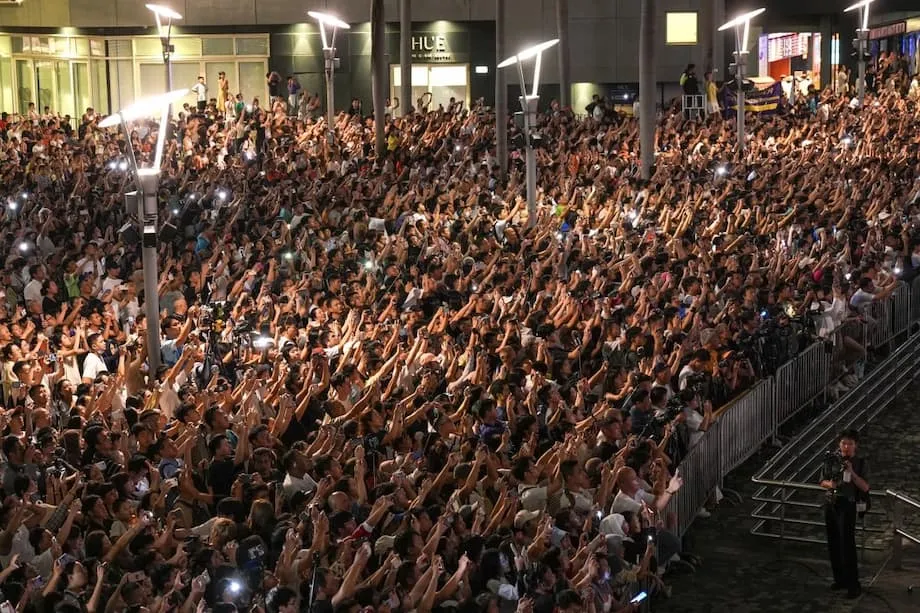
Victoria Harbour will be the centre of the opening day's celebrations. A fireworks display marking the 76th anniversary of the founding of the People's Republic of China begins at 8 pm on October 1 and lasts about 23 minutes. Organisers expect around 290,000 spectators along the two shores.
Transport operators and public agencies are preparing extra trains, more ferry services, automated immigration channels and extensive crowd controls. The MTR will add more than 570 train trips between September 26 and October 8, while around 700 automated clearance lanes will be available across checkpoints during the holiday.
As of September 28, the city is preparing for crowded waterfront promenades, long lines at attractions and heavy demand for journeys home after evening events. Free tram rides, discounted cinema tickets and cultural programmes will accompany the major celebrations, spreading holiday activity across several districts.
Border traffic rises by 1.6 million movements
The Immigration Department's estimate of 8.76 million passenger movements represents an increase of 1.6 million over last year's 7.16 million. The total covers travel through land, sea and air control points, including residents leaving Hong Kong and visitors entering for shopping, dining and holiday events.
A passenger movement is a crossing rather than a count of individual holidaymakers. Someone who leaves Hong Kong and later returns contributes to traffic in both directions. The separate forecast of around 1.5 million mainland visitors describes the expected scale of inbound tourism.
National Day on Wednesday, October 1, and Saturday, October 4, the first weekend of the break, are identified as particularly busy days in the holiday preparations. October 6, the Mid Autumn Festival, is also identified as a peak for border traffic. Travellers should therefore expect pressure at several points across the eight days.
Lo Wu, Lok Ma Chau and Shenzhen Bay are among the crossings where popular northbound routes can develop queues. Morning departures and late evening returns tend to create the tightest bottlenecks. Afternoon travel, or other periods outside the busiest waves, may offer more room.
Across China, officials expect average daily border movements at major ports to exceed 2 million during the combined holiday. Land crossings serving Shenzhen and Zhuhai are expected to handle strong flows, reflecting demand for short journeys within the Greater Bay Area.
Why the longer holiday matters
The mainland holiday runs from October 1 to 8 because National Day and the Mid Autumn Festival fall within the same break this year. Eight days give travellers more time for regional visits and family gatherings, increasing demand for transport across southern China.
Hong Kong's forecast also reflects the recovery of international flights and the return of routine weekend travel within the Greater Bay Area. Those patterns have strengthened passenger flows since the summer, with holiday journeys adding to an already busy regional transport network.
The Guangzhou Shenzhen Hong Kong high speed railway had carried more than 20 million passengers in 2025 by late August, an increase of more than 16 percent from a year earlier. Commuting between Hong Kong and Shenzhen now accounts for a large share of that traffic, while holiday periods can push daily ridership to new peaks.
The expected 1.5 million mainland visitors would bring Hong Kong close to the approximately 1.52 million recorded during Golden Week in 2018. For hotels, shops, restaurants and attractions, that means preparing for visitor volumes near an earlier holiday high while serving residents taking part in the same celebrations.
A 23 minute show over Victoria Harbour
The National Day fireworks will begin at 8 pm on October 1 over Victoria Harbour between Central and Tsim Sha Tsui. Large barges positioned in the central fairway will launch the display, with themed scenes drawing on Chinese animation and the upcoming National Games.
Visitor guidance describes more than 30,000 shells fired in sequences synchronised to music. Public waterfront viewing is free, and the government provides event information through its National Day fireworks page.
The Tsim Sha Tsui waterfront and Avenue of Stars are among the main viewing areas. On Hong Kong Island, Central Harbourfront and Tamar Park near Admiralty offer other vantage points. West Kowloon Cultural District provides lawns and waterfront space, while North Point East Coast Park Precinct offers a more spacious alternative farther east.
Spectators hoping for a clear view should arrive early, ideally two to four hours before the display. Waterfront areas can fill quickly, and road closures may turn the final part of a journey into a long walk. Water, weather protection and comfortable shoes will be useful for people waiting outdoors.
Restaurants and hotels also offer viewing packages. Public promenades provide an alternative without an admission charge, although arriving early remains important. Families seeking more space can consider West Kowloon's lawns, Tamar Park, Central Harbourfront event spaces or the eastern waterfront at North Point.
Road closures change access to the waterfront
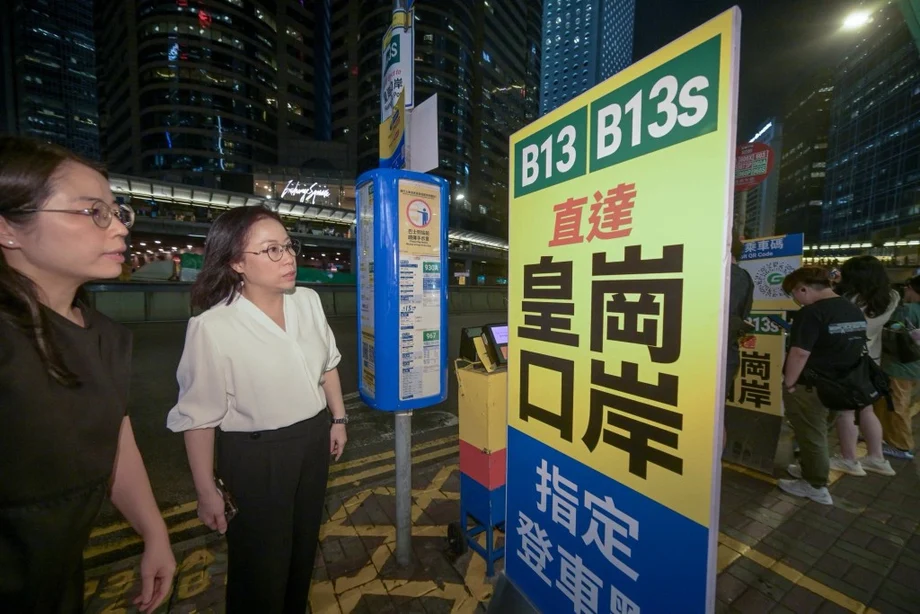
Police will introduce crowd controls along both shores of Victoria Harbour. In Tsim Sha Tsui and West Kowloon, measures begin in the late afternoon, with phased road closures starting from around 5 pm. Buses will be diverted to temporary stops, and some taxi stands will move away from waterfront areas.
Pedestrian barriers and routes allowing people to walk in one direction may be used in crowded corridors. These arrangements are intended to keep spectators moving safely as they arrive for the fireworks and leave afterwards.
Hong Kong Island will also see phased closures around Golden Bauhinia Square, Wan Chai and Central. Roads near the waterfront will be restricted to separate vehicles from pedestrians heading towards promenades and viewing decks.
Drivers should expect limited access around Central and Wan Chai during busy hours, together with parking restrictions in core harbourfront areas. Passengers taking buses or taxis should allow for changed stopping points and additional walking, especially close to the display.
The expected audience of around 290,000 makes the journey away from the harbour a major part of the operation. Extra public transport will help carry spectators home, while police controls will manage the flow from viewing areas into surrounding streets and stations.
Extra MTR trains and overnight journeys
The MTR's programme of more than 570 additional train trips runs from September 26 through October 8. On National Day, extra services will operate on the Island, Tsuen Wan, Kwun Tong, South Island, Tung Chung, East Rail and Tuen Ma lines, particularly during the afternoon and evening.
October 6 brings another major transport operation. After Mid Autumn Festival events, most local railway lines will run overnight services so people attending celebrations can travel home late. Overnight operation applies to most local lines, with passengers needing to check the arrangements for their particular route.
The East Rail Line will add trains in both directions serving Lo Wu and Lok Ma Chau. These services connect the local railway network with two important land boundary crossings, helping passengers complete the Hong Kong part of their cross border journeys.
Busy interchanges and border stations will have reinforced management and additional staff to direct queues. Courtesy channels will assist elderly passengers and families. Upgraded mobile and Wi Fi coverage at major hubs will help travellers stay connected while waiting.
The MTR advises passengers to allow extra time, follow station signs and listen to announcements when platforms and concourses become crowded. More trains increase the number of people the network can carry, while station controls help manage how passengers reach those trains.
High speed rail prepares for an October 4 record
The High Speed Rail Hong Kong Section will operate 13 extra pairs of short haul trains each day from October 1 to 8. A pair means a service in each direction, adding opportunities both to leave Hong Kong and to return.
October 4 is scheduled to bring a record 120 pairs of trains between Hong Kong West Kowloon Station and mainland destinations. The expanded timetable places the largest planned service level on the first Saturday of the holiday, one of the days expected to attract heavy travel.
West Kowloon Station is preparing for those record service levels alongside the wider increase in railway demand. The line's more than 20 million passengers by late August, up over 16 percent from a year earlier, shows the scale of traffic already using the route before Golden Week begins.
Travellers using high speed services should build time for station procedures and queues into their plans. Extra departures provide more transport capacity, but passengers still need time to reach the station and complete the steps required before boarding.
Automated clearance and live border updates
The Immigration Department will make around 700 automated clearance channels available across checkpoints during the holiday. Eligible travellers can use these electronic lanes to complete immigration checks, helping move passengers through control points more quickly.
The Easy Boundary platform will provide live information on average waiting times at individual crossings, along with details of shuttle buses and connecting services. Travellers can use those updates when deciding whether to cross at Lo Wu, Lok Ma Chau or Shenzhen Bay, and when planning the next stage of their journey.
Late morning departures and returns in the middle of the afternoon are among the suggested alternatives to peak travel periods. Documents should be checked before leaving home, including passport validity and any required entry papers, and kept ready for inspection.
Families with young children and passengers carrying bulky luggage should follow signs towards staffed counters or courtesy lanes where appropriate. Everyone should leave a buffer in their itinerary because concentrated holiday arrivals can create unpredictable queues even with extra staffing and automated channels.
The Hong Kong Tourism Board's Golden Week information hub will also carry practical updates on busy periods at attractions and boundary crossings. Checking both transport and attraction information can help visitors plan a day that includes journeys across the city as well as time at their destination.
Heritage celebrations extend beyond National Day
The Tai Hang Fire Dragon Dance and Mid Autumn lantern displays will join the fireworks in drawing visitors during the holiday. Victoria Park's lantern festival is among the attractions highlighted by tourism leaders, with lantern displays also planned across districts.
Tommy Tam Kwong-shun, chairman of the Travel Industry Council, said heritage traditions remain a strong attraction for visitors. He described the combination of National Day events and Mid Autumn celebrations:
Besides the many large and small-scale events this year, such as the National Day fireworks, there will be Intangible Cultural Heritage events during the Mid-Autumn Festival, such as the Tai Hang Fire Dragon Dance. Visitors really appreciate this, as well as the Mid-Autumn Lantern Festival at Victoria Park, which should also attract them.
Intangible cultural heritage means traditions and practices passed between people, such as the Fire Dragon Dance, rather than a building or an object. These celebrations give visitors reasons to travel beyond the main fireworks viewing areas and spend time in other neighbourhoods.
City agencies and cultural groups are coordinating a broad programme throughout Golden Week. Free tram rides, extra services on ferries crossing the harbour and discounted cinema tickets on selected days form part of the celebrations. The transport arrangements also help residents and visitors move between popular districts.
Harbour safety and an airport tax refund platform
Marine traffic will face temporary restrictions during the fireworks. Parts of the central fairway will be closed to regular vessels, creating safe areas around the launch barges. Exclusion zones will keep other boats away from the display operation.
Vessel operators should follow Marine Department notices and instructions from marine police. Safety checks will increase around harbour approaches, and improper anchoring near restricted areas may lead to enforcement action.
Marine police have also reminded operators that drinking or using drugs while at the helm carries heavy penalties. Harbour cruises and other vessels will need to observe the temporary controls as well as normal navigation requirements.
At the airport, the Airport Authority will launch a new Refund Application Platform for the air passenger departure tax on October 1. Eligible passengers flying into or out of Hong Kong can check the new service when arranging their travel. The platform gives qualifying passengers a way to apply for a refund.
What the holiday means for tourism businesses
Airlines and transport operators are preparing for strong demand across the eight day break. Data from industry platforms shows rising flight searches and bookings, with mainland domestic ticket reservations well ahead of last year and international bookings also higher.
The Civil Aviation Administration has been guiding carriers to add capacity where possible while avoiding wasteful scheduling. High load factors, meaning a large share of seats filled, and more stable fuel prices support expectations of stronger revenue per seat during peak weeks.
Cathay Pacific Group carried 24 percent more passengers in July than a year earlier. Its low cost sister airline, HK Express, reported steady network expansion. The overlap between Golden Week and the Mid Autumn Festival is expected to lift leisure demand in October, including outbound trips by Hong Kong residents and arrivals from the mainland.
Hong Kong's hospitality, retail and dining businesses stand to gain from the expected visitor influx. Waterfront restaurants, harbour cruise operators, shopping areas in Tsim Sha Tsui and Central, and cultural venues hosting holiday programmes are likely to see heavy foot traffic. Around 1,300 mainland tour groups will add to demand between October 1 and 8.
The holiday's main dates bring different pressures on the city:
- September 26 to October 8: The MTR programme adds more than 570 train trips.
- October 1: National Day fireworks begin at 8 pm, with phased waterfront road closures from late afternoon. The airport tax Refund Application Platform launches.
- October 1 to 8: The mainland holiday runs for eight days, and high speed rail adds 13 pairs of short haul trains daily.
- October 4: High speed rail plans a record 120 pairs of trains serving Hong Kong West Kowloon Station and mainland destinations.
- October 6: Mid Autumn Festival celebrations are followed by overnight services on most local MTR lines.
For residents and visitors, the practical changes are extra transport choices alongside longer queues, temporary road restrictions and crowded public spaces. Planning around the event timetable and checking live travel updates will help people move between the border, the waterfront and other holiday destinations.
What to Know
- Hong Kong forecasts 8.76 million border passenger movements from October 1 to 8, about 22 percent above last year's 7.16 million.
- Tourism leaders expect around 1.5 million mainland visitors and approximately 1,300 mainland tour groups.
- The October 1 fireworks begin at 8 pm, last about 23 minutes and are expected to attract around 290,000 spectators.
- Waterfront road closures begin in phases from late afternoon, including around 5 pm in Tsim Sha Tsui and West Kowloon.
- The MTR adds more than 570 train trips, with overnight services on most local lines after October 6 celebrations.
- High speed rail adds 13 train pairs daily during Golden Week and plans 120 pairs on October 4.
- Around 700 automated immigration channels and Easy Boundary waiting time updates will support border travel.
- Marine exclusion zones will protect the fireworks operation, and an airport departure tax refund platform launches on October 1.