Factories in Japan are serving customers far beyond Japan
At least 84 German companies operate production or assembly facilities across 132 locations in Japan, giving German industry a manufacturing footprint that reaches well beyond the Japanese market. About 730 German companies operate in the country altogether. For manufacturers deciding where to produce for Asia, Japan is becoming a base for exports as well as a destination for sales.
Contents
- Factories in Japan are serving customers far beyond Japan
- What the manufacturing survey covers
- Why the cost per finished product matters
- How Japanese plants connect with Asian markets
- Stability becomes more valuable as trade policy shifts
- Automation supports precision and flexible production
- Workers and currency swings remain the main pressures
- Japan and India take different roles in Asian investment
- Quality, reputation and the next expansion cycle
- Key Points
The German Chamber of Commerce and Industry in Japan (AHK Japan) reports that 41 percent of surveyed manufacturers export products made in Japan to the Association of Southeast Asian Nations (ASEAN), while 38 percent ship to China and 29 percent to North America. Some 71 percent serve Japanese and overseas customers from the same facilities, combining local production with an international business.
Expansion plans suggest that companies want to build on that footprint. In the chamber's survey, 57 percent intend to increase production capacity in Japan in the coming years, and 35 percent report greater interest from headquarters in using the country for manufacturing and diversification. The survey gives no specific dates for those capacity increases.
A weaker yen has reduced costs measured in euros, while Japan's reliable legal system and economic stability help companies plan. Its proximity to China and Southeast Asia also puts factories near customers and markets that remain central to German supply chains and revenue plans. Those advantages matter as manufacturers weigh uncertainty over international trade policy.
Japan's attraction comes with practical limits. Companies struggle to recruit qualified workers, and exchange rate swings can disrupt financial planning. The emerging strategy combines Japan's dependable production environment with other locations, rather than placing every factory or regional function in one country.
What the manufacturing survey covers
AHK Japan's first survey focused on German manufacturers with plants in the country polled 34 companies from 69 relevant corporate groups. Respondents included businesses in chemicals and pharmaceuticals, mechanical engineering, medical supplies and health care, and automotive components.
Many participants have deep roots in Japan. Three out of four have manufactured there for more than 20 years, and a fifth have operated even longer. A majority run one site, while two out of five operate multiple facilities across the country. The interest in expansion therefore builds on an established industrial presence.
Japanese customers are a central reason for producing locally. Companies cite proximity to buyers, strict and specific customer requirements, and steady supply chains. Access to highly qualified personnel who can meet exacting quality standards is another advantage.
For a manufacturer, being close to customers can mean adapting a product faster when requirements change. Reliable supplies and skilled staff can also mean fewer delays and fewer defective products. Together, those factors support Japan's role as a stable base within wider Asian operations.
Why the cost per finished product matters
Some 95 percent of manufacturers surveyed by AHK Japan say their unit labor costs in Japan are lower than in Germany. Nearly half, 47 percent, estimate that the gap is up to 30 percent. That finding helps explain why a country associated with demanding quality standards can also appeal on production costs.
Unit labor cost means the labor expense needed to make each unit of output. It combines wages with productivity. A factory can pay relatively high hourly wages and still achieve a lower labor cost per finished product if its workers and equipment produce efficiently and avoid expensive mistakes.
Japan's hourly wages may not be the lowest in Asia, but high productivity, stable processes and less scrap can reduce the cost of each usable item. German producers in Japan often use streamlined production lines, trained operators, repeatable processes and close coordination with suppliers. Consistent quality also reduces the need to redo work, an expense that matters to factories competing in export markets.
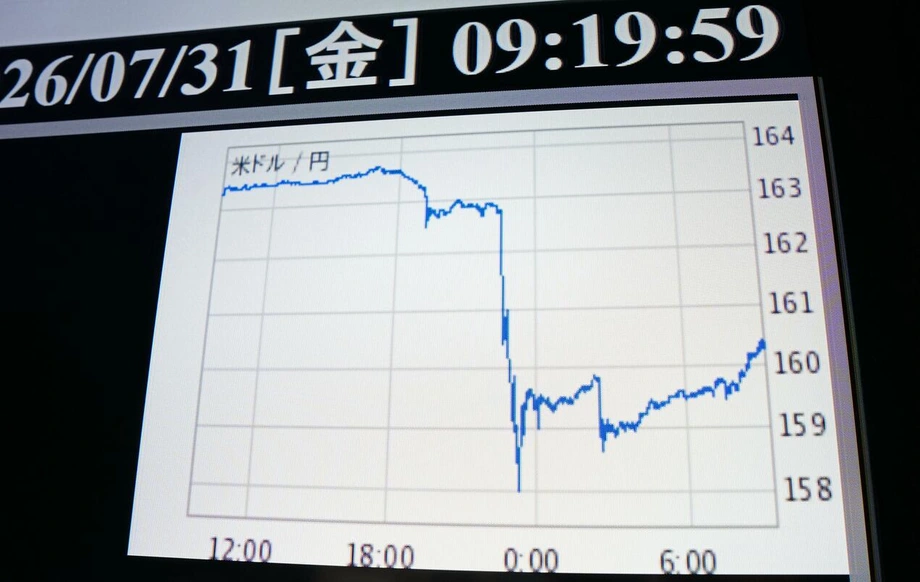
The weaker yen adds another advantage. When the Japanese currency falls against the euro, wages, rent and other local expenses cost less when expressed in euros. That can improve margins on goods manufactured in Japan for export.
Companies buying substantial amounts of materials or components from outside Japan still face currency swings on those purchases. They can manage that exposure through hedging, greater local sourcing or price adjustments agreed with customers. Hedging means using financial arrangements to limit the effect of exchange rate changes on future payments.
How Japanese plants connect with Asian markets
ASEAN and China are leading export destinations for the German manufacturers surveyed in Japan, at 41 percent and 38 percent respectively. ASEAN remains a growth engine for German industrial suppliers, while China is a vital market for automobiles, chemicals, machinery and medical devices.
Japan offers short shipping times to South Korea, coastal China and Southeast Asia. Its substantial port capacity and reliable domestic logistics help factories schedule exports and support just in time production, in which materials arrive close to when they are needed on the production line.
Japan's network of economic partnership agreements across Asia can also reduce tariffs or simplify customs procedures for goods made in the country. Together with dependable transport, those arrangements help manufacturers use one production base to reach several markets.
Factories in Japan can work closer to regional customer engineering teams and adapt products more quickly to local standards. For businesses making specialized industrial products, the ability to adjust specifications and deliver consistently can be as important as the initial manufacturing cost.
North America is another destination, served by 29 percent of surveyed manufacturers. Companies supplying it from Japan are balancing tariff exposure, delivery times and customer needs. Some will continue using Japanese plants when production depends on inputs or processes that are difficult to reproduce elsewhere.
Stability becomes more valuable as trade policy shifts
Economic stability was identified as Japan's leading advantage by 94 percent of German companies in a recent business climate survey by AHK Japan and KPMG. A large majority reported profits in Japan, and a substantial share achieved pretax profit margins in double digits.
Japan's regulatory clarity and contract enforcement give corporate boards greater confidence when planning investments. Predictable rules help companies judge costs and commitments over time, particularly when trade policy elsewhere is changing.
Volker Treier, head of foreign trade at the Association of German Chambers of Industry and Commerce (DIHK), warned that protectionism was making overseas business harder for German exporters. He identified the United States as a particularly difficult environment:
Protectionist tendencies are complicating foreign business for German companies, particularly in the United States, and postponing a recovery in exports.
Christoph Schemionek, who leads the Delegation of German Industry and Commerce in Washington, described the effect of the policy environment on investment planning in the United States:
The approach is primarily chaos, which always means planning uncertainty.
An Ifo institute survey found that almost 30 percent of German companies with investment plans in the United States postponed them, while 15 percent canceled projects amid tariff uncertainty. New tariff measures on vehicles add complexity for exporters connected to the automotive industry.
German companies continue to sell into the United States, but investment committees are applying stricter assessments of risk. That makes predictable locations such as Japan more attractive when companies consider adding capacity aimed at Asian customers.
Automation supports precision and flexible production
German manufacturing in Japan is concentrated in industries where quality and engineering depth matter. Chemicals and pharmaceuticals, mechanical engineering, medical supplies and automotive components dominate the footprint. Many operations have developed from small assembly lines into full production plants with local suppliers, testing facilities and support for customers using their products.
That development reflects the demands of Japanese customers and the standards needed to export to other advanced markets in Asia and beyond. A plant serving several destinations must deliver consistent products while responding to different customer requirements.
Japan is also among the world's most intensive users of industrial robots. The International Federation of Robotics reports that 44,500 industrial robots were installed in Japan in 2024, bringing the country's operational stock to about 450,500 units.
Automation helps factories repeat precise tasks, maintain consistent quality and keep equipment operating. Those advantages support the cost and quality profile available to German manufacturers working in Japan.
Plants with greater automation can accommodate changes in product complexity and smaller production runs without large increases in costs. That suits German suppliers making specialized components, custom machinery, medical products requiring high reliability and demanding chemical products. When demand shifts between Asian markets, flexible plants can adjust production more smoothly.
Workers and currency swings remain the main pressures
Recruiting and retaining skilled employees is the leading challenge reported by German manufacturers in Japan. In the AHK Japan manufacturing survey, 82 percent said hiring qualified staff was difficult, particularly machine and plant operators, technicians and technical specialists.
Half of the companies now require English skills for managerial positions in manufacturing, narrowing the pool of candidates further. Businesses are responding with training on the job, partnerships with technical colleges, more structured career paths and targeted relocation packages for workers moving within Japan.
The recruitment problem makes automation more useful, but factories still need people able to operate machinery, maintain equipment and supervise production. Expansion plans therefore depend on staffing as well as the availability of buildings and equipment.
Currency volatility is another major challenge, identified by 76 percent of respondents in a separate survey of German subsidiaries in Japan. Companies are increasing their use of hedging and seeking to match revenues earned in yen with costs paid in yen through local sourcing.
Some businesses are redesigning price lists so they can respond faster to exchange rate movements. Inflation and energy expenses also remain under close watch, although respondents suggest these have caused less disruption than labor shortages and currency swings.
Japan and India take different roles in Asian investment
German companies are reducing their concentration of activities in China while retaining business there. A 2024 business climate survey by AHK Japan and KPMG showed that 38 percent of German companies were relocating production from China to Japan, and 23 percent were moving regional management functions to Japan.
Japanese plants nevertheless continue to supply Chinese customers, as the manufacturing survey's 38 percent export share shows. Moving some production or management functions to Japan spreads activities across more locations while keeping access to the Chinese market.
India is also attracting German investment. A 2025 survey by KPMG and the Indo German Chamber of Commerce found that 79 percent of German companies planned to invest in India by 2030. More than half expected to use India as a production site for Asia by that date.
India's attractions include political stability in the current cycle, a large pool of specialists and lower wages. Bureaucracy and regulatory complexity remain challenges. Those strengths and constraints give it a different place in corporate planning from Japan.
Many German manufacturers will pursue an approach using several bases. Japan can support products with demanding specifications and access to Northeast and Southeast Asian customers. India can provide scale and services such as shared capability centers, which bring business support activities together in one location.
Quality, reputation and the next expansion cycle
Consumer research by the Nuremberg Institute for Market Decisions found that the Made in Germany label was the most trusted product origin in major countries. Japan also scored highly for manufacturing quality and electronics.
German engineering, Japanese manufacturing precision and dense supplier networks can support export strategies built around trust, durability and consistent performance. For industrial buyers in ASEAN and China, those qualities can make products manufactured in Japan attractive alongside price and delivery considerations.
The planned expansion points to a steady increase in capacity rather than a dramatic surge. With 57 percent of surveyed manufacturers intending to expand and 35 percent seeing more interest from headquarters, Japan's existing facilities provide a foundation for further investment.
Robots are likely to take on more work as hiring remains difficult. Worldwide industrial robot installations are forecast to reach about 575,000 units in 2025 and exceed 700,000 by 2028, with Asia as the main engine of growth. Japan's established automation ecosystem can help new production lines adopt advanced processes with fewer difficulties.
The surveys and forecasts set out several dates relevant to investment planning:
- 2024: AHK Japan and KPMG recorded production and regional management moves from China to Japan. Japan installed 44,500 industrial robots during the year.
- 2025: The India investment survey identified plans extending to 2030, while worldwide robot installations were forecast at about 575,000 units for the year.
- 2028: Worldwide robot installations are forecast to exceed 700,000 units.
- 2030: The target year by which 79 percent of surveyed German companies plan to invest in India and more than half expect to use it for production serving Asia.
For German manufacturers, Japan's combination of stable rules, efficient production and regional access supports factories that need dependable output, few defects and short delivery times. Skilled worker shortages and currency movements will shape how quickly those factories can grow.
Key Points
- About 730 German companies operate in Japan; at least 84 have production or assembly facilities across 132 locations.
- Among surveyed manufacturers, 41 percent export from Japan to ASEAN, 38 percent to China and 29 percent to North America.
- Some 71 percent serve both Japanese and overseas customers from the same facilities.
- Capacity increases are planned by 57 percent, while 35 percent report rising interest from headquarters.
- Some 95 percent report lower unit labor costs than in Germany; 47 percent estimate a gap of up to 30 percent.
- Recruitment is difficult for 82 percent of manufacturers, while 76 percent in a separate subsidiary survey identify currency volatility as a major challenge.
- The 2024 business climate survey recorded 38 percent moving production from China to Japan and 23 percent moving regional management.
- Japan installed 44,500 industrial robots in 2024 and had about 450,500 in operation.
- United States tariff uncertainty and investment plans in India are shaping German decisions about where to produce.