Three days of buying totalled 15.4 trillion yen
Japan bought 7.9756 trillion yen, about $50.4 billion, on July 30 in its largest single day of intervention to support the currency, according to Finance Ministry figures released on November 9. The operation accounted for more than half of the 15.3993 trillion yen deployed across three days as the yen approached 164 against the dollar, its weakest level in 39 years and eight months.
Contents
- Three days of buying totalled 15.4 trillion yen
- How much larger was the new record?
- When authorities acted and how the yen moved
- What buying yen actually does
- Why American participation mattered
- Why the recovery lost momentum
- What rate checks and reserve figures reveal
- What the exchange rate means for households
- Key Points
The ministry's detailed figures for the July to September quarter put the other purchases at 5.5523 trillion yen on July 31 and 1.8714 trillion yen on August 3. Japan and the United States acted together on July 31, their first coordinated operation to support the yen since 1998.
The spending produced a sharp currency recovery, followed by another retreat. The yen strengthened into the lower 155 range against the dollar on August 3 and briefly reached the 152 range on September 8. By the Monday morning of the disclosure, it was trading around 158.30 in Tokyo.
Japan's government and the Bank of Japan had intervened without immediately announcing each operation. The quarterly release supplied the dates and daily amounts, revealing three days of purchases when traders had expected two.
The central tension is visible in those numbers: authorities committed a record amount in a single day, yet the difference between Japanese and American interest rates continued to put pressure on the yen. Buying the currency gave it immediate support; keeping it stronger proved more difficult.
How much larger was the new record?
July 30 surpassed the previous daily record of 6.2787 trillion yen, set on April 30, by 1.6969 trillion yen. That is an increase of about 27%, calculated from the ministry's exact figures. The record applies specifically to purchases of yen intended to support its value, within intervention data dating back to 1991.
The first day's 7.9756 trillion yen represented about 51.8% of the three day total. July 31 accounted for roughly 36.1%, and the final operation for about 12.2%. Japan therefore concentrated nearly 88% of its purchases in the first two days.
The summer campaign, worth roughly $97 billion, exceeded the amount spent during April and May. Those earlier operations had taken place around Japan's Golden Week holiday period, when authorities also moved heavily to support the currency.
The 15.4 trillion yen figure was described as a record monthly intervention total because the previously disclosed reporting window ran from July 30 through August 26. The daily breakdown places the purchases on three dates spanning July and August.
When authorities acted and how the yen moved
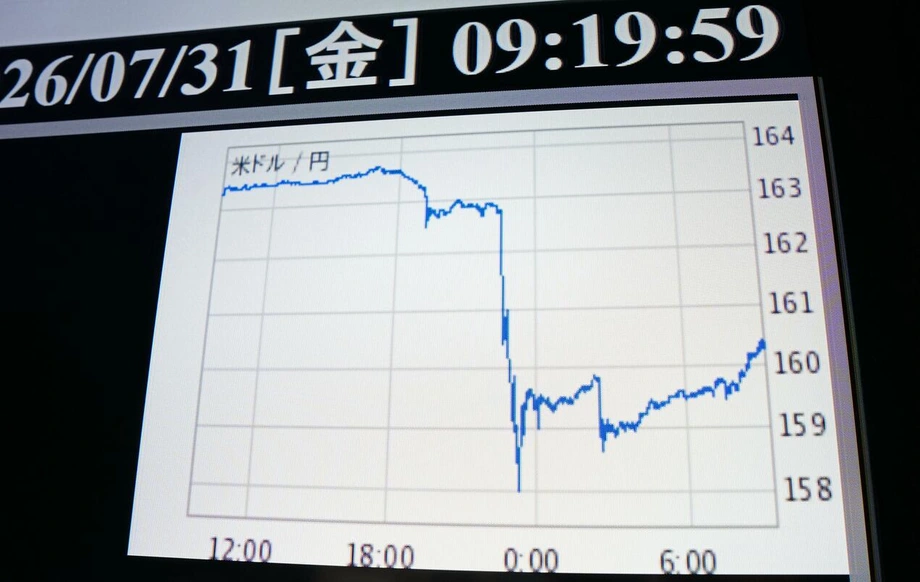
Late July brought the immediate trigger: the dollar climbed into the upper 163 yen range, close to 164. A higher number in this exchange rate means a weaker yen, because more yen are needed to buy one dollar.
- April 30: Japan bought 6.2787 trillion yen, setting the previous daily record.
- July 30: Japan acted alone, buying 7.9756 trillion yen ahead of a Bank of Japan policy decision.
- July 31: Japan bought 5.5523 trillion yen during coordinated intervention with the United States.
- August 3: The detailed quarterly figures place the final 1.8714 trillion yen purchase on this date. The yen briefly strengthened into the lower 155 range.
- September 8: The yen briefly reached the 152 range, its strongest level in about six months.
- September 18 to 19: Japanese authorities conducted a rate check as the currency weakened again.
The third purchase was also dated August 1 in a description of the disclosure; the detailed figures attributed to the Finance Ministry place it on August 3. The amount, 1.8714 trillion yen, and the combined total are the same.
What buying yen actually does
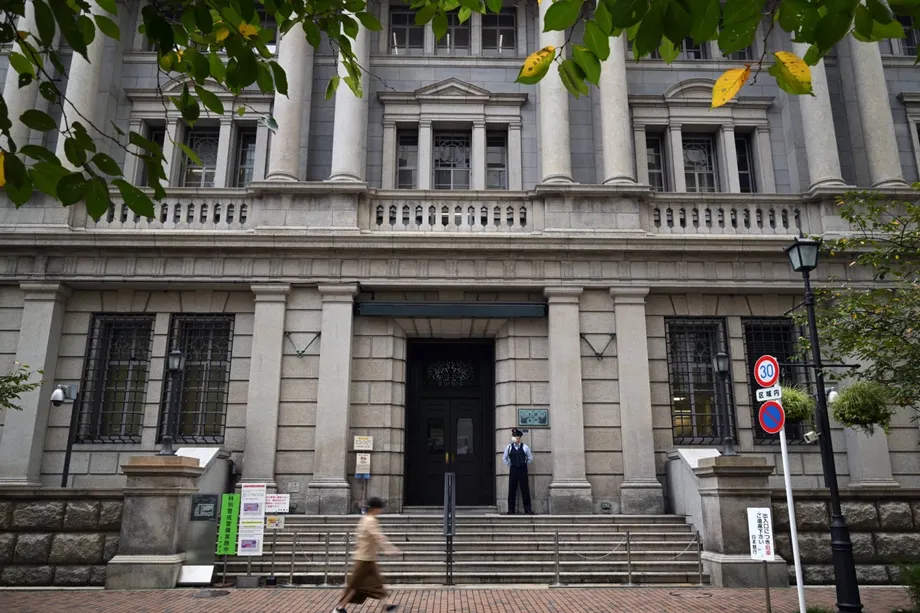
Japan's operations involved selling dollars and buying yen in the foreign exchange market, where currencies are exchanged. That creates a large buyer for yen at a moment when selling pressure is pushing its value down.
The Finance Ministry directs Japan's currency intervention, with the Bank of Japan carrying out the transactions. This differs from a central bank interest rate decision, which changes the price of borrowing money across the economy.
July 30's purchase came before a Bank of Japan policy decision. Together with the absence of an immediate announcement, that timing increased uncertainty for traders betting on further yen weakness. A sudden rise in the yen can force those traders to reverse their positions, adding further buying pressure.
Tsuyoshi Ueno, senior economist at NLI Research Institute, described the size of the operation as a measure of the government's concern.
"The enormous scale of intervention underscored the government's sense of urgency to stem the yen's decline," said Tsuyoshi Ueno.
Japan's summer purchases show how forcefully authorities were prepared to act. Their subsequent rate check also showed that currency surveillance continued after the initial recovery.
Why American participation mattered
The United States joined Japan on July 31 after nearly 28 years without a coordinated operation of this kind. Finance Minister Satsuki Katayama and U.S. Treasury Secretary Scott Bessent confirmed the joint action, saying it was intended to curb disorderly currency movements.
Japan sold dollars for yen, while the American operation involved selling euros for yen. Both transactions increased demand for the Japanese currency, although the currencies sold were different. The 5.5523 trillion yen figure is Japan's purchase amount.
Bessent also backed efforts to address yen undervaluation and urged Japan to tighten monetary policy. He linked the weak currency to domestic inflation, connecting the exchange rate debate with the prices Japanese households pay.
South Korean officials said the Bank of Korea timed purchases of won alongside Japan's intervention to make the actions more effective. Each country was supporting its own currency, broadening the regional response to market pressure.
Why the recovery lost momentum
The yen's path from nearly 164 per dollar to 152.89 in early September, then back to around 158.30, shows both the strength and the fading of the recovery. Its return to 158.30 left it weaker than at the September peak, though still stronger than near 164.
The persistent difference between Japanese and American interest rates remained a major force. When dollar investments pay more interest than comparable yen investments, investors have a reason to hold dollars. Buying dollars with yen can weaken the Japanese currency.
The Bank of Japan raised its policy rate to 1.25% in September, while expectations of further Federal Reserve rate increases reinforced the view that the gap would persist. Another Japanese increase was expected before the end of the year, although no decision date was given.
Bank of Japan Governor Kazuo Ueda pointed to risks that inflation could rise more than expected as energy costs reached consumer prices. Higher Japanese rates can support the yen by making investments in the currency more attractive, but they also make borrowing more expensive for households and businesses.
Ueno identified uncertainty surrounding Iran as another source of pressure on the yen. His assessment added a geopolitical factor to the interest rate explanation, showing that the currency was responding to more than intervention alone.
What rate checks and reserve figures reveal
Japan's government and the Bank of Japan conducted a rate check late on September 18 and into the early hours of September 19. During such a check, authorities ask market participants about exchange rates and trading conditions. Traders often view it as a warning that intervention may follow.
Katayama and top currency official Atsushi Mimura remained central to Japan's response. Katayama reiterated that authorities were prepared to take decisive action when necessary. Political concern also reached the leadership level: President Donald Trump and Prime Minister Sanae Takaichi expressed concern about yen weakness at their September summit.
Japan's capacity to obtain dollars also drew attention. Finance Ministry figures put its overseas securities holdings at $835 billion at the end of October, up from the previous month.
The United States and Japan confirmed that Japan could access dollars through the Federal Reserve's Foreign and International Monetary Authorities Repo Facility, known as FIMA. Under a repo transaction, an eligible authority temporarily exchanges U.S. Treasury securities for dollars and agrees to reverse the transaction later.
That arrangement offers a route to dollar funding while allowing the securities to be retained through a temporary financing agreement. The financing method used for each summer intervention was not specified.
What the exchange rate means for households
Japanese households feel yen weakness when imported goods become more expensive. Energy and other purchases priced in dollars require more yen when the currency falls, and businesses may pass those costs to customers. Bessent's inflation comments and Ueda's concern about energy costs addressed different parts of that same price pressure.
Japanese exporters can benefit when foreign earnings convert into more yen. Companies that rely heavily on imported fuel, materials or products face the opposite pressure. A stronger yen changes those effects, easing some import costs while reducing the yen value of overseas revenue.
The summer campaign therefore sits between two policy tools. Intervention changes demand for currencies directly, while interest rate decisions influence borrowing, investment and inflation. Japan's record purchases delivered an immediate market response, but the later retreat kept attention on the interest rate gap and the next decisions in Tokyo and Washington.
Key Points
- Japan bought a record 7.9756 trillion yen on July 30, about 27% above the previous daily record.
- Three operations totalled 15.3993 trillion yen, with the detailed figures listing July 30, July 31 and August 3.
- The United States joined the July 31 intervention, the first coordinated yen support since 1998.
- The yen strengthened to 152.89 per dollar in early September before retreating to around 158.30.
- Japanese authorities conducted a rate check on September 18 to 19 as pressure returned.
- The interest rate gap, inflation pressures and access to dollar funding remain central to Japan's currency response.