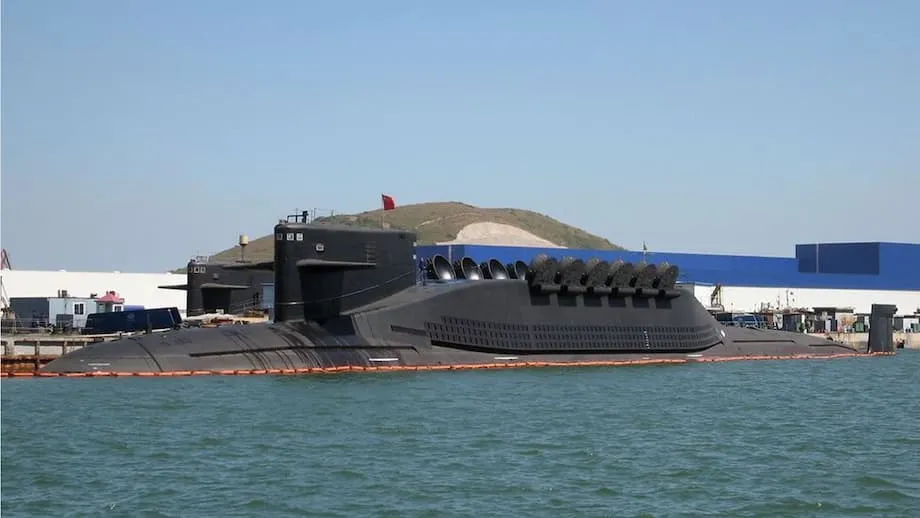
One submarine, a delayed delivery and a careful diplomatic balance
Thailand has signed an agreement for a Chinese S26T submarine after resolving an engine dispute that delayed a project first approved in 2017. Delivery is now expected in late 2028, following an extension of about 40 months. The purchase, originally planned as a program of three boats, has been reduced to one because of budget pressure.
Contents
- One submarine, a delayed delivery and a careful diplomatic balance
- How the engine dispute delayed the project
- How the submarine generates power underwater
- Quiet operation, weapons and an undisclosed Thai configuration
- Why Bangkok is keeping both major powers close
- What one boat changes in Southeast Asian waters
- Reliability and support will be tested over decades
- Washington and Beijing have different interests in the sale
- The work Thailand must finish before the first patrol
- A wider region seeking choices rather than exclusive camps
- What to Know
Royal Thai Navy chief Admiral Jirapol Wongwit attended the signing at the Beijing headquarters of China Shipbuilding and Offshore International. The package includes training and technology transfer, giving Thailand access to expertise as well as a vessel.
As of September 22, 2025, the agreement brings a prolonged period of uncertainty closer to an end. Thailand originally agreed to pay about 13.5 billion baht, roughly $400 million at the time, for the submarine. Its hull was laid in Wuhan in 2019, and handover was initially scheduled for 2023.
Thailand is one of the United States' oldest allies in Asia. Buying a major Chinese naval platform while maintaining that relationship reflects Bangkok's effort to preserve freedom of action between Washington and Beijing. The United States has acknowledged the purchase while stressing that Thailand remains a close partner.
China, now the world's fourth largest arms exporter, gains a major naval sale and a continuing relationship with the Thai navy through training, maintenance and technical support. For Thailand, the next task is to turn a delayed procurement into a working submarine force, with trained crews, suitable facilities and dependable funding.
How the engine dispute delayed the project
The S26T was intended to use German MTU 396 diesel engines. Those engines could not be exported to China because of the European Union's arms embargo on the country. Without the planned power source, construction slowed and the submarine became the subject of an extended debate in Bangkok.
Thai officials considered alternatives that included exchanging the submarine order for a frigate or cancelling it. China instead proposed its CHD620 engine, opening a technical dispute over whether the replacement could meet the performance expected of a modern submarine.
Germany's MTU engines have a long record of service in many navies. Thai navy engineers and outside observers questioned whether the Chinese replacement would offer the expected reliability and low noise. Independent testing data was limited, making outside verification difficult.
Beijing conducted trials of the CHD620 and supplied documentation to Bangkok. Thai authorities say the engine met performance and safety requirements. Accepting it allowed construction to proceed, although the revised schedule pushed delivery to the end of 2028.
The main stages of the project stretch across more than a decade:
- 2017: Thailand agreed to buy the S26T for about 13.5 billion baht, then roughly $400 million.
- 2019: The submarine's hull was laid in Wuhan.
- 2023: The original handover year passed while the engine dispute remained unresolved.
- By September 22, 2025: Thailand had signed the agreement accepting the Chinese engine, with training and technology transfer included.
- Late 2028: Delivery is expected after a construction extension of about 40 months.
How the submarine generates power underwater
The S26T is an export version of China's Type 039A Yuan class. It is a conventional submarine powered by diesel engines and electric motors, with an air independent propulsion system, usually shortened to AIP. Public descriptions often identify that system as a Stirling type.
Three elements work together. Diesel engines charge large batteries while the submarine uses a snorkel to draw air from above the water. The batteries then supply electricity for quiet underwater movement. AIP provides another way to generate power while submerged, allowing the boat to remain hidden longer.
AIP uses a small supply of liquid oxygen and a heat engine operating in a closed cycle to generate electricity without drawing oxygen from the atmosphere. In simple terms, the submarine carries what that system needs to keep working underwater instead of regularly reaching up for air.
The system allows submerged operations lasting about one to two weeks without surfacing. It cannot match the endurance of a submarine powered by a nuclear reactor, but it narrows the gap in persistence and stealth during peacetime patrols or operations in coastal waters.
The export package advertises endurance of up to about 65 days at sea, long range on the surface or while snorkeling, and extended quiet patrols underwater. The 65 days describes time at sea, while the shorter period describes how long AIP can support operations without surfacing.
Quiet operation, weapons and an undisclosed Thai configuration
The S26T's design places considerable weight on reducing noise. Its teardrop hull carries anechoic tiles, which help reduce acoustic reflections, while a skewed propeller is intended to make propulsion quieter. These features matter because submarines rely on remaining difficult to detect.
Public descriptions of the S26 family list six torpedo tubes measuring 533 millimeters. Weapons options include heavy torpedoes and cruise missiles designed to attack ships. The submarine can also lay naval mines.
Details of the Thai submarine's final sensors, weapons and combat systems have not been released. Export equipment varies by customer, and the Type 039A used by China's own navy is thought to have more advanced sensors and software than versions sold abroad.
A submarine with a simpler export configuration can still threaten surface ships, gather intelligence and make an opponent's planning more difficult. A navy facing a quiet submarine must account for where it might be operating, even when its location is unknown.
Export versions of advanced military equipment often use simpler sensors, older combat management software and fewer components from outside suppliers. Those choices can reduce costs and ease delivery, while limiting performance during the most demanding missions.
Why Bangkok is keeping both major powers close
Thailand's relationship with the United States reaches back to an 1833 treaty of amity. Thailand later hosted major American operations during the Vietnam War and participated in coalition missions led by the United States in subsequent decades.
The alliance came under strain after Thailand's 2014 coup, when Washington curtailed some military assistance and training. Cooperation has since been rebuilt in parts, even as Thai leaders expanded engagement with China.
Thai diplomacy is often described through the image of bamboo bending without breaking. Successive governments have sought to spread risk and avoid exclusive commitments. Beijing is now Thailand's largest trading partner, while the United States remains a major market for Thai exports and a source of investment and advanced technology.
The submarine purchase fits that balancing approach. It creates a channel for naval technology cooperation with China while Thailand maintains its American alliance and extensive combined exercises, including Cobra Gold.
Reducing the purchase from three submarines to one also limits its scale. The decision carries a political message that Bangkok wants options, while Thailand continues to work with Western and regional partners on training, maritime domain awareness and air power. Maritime domain awareness means knowing what is happening at sea, including the movement of vessels and possible threats.
Bangkok's strategy is to keep room to maneuver between the two powers. Its procurement choices, exercises and diplomatic relationships form different parts of that effort, rather than moving together toward an exclusive partnership.
What one boat changes in Southeast Asian waters
The purchase is expected to make Thailand the sixth Southeast Asian navy with submarines, joining Indonesia, Malaysia, Myanmar, Singapore and Vietnam. Several regional fleets are small, and submarines can spend lengthy periods undergoing maintenance or supporting training.
A single boat gives Thailand a potent but limited asset. Maintenance and crew preparation affect how often it can deploy. Building a dependable force will require years of training, written operating doctrine and practice alongside surface ships and maritime patrol aircraft.
Across Southeast Asia, the spread of submarine capability gives governments more ways to monitor shipping lanes and raise the cost of coercion near their shores. A submarine can make approaching hostile forces less certain about the risks they face.
Thailand's boat is likely to operate in the Gulf of Thailand and the Andaman Sea. The Gulf is shallow and busy, presenting different operating challenges from the Andaman Sea, which connects to the Bay of Bengal and the wider Indian Ocean.
A presence in both areas would give Bangkok new ways to monitor sea lines of communication, the routes used by commercial and naval shipping. Dividing operations between the two coasts will also require careful logistics planning.
Reliability and support will be tested over decades
Critics focus on the CHD620's shorter service record compared with its German counterpart and the absence of publicly released independent test data from the Thai navy. Thai authorities have accepted the engine after reviewing trials and documentation, but dependable operation will also depend on performance throughout the submarine's working life.
Criticism extends to experiences in some Chinese export programs, where buyers have faced delays, difficulties bringing equipment together and substantial dependence on Chinese technical support. A submarine combines propulsion, sensors, weapons and software, making successful integration central to its usefulness.
Pakistan's S26 program illustrates some of these tradeoffs. Its boats promise greater endurance and stealth than older designs, yet schedules have slipped. Crews are also expected to depend on Chinese training and logistics, at least during the early years.
Chinese industry is adapting its export packages by offering financing, training pipelines and technology transfer. Thailand's agreement includes training and the transfer of technical knowledge to Thai personnel.
The lasting value of that package will depend on the quality of support after delivery, reliable access to spare parts and the ability to upgrade equipment. Those services will shape whether the navy can keep the submarine available for operations rather than waiting for repairs or outside assistance.
Washington and Beijing have different interests in the sale
US officials have restated that Thailand remains a close partner and have avoided direct criticism of the purchase. Washington is likely to concentrate on maintaining military exercises, education and maritime cooperation.
Access and interoperability are central to that relationship. Interoperability means that different armed forces can communicate, train and operate together effectively. Continued exposure to American and allied systems would help Thailand retain choices and limit dependence on any one supplier.
Beijing can present the deal as evidence that China can supply sophisticated submarines to foreign customers at competitive prices. The sale has commercial value, but it also creates lasting contact between Chinese shipyards and the Royal Thai Navy.
Training and maintenance can deepen that relationship long after construction ends. Thai sailors and technicians will need knowledge, equipment and support to operate the submarine, giving the supplier a continuing role.
Both powers will also watch Thailand's later procurement decisions. A larger presence of Chinese platforms in Thai forces could make some US technologies harder for Bangkok to acquire. Stronger American engagement would give Thailand more options for upgrades and operating doctrine. Bangkok's calculation is to preserve those options without crossing either power's red lines.
The work Thailand must finish before the first patrol
The extension to late 2028 leaves time for crew selection, language instruction, simulator training and trials at the shipyard before the submarine's voyage to Thailand. Each stage is part of preparing sailors to operate a complex vessel safely.
Shore facilities must also be ready. The navy will need suitable piers, workshops, secure communications and equipment for handling oxygen used by the AIP system. Supporting infrastructure is part of the practical cost of establishing a submarine force.
The S26T will need to operate alongside maritime patrol aircraft, surface combatants and coastal sensors. Exercises will test how it shares information, avoids friendly forces in crowded waters and contributes to intelligence gathering and sea denial. Sea denial means making it difficult or dangerous for an opponent to use an area of water.
Thai planners must decide how to divide the boat's time between the Andaman and Gulf coasts. The different geography and operating conditions make that a question of logistics as well as military priorities.
Specialized crews will need enough time at sea to build and maintain their skills. Retaining those sailors, paying for maintenance and sustaining realistic training will determine whether Thailand gains a reliable operational capability. The promised training and technology transfer can support that effort, while steady funding remains essential.
A wider region seeking choices rather than exclusive camps
Thailand's purchase sits within a broader pattern across the Indo Pacific. Southeast Asian governments are diversifying defense relationships with Australia, Japan, India and South Korea while maintaining channels to both China and the United States.
Small group exercises, focused technology agreements and practical industrial cooperation allow countries to build several relationships at once. This approach gives governments ways to address particular needs without making every decision a choice between Washington and Beijing.
Mainland Southeast Asia has seen a stronger Chinese presence, including deeper ties with Cambodia and Laos. Maritime Southeast Asia has leaned more heavily on the United States and its partners for exercises and patrols. Differences in geography and perceptions of risk help explain those approaches, while the divergence puts pressure on unity within the Association of Southeast Asian Nations, or ASEAN.
Thailand occupies a position between those tendencies. Its submarine decision creates another connection with China while leaving space for security cooperation with other partners.
European leaders have also spoken of strategic autonomy and coalitions that avoid forcing a choice between the United States and China. Similar thinking has appeal in Southeast Asia, where governments seek freedom to make their own decisions and steady economic growth rather than confrontation between major powers.
For Bangkok, the immediate measure of success is practical: receiving the submarine, preparing its crews and maintaining it reliably. The wider diplomatic aim is to gain technology and training from partners while preserving the ability to work with several security providers.
What to Know
- Thailand has signed for one Chinese S26T submarine after an engine dispute delayed the project approved in 2017.
- The original agreement was worth about 13.5 billion baht, roughly $400 million at the time. Budget pressure reduced the wider plan from three boats to one.
- The EU arms embargo on China blocked German MTU 396 engines. Thai authorities accepted China's CHD620 after trials and a review of documentation.
- An extension of about 40 months moves delivery to late 2028, compared with the original handover target of 2023.
- The package includes training and technology transfer. Advertised endurance reaches about 65 days at sea, with AIP supporting about one to two weeks submerged without surfacing.
- The purchase is expected to make Thailand the sixth Southeast Asian navy with submarines. Its final weapons and sensor configuration has not been released.
- Bangkok is maintaining its US alliance while expanding naval cooperation with China.
- Crew preparation, maintenance funding, spare parts and dependable technical support will determine the boat's usefulness in service.