Five partners begin a new chapter in Delhi classrooms
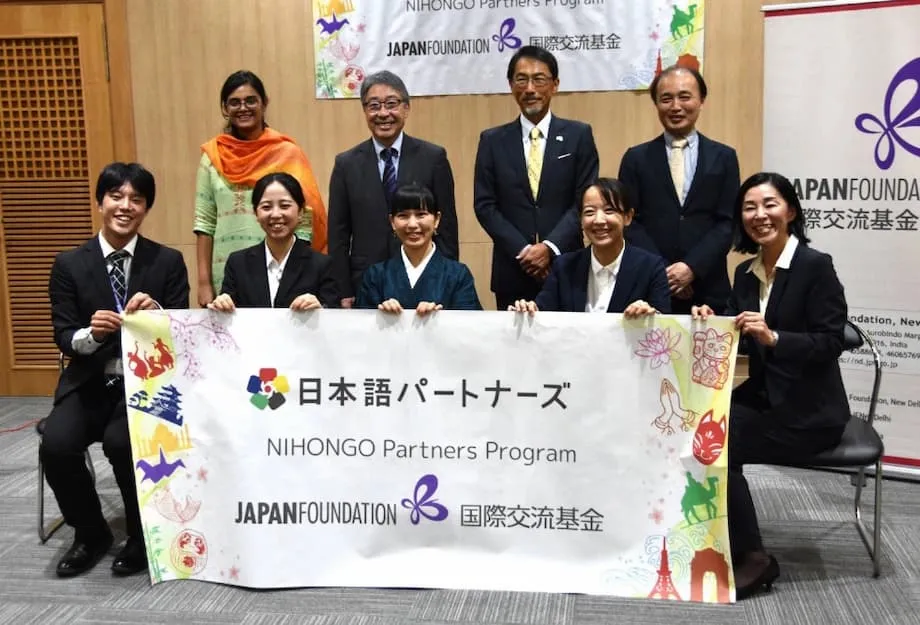
Five Japanese language partners have gathered in New Delhi for a six month assignment in secondary schools across the Delhi area, opening the Japan Foundation program's first deployment to a South Asian country. Their task is to help local Japanese teachers, give students more conversation practice and introduce everyday Japanese culture through personal contact.
Contents
- Five partners begin a new chapter in Delhi classrooms
- Who are the new Nihongo Partners?
- Why India is joining the program now
- What students and teachers can expect
- A program operating across Asia since 2014
- How classroom learning connects to work and study
- What the wider exchange plan includes
- What experience elsewhere offers India
- What will determine whether the effort grows?
- The people behind the exchange
- Key Points
As of September 17, 2025, the small team represents the beginning of a longer commitment. The Japan Foundation plans to continue sending Nihongo Partners to India on a rolling basis for about a decade, starting this year. The partners work as classroom assistants and cultural ambassadors, while local teachers remain responsible for leading instruction.
The arrival comes as India and Japan expand cooperation in education, research, skills and industry. At their 2025 Annual Summit, the two prime ministers endorsed a human resource plan targeting exchanges involving 500,000 people in both directions over five years. That total includes 50,000 skilled personnel moving from India to Japan.
Language education connects several parts of that ambition. For a school student, Japanese may begin with an interest in anime or music and develop into plans for university study. For someone preparing to work in Japan, it can make conversations with employers, colleagues and neighbours easier. Both governments see these exchanges as a way to deepen mutual understanding.
The Delhi assignment brings that policy into schools through a direct approach: students can practise with people who use Japanese every day. The aim is to connect unfamiliar sounds and writing systems with real conversations, shared activities and relationships that encourage learners to continue.
Who are the new Nihongo Partners?
The Nihongo Partners program recruits Japanese citizens from different backgrounds, including university students, aspiring teachers and professionals in the middle of their careers. Participants receive basic training before joining local teachers to support conversation exercises, school events and cultural activities.
Hiroto Kishi, a university student aged 21 from Chiba Prefecture who hopes to become a teacher, described his ambition at the Delhi gathering:
I will do my best to become a bridge between Japan and India.
Kotori Takagi, aged 23 and from Fukuoka Prefecture, said an earlier visit to India had made a strong impression on her, from the food to the energy of daily life. She described what she wanted students to learn about her country:
I want to show Japan as it really is through cultural exchanges.
Kishi and Takagi express the program's central idea: direct contact can turn curiosity into a reason to keep studying. Japanese scripts and sounds can feel challenging to beginners. Having someone to speak with gives those lessons an immediate purpose beyond completing a textbook exercise.
The exchange also asks something of the visitors. Partners learn local languages and customs, take part in community activities and return to Japan with experiences that can influence their interests and careers. Their role is built around mutual learning and equal respect, with the visiting participant supporting the local teacher.
Why India is joining the program now
Indian students are showing growing interest in Japanese. Some discover it through anime, games and music before seeking organised courses. Others connect language study with education in Japan or possible employment with Japanese companies. The two governments want to turn those interests into practical skills through more language instruction, teacher training and places to take proficiency tests.
Delhi offers a base for the first group because the metropolitan area has secondary schools able to host initial classes, access to universities and teacher networks, and institutions that can help with materials and events. Proximity to those organisations also makes coordination easier for five visitors working across several schools.
The six month placement gives the team time to become familiar with teachers and students. Repeated visits can support activities that develop across a school term, including speaking practice, clubs and preparations for events. The planned continuation of dispatches over about ten years gives the initiative a longer horizon than the first group's stay.
What students and teachers can expect
The five partners will rotate through secondary schools around Delhi, working with each school's Japanese teacher on activities suited to the curriculum. As native speakers, they can demonstrate natural rhythm and intonation. They can also help students use the language in less formal settings, where a craft, a game or a shared task gives a conversation a clear purpose.
The classroom and school activities described for the assignment include:
- Conversation practice in small groups, helping students use speaking and listening skills beyond textbook exercises.
- Cultural workshops involving calligraphy, origami, school festival projects, simple cooking demonstrations and popular culture.
- Clubs and events after school that give interested students regular contact with other learners.
- Help with contests, speech preparation and pronunciation practice before certification tests.
- Teaching materials developed with local teachers so activities can continue after the six month placement.
- Online exchanges with schools in Japan when schedules allow, giving students more opportunities for real conversation.
Local teachers often face large classes and limited lesson time. A partner can help run a role play, organise a quiz or coach a student who is hesitant to speak. Those tasks give learners more chances to participate while allowing the teacher to manage the wider class.
School events can extend the contact to families and students who have not yet chosen Japanese. An open cultural activity may give a newcomer a first reason to try the language. For students already enrolled, clubs and shared projects can create a community that helps sustain interest between lessons.
A program operating across Asia since 2014
The Nihongo Partners initiative began in 2014 to support schools where interest in Japanese was growing and trained teachers were limited. Japan's Ministry of Foreign Affairs describes it as a program centred on people, sending Japanese citizens to assist local classes and share their culture while learning from the host community.
By March 2024, 3,158 Japanese citizens had served as partners, mainly in Southeast Asia, China and Taiwan. Overseas dispatches stopped during 2020 and 2021 because of COVID-19 travel restrictions. During the coronavirus period, partners and host schools maintained connections through online events and virtual classes.
The program's fiscal year 2021 record also lists 123 partners dispatched to middle schools, high schools and universities in several countries despite travel constraints. Exact travel dates were not given alongside the statements about the suspension and that fiscal year's dispatches.
Many activities moved online for a period, including conversation clubs and cultural demonstrations. That experience gave schools ways to maintain contact between visits. Virtual exchanges now complement activities held in person when school calendars make regular meetings difficult.
Data released in the middle of 2025 lists 399 partners scheduled across fiscal years 2024 to 2033 under the Japan Foundation's wider Asian plan. The destinations include Thailand, Vietnam, Indonesia, Malaysia and Taiwan, among others. The plan includes six places for India, with room for expansion if schools and training capacity grow.
The six places listed in that plan and the five people in the first Indian group describe the planned allocation and the initial deployment respectively. The larger program gives India experience to draw on as teachers and organisers develop routines for a new destination.
How classroom learning connects to work and study
Japanese language ability can support applications for study abroad, internships and jobs. Two testing systems feature in the cooperation plans: the Japanese Language Proficiency Test, known as JLPT, and the Japan Foundation Test for Basic Japanese, known as JFT Basic.
The JLPT measures reading and listening at five levels. It is offered in dozens of countries, with overseas applications exceeding one million a year and test locations in more than 200 cities. The levels give learners a series of goals as they move from basic knowledge towards more advanced comprehension.
The JFT Basic checks communication skills used in everyday life. It supports Japan's Specified Skilled Worker status of residence, which allows foreign workers with basic Japanese and the required skills for particular sectors to work in Japan. Language learning therefore forms one part of preparation alongside occupational skills.
India and Japan have agreed to expand both teaching and certification. Their plans include more JLPT and JFT Basic centres across India, subsidies for language courses and training for more Indian teachers through programs supported by the Japan Foundation. More frequent testing is also planned where demand is high.
The governments' human resource action plan encourages Indian educators to join the JET Programme as assistants teaching English in Japanese schools. That experience can help educators who later teach Japanese in India by giving them direct experience of classrooms and daily life in Japan.
What the wider exchange plan includes
The summit target of 500,000 exchanges over five years reaches beyond school language lessons. The 50,000 skilled personnel expected to move from India to Japan account for one tenth of that target. Language instruction connects the early stages of learning with the broader plans for education and employment.
The measures set out for this wider cooperation include:
- More courses for Indian teachers of Japanese, including refreshed teacher training from the Japan Foundation.
- Additional JLPT and JFT Basic centres and more frequent tests in places with strong demand.
- Scholarships and exchange projects bringing Indian students and researchers to Japan.
- Outreach connecting Japanese employers with Indian universities and job fairs.
- Support desks, information portals and coordination by both foreign ministries to help exchanges run smoothly.
Japan and India have also adopted a joint vision for the next decade. It places exchanges between people, vocational training and language education alongside cooperation in technology, health and infrastructure. The school placements are a small part of that larger effort, with a specific focus on students and the teachers who introduce them to Japanese.
Japan's foreign ministry estimates that about 3.79 million people study Japanese in 141 countries and regions. The Sakura Network, which links core institutions and teacher associations, had 355 members as of early 2024. These networks provide a wider institutional setting for the expansion of teaching in India.
The Japan Foundation also operates Minato, a free online platform offering courses for beginners and learners at intermediate levels. For people without a nearby class, online study provides another route into the language. For schools, digital activities can help maintain contact between visits by a partner.
What experience elsewhere offers India
Schools in Southeast Asia offer practical lessons for the Delhi assignment. Short and frequent speaking activities can help students build confidence, while cultural events involving food, crafts and music can attract learners who might not initially choose a conventional language class.
Students also benefit from having a visible next step: a beginner course can lead to a test level, a club and regular contact with someone from Japan. A partner who recognises a student and remembers their progress can make that path feel more personal. These activities can fit into busy school schedules without requiring expensive projects.
Local teachers gain support when they have someone to plan with and activities ready for classroom use. Joint preparation can leave behind useful materials after a visiting partner departs. Online conversation sessions and cultural demonstrations can then help sustain connections between periods of direct contact.
The experience during coronavirus restrictions showed how schools could continue exchanges when travel was interrupted. For India, that offers a practical way to combine school visits with virtual activities, depending on timetables and the availability of partner schools in Japan.
What will determine whether the effort grows?
India's large school system presents a challenge for expansion. Curricula differ across education boards, and trained Japanese teachers remain few compared with potential demand. Five visiting partners can generate interest in selected schools, while continued growth will require more local teachers and dependable funding.
Schools, state education departments and the Japan Foundation will need clear coordination as the initiative develops beyond Delhi. Materials created during the first placement can help, but schools also need teachers able to keep classes running and guide students towards more advanced study.
The visitors' working conditions also matter. Travelling between several schools in a busy city can be demanding. Safe housing, reasonable travel times and mentoring at schools can help partners manage the assignment. Clear ways for teachers, students and partners to give feedback would allow organisers to adjust activities during the six month term.
Progress can be measured through practical indicators: how many schools introduce or expand Japanese, how many students continue to higher levels, how many take JLPT or JFT Basic, and how many join clubs and cultural events. Those measures would show whether initial enthusiasm develops into continued learning.
Employers could also be invited to speak at schools and share information about internships or hiring connected to Japanese language study. Linking student interest, teaching capacity and workplace demand would give schools a fuller picture of where their learners can go next.
The people behind the exchange
Connections between India and Japan also develop outside formal education, through technology research, sport and the arts. One example is Nozomu Hagihara, a Japanese national who attempted a record setting journey by dribbling a football across several Indian states after years of living and working in India. His personal project reflects the everyday relationships that accompany government programs.
The school partners will build their own connections through smaller encounters: helping with a short speech, attending a school fair or introducing a simple recipe. Such moments can make Japanese feel like a means of friendship, travel and future study rather than only an academic subject.
The main dates show how the Delhi launch fits into the wider effort:
- 2014: The Nihongo Partners initiative began.
- 2020 and 2021: COVID-19 travel restrictions interrupted overseas dispatches, while online exchanges helped maintain contact.
- Fiscal year 2021: The program recorded 123 dispatches to schools and universities in several countries.
- Early 2024: The Sakura Network had 355 member institutions and associations.
- March 2024: The cumulative number of Nihongo Partners reached 3,158.
- Middle of 2025: Planning data listed 399 partners across fiscal years 2024 to 2033, including six places for India.
- 2025 Annual Summit: India and Japan endorsed a target of 500,000 exchanges over five years, including 50,000 skilled personnel from India to Japan.
- September 17, 2025: India's first five partners were beginning a six month assignment around Delhi, with further dispatches planned for about a decade.
Key Points
- Five Nihongo Partners are supporting Japanese language teaching in secondary schools around Delhi for six months.
- India is the program's first destination in South Asia.
- Partners assist local teachers with conversation, cultural activities and school events.
- The Japan Foundation plans repeated dispatches to India for about ten years from 2025.
- The wider bilateral plan targets 500,000 exchanges over five years, including 50,000 skilled personnel moving from India to Japan.
- Cooperation includes more teacher training, language courses and JLPT and JFT Basic test centres in India.
- Local teacher development, sustained funding and student participation will be central to expansion.