Women account for most of a historic decline
Bangladesh's labour force fell by 1.7 million in 2024, with women accounting for almost all of the decline. The final Bangladesh Bureau of Statistics Labour Force Survey 2024 put the number of people working or seeking work at 71.7 million, down from 73.4 million in 2023. It was the country's first labour force contraction since 2010.
Contents
- Women account for most of a historic decline
- The warning signs appeared in late 2023
- Urban women face different barriers at different skill levels
- Garment factories are changing the jobs they need
- Trade pressures make the transition more urgent
- Education and unpaid care shape participation
- Safe travel and trusted childcare affect job choices
- Rural work needs income, skills and access to markets
- Bangladesh's gains remain uneven by international measures
- New skills and service jobs could help reverse the fall
- A continued decline would reach beyond the workplace
- Key Points
The number of women in the labour force dropped to 23.7 million from 25.3 million, a fall of 1.6 million, or about 6.3 percent. Male participation stayed almost unchanged at about 48 million. Based on those figures, women accounted for roughly 94 percent of the total contraction.
The labour force includes people who have jobs and people who are looking for one. A woman who stops searching because she cannot arrange childcare or find suitable employment moves outside that count. Bangladesh's decline therefore covers both work and the willingness or ability to keep seeking it.
The reversal follows more than a decade in which women helped drive the expansion of the country's workforce. From 2010 to 2023, the labour force grew by more than 16 million. Women's numbers rose from 17.2 million to 25.3 million over that period, an increase of 8.1 million. The fall in 2024 erased roughly one fifth of that numerical gain.
Women working on garment lines around Dhaka and Chattogram, on farms and in small trading activities across the country have supported export earnings and rural incomes. Fewer women working or looking for jobs can leave households with less money, reduce spending and slow social gains connected to steady earnings.
The warning signs appeared in late 2023
Quarterly figures had already pointed to a change before the annual contraction. In the fourth quarter of 2023, female unemployment rose by around 120,000 compared with the same period a year earlier. The number of employed women declined, while the number outside the labour force increased by about 1.42 million.
Women outside the labour force include homemakers who are not seeking work. Their circumstances differ from those of unemployed women, who remain in the labour force because they are looking for employment. Both changes matter: one means more women searching without finding work, while the other means more women no longer participating.
The figures trace a reversal across several periods:
- 2010: Bangladesh had 17.2 million women in its labour force.
- 2010 to 2023: The total labour force expanded by more than 16 million, with women's participation providing much of the growth.
- Fourth quarter of 2023: Female unemployment increased by around 120,000 from a year earlier, and the number of women outside the labour force rose by about 1.42 million.
- 2023: The labour force reached 73.4 million, including 25.3 million women.
- 2024: The total fell to 71.7 million, including 23.7 million women, while men's participation remained near 48 million.
The annual decline places household income, poverty reduction and economic growth under pressure. A family that loses a woman's earnings has less protection against rising prices or illness, while businesses can face weaker demand when household spending falls.
Urban women face different barriers at different skill levels
Urban labour markets show the contraction most strongly. Women with little or no formal education have seen manufacturing opportunities shrink as factories reduce roles that once employed large numbers of women. Service sector employment has not expanded quickly enough to replace those opportunities.
Women with university or technical education face a different problem: many cannot find jobs that match their training or career expectations. Education can prepare someone for skilled work, but the benefits are harder to realise when suitable vacancies are limited.
City living adds practical restrictions. Childcare is scarce and expensive, and reliable, safe transport is often difficult to secure. A job may be available, yet its hours or location can make accepting it unmanageable for a mother or someone with other care responsibilities.
Social attitudes about which jobs are suitable for women also influence whether they search for work or accept an offer. These pressures operate alongside the shortage of jobs. Improving employment prospects requires attention to both the positions employers create and the conditions that allow women to take them.
Garment factories are changing the jobs they need
Bangladesh's garment industry shows how women's place in employment is shifting. Women formed a clear majority of the workforce when the industry took off. Recent surveys suggest their share is now close to half, with one study putting it at about 53 percent in 2023, down from much higher levels a decade earlier.
Mechanisation has replaced tasks previously performed on sewing lines, and opportunities for junior machine operators have narrowed. Some women in the second generation of potential garment workers also show less interest in factory employment. Mechanisation in agriculture and other industries is reducing demand for roles requiring fewer skills as well.
The garment sector remains a vital employer, but factories are adopting technology across cutting, sewing assistance and finishing. Machines reduce demand for repetitive work while increasing the need for technicians, quality controllers, maintenance workers and staff who plan production using digital tools.
Research on technology adoption in Bangladesh indicates that modern machinery can reduce factory headcounts. An industry study estimated that roughly two to four workers lost their jobs for each one million dollars invested in new equipment. Many of the affected positions, including machine operators and helpers, have historically been held by women.
Training is central to whether women can move into the jobs that remain or are created. Without rapid opportunities to learn new skills, they risk losing their place in the industry that opened employment to millions. With suitable preparation, workers can move from repetitive tasks toward technical and higher value roles.
Trade pressures make the transition more urgent
Bangladesh's movement toward graduation from least developed country status adds pressure to the garment industry's technology transition. That status is an international development category. Leaving it can change the trade advantages available to exporters, and exports to some markets may face higher tariffs, which are taxes charged on imported goods.
Buyers are also demanding shorter lead times and higher compliance. Lead time is the period needed to complete and deliver an order. For factories, meeting those demands means producing promptly while satisfying the standards buyers require.
Factories are likely to respond with more automation and greater requirements for worker skills. Women concentrated in jobs involving repetitive tasks could lose ground unless training helps them qualify for the technical positions that are growing.
Preparing women for maintenance, quality control and production planning would help preserve their presence in garments. It would also protect household incomes in industrial areas, where factory wages support spending beyond the workplace.
Education and unpaid care shape participation
Economists often describe women's labour force participation as following a U shaped pattern during development. Participation can be high when incomes are low, decline at middle stages and rise again at very high income levels. The shape describes how changing education and employment opportunities can affect women's decisions about work.
Rising school enrolment can temporarily keep more women outside the labour market. At the same time, the kinds of jobs available may change before new service sector positions appear in sufficient numbers. Women can spend longer preparing for employment while finding too few suitable jobs when they are ready.
Bangladeshi women spend far more time than men on unpaid care, including looking after children and older relatives. That work takes time even though it does not provide wages. A shortage of affordable childcare centres prevents many mothers from accepting jobs with fixed hours.
Family help can ease the burden, but employers sometimes hesitate to hire young women because they expect them to leave after marriage or childbirth. Women therefore face constraints both at home and during recruitment, making it harder to enter employment and remain there.
Safe travel and trusted childcare affect job choices
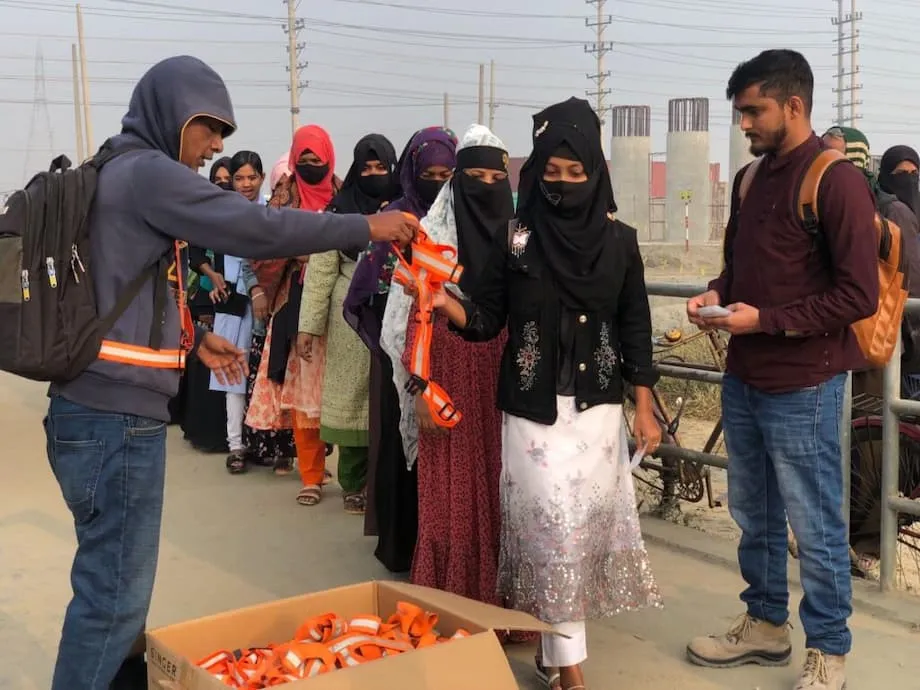
Harassment on public transport and during commutes discourages many families from allowing daughters to work far from home. Safety and dignity matter at work and on the journey there. For women who cannot travel reliably, the range of jobs they can consider becomes smaller.
Evidence from programmes in South Asia indicates that safe, dependable commuting and trusted childcare increase women's willingness to accept jobs and stay in them. Information campaigns and credible job offers can also change family attitudes by showing that women's employment brings stable income and future prospects.
Community childcare centres in urban neighbourhoods and industrial parks would allow more mothers to work regular hours. Tax credits available for a limited period, loans at low cost and matching grants could help employers establish centres. Clear standards and public inspections would help families trust the care being provided.
Transport measures could include dedicated buses on busy industrial routes, better lighting at stops, safety features in ride hailing services and quick responses to complaints. City corporations could work with large employers to provide shuttles at peak hours on predictable schedules.
Workplace policies also affect whether women stay and advance. Priorities include enforcing existing childcare rules in factories and offices, supporting a return to employment after childbirth, allowing flexible schedules where the work permits and providing safe channels for reporting harassment. Employers could publish pay and promotion statistics to track gender balance in teams and management.
Rural work needs income, skills and access to markets
Women outside cities face barriers in the rural economy beyond farming. Capital is difficult to obtain, market information is uneven and selling beyond the local bazar can be hard without business networks. These limits restrict the growth of small enterprises even when women are already producing goods or providing services.
Some women take on family farming or cottage industry work when male relatives migrate to cities, then step back when the men return. Much of that participation is unpaid or temporary. It can increase the number of women counted as working without giving them lasting earnings, skills or assets.
Job quality therefore matters alongside the number of workers. As Bangladesh moves away from agriculture, women are not gaining enough formal roles and jobs requiring skills in manufacturing and modern services. A healthier transition would bring more women into small factories, logistics, healthcare, education, finance, retail management and hospitality.
Support for women running businesses could include more credit without collateral, backed by partial guarantees, simpler digital loan applications and mentoring for those starting their first enterprise. Collateral is an asset a borrower pledges to secure a loan. Removing that requirement can help women who lack assets of their own.
Reserving a small share of public procurement for firms led by women would create another route to buyers. Platforms connecting women's businesses with large customers could extend their reach beyond local markets. Mobile money and e commerce could reduce the need to travel and lower safety risks for rural sellers.
Bangladesh's gains remain uneven by international measures
International Labour Organization modelled data published by the World Bank puts Bangladesh's female labour force participation rate near 44 percent in 2024. The rate measures the share of women participating, rather than simply counting how many women are working or seeking work.
Bangladesh's rate is above that of some large South Asian peers, including India at near 33 percent. It remains below many economies with middle or high incomes, where women's participation often ranges from 50 to 70 percent.
Global measures of gender parity show that economic participation and leadership remain among the areas with the widest gaps. Bangladesh has made strong gains in girls' schooling and health outcomes over the past two decades, yet translating those gains into paid work and better jobs has been harder.
The 2024 global benchmark shows steady but slow progress. For Bangladesh, the comparison makes domestic choices about jobs, childcare, safety and skills especially important: improvements in education need employment opportunities through which women can use what they have learned.
New skills and service jobs could help reverse the fall
Demand is rising for health workers, teachers, early childhood educators, financial service staff, retail supervisors, hospitality professionals and customer support workers. Targeted investment and changes that make it easier for businesses to operate could help those sectors grow and create jobs women are prepared to accept.
Training connected to industry needs could help women enter roles emerging from automation. Priorities include machine maintenance, quality control, supply chain software, basic industrial engineering and digital literacy. Vouchers for women, apprenticeships with stipends and learning in the workplace could connect training more closely with an actual job offer.
Bridging programmes could also open routes into pharmacy support, medical coding, accounting support, IT support and basic programming. These options would broaden the range of work available beyond the factory and agricultural tasks where demand for labour is declining.
Childcare, safe transport and skills programmes address different parts of the same employment problem. A woman may need suitable training to qualify for a job, dependable childcare to work its hours and safe travel to reach it. Expanding vacancies without addressing those practical requirements would leave many women unable to take them.
A continued decline would reach beyond the workplace
A sustained fall in women's participation would reduce household incomes and slow poverty reduction. Bangladesh would also capture less of its potential demographic dividend, the economic benefit that can come when large numbers of young people reach working age and find productive jobs.
Slower growth in employment and earnings would weaken the expansion of the tax base. That would leave the government with less financial room for spending on health, education and infrastructure, linking women's access to work with services used by the wider population.
Women with fewer opportunities for paid employment can also have less bargaining power at home. Families become less resilient to inflation or illness when they have fewer sources of income. Gains in girls' schooling can come under pressure if families see limited employment prospects after education.
The 2024 reversal makes access to good jobs an economic priority as well as a matter of fairness. Restoring participation requires more than replacing lost positions: women need work that provides reliable earnings, builds skills and allows them to remain employed as their family responsibilities change.
Key Points
- Bangladesh's labour force fell from 73.4 million in 2023 to 71.7 million in 2024, its first contraction since 2010.
- Women's participation fell from 25.3 million to 23.7 million, while men's remained near 48 million.
- Late 2023 figures already showed rising female unemployment and more women outside the labour force.
- Automation is reducing repetitive roles in garments and other industries while increasing demand for technical skills.
- Women face shortages of suitable jobs, affordable childcare and safe transport, alongside unpaid care responsibilities and social constraints.
- Rural women often undertake unpaid or temporary work and face barriers to finance and markets.
- Bangladesh's female participation rate was near 44 percent in 2024, compared with India's near 33 percent.
- Priorities include expanding service jobs, training, childcare, safe commuting, workplace protections and support for businesses led by women.