475 detained as factory raid strains a key alliance
South Korea has opened an investigation into possible human rights violations after a September 4, 2025, immigration raid detained 475 people at a Hyundai and LG Energy Solution battery factory construction site in Ellabell, Georgia, west of Savannah. More than 300 South Koreans returned home after about a week in United States custody, while images of workers in handcuffs and ankle chains stirred anger in a country whose companies are investing billions of dollars in American manufacturing.
Contents
- 475 detained as factory raid strains a key alliance
- What happened at the Georgia construction site
- Workers describe fear, confinement and relief
- Why factory technicians became caught in visa rules
- Seoul seeks safeguards as Washington discusses changes
- What the rights investigation will examine
- A delay for Hyundai and pressure on manufacturing plans
- Public anger reaches the embassy and business community
- What the two governments are trying to resolve
- Key Points
Seoul's presidential office said it conveyed strong regret to Washington and demanded protection for the rights and interests of South Korean citizens during law enforcement proceedings. The government pledged to work with the companies involved to document possible mistreatment, support a thorough investigation and prevent another such incident.
The detained Koreans included engineers and mechanics working for Hyundai, LG Energy Solution and subcontractors. Many had travelled to the United States to install equipment and prepare production lines, work that companies say is difficult to fit into existing visa arrangements for brief technical assignments.
U.S. authorities said many of those detained had overstayed visas, entered without proper authorization or lacked permission to work. The operation has brought two issues into the same dispute: whether people were working lawfully, and how they were treated during arrest and detention.
By September 15, both governments were pursuing practical changes to visa procedures while Seoul examined workers' treatment. The confrontation came during sensitive trade negotiations involving a major South Korean investment commitment and lower U.S. tariffs. Hyundai said the disruption would delay the Georgia factory launch by roughly two to three months.
What happened at the Georgia construction site
U.S. Immigration and Customs Enforcement, known as ICE, took part in the coordinated operation at the battery plant construction site. Returning workers said agents from the Federal Bureau of Investigation and the Justice Department's Bureau of Alcohol, Tobacco, Firearms and Explosives were also involved.
Officers swept through the construction area and separated workers according to their immigration status, according to people who later returned to South Korea. Most of the 475 people detained were South Korean nationals.
U.S. authorities released video showing detainees being led away in handcuffs and chains. Broadcast widely in South Korea, the footage became a central source of public anger. U.S. officials described the raid as a significant enforcement operation within a broader crackdown on illegal work and visa misuse in 2025, saying immigration laws apply equally to every nationality.
The main developments unfolded over the following days:
- September 4: U.S. officers raided the Hyundai and LG Energy Solution battery factory construction site in Ellabell and detained 475 people.
- During the following week: South Korean workers remained in custody while officials discussed their release and return, and Seoul sought assurances about their treatment.
- After about a week in detention: More than 300 South Koreans flew home and reunited with relatives at Incheon International Airport.
- By September 15: South Korea had opened a rights investigation, and the two governments were working on clearer visa arrangements for technical teams.
Some workers from other countries remained in U.S. custody after the Korean charter flight departed. South Korean officials also pressed their American counterparts about those detainees' treatment, expressing concern about fair procedures regardless of nationality.
Workers describe fear, confinement and relief
LG Energy Solution engineer Choi Young Hee described a shift from questioning to an experience that felt like a criminal roundup. Choi said:
It started to look serious when they started putting handcuffs and shackles.
Jang Young Seon, an engineer employed by a subcontractor, said the experience could discourage workers from accepting future assignments in the United States, including invitations to train American employees:
Nobody is going to stay and work when it's like this.
Many detainees were processed at an ICE facility in Folkston, in southeastern Georgia. Workers described long waits, crowded rooms and basic conditions. One worker described the difficulty of sharing a small room, saying there was:
the toilet next to where we ate and slept.
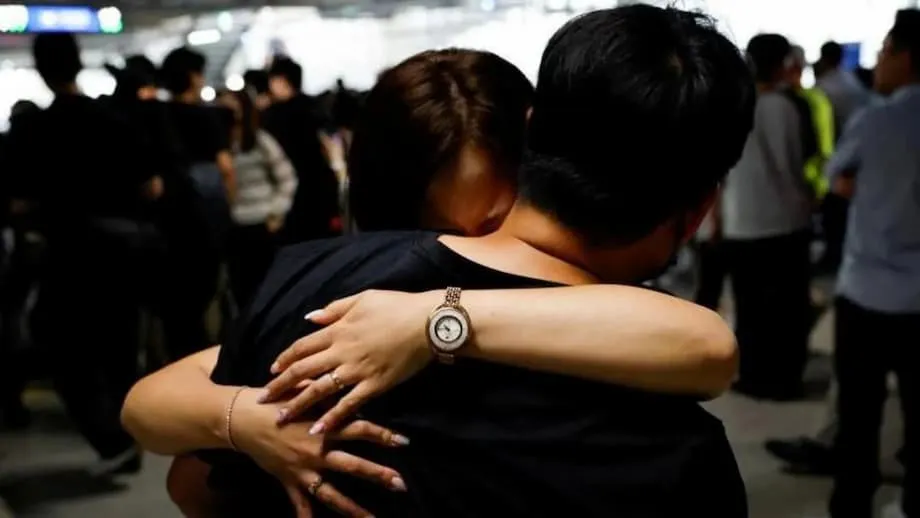
At Incheon International Airport, returning workers embraced family members after a week they described as shocking and confusing. One arrival shouted:
I'm back! I'm free!
South Korean officials asked the media to respect returnees' privacy and urged civility in public discussion of the case.
Why factory technicians became caught in visa rules
South Korean manufacturers are putting large sums into American vehicle, battery and semiconductor projects, often under tight construction schedules. Engineers and mechanics who know the machinery are needed to install specialized equipment, make adjustments and bring production lines into stable operation.
These assignments commonly last weeks or a few months, after which technicians move to another factory launch. Companies say U.S. immigration law offers no straightforward visa for this kind of brief technical deployment when the job involves practical work rather than long term employment.
Many of the detained Koreans had entered under the Visa Waiver Program using ESTA travel authorization, or with B-1 business visitor visas. These arrangements cover activities such as meetings, training and similar business travel. Neither provides general permission to perform routine physical labor.
A narrow B-1 allowance covers installing or servicing equipment purchased from a foreign supplier. At a large factory construction project, however, deciding which tasks fall within that allowance can be difficult. Supervising an installation and physically adjusting machinery may happen during the same assignment, even though permission to carry out each activity can differ.
Korean companies and contractors say they have long operated in this grey area. Supervisors may plan for visiting technicians to oversee installation while local crews perform most physical tasks. When construction falls behind or machinery needs adjustment, those technicians can end up doing practical work themselves to keep the project moving.
Companies argue that inconsistent enforcement adds uncertainty: work accepted at one site may attract an immigration operation at another. Other routes also present problems. H-1B visas for specialty occupations and L-1 visas for transfers within a company can be slow, subject to caps or poorly suited to moving dozens or hundreds of technicians for brief assignments.
South Korea has therefore pressed for a dedicated visa or a program tailored to investment projects. Its foreign minister said the two governments were forming a working group to produce clearer rules and, if necessary, a new visa pathway for skilled teams needed to launch factories.
Seoul seeks safeguards as Washington discusses changes
South Korea's presidential office said Washington had been asked to ensure that law enforcement did not infringe the rights and interests of Korean citizens. Senior officials described protecting the dignity and safety of South Korean workers abroad as a core responsibility of the state.
Seoul also said it would coordinate with the affected companies to identify abusive conduct and support the investigation. The review is intended to establish what workers experienced and help prevent a repeat during future industrial projects.
U.S. diplomats engaged quickly. According to South Korea's foreign ministry, the U.S. Deputy Secretary of State expressed regret during meetings in Seoul and proposed using the incident to improve visa processes for technicians connected to major investments.
The discussions included a possible new visa category, clearer guidance on existing visas and assurances that Korean workers would not face disadvantages if they returned to complete unfinished assignments. South Korean officials said the United States agreed workers could return without penalty, provided their travel complied with clarified rules.
President Donald Trump also intervened while the return flight was being arranged. South Korean officials said he temporarily paused the departure to explore whether some workers wanted to stay and help train American employees.
South Korea's foreign minister said Trump sought a less punitive outcome and asked U.S. officials whether the case could have a different ending. The minister attributed these words to the president:
This is not right,
The diplomatic effort linked immediate concerns about workers' release and treatment with the longer problem of how companies can lawfully bring technical teams into the United States. Both governments were discussing changes, but a final visa solution had not been announced by September 15.
What the rights investigation will examine
ICE carries out workplace operations targeting unauthorized employment, visa fraud and related offenses. Those operations can involve search warrants, interviews at a worksite and detention for processing. Accounts of several federal agencies taking part point to a broad enforcement presence at the Georgia construction site.
U.S. authorities describe restraints during transport as a standard safety procedure. In South Korea, the images of handcuffs and ankle chains were widely viewed as degrading and became the focal point of debate over the workers' treatment.
Seoul's investigation is expected to assess whether detainees received timely access to lawyers and consular assistance, whether their medical needs were met, and whether restraints and conditions in holding facilities met legal and humanitarian standards. Consular assistance means help from officials representing a person's home country while that person is abroad.
Workers' descriptions of cramped or unclean processing facilities will form part of the concerns surrounding detention. South Korea's review will address treatment during custody alongside the separate U.S. allegations about immigration status and work authorization.
Seoul has also raised the position of foreign workers who remained detained after the South Korean group left. Their continued custody extended the concern beyond the citizens covered by the charter flight.
A delay for Hyundai and pressure on manufacturing plans
The battery plant is part of Hyundai's larger complex near Savannah and is central to its electric vehicle strategy. Executives said the raid would delay the factory launch by approximately two to three months as companies find replacement workers and rebuild schedules.
Contractors already facing a tight market for specialized industrial construction workers must now adjust their plans. The disruption affects the sequence of work needed to move a factory from equipment installation to stable production, a process that relies on technicians familiar with the machinery.
LG Energy Solution's leadership said the disruption remained within a manageable range and that the company intended to keep the launch moving. Its assessment was cautious, even as Hyundai pointed to a delay measured in months.
For Washington, Korean investment supports plans to build domestic supply chains for electric vehicles and energy storage. Foreign capital is also tied to the administration's effort to revive American manufacturing and support jobs across the Southeast and Midwest.
Korean technicians are often the link between a new building filled with machinery and a factory turning out products. Their role gives the visa dispute a concrete business cost: companies need permission to send the people who can bring equipment into operation, while U.S. authorities insist that those people must have authorization for the tasks they perform.
Public anger reaches the embassy and business community
Protesters gathered near the U.S. Embassy in Seoul after footage of the detained workers spread. Some carried banners mocking Trump and accusing Washington of seeking South Korean investment while criminalizing the workers helping build the factories.
The sense that a major investor and security ally had been treated disrespectfully reached across political lines. Public surveys showed a clear majority disapproved of the raid, and politicians warned that another incident could damage the business climate.
Senior figures close to President Lee Jae Myung said companies would hesitate to send technicians without predictable visa arrangements and fair treatment at worksites. The government urged calm while pressing Washington for concrete solutions.
The Korean Confederation of Trade Unions demanded accountability and an apology from the U.S. administration. Condemning the use of chains and the detention conditions described by workers, the labor organization called the incident:
a clear violation of human rights
The confederation urged Seoul to consider stronger measures if workers' safety could not be guaranteed. Korean companies, concerned about further interruptions, began reviewing travel plans and staffing rotations for American projects.
Business leaders called repeatedly for transparent and reliable visa rules that reflect the brief technical deployments required to start complex production lines. For the workers being asked to travel, the question also involves confidence that they will be treated fairly during an assignment.
What the two governments are trying to resolve
Seoul and Washington have set up a working group to develop practical changes. Options under discussion include a visa route tailored to technical teams supporting major factory launches, official guidance spelling out permitted B-1 activities and advance checks for workers on large investment projects.
The wider economic negotiations add pressure to reach an agreement. South Korea's substantial investment commitment and talks over lower U.S. tariffs were already politically sensitive when the raid occurred. The detention of the people helping deliver those investments made the dispute immediate for companies, workers and both governments.
The allies say they want lawful immigration enforcement and continued cooperation on the factories Washington has encouraged companies to build. For manufacturers, meeting opening schedules depends on rules they can understand before technicians travel. For Seoul, the investigation must also address the treatment that prompted public anger and the demand for stronger protections.
Key Points
- U.S. officers detained 475 people on September 4 at a Hyundai and LG Energy Solution battery factory construction site in Ellabell, Georgia. Most were South Korean.
- More than 300 South Koreans returned home after about a week in custody. Some workers from other countries remained detained.
- U.S. authorities cited visa overstays, unauthorized entry and a lack of permission to work.
- South Korea opened an investigation into possible rights violations, including concerns about restraints, detention conditions and access to assistance.
- Seoul conveyed strong regret to Washington, while protests and labor groups demanded accountability.
- The two governments are discussing clearer visa rules or a new route for technicians needed on major investment projects.
- Hyundai said the disruption would delay the Georgia factory launch by roughly two to three months.