Open system vapes would be first to go
Malaysia is preparing a nationwide ban on vaping, starting with refillable open system devices before extending the prohibition to all vape products. As of September 12, 2025, the Health Ministry is drafting a Cabinet memorandum to set out the scope and timing, while a technical committee completes a detailed report.
Contents
- Open system vapes would be first to go
- Why refillable devices are the first target
- Teen use drives the health argument
- Retailers warn of a larger illegal market
- From nicotine taxes to a proposed prohibition
- State restrictions leave an uneven map
- Singapore demand reaches across the Causeway
- Enforcement would move from checking to stopping sales
- Disposable devices bring waste and fire risks
- Regional policies show different approaches
- Users and businesses await the Cabinet decision
- What to Know
Health Minister Dzulkefly Ahmad says the memorandum will go to the Cabinet after consultations with economic and legal agencies. The proposal responds to rising youth use, reports of illegal drugs in vape liquids and a thriving trade linking Malaysian sellers with customers in Singapore, where vaping is already prohibited.
Dzulkefly has described the government's intention in unequivocal terms:
It is no longer a question of if we ban, but when we ban.
The proposed prohibition would mark another major change for a market valued at about 3.48 billion ringgit in 2023, when an estimated 1.4 million Malaysian adults used electronic cigarettes. Parliament passed the Control of Smoking Products for Public Health Act in 2024 to regulate nicotine products, but stopped short of banning them.
Health advocates argue that prohibition would protect children from nicotine dependence and reduce future medical and social costs. Retailers and groups representing vapers warn that closing the legal market would shift sales to illicit suppliers, making products harder to monitor and potentially less safe.
State governments have already taken different approaches to retail licensing and sales. A national ban is intended to replace those uneven restrictions with a single standard and bring Malaysia closer to several Southeast Asian neighbours that prohibit electronic cigarettes.
Why refillable devices are the first target
Open system vapes are reusable devices with tanks that users fill with liquids of their choice. Their flexibility appeals to experienced users, but also creates opportunities for misuse because almost any liquid can be poured into them. Closed system products are usually disposable and prefilled, making them more convenient for new or occasional users.
Dzulkefly says open systems would be targeted in the first phase, followed by all vape products. Officials argue that starting with the devices most easily modified would address liquids most vulnerable to tampering while allowing enforcement teams to build capacity.
A phased approach would also give authorities time to refine rules, train inspectors, engage retailers and logistics companies, and address gaps involving online sales and courier deliveries. Those channels matter because restrictions on physical shops can leave buyers turning to sellers operating through their phones.
The minister has said he will not pre empt the Cabinet's decision. He has also said the Prime Minister supports the initiative and wants the ministry to get the details right. The start date, legal scope, penalties and treatment of online marketplaces remain undecided, and the ministry has urged patience while the memorandum is completed.
Teen use drives the health argument
A government survey in 2022 found that 14.9 percent of secondary school students aged 13 to 17 used electronic cigarettes, equivalent to almost 400,000 teenagers at the time. That means nearly 15 out of every 100 students in that age group were vaping.
Consultant paediatrician and child disability advocate Datuk Dr Amar Singh HSS believes the number has since grown. He points to promotion near schools, young people's perceptions that vaping is harmless and a rapidly expanding user base. School administrators and parents describe increasing incidents outside school gates and in nearby retail areas.
Dr Amar supports a national prohibition as a measure to prevent dependence among children:
We need a national ban on vape products if we are serious about protecting our youth. Otherwise, we risk creating a new generation of teen addicts.
Flavoured liquids, designs shaped by fast changing trends and online marketing have made experimentation easy. Nicotine exposure during adolescence can prime the brain for dependence, impair attention and learning, and influence behaviour.
Dr Amar also warns that some young people use vaping to cope with stress and anxiety, while regular use can worsen mood problems, increase impulsivity and deepen addiction. The concern extends beyond whether a teenager tries a device to whether repeated use becomes difficult to stop.
Health professionals flag respiratory complaints and the risk of acute lung injury associated with vaping in some countries. Such cases are rare in Malaysia, but risks increase when liquids contain unknown chemicals or users modify devices without guidance.
The Health Ministry also cites reports of liquids containing tetrahydrocannabinol, fentanyl or cocaine as a reason for stricter action. Singapore has recently treated vaping more explicitly as a drug control issue and raised penalties.
Research on vaping in Southeast Asia remains limited. Most studies are small, and many rely on material that has not undergone peer review. Researchers remain concerned about the combination of high nicotine concentrations, youth curiosity and online access, while several countries in the region favour acting before use becomes more widespread.
Retailers warn of a larger illegal market
Retailers and groups supporting vaping argue that prohibition could repeat Malaysia's experience with illegal cigarettes. They say removing a legal market for products already used by millions would leave demand in place while handing sales to suppliers operating outside the rules.
A survey commissioned by the Malaysian Vapers Alliance found that 74 percent of respondents feared a ban would enlarge the illicit market, while 80 percent worried that unregulated products would be unsafe. Shop owners question whether enforcement could keep pace with more online sales and warn of more untested liquids and riskier behaviour.
These groups favour strict regulation through licensing, approved product lists, limits on nicotine strength and controls on where devices can be sold. Health advocates favour prohibition to prevent youth addiction and avoid future health and social costs. Their disagreement centres on which approach can best reduce access to harmful products.
From nicotine taxes to a proposed prohibition
Malaysia's vape market expanded rapidly after the government removed liquid nicotine from the Poisons List in 2023 so that an excise tax could be imposed. The change effectively legalised nicotine in vape liquids and attracted new brands and investment.
The Control of Smoking Products for Public Health Act followed in 2024. It introduced product registration requirements, banned retail displays, vending machines and online sales, and capped nicotine strength. Lawmakers dropped a proposed generational endgame clause that would have phased out sales and use for people born after a specified year.
Inspections and seizures increased after the law, including enforcement from late 2024. National operations targeted unregistered liquids and devices. Registered brands fell from more than 3,200 to about 390, while registered variants fell from about 6,800 to 2,794. Variants are different versions of products within the market.
Those figures amount to a reduction of roughly 88 percent in registered brands and 59 percent in registered variants, using the reported starting and ending totals. Authorities were narrowing the regulated market even as the ministry prepared a proposal to prohibit it.
The main developments span almost a decade:
- 2016: Johor froze new business licences for vape retailers.
- 2018: Singapore's vaping ban took effect.
- 2022: Malaysia's government survey recorded vaping among 14.9 percent of secondary school students aged 13 to 17.
- 2023: Malaysia removed liquid nicotine from the Poisons List to impose an excise tax; the vape market was valued at about 3.48 billion ringgit.
- 2024: Parliament passed the Control of Smoking Products for Public Health Act, followed by stepped up enforcement.
- August 2025: Terengganu and Perlis had implemented full state bans.
- September 12, 2025: The Health Ministry was preparing a Cabinet memorandum for a phased national prohibition.
State restrictions leave an uneven map
Johor's freeze on new vape retail licences dates to 2016, yet existing shops and online sellers continue to supply customers. The state illustrates the difficulty of reducing access through licensing restrictions while other routes remain available.
Kelantan, Terengganu, Perlis, Kedah and Pahang have moved to restrict sales by stopping new licences or renewals. Terengganu and Perlis had implemented full bans at the state level by August 2025.
A national prohibition would replace these differing measures with a common rule. For retailers, users and enforcement teams, that would change the basic question from which products can legally be sold in a particular place to which activities the national prohibition covers.
Singapore demand reaches across the Causeway
Singapore has prohibited vaping since 2018, but demand continues to support Malaysian sellers, particularly in Johor Bahru. Shops near the border report steady business from Singaporeans despite Johor's freeze on new retail licences.
Singapore recorded 19 large smuggling cases at its checkpoints in 2023, seizing around 90,000 devices and related items. From April to June 2025, more than 3,700 people were caught possessing or using vapes, an increase from the preceding quarter.
Singapore's higher penalties and stronger focus on drugs in vape liquids have added urgency to enforcement. The trade across the Causeway connects Malaysia's domestic policy debate with the practical challenge of policing an international border.
A Malaysian ban could reduce access through open retail sales, while online sellers and informal couriers could adapt to continued demand. Coordinated customs checks, information sharing and action involving payment and delivery channels would be needed to suppress those routes.
Enforcement would move from checking to stopping sales
Malaysia's inspectors currently check whether products and sellers comply with rules, including registration and labelling requirements. Under prohibition, their work would shift towards closing sales operations and seizing stock.
Online platforms, delivery companies and sellers operating across borders would become central to that task. Buyers can avoid checks focused on shops by ordering through a phone, leaving enforcement teams needing to trace suppliers and deliveries as well as inspect premises.
Malaysia's illegal cigarette market provides the main warning cited by the vape industry. Analysts estimate that untaxed, illegal products account for more than half of cigarette sales, and illicit tobacco has held an outsized market share for years.
Supporters of a vape ban argue that one clear rule would be easier to explain and enforce. They point to contaminants found in some liquids, along with sweet flavours and high nicotine strengths marketed to young people, as reasons to prioritise prevention and lower future medical costs.
Enforcement capacity would shape the result under either approach. More inspections, faster laboratory testing of seized liquids and action against large suppliers would be needed, alongside public campaigns explaining penalties and support for people trying to quit.
Disposable devices bring waste and fire risks
Disposable vapes also create an electronic waste problem. Their small lithium ion batteries sit alongside nicotine residue, metals and other chemicals, so discarding them with ordinary rubbish can create fire risks and environmental contamination.
Malaysia's Fire and Rescue Department has warned that heat and damage during disposal can cause these batteries to catch fire. Its director general, Nor Hisham Mohammad, described the danger:
If tossed into regular bins, they can cause fires in garbage trucks or landfills.
Waste management specialists say many pods resemble ordinary plastic items and are therefore unlikely to be separated for proper recycling. Specialist Theng Lee Chong warns that plastic casings and hazardous components can contaminate soil and water when they reach landfills.
Advocates propose collection systems at retailers and extended producer responsibility. Under that model, manufacturers would help pay for the safe collection and disposal of the products they sell.
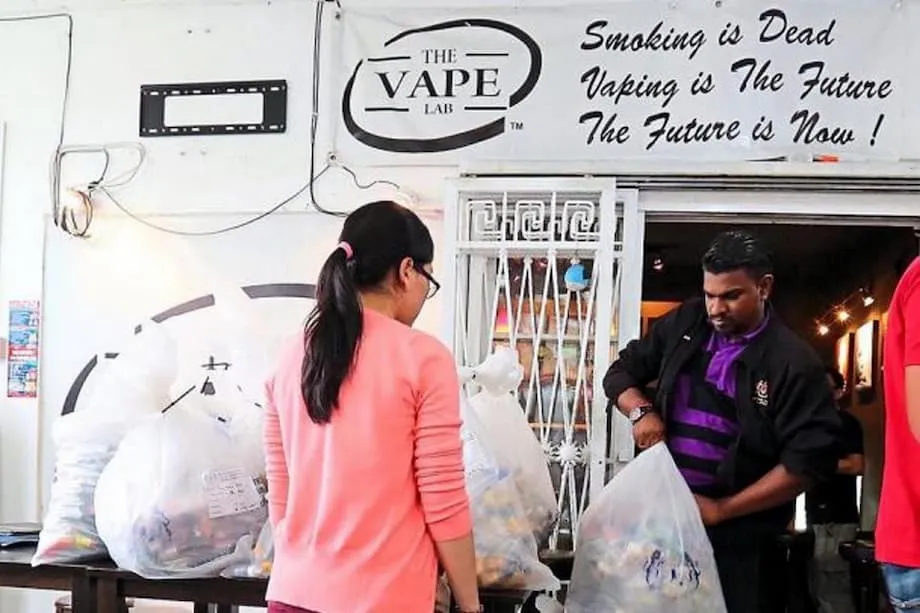
Electronic recycling firms say such collection can work. One company reports having collected and recycled thousands of pods through a return programme, then transferred the pods and batteries to licensed facilities for processing in line with environment agency guidelines.
Regional policies show different approaches
Singapore, Brunei, Cambodia and Thailand have bans on electronic cigarettes, while Laos has moved to restrict sales and imports. The Philippines, Vietnam and Hong Kong regulate use, while Indonesia and Myanmar have had weaker or fragmented rules.
Public health research in Southeast Asia suggests that early, firm action reduces youth uptake and makes enforcement simpler. Malaysia's proposed prohibition would move it towards neighbours that have chosen bans rather than continued legal sales under regulation.
Thailand's experience with cannabis also features in the policy discussion. The country decriminalised cannabis in 2022, experienced a wave of unregulated sales and is now moving to recriminalise use outside medical treatment. Malaysian leaders say they want to avoid a similar cycle in which rapid market growth runs ahead of rules and enforcement.
Malaysia's national proposal is intended to close that gap. Its practical effect would depend on how the phased restrictions are defined, how suppliers respond and whether authorities can reach the online and informal channels that already serve buyers.
Users and businesses await the Cabinet decision
Retailers face the prospect of losing first the open system trade and later all vape sales. Users need to know which activities will be prohibited, how penalties will apply and how the changes will affect purchases through online marketplaces.
The ministry's proposed sequence gives enforcement agencies, retailers and logistics companies time to prepare between stages. It also places a responsibility on authorities to explain the rules and provide quitting support as access changes. People using vaping to stop smoking can speak to their doctors about approved treatments to help them quit.
Dzulkefly's position is that prohibition is the government's intended destination. The Cabinet memorandum is the next step towards turning that intention into rules that businesses, users and enforcement teams can follow.
What to Know
- Malaysia plans to prohibit vaping in phases, starting with refillable open system devices before extending the ban to all vape products.
- As of September 12, 2025, the Health Ministry was preparing a Cabinet memorandum covering scope and timing.
- A 2022 government survey found that 14.9 percent of secondary school students aged 13 to 17, almost 400,000 teenagers, used electronic cigarettes.
- Malaysia's vape market was valued at about 3.48 billion ringgit in 2023, with an estimated 1.4 million adult users.
- The 2024 smoking products law regulates the market. Registered brands subsequently fell from more than 3,200 to about 390, and variants from about 6,800 to 2,794.
- Health advocates support prohibition to prevent youth addiction; retailers and vaper groups warn of unsafe products and a larger illicit market.
- Johor froze new retail licences in 2016. Terengganu and Perlis had implemented full state bans by August 2025.
- Singapore's continued demand, smuggling cases and possession offences make the trade a regional enforcement problem.
- Disposable vapes create battery fire and pollution risks, prompting calls for retailer collection and manufacturer funding for safe disposal.