A national DNA study moves into public healthcare
Singapore plans to connect whole genome sequences with health records for around 450,000 people under SG-INSIGHT, a study that will recruit patients across all three public healthcare clusters. Illumina announced on November 3, 2026, that it had been selected to provide sequencing services, joining a programme designed to test how genetic information can improve prevention, diagnosis and treatment.
Contents
- A national DNA study moves into public healthcare
- Why recruiting patients changes the research
- Medicine selection is an early clinical priority
- One genome, repeated analysis over a lifetime
- Illumina will carry out its work in Singapore
- A Lucence consortium brings another sequencing platform
- Preparing hundreds of thousands of samples
- How Singapore reached this stage
- The evidence needed before wider use
- Key Points
The scale is substantial: approximately one in 10 Singapore residents. PRECISE, the national coordinating office for precision medicine, gives a range of 400,000 to 450,000 participants in its Phase III launch document. The programme runs from 2025 to 2031, with participants to be enrolled through the healthcare clusters over five years.
Illumina is not the only company announcing a role. Ultima Genomics said on November 2 that its UG200 sequencing platform had been selected through a consortium led by Singapore laboratory Lucence, with QIAGEN supplying sample preparation technology. The announcements leave the allocation of participants and sequencing volumes between the providers, along with contract values and financial terms, undisclosed.
Whole genome sequencing reads a person's complete set of DNA instructions. Researchers then look for genetic differences that may help explain disease risk, the course of an illness or a response to medicine. SG-INSIGHT will connect those readings with information about patients' actual health and treatment.
Singapore's central task is to measure whether that information can improve care at a cost and scale the public healthcare system can sustain. Phase III remains a research initiative intended to gather the evidence needed for broader use.
Why recruiting patients changes the research
NHG Health, National University Health System and SingHealth will bring people receiving medical care into the study. This changes the focus from Phase II, PRECISE-SG100K, which covered more than 100,000 genomes from healthy volunteers.
Patients with existing conditions give researchers opportunities to study how illness develops and how treatments work. Some diseases that occur infrequently in a healthy volunteer group will be more common in a group recruited through hospitals and other healthcare services.
Professor Patrick Tan, executive director of Precision Health Research, Singapore, or PRECISE, explained the shift in the official launch document:
In Phase II, we studied healthy cohorts to contribute to population health research. In Phase III, we will work with individuals receiving medical treatments and clinical services, including those with specific disease conditions. This will allow important studies to better understand how genomic information may be used to support improved health outcomes. Importantly, Phase III is about understanding and addressing the practical challenges of integrating precision medicine into clinical care in a thoughtful, sustainable, and equitable way.
PRECISE plans to examine genetic differences alongside lifestyle, environmental and clinical information. A person's health reflects several influences, so linking these records helps researchers investigate why people with similar genetic risks may experience different outcomes.
Medicine selection is an early clinical priority
Pharmacogenomics, the study of how genes affect a person's response to medicines, is the first named priority for demonstrating clinical usefulness. Phase III's Work Package 1 includes developing and expanding a system to help doctors prescribe medicines using participants' genetic profiles.
Genetic differences can affect how quickly the body processes a drug or how strongly a person responds to it. For a doctor, a useful genetic result could help guide the choice of medicine or dose alongside other medical information.
Singapore's earlier research offers a reason to investigate this application. A pilot involving 10,000 genomes found that nearly every participant carried at least one genetic variant that could interact poorly with a medicine. The findings appeared in a research paper published in 2022.
Warfarin, a medicine used to prevent harmful blood clots, was highlighted in that earlier work. Genetic sensitivity can influence the dose a patient needs, making it a concrete example of why the same prescription may affect people differently.
PRECISE's public programme overview, updated on June 26, 2026, also identifies predicting disease, improving diagnosis and reducing side effects as areas being explored. Phase III will examine how those ambitions translate into care for patients across Singapore.
One genome, repeated analysis over a lifetime
PRECISE calls its longer term approach SOAR, short for "Sequence Once, Analyse Repeatedly". The idea is to generate a patient's whole genome sequence once and return to that information when a new clinical need arises.
A genome sequence is a large store of information. Different parts may become useful at different times, and scientific understanding of genetic variants can develop after the original sequencing. Reanalysis means examining the existing data for a particular medical question or with updated knowledge.
PRECISE's Phase III research plan, updated on July 6, 2026, says falling sequencing and information technology costs may make this approach economically and clinically practical. Testing that proposition is part of the programme's purpose.
Each healthcare cluster is also expected to establish a Genomic Innovation Hub to identify genetic conditions that could be suitable for wider clinical use. These hubs would connect the national research effort with the places where patients receive care.
PRECISE also plans to expand the Phase II resource with imaging, digital phenotyping and multi-omic data. Digital phenotyping uses digitally collected measurements to describe aspects of health, while multi-omic research examines biological information beyond DNA, such as gene activity or proteins. Together, these measurements can give researchers a fuller picture of disease.
Illumina will carry out its work in Singapore
Illumina said its selection followed an international competitive tender. Its local scientific, laboratory and bioinformatics teams will oversee sample preparation, sequencing and analysis at a Singapore genomics facility alongside its manufacturing and research operations.
Bioinformatics is the use of computing to organise and interpret biological data. In this study, that includes turning sequencing output into information researchers can examine alongside health records.
The facility will seek the necessary accreditation and comply with Singapore's Healthcare Services Act 2020, according to Illumina. The company describes those steps as part of meeting quality, safety and regulatory requirements.
Jacob Thaysen, Illumina's chief executive officer, described the intended direction of the work:
By bringing genomic information closer to everyday healthcare, this programme has the potential to advance understanding of disease, generate evidence that support more informed care decisions, and ultimately move healthcare toward earlier, more precise intervention.
Illumina established its Singapore presence in 2008 and says it now has more than 1,700 employees across three locations. Singapore is its Asia Pacific regional headquarters and one of its largest hubs outside the United States. The new assignment builds on its support for PRECISE-SG100K.
A Lucence consortium brings another sequencing platform
Lucence will lead the consortium involving Ultima Genomics and QIAGEN. Its responsibilities include local operational leadership, clinical programme management and laboratory execution. Ultima will provide sequencing and genomic analysis, while QIAGEN will support sample preparation and automation.
Ultima said the selection followed evaluation of quality, readiness for clinical work, pricing and innovation. The consortium will use its UG200 platform and Solaris 2.0 chemistry, both launched in February 2026. Sequencing chemistry refers to the reactions used to read DNA.
Gilad Almogy, Ultima's founder and chief executive officer, has argued for a decade that sequencing must become inexpensive enough for use across large patient populations. SG-INSIGHT gives the company a major opportunity to apply that approach within a national clinical research programme.
Ultima also said it had launched paired-end sequencing and expected pangenome-aware whole genome analysis by the end of 2026. Paired-end sequencing reads both ends of DNA fragments. Pangenome analysis uses a reference framework that represents genetic variation across multiple people, helping analysis account for population diversity.
Cost matters throughout Phase III because PRECISE is assessing the economics of using genomic information beyond small pilot projects. The programme must consider the whole process, from preparing a sample to producing information that can support a medical decision.
Preparing hundreds of thousands of samples
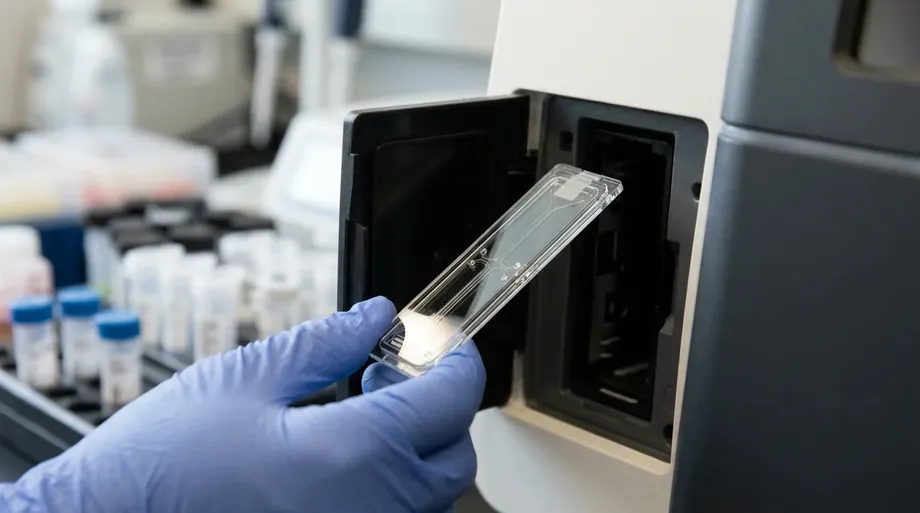
QIAGEN will supply QIAsprint Connect for automated DNA extraction and the QIAseq FX DNA Library Kit for library preparation. Extraction separates DNA from a biological sample. Library preparation turns that DNA into material the sequencing machine can read.
QIAsprint Connect can perform two automated runs of up to 96 samples each from a single start command, according to QIAGEN. The company gives a peak capacity of more than 3,600 samples per week and describes SG-INSIGHT as the system's first deployment at national scale.
Barcode checks are designed to catch setup errors, while automated audit trails and run reports record how samples move through the process. At this scale, laboratories need reliable ways to track each sample and identify where a problem occurred.
QIAGEN also describes the project as the first use of its universal next generation sequencing products in a nationwide population genomics study. Its library preparation kit will prepare samples for Ultima's UG200 platform.
Justus Krause-Harder, QIAGEN's head of Molecular Tools & Oncology, explained why those steps matter as research moves closer to patient care:
Population genomics is increasingly moving closer to clinical care, placing new demands on the reliability, consistency and scalability of the workflows that underpin whole genome sequencing.
How Singapore reached this stage
PRECISE-SG100K started in late 2022. By mid-December 2023, around 80,000 residents aged 21 to 84 had enrolled and approximately 50,000 genomes had been sequenced. Participants came from four research cohorts, including HELIOS and studies associated with the National University of Singapore, Singapore Eye Research Institute and National Heart Centre Singapore.
NovogeneAIT was then carrying out more than 760 whole genome sequences per week, using sequencing technology and equipment supplied by Illumina. The planned collection of 100,000 genomes was estimated to contain 20 petabytes, or 20 million gigabytes, of data.
The current SG-INSIGHT target of 450,000 participants is about 4.5 times the 100,000 reference size of Phase II. The comparison shows the increase in intended scale alongside the change in who will be studied.
- Late 2022: PRECISE-SG100K began building a large population health and genome resource.
- Mid-December 2023: About 80,000 residents had enrolled, with around 50,000 genomes sequenced.
- 2025 to 2031: Phase III's stated programme period, including recruitment through the three public healthcare clusters over five years.
- November 2, 2026: Ultima announced selection of its UG200 platform through the Lucence consortium.
- November 3, 2026: Illumina announced its selection to provide sequencing services.
- End of 2026: Ultima's expected availability date for pangenome-aware whole genome analysis.
An ambition described in 2023 aimed to map up to one million people by 2027. PRECISE's current Phase III plan sets out the more specific target of about 400,000 to 450,000 residents during the 2025 to 2031 programme.
The evidence needed before wider use
PRECISE's launch document places cost and effectiveness at the centre of Phase III. Researchers will examine whether genomic information can support preventive and more targeted care when used across a large population, rather than within a limited trial.
A secure platform connecting genomic, clinical and other health information is another stated goal. Earlier Phase II operations removed personal identifiers from samples and encrypted genomic data before storage. Phase III plans a connected resource that supports both research and clinical outcomes.
Healthcare staff will also need the skills to interpret results and discuss them with patients. During the earlier programme, Illumina's Singapore head Simon Giuliano identified shortages of genetics professionals, including counsellors and bioinformaticians, alongside barriers involving awareness, access and cost.
Singapore's Ministry of Health supports Phase III through the National Medical Research Council Office under funding initiative MOH-001734. The practical test is whether the programme can turn a much larger volume of DNA data into useful, affordable decisions for patients, beginning with medicine selection and extending to other uses as evidence develops.
Key Points
- SG-INSIGHT targets around 450,000 people, approximately one in 10 Singapore residents.
- Phase III runs from 2025 to 2031 and recruits patients through NHG Health, NUHS and SingHealth.
- Illumina will provide sequencing services in Singapore; a Lucence consortium involving Ultima and QIAGEN has also announced a role.
- Provider allocations, contract values and financial terms have not been disclosed.
- Early clinical work will examine how genetic profiles can guide prescribing.
- PRECISE will assess cost, effectiveness and practical requirements before broader use in healthcare.