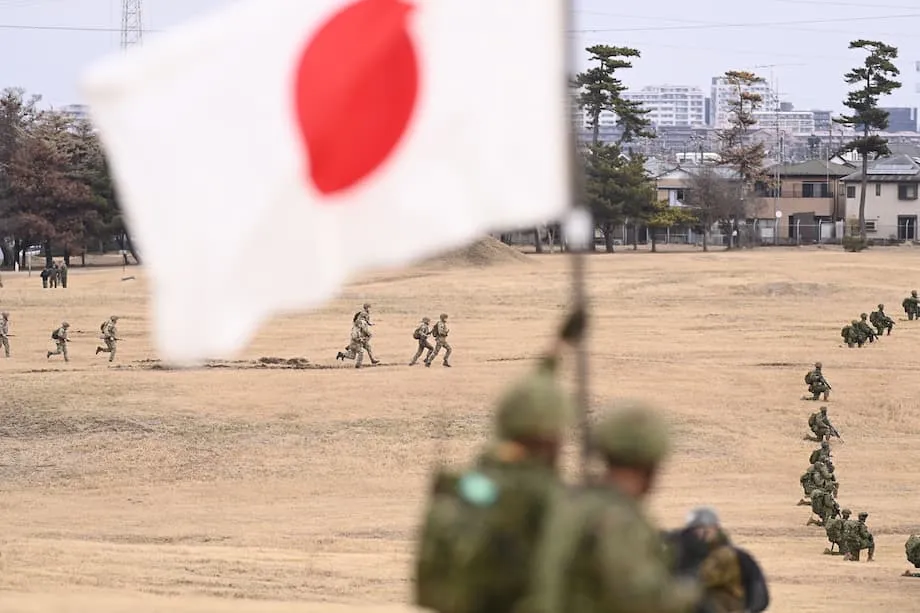
New missile systems arrive as allies expand training
The United States and Japan began Resolute Dragon on September 11, 2025, bringing the US Army's Typhon missile system to Marine Corps Air Station Iwakuni and, for the first time, Marine Corps NMESIS launchers and MADIS air defenses to Ishigaki. The island lies about 150 miles east of Taiwan, placing part of the exercise close to one of the region's most sensitive areas.
Contents
- New missile systems arrive as allies expand training
- What Typhon brings to Japan
- NMESIS, Type 12 and defenses against drones
- Where the exercise takes place
- China and Russia challenge the deployment
- Defense talks continue alongside the drills
- Commanders describe a deterrent signal
- Japan's defense policy reaches its outer islands
- Taiwan scenarios and activity across the Pacific
- Moving missiles also means moving supplies
- At a Glance
About 5,200 US personnel and roughly 14,000 members of the Japan Self Defense Forces are participating in the largest Resolute Dragon exercise to date. The annual drills run until September 25 across multiple locations in Japan, combining command post exercises with field training in rapid deployment, joint island operations and the transfer of targeting information from sensors to weapons crews.
China has condemned Typhon's arrival as a threat to regional security, and Russia has joined the criticism. Washington and Tokyo describe the exercise as preparation to operate together and deter attacks. The weapons involved include Typhon, which can launch Tomahawk cruise missiles and Standard Missile 6 weapons, the Marine Corps' NMESIS system for attacking ships, and Japan's extended range Type 12 surface to surface missiles.
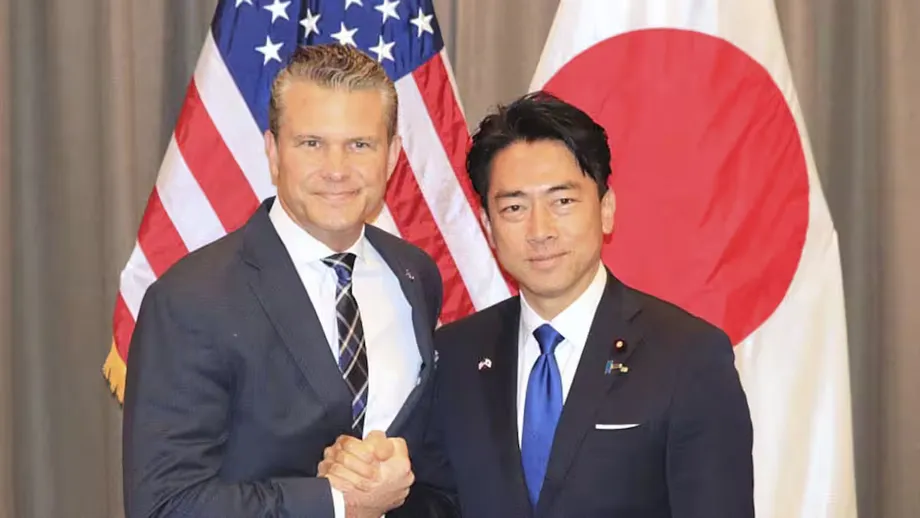
The opening follows a video call between US Defense Secretary Pete Hegseth and Chinese Defense Minister Admiral Dong Jun, their first known direct conversation since the spring. It also comes as governments assess a recent Chinese military parade displaying new missiles and large naval exercises around Taiwan. Military preparations and diplomatic contacts are proceeding together, with both sides stating their positions on security in the Western Pacific.
US officials describe the missile combination as a layered coastal defense: different weapons, with different reaches and functions, can help protect sea lanes and important territory while allowing forces ashore to strike targets at sea or farther away.
What Typhon brings to Japan
Typhon, also known as the Mid Range Capability, is a launcher mounted on trucks that fires two families of weapons. The Standard Missile 6, or SM 6, can contribute to defense against ballistic missiles, defend against aircraft and strike ships. Its estimated range is roughly 370 kilometers, about 230 miles, depending on how it is used.
The Tomahawk is a cruise missile that flies low and can change direction on its way to a target. Its reach is around 1,600 kilometers, close to 1,000 miles. From coastal Japan, that distance puts inland targets in much of eastern China within reach. Typhon is a launching system, rather than a ballistic missile itself.
The Center for Strategic and International Studies notes that placing these weapons on mobile launchers ashore creates options against fleets operating inside the first island chain while also allowing strikes against distant land targets. Mobility matters because crews can move their launchers between positions, making them harder to locate and attack.
The system's development followed the United States' withdrawal from the Intermediate Range Nuclear Forces Treaty in 2019, citing Russian violations. The treaty prohibited missiles launched from the ground, whether ballistic or cruise missiles, with ranges between 500 and 5,500 kilometers. After leaving it, the Army developed Typhon to provide precision strikes over long distances from land, alongside capabilities already available at sea and in the air.
Typhon has appeared in the Philippines for exercises. In July, it fired an SM 6 during Australia's Talisman Sabre exercise, striking a maritime target west of the international date line. Those deployments preceded the US Army's 3rd Multi Domain Task Force bringing the system to Japan. Its temporary presence for Resolute Dragon does not change treaty obligations.
NMESIS, Type 12 and defenses against drones
NMESIS stands for Navy Marine Expeditionary Ship Interdiction System. It gives Marine units a mobile weapon for attacking ships from land, using Naval Strike Missiles mounted on an unmanned launcher built on a light tactical vehicle.
The missile travels close to the sea's surface, making detection difficult, and has a range of about 115 miles. Coastal units can operate from concealed positions and move after firing to avoid an opposing force's response. Training in Japan this month includes locating ships, sharing target information and coordinating simulated strikes with Japanese units.
Japan's upgraded Type 12 surface to surface missile extends the reach of its forces ashore. Public assessments and defense institutes put the modernized missile's range at up to 900 kilometers, roughly 560 miles. It forms part of Tokyo's counterstrike plans, supported by domestic production and technology from allies.
Resolute Dragon also includes the Marine Air Defense Integrated System, or MADIS, which is designed to defeat drones and aircraft flying at low altitude. High Mobility Artillery Rocket Systems, known as HIMARS, will train alongside Japanese rocket artillery at Yausubetsu Maneuver Area in Hokkaido. Officials say there will be no live firing on the more populated islands in the southwest.
Where the exercise takes place
The US Army says Typhon will be stationed at Marine Corps Air Station Iwakuni on Honshu during the exercise. US and Japanese announcements place other training across the Southwest Islands, which stretch toward Taiwan. Ishigaki is about 150 miles east of Taiwan, while Yonaguni, Japan's westernmost island, lies only 67 miles from Taiwan's coast.
The Marine Corps says parts of Resolute Dragon rehearse operations on remote islands and a joint response to a crisis. Japanese defense documents posted locally specify that training on Ishigaki will take place without live firing. NMESIS and MADIS are being brought to that island for the first time.
US Marines and Japanese units have been refining the approach demonstrated by these deployments since 2024. Small missile teams spread across islands, use sensors to find ships, receive targeting information and, if required, fire before relocating. An opponent moving a large fleet through a narrow passage would have to account for weapons operating from several locations.
Farther north, HIMARS and Japanese rocket systems are scheduled to train at Yausubetsu in Hokkaido from September 14 to 24. That segment uses an established maneuver range away from densely populated civilian areas. The exercise therefore separates artillery training in the north from rehearsals without live firing near communities in the southwest.
The main dates show how the current deployment fits into earlier military and diplomatic activity:
- 2019: The United States withdrew from the Intermediate Range Nuclear Forces Treaty, citing Russian violations.
- 2022: Japan adopted a National Security Strategy endorsing a counterstrike capability.
- 2024: US and Japanese forces continued refining mobile missile operations on islands; Keen Edge included reported scenarios involving Taiwan and Yonaguni.
- Early 2025: The allies held the Resilient Shield ballistic missile defense exercise.
- July 2025: Typhon fired an SM 6 at a maritime target during Talisman Sabre in Australia.
- September 11 to 25, 2025: Resolute Dragon takes place across Japan.
- September 14 to 24, 2025: Artillery training is scheduled at Yausubetsu in Hokkaido.
- Late October 2025: Diplomats are working toward possible talks between Xi Jinping and Donald Trump during Asia Pacific Economic Cooperation events in South Korea.
China and Russia challenge the deployment
China's Foreign Ministry has opposed Typhon's deployment since it was announced. Official briefings have described the system as a danger to neighboring countries and strategic stability. Chinese state media have carried the same position. Beijing has urged Washington and Tokyo to reconsider and has called on Japan to exercise restraint in military affairs, invoking history and regional trust.
Guo Jiakun, a spokesperson for China's Foreign Ministry, said the deployment would damage other countries' legitimate security interests. He argued that Typhon should not be brought into Asian countries and called on the two allies to respect their neighbors' concerns:
The US and Japan should respect other countries security concerns and must not bring in the Typhon intermediate range missile system.
Maria Zakharova, a spokesperson for Russia's Foreign Ministry, called Japan's decision to host Typhon destabilizing. She warned that Moscow would consider responses if such deployments took place near Russian territory, describing the expansion of US missile capabilities ashore in Asia as a threat:
This is another destabilizing step... Deploying Typhon missiles in regions near Russia poses a direct strategic threat to Russia.
Beijing and Moscow are concerned about the distances these weapons can cover. Tomahawks extend the reach of forces ashore, while SM 6 provides options for controlling waters and defending against aerial threats. Combined with Japanese Type 12 units, naval platforms and Air Self Defense Force capabilities, the systems create overlapping coverage that can complicate rapid movements by the People's Liberation Army in nearby seas.
Defense talks continue alongside the drills
Hegseth's call with Dong placed direct communication alongside the expanding exercise. Pentagon chief spokesperson Sean Parnell said Hegseth told his counterpart that the United States does not seek conflict with China and is not pursuing regime change or the strangulation of China. Hegseth also said US interests in the Asia Pacific are vital and will be protected.
China's account of the conversation said Dong raised Taiwan and the South China Sea and urged Washington to respect China's core interests. Those issues remain central to Beijing's objections to US military activity in the region.
US Secretary of State Marco Rubio and Chinese Foreign Minister Wang Yi also spoke by telephone that day. Preparations continued for a possible meeting between Chinese President Xi Jinping and US President Donald Trump in late October, on the sidelines of Asia Pacific Economic Cooperation events in South Korea. The meeting remained a possibility rather than a confirmed appointment as the drills opened.
A bipartisan delegation from the US House of Representatives was also preparing to visit China, the first such trip in more than six years. The planned visit adds legislative contact to discussions between defense chiefs and foreign ministers after years of limited congressional travel.
Washington and Tokyo have stressed stability and crisis management while increasing their ability to withstand military pressure in the Western Pacific. Senior contacts and reopened defense hotlines are intended to keep communication available even when governments disagree about missile deployments and exercises.
Commanders describe a deterrent signal
Lieutenant General Roger Turner, commander of III Marine Expeditionary Force, described Resolute Dragon as essential to strengthening allied capabilities alongside Japan's Western Army. His statement tied realistic training to the message the allies want to send to a potential attacker:
By training alongside the Western Army in realistic, combat focused scenarios, we sharpen the warfighting edge of our forces and present a clear, credible deterrent to any adversary who would threaten peace and security in the Indo Pacific.
Marine Corps spokesperson 2nd Lieutenant James Selcke said in an email that the exercise was growing and attracting participation from joint and allied forces. He linked its increasing size to military readiness:
The drills growing scale reflects the importance of this exercise and the desire of joint and allied forces to join in the opportunity to enhance our readiness.
For the participating forces, readiness includes working through the steps between finding a target and assigning a weapon to it. A sensor may locate a ship, but the information must reach the appropriate command and launcher quickly enough to remain useful. Command post drills practice coordination, while field events test movement, communications and cooperation between units.
The scale of Resolute Dragon makes those tasks a shared undertaking across services and national forces. Washington and Tokyo describe the training as routine and defensive, while China views systems such as Typhon as provocative. Reliable communication helps reduce the risk that an exercise movement will be mistaken for preparation to attack.
Japan's defense policy reaches its outer islands
Tokyo's 2022 National Security Strategy endorsed a counterstrike capability, meaning the ability to strike an opponent's military targets in response to an attack. The decision opened the way for Japan to purchase Tomahawks for its navy, upgrade the Type 12 missile and invest in networks that connect targeting information across its forces.
Japan also set a goal of bringing defense spending close to 2 percent of gross domestic product by the latter half of the decade. Its policy retains a focus on self defense while giving a larger role to weapons that reach farther and units that operate from dispersed locations. Those changes address an opponent with growing missile and naval power.
Japan had been cautious about hosting US missiles based on land, even for training. Typhon's temporary deployment at Iwakuni and the arrival of NMESIS and MADIS on Ishigaki show a greater willingness to rehearse their use at strategically important locations.
Communities, particularly in Okinawa Prefecture, continue to have concerns about military activity. Planners stress that training near populated areas avoids live firing, while the artillery segment in Hokkaido takes place at an established range. Tokyo's approach is to increase readiness while managing risks to residents.
The first island chain runs from Japan through Taiwan and the Philippines toward Borneo. It crosses major sea routes and contains narrow passages through which naval forces enter the wider Pacific. Japan's Southwest Islands occupy an important part of that geography.
Detachments on Yonaguni, Ishigaki and other islands can cover the Miyako Strait and waters north of Taiwan. Allied forces in the Philippines can watch the Bashi Channel to Taiwan's south. Weapons positioned across these islands can create areas where an opposing fleet risks attack, making access through the straits more difficult.
Taiwan scenarios and activity across the Pacific
Keen Edge, a command and control exercise held in 2024, reportedly included scenarios in which US and Japanese forces coordinated missile and air strikes against a Chinese invasion fleet heading toward Taiwan while responding to attacks on Japanese bases. Another reported scenario considered a Chinese assault on Yonaguni.
Chinese carrier activity near Yonaguni in 2024 and 2025, including sorties by the Shandong, has sharpened Tokyo's attention to air and missile coverage for its outer islands. Their proximity to Taiwan links the defense of Japanese territory to planning for a wider regional crisis.
Beyond Resolute Dragon, reported US and Japanese planning envisages deploying HIMARS and other weapons along the Nansei island chain, which stretches from Kyushu toward Taiwan, during a crisis. The concept would place Marine units at temporary sites with logistical support from Japan.
A similar approach is developing with the Philippines, where access agreements and exercises have created options for positioning weapons with longer ranges in Batanes and Luzon if deterrence fails. The purpose is to threaten landing ships, help keep sea lanes open and prevent an attacker from achieving a rapid victory before defenders can respond.
Chinese naval operations farther from home also influence allied planning. In February, Australia and New Zealand monitored a Chinese navy task group operating inside Australia's exclusive economic zone near Tasmania. Such a zone gives a coastal country rights over marine resources.
At the same time, the United States and Japan conducted Resilient Shield, a ballistic missile defense exercise linking ships and air defense units in a common training picture. Held in early 2025, it used complex computer scenarios to practice integrating air defense units and destroyers. The aim was to establish common procedures before a crisis.
Moving missiles also means moving supplies
Missile teams dispersed across islands require fuel, spare parts and communications that keep working under pressure. Operating within reach of an adversary's weapons makes the ability to move, conceal equipment and maintain supplies central to the military concept.
The Marine Corps has published concepts stressing mobility, deception and quick repositioning. Training in Japan this month focuses on moving concealed launchers and transferring target information from sensors to weapons crews. Earlier events in Okinawa reportedly included the first full field integration of NMESIS on Japanese soil, testing basic tactics and communications between the allies.
Misjudgment remains a central risk for Washington and Tokyo. More sensors and missiles, combined with less time to make decisions, put greater demands on disciplined procedures. China and the allies are expanding the scope of their operations across the Pacific while holding sharply different views of what those deployments mean for security.
The Marine Corps expects to field more NMESIS batteries through 2025 and beyond and to embed the 12th Marine Littoral Regiment in Okinawa as a hub for dispersed operations. Japan will continue introducing Type 12 units with longer ranges and connecting targeting networks across its services.
The US Army's 3rd Multi Domain Task Force will continue testing how best to use Typhon, including linking it with allied sensors. The next scheduled exercise milestones are the September 14 start of the Hokkaido artillery segment, its September 24 conclusion and the September 25 end of Resolute Dragon. Diplomatic work continues toward possible talks between the presidents in late October and contacts at other levels.
At a Glance
- Resolute Dragon runs from September 11 to 25, 2025, involving about 5,200 US personnel and roughly 14,000 Japanese personnel.
- Typhon is stationed at Iwakuni for the exercise and can launch SM 6 weapons and Tomahawks, with the latter reaching around 1,600 kilometers.
- NMESIS and MADIS are coming to Ishigaki for the first time; training there will take place without live firing.
- Japan's upgraded Type 12 missile has an assessed range of up to 900 kilometers.
- HIMARS and Japanese rocket artillery will train at Yausubetsu in Hokkaido from September 14 to 24.
- China and Russia oppose the Typhon deployment, describing it as destabilizing and threatening their security interests.
- Hegseth and Dong held a video call before the exercise, while preparations continue for possible Xi and Trump talks in late October.
- Reported allied scenarios include defending Japanese bases and striking an invasion fleet heading toward Taiwan.
- Resolute Dragon and Resilient Shield practice shared targeting, island operations and air and missile defense coordination.