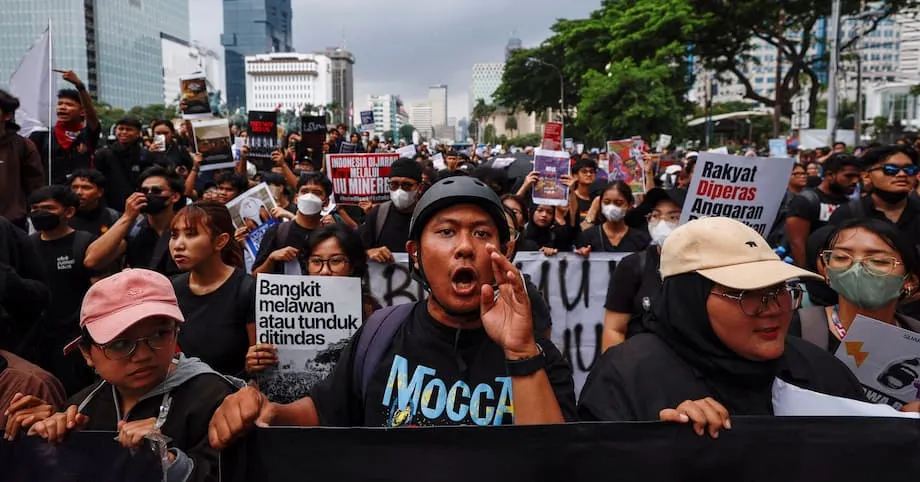
Thousands detained as anger moves from streets to screens
More than 3,000 people have been detained across Indonesia since late August, according to Human Rights Watch, as protests over lawmakers benefits have developed into a confrontation over police violence, online speech and the treatment of government critics. By September 11, 2025, police investigations were reaching beyond street demonstrations to social media users accused of encouraging unrest.
Contents
- Thousands detained as anger moves from streets to screens
- Why lawmakers allowances became a flashpoint
- How the demonstrations spread
- Who has been arrested over online posts?
- What the online speech law allows
- Why lawyers are challenging the arrests
- Deaths and injuries put policing under scrutiny
- Prabowo combines concessions with a firm security response
- Platforms, surveillance and pressure on critics
- Calls for an independent account of the violence
- The Bottom Line
The protests began on August 25. Three days later, Affan Kurniawan, a 21 year old motorcycle taxi driver, died when an armored police vehicle ran over him near crowds in Jakarta. Video of his death spread rapidly online and helped propel demonstrations in nearly 50 cities, according to rights monitors.
Rights groups report eight to eleven deaths since the demonstrations began, hundreds to more than 1,000 injuries, and thousands of detentions. The unrest, Indonesia's largest in years, has brought students, labor unions and civil society organizations to parliament buildings and city centers. Their anger combines rising living costs and weak wage growth with resentment of generous benefits for elected representatives.
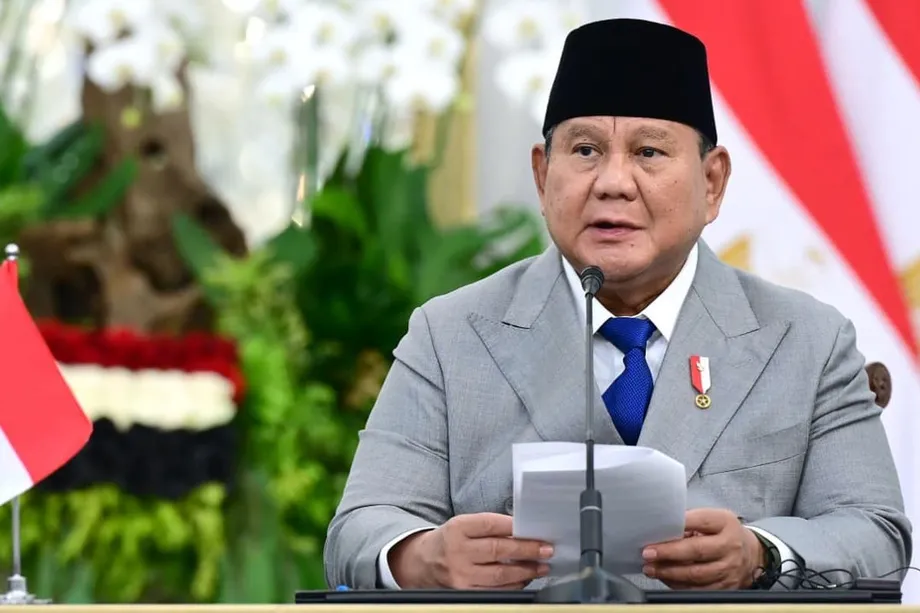
President Prabowo Subianto has rolled back some lawmakers perks and appealed for calm. He has also described some violence as treason and terrorism and ordered a firm response to rioting. Police have used water cannon and tear gas, while soldiers have been deployed to protect sensitive sites in Jakarta.
Police say they have detained more than 40 alleged provocateurs in investigations into riots in Jakarta and other regions. At least 11 people have been held over social media posts that authorities say encouraged protests or violence. Rights advocates argue that the widening investigations risk drawing peaceful criticism into criminal proceedings.
Why lawmakers allowances became a flashpoint
Lawmakers agreed to a monthly housing allowance of around 50 million rupiah for each of the House of Representatives' 580 members. That amount is far above Jakarta's minimum wage. Across all 580 members, the stated allowance would amount to about 29 billion rupiah each month.
Workers and students have pointed to the gap between those benefits and their own circumstances. Food prices have risen, wage growth has been weak, and youth unemployment is high. Many young people turn to gig work, including transport jobs arranged through apps, to make ends meet.
Affan's death became a rallying point partly because his work reflected those pressures. A young motorcycle taxi driver trying to earn a living was killed near a demonstration about the distance between political privilege and everyday hardship.
Public grievances also include proposed tax increases and the cost of populist programs. A free school meal initiative has been marred by reports of food poisoning. The movement known as Indonesia Gelap has drawn supporters calling for integrity in public spending and accountability in policing.
Student groups say the government's concessions have not addressed their central demands. In Makassar, student union leader Syamry criticized the official response in remarks to reporters:
The President statement yesterday did not accommodate demands from students and civil society.
How the demonstrations spread
Jakarta was the starting point for unrest that quickly reached other parts of Indonesia. Students continued gathering in Yogyakarta, Bandung and Makassar despite the tense security situation. In several regions, crowds ransacked or set fire to local government buildings after clashes.
The main events unfolded over a short period:
- August 25: Protests began over lawmakers perks and economic pressures.
- August 28: Affan Kurniawan died after an armored police vehicle ran over him near crowds in Jakarta.
- Within days: Video of the incident helped drive rallies in nearly 50 cities, according to rights monitors.
- By September 11: Street detentions were accompanied by arrests over social media posts and restrictions affecting online protest activity.
Financial markets slipped in early trading before recovering some ground. On the streets, the government's response combined concessions on benefits with stronger security measures. Reports described snipers at key locations and checkpoints across the capital, alongside soldiers guarding sensitive sites.
Who has been arrested over online posts?
Laras Faizati Khairunninsa, a communications officer at an organization linked to the ASEAN secretariat in Jakarta, is among those arrested. Bareskrim, the National Police criminal investigation department, accused her of inciting hatred against individuals and groups and urging mass action through posts and videos.
The head of the police cybercrime directorate displayed screenshots at a press conference that he said came from Laras' Instagram account. One image placed her near National Police headquarters, which officials described as a vital national site.
The director alleged that the post encouraged people to burn the building and attack those inside. Police said the content had been uploaded from a location close to the headquarters, a detail they argued made it a threat to the institution. Those allegations form the police account of why they acted against her.
In the same week, Jakarta Police apprehended six people accused of using social media to encourage underage students to carry out anarchic actions during protests on August 25 and August 28.
Those detained include human rights figures Delpedro Marhaen and Muzaffar Salim of the Lokataru Foundation, and Syahdan Husein of Gejayan Memanggil. The online movement has helped organize student actions in Yogyakarta.
The Jakarta Legal Aid Institute also reported losing access to its TikTok account. The platform marked the account as permanently banned after the group posted a solidarity message urging people to stay safe. Alongside the arrests, that loss reduced a legal aid organization's ability to communicate through a platform used during the protests.
What the online speech law allows
Police cite criminal law and the Electronic Information and Transactions Law, commonly called the ITE Law, to justify the arrests. First passed in 2008 and amended several times, the law regulates online speech and has been used in cases involving hate speech, defamation and incitement.
Incitement means encouraging others to commit a harmful act. The central issue in these cases is whether a post presents a direct danger of violence or expresses anger, criticism or support for protest. Critics say vague language and broad interpretations of the ITE Law allow peaceful expression to be treated as a crime.
Indonesia is a party to the International Covenant on Civil and Political Rights, which protects freedom of expression and peaceful assembly while permitting narrow restrictions on direct incitement to violence. Courts must consider the speaker's intent, the likelihood of harm and the direct connection between the words and that harm.
A recent Constitutional Court ruling narrowed the use of some ITE defamation provisions. People nevertheless continue to face charges over critical posts. Defamation concerns damage to someone's reputation; incitement concerns encouraging harmful action. Both have featured in the wider debate over the use of laws governing online expression.
Why lawyers are challenging the arrests
Dimas Bagus Arya of the Commission for Missing Persons and Victims of Violence, known as KontraS, questioned whether police followed preliminary steps before naming online critics as suspects. Those steps include summoning people for questioning as witnesses.
Legal experts describe due process as beginning with witness questioning and moving to suspect status when there is probable cause supported by evidence. In plain terms, investigators must have an evidence based reason to suspect someone and follow the required procedure. Rights advocates say the speed of some arrests suggests that deterring criticism is taking priority over those protections.
Julius Ibrani of the Indonesian Legal Aid Association called the arrests a criminalization of expression. Nenden Sekar Arum of the Southeast Asia Freedom of Expression Network warned that the campaign appeared to be a broad crackdown on people criticizing the government online.
Both argue that fear of prosecution will encourage people to censor themselves. The practical result is that someone who would otherwise post criticism, satire or a protest message may stay silent because they fear an investigation.
KontraS and allied organizations are petitioning for the release of detainees or, at least, the suspension of their detention. Lawyers are preparing pretrial challenges if suspects are not freed soon. Such challenges are a common route in Indonesia when families and legal counsel argue that investigators failed to follow the procedures for naming a suspect.
Deaths and injuries put policing under scrutiny
Witnesses and rights groups describe widespread use of tear gas and rubber bullets to disperse crowds in several cities. Seven officers are under investigation over the armored vehicle incident that killed Affan in Jakarta on August 28.
A student died in Yogyakarta after an alleged beating during clashes outside police headquarters. In other cities, public employees and a member of the civil service police unit died during arson and mob violence following clashes.
Amnesty International has described the police response as excessive and called for a full accounting. The organization warns that weapons used to control crowds can quickly increase danger when officers lack strict training and oversight.
Montse Ferrer, Amnesty International's Regional Research Director, called for an independent and impartial investigation into the deaths and the handling of demonstrations:
Nobody should die while exercising their right to freedom of expression and peaceful assembly. Authorities in Indonesia must promptly ensure an independent and impartial investigation into these deaths and violent incidents.
Human Rights Watch has urged the government to end arbitrary detention and bring policing into line with United Nations guidance on force and less lethal weapons. Less lethal weapons are designed to reduce the risk of death compared with firearms, but their use still requires controls to protect people from serious injury.
Prabowo combines concessions with a firm security response
President Prabowo has sought to balance reductions in controversial benefits with instructions for police and the military to act firmly against rioters. His warnings against looting, and his description of some violence as treason and terrorism, place parts of the unrest within a national security frame.
After visiting injured officers, Prabowo promised promotions for dozens of police hurt during the unrest. In a televised appearance, he acknowledged that some officers might have acted wrongly while defending the force and pointing to its casualties:
There might be police members who were wrong, but do not forget dozens of officers who sacrificed themselves.
The police cybercrime directorate says its investigations focus on content that crosses a clear legal boundary. Officials argue that encouraging attacks on a vital facility moves beyond protected expression into criminal conduct.
International law permits restrictions on direct incitement to violence. The dispute concerns how clear, immediate and likely the danger must be, and whether authorities apply the law consistently rather than selectively.
Human Rights Watch also opposes using soldiers for civilian law enforcement. The organization says soldiers are trained for combat and are more likely to use wrongful force in civilian settings. Its concern places the deployment of troops alongside the wider demand for restraint and accountability.
Platforms, surveillance and pressure on critics
TikTok suspended its live feature in Indonesia during the peak of the unrest. Livestreaming had been part of the online activity surrounding the demonstrations, so the suspension restricted a way for people to share events as they unfolded.
Digital rights advocates cataloged disruptions to online access and restrictions on livestreams. Some activists said their posts received less visibility or their accounts were restricted after they shared protest information or footage of police actions.
CIVICUS, an alliance monitoring civic freedoms, reported doxxing and cyberattacks against critics during earlier protests in 2025. Doxxing involves publishing someone's private identifying information, exposing them to harassment or threats. Human rights defenders and journalists have also faced harassment and other digital attacks.
Authorities have at times suggested foreign interference without providing evidence. Rights groups view those claims as an effort to discredit local voices. Press freedom groups say Indonesia's ranking fell in 2025, adding to concerns about the conditions facing journalists and critics.
CIVICUS has also described ongoing revisions to criminal procedure rules and police and military laws that expand state powers. Its monitoring report flagged surveillance changes, including wiretapping arrangements between the Attorney General Office and telecommunications operators without strong safeguards. It also highlighted a military law revision expanding the military's role in civilian institutions.
Advocates say these measures, combined with aggressive use of the ITE Law, increase the risk that authorities will treat online activism as a security threat. Journalists and human rights groups describe a chilling effect on satire, memes and sharp criticism. Nenden Sekar Arum warned that the direction was worrying because anyone could be targeted for what they wrote online.
Calls for an independent account of the violence
Amnesty International Indonesia director Usman Hamid has called for a joint fact finding team that includes community leaders and experts. The proposed team would identify those who instigated arson and destruction and examine the role of security forces in violent incidents.
Hamid said police should identify the people responsible for attacks on public facilities:
This is why the police should be showing us the people who actually instigated the riots and damaged public facilities.
Human Rights Watch wants peaceful protesters released, arbitrary detention ended and excessive force investigated. CIVICUS is calling for an end to online restrictions, doxxing and cyberattacks against critics, as well as updated police training consistent with international standards.
Rights lawyers also want clear investigation schedules for the deaths, including Affan's. As of September 11, no clear timetable for completing those investigations or resolving the pending release requests had been given.
For detainees and their families, the immediate issues are access to fair procedures and decisions on release. For protesters, journalists and online critics, the central concerns are whether they can express grievances safely and whether those responsible for deaths and destruction will be held accountable.
The Bottom Line
- Protests began on August 25 over lawmakers perks, rising living costs and weak wage growth.
- Affan Kurniawan, 21, died under an armored police vehicle in Jakarta on August 28; seven officers are under investigation.
- Rights monitors say rallies reached nearly 50 cities. Rights groups report eight to eleven deaths and hundreds to more than 1,000 injuries.
- Human Rights Watch estimates more than 3,000 detentions nationwide since late August.
- Police say more than 40 alleged provocateurs have been detained, including at least 11 people held over social media posts.
- Detainees include Laras Faizati Khairunninsa, Delpedro Marhaen, Muzaffar Salim and Syahdan Husein.
- Prabowo reduced some lawmakers benefits while ordering firm action against rioting and defending injured police.
- TikTok suspended livestreaming, and the Jakarta Legal Aid Institute reported a permanent ban on its account.
- Rights groups seek independent investigations, the release of peaceful protesters, fair arrest procedures and an end to online restrictions.