More complaints, fewer approvals for urgent protection
South Korea recorded 13,269 stalking cases in 2024, compared with 7,626 in 2022, while courts approved a shrinking share of requests for emergency protection. Ministry of Justice figures provided to lawmakers show another 7,981 cases were filed between January and July 2025. If that pace continues, the total for 2025 is likely to exceed last year's figure.
Contents
- More complaints, fewer approvals for urgent protection
- What conduct does the stalking law cover?
- How emergency protection works
- Why lawmakers removed the consent clause
- Protective orders are falling behind
- The Sindang Station killing and public anger
- What the first year of court cases showed
- Digital surveillance creates another protection gap
- Regional changes and practical prevention
- What advocates and officials want changed
- Key Points
The increase follows a major change in how the country handles stalking. The Act on Punishment of Crime of Stalking took effect in October 2021, replacing an approach that often treated stalking complaints as minor public order offenses. A revision in 2023 then removed a clause that allowed suspects to avoid punishment when victims withheld consent to prosecution.
Only 406 cases were reported during the first three months under the new law in late 2021. By the end of 2023, more than 10,400 cases had been filed. The figures reflect a growing willingness to seek help and stronger enforcement, while exposing weaknesses in the protection available after a complaint.
Courts approved 98.4 percent of prosecutors' emergency measure requests in late 2021. That share fell to 95.8 percent in 2024 and 93.3 percent through July 2025. For someone facing repeated calls, unwanted visits or threats, the decision can determine whether a court order keeps a suspect away while a case proceeds.
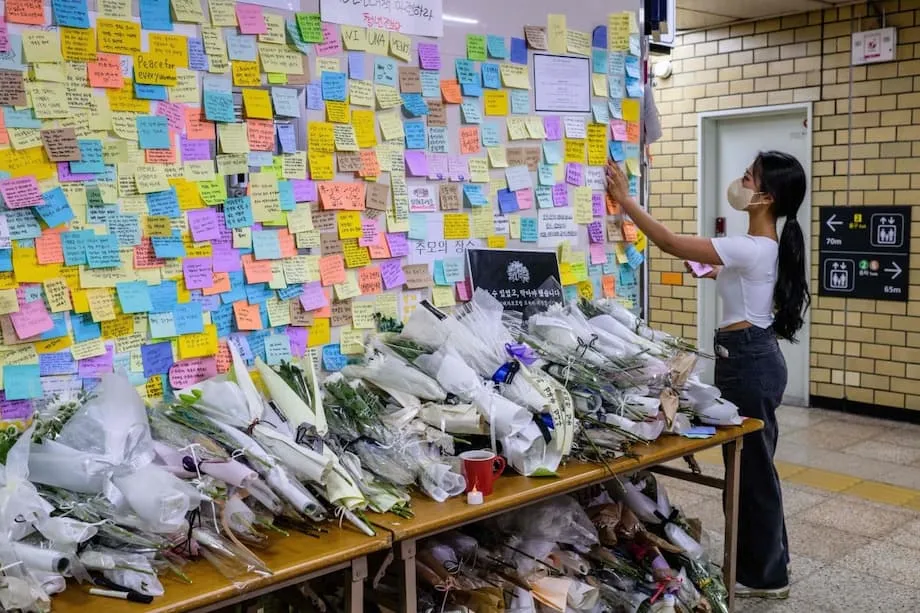
The killing of a 28 year old Seoul Metro employee at Sindang Station in 2022, after she had reported persistent harassment, brought those risks into public view. Protests, campaigning by women's rights groups and heightened media scrutiny helped turn stalking from a matter often treated as a private complaint into a public safety priority.
What conduct does the stalking law cover?
The 2021 statute gave South Korea its first comprehensive legal definition of stalking. It addresses repeated or continuous unwanted conduct that causes fear or anxiety, with penalties intended to reflect the danger that harassment can escalate into physical harm.
The law covers approaching or following someone against their will, waiting or loitering near their home, workplace or school, and sending unwelcome messages or images. It also covers damaging property in a way that causes fear, distributing personal information and impersonation.
Repeated or continuous conduct can be prosecuted as a stalking crime, carrying a maximum sentence of three years in prison or a fine of up to 30 million won. When a weapon is used, the maximum prison term rises to five years, with a higher fine. Breaching court orders can bring additional penalties.
The requirement for repeated or continuous behavior makes documentation important. Calls, messages, visits and encounters near a home or workplace can together show a pattern. Early reporting and evidence collection help police record that pattern and seek protection before the behavior becomes more dangerous.
How emergency protection works
Police can act immediately when they receive a stalking report. They can stop the behavior, separate the suspect from the victim and impose restrictions intended to prevent further contact. Those restrictions include keeping the suspect at least 100 meters from specified locations and banning phone calls, text messages or online contact directed at the victim.
A victim facing a serious risk of further harm may be moved to a shelter. Police can also explain the person's rights and available services, guide them to a secure facility and coordinate with prosecutors on protective orders suited to the risk.
Judicial police can issue urgent emergency measures, which require prompt court review. Prosecutors can seek provisional court orders, including restraining orders, detention where warranted and, in certain cases, electronic monitoring. Provisional measures provide protection while the legal process continues.
The statute sets out procedures for changing or revoking protective measures and requires protection of the victim's identity. Together, restrictions on physical approaches and electronic contact are intended to give victims time and space to make safety plans.
South Korea also strengthened support outside the criminal process in 2023 through the Act on Prevention of Stalking and Protection of Victims. That law formalized shelters and counseling services for people at risk, reinforcing the support system around the punishment law.
Why lawmakers removed the consent clause
The 2023 revision addressed a problem raised repeatedly by women's organizations: a frightened victim could face pressure from a stalker to withdraw a complaint or oppose punishment. Under the original clause, a suspect could avoid punishment if the victim withheld consent.
Lawmakers from across the aisle supported removing the clause at a National Assembly plenary session. They argued that prosecution should proceed according to evidence and risk, rather than a suspect's ability to pressure someone who fears retaliation.
Song Ran hee, head of the Korea Women's Hotline, welcomed the change while criticizing how long it had taken. She said the original provision misunderstood the dynamics of stalking, in which fear can silence the person seeking protection.
It is something that should have been done years ago. We had expressed grave concerns on the matter since the legislation of the initial anti stalking law and repeatedly called on the government to eliminate the unreasonable clause.
Advocacy leaders described the revision as overdue after years of campaigning. Removing the clause addressed a barrier to prosecution, while the separate task of securing and enforcing protective measures continued to depend on decisions by police, prosecutors and courts.
The main legal changes and the case that intensified demands for action unfolded over several years:
- October 2021: The Act on Punishment of Crime of Stalking took effect, establishing a comprehensive definition and criminal penalties.
- 2022: The killing of a Seoul Metro employee at Sindang Station prompted grief, protests and demands for stronger protection.
- 2023: The National Assembly removed the consent to punishment clause, and the Act on Prevention of Stalking and Protection of Victims formalized shelters and counseling.
- 2024: Stalking cases reached 13,269, while court approval of prosecutors' emergency measure requests fell to 95.8 percent.
- January to July 2025: Another 7,981 cases were filed, and the emergency measure approval rate fell to 93.3 percent.
Protective orders are falling behind
Ministry figures cited by lawmakers show a steady decline in court approval of prosecutors' emergency measure requests: 98.4 percent in late 2021, 98.1 percent in 2022, 97.9 percent in 2023, 95.8 percent in 2024 and 93.3 percent through July 2025.
Approval rates for requests made by judicial police also fell, from 94.1 percent in 2022 to 92.2 percent in 2024. Prosecutors' requests for longer lasting provisional measures have had approval rates of around 84 percent.
The figures concern advocates because protective measures are meant to interrupt harassment before it escalates. Restraining orders, relocation to secure facilities and bans on electronic contact can provide breathing space while a victim arranges safer accommodation or other support.
A lower approval rate means a larger share of applications ends without the requested court protection. The figures do not give the reasons for individual refusals. Advocates warn that victims can return home still facing threats while their cases continue.
Rep. Jeon Hyun heui of the Democratic Party urged courts to act more decisively when police or prosecutors present credible assessments of danger and documented patterns of repeated harassment. She criticized hesitation in granting protection.
It is a dereliction of duty for the courts to hesitate in taking action while victims, desperately in need of help, remain exposed to stalking threats.
The rising number of complaints also creates more work for the agencies responsible for protection. Prosecutors and police leaders point to the need for sufficient staff and resources to process cases, supervise compliance with orders and use electronic monitoring when the assessed risk warrants it.
The Sindang Station killing and public anger
The 2022 killing at Seoul's Sindang Station became a painful example of what can happen when protection fails. Police had accused Jeon Joo hwan of stalking a colleague through incessant calls and messages, as well as illicit filming.
The victim reported him twice within six months, but he was not detained. Jeon was fired and faced sentencing on stalking charges. The day before that court date, he went to the station where she worked and stabbed her in a restroom.
The killing brought an outpouring of grief and anger. It increased pressure on lawmakers and courts to close legal loopholes and use stronger protective tools earlier in a pattern of abuse, before a victim faces an attack.
Jeon apologized and admitted wrongdoing when he was brought before reporters after his arrest.
I did a truly crazy thing.
Academics said the case brought into focus a wider sense of vulnerability among women. A restroom at a busy station was a place where people should have been able to expect safety.
Hyobin Lee, an adjunct professor of Korean politics, expressed that fear in describing the attack.
There is no such thing as a safe place in Korea for women anymore, as the attack happened in a crowded, public place in the middle of the day.
What the first year of court cases showed
Researchers examining 193 stalking related court cases from October 2021 to October 2022 found that most victims were women. The average victim age was slightly above 42, and former intimate partners represented the largest share of alleged stalkers.
Rejection was the primary reported motive. Direct contact and approaches were more common than behavior conducted solely through digital or indirect means. About 16.6 percent of stalkers had diagnosed mental disorders, with psychosis fairly common among those identified.
The findings help explain why protection often depends on quick intervention and clear records of what has happened. Cases involving former partners can include repeated calls, visits, waiting near homes or workplaces and escalating confrontations. Police need to connect those incidents into a documented pattern.
Obtaining an order that bars contact can interrupt that pattern. Faster documentation and protective action offer a better chance of preventing serious harm, particularly when unwanted contact continues despite rejection or a complaint.
Digital surveillance creates another protection gap
Technology allows a person to monitor and intimidate someone without appearing at their door. In South Korea, where smartphone use is near universal and social media is extensive, victims report spyware installation, GPS tracking in real time and messaging around the clock.
Spyware is software used to secretly monitor a device. GPS tracking can reveal where someone is or where they have been. Combined with persistent messages, these tools can be used to monitor, isolate and intimidate a victim throughout daily life.
An analysis from the Korean Women's Development Institute notes that South Korea lacks official statistics on stalking involving technology. Some conduct, including covert GPS tracking, is often prosecuted as a privacy violation rather than stalking. That can limit the penalties and leave the pattern of intimidation less clearly reflected in the charge.
Bae Seong shin, a Gender Equality Officer at the Supreme Prosecutors' Office who has studied abuse involving technology, described the effects of surveillance without physical contact.
Unlike conventional physical stalking, technology mediated stalking exerts a powerful form of control without direct contact, leaving victims feeling trapped in what one might call an invisible prison.
Countries that recognize coercive control as a central feature of domestic abuse are adapting their laws to cover intimidation and surveillance that may involve no physical contact. Coercive control means a pattern of behavior used to restrict another person's freedom and make them feel constantly watched or threatened.
Advocates in South Korea want the stalking statute to address control through technology explicitly. They also want investigative units to have the tools, training and digital forensics support needed to act quickly. Digital forensics involves examining devices and electronic records to recover and understand evidence.
Regional changes and practical prevention
Governments across the region are updating criminal codes to address psychological harm, online harassment and the protection of personal information. Malaysia has introduced Penal Code amendments criminalizing doxing and communications intended to cause emotional distress, seeking faster and stricter action against bullying in physical and digital settings.
Doxing means exposing someone's personal information in a way that can leave them vulnerable to harassment. The Malaysian changes reflect a wider move toward recognizing emotional and psychological harm, rather than concentrating narrowly on physical injuries.
Prevention strategies that have shown promise in other jurisdictions include standardized risk assessments when police first receive a complaint, rapid court review of emergency measures and strict enforcement when restraining orders are breached. Electronic monitoring is another tool for offenders assessed as posing the highest risk.
Police, prosecutors, courts and victim services need to share information so that each understands the pattern of harassment and the protection already in place. Specialized training in digital evidence and online harassment is also important when conduct moves between physical locations, phones and internet platforms.
What advocates and officials want changed
Advocates are calling for simpler access to protective orders and stronger enforcement of breaches as complaints rise. The range of cases is also widening beyond former partners to include acquaintances and strangers.
Many advocates want courts to issue temporary orders barring contact more readily at the emergency stage, citing the documented risk that stalking can escalate. Police and prosecutors also need enough resources to manage the growing number of cases and supervise restrictions once they are imposed.
Specialists studying abuse through technology want clearer legal wording covering spyware, account takeovers, covert GPS tracking and coordinated harassment across platforms. They recommend including stalking involving technology in national crime statistics so that policy and resources can respond to its scale.
Victim service providers consistently call for more shelters, better relocation support and a dedicated stalking helpline operating 24 hours a day. They also stress continued case management rather than support that ends after the immediate crisis.
South Korea's reforms have changed the legal response to stalking and encouraged more people to seek help. The pressure now falls on the protection system: obtaining timely orders, enforcing them, responding to digital surveillance and keeping support available while victims rebuild safer daily routines.
Key Points
- Stalking cases rose from 7,626 in 2022 to 13,269 in 2024, with 7,981 filed through July 2025.
- The 2021 law carries penalties of up to three years in prison or a fine of 30 million won, rising to five years in prison and a higher fine when a weapon is used.
- A 2023 revision removed the clause allowing suspects to avoid punishment when victims withheld consent.
- Court approval of prosecutors' emergency measure requests fell from 98.4 percent in late 2021 to 93.3 percent through July 2025.
- The 2022 Sindang Station killing intensified demands for earlier intervention and stronger victim protection.
- A review of 193 court cases found that most victims were women and former intimate partners were the largest group of alleged stalkers.
- South Korea lacks official statistics on stalking involving technology, while covert tracking can be prosecuted under privacy rules.
- Advocates seek faster protective orders, stronger enforcement, clearer coverage of digital abuse and expanded shelters and continuing support.