Quetta bombing brings grief and anger onto the streets
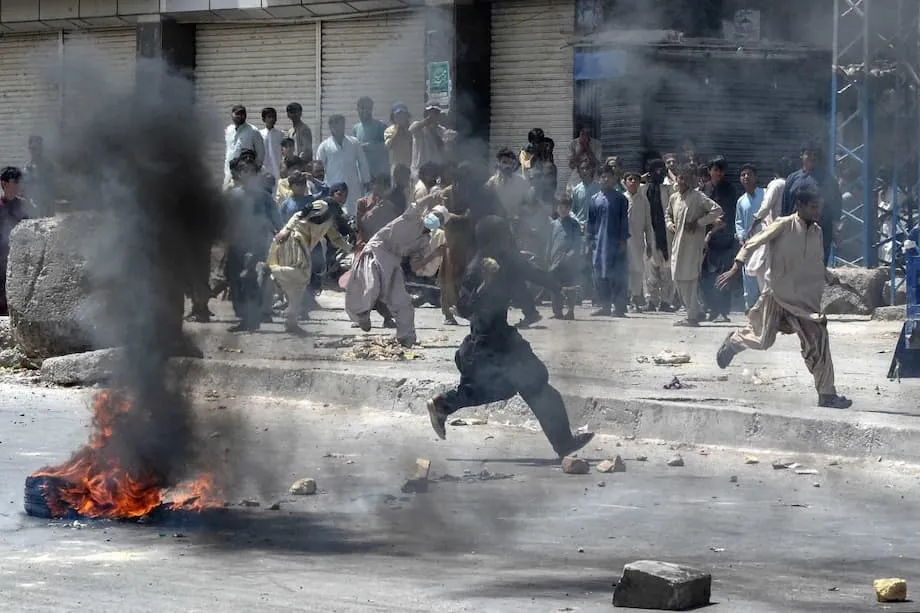
Police arrested 260 people and fired tear gas during a strike across Pakistan's Balochistan province on Monday, September 8, as protesters demanded accountability for a suicide bombing that killed 15 people at a political rally in Quetta six days earlier.
Contents
- Quetta bombing brings grief and anger onto the streets
- A strike reaches markets, schools and transport routes
- Police invoke assembly restrictions in Quetta
- The attack and the demands for answers
- How the latest confrontation developed
- Rights groups point to earlier protest crackdowns
- An earlier march was also struck by a bomber
- Several armed threats overlap in Balochistan
- Violence across the Iranian border adds pressure
- Resources, disappearances and distrust
- Officials promise an investigation as families seek accountability
- What to Know
Markets closed and roads were blocked across more than a dozen cities in Pakistan's largest province by land area. The strike followed the September 2 attack on a Balochistan National Party gathering in a stadium parking area in Quetta, the provincial capital. Many people were wounded, and the Islamic State group's Khorasan Province branch, known as ISKP, claimed responsibility.
Demonstrators wanted to know how a bomber reached the rally, who helped make the attack possible and whether officials responsible for security had failed to protect those attending. Senior political figures had appeared at the gathering shortly before the explosion.
Quetta police moved against sit ins and road blockades, clashing with protesters at several locations and using tear gas near major intersections. Authorities reported 260 arrests by evening, after initial estimates put the number detained at dozens.
The confrontation brought together two sources of public anger: fear of further militant attacks and resentment over the government's response to political protest. Opposition parties demanded a transparent investigation into the bombing, while police said they were acting against forced business closures and blocked roads.
Balochistan already faces an armed separatist insurgency, attacks by extremist groups and longstanding complaints about disappearances, policing and access to basic services. The bombing and the arrests added fresh pressure to a province where relations between communities and state institutions are deeply strained.
A strike reaches markets, schools and transport routes
Opposition parties, including the Mengal faction of the Balochistan National Party and regional and national allies, called the strike to press for the identification and punishment of those behind the bombing. Organizers sought to demonstrate unity across the province rather than limit the response to Quetta.
Businesses shut and crowds marched in more than a dozen cities. In Quetta, business groups and school associations said they would close for the day, either in solidarity with the protest or as a precaution. Images of shuttered shops circulated on social media.
By midday, closures were being reported along the N 25 highway around Quetta and at other important road junctions. Political alliances supporting the strike said routes to airports and railway stations would also be blocked. For residents, the disruption affected journeys through the city and access to transport beyond it.
Police accused some protesters of forcing shopkeepers to close, obstructing highways and violating restrictions on public gatherings. Officers described their use of tear gas as necessary to reopen major roads and prevent confrontations.
Provincial officials said they supported peaceful protest but would intervene when gatherings became forced closures or occupations of roads. Police spokespersons said detentions would continue where crowds disrupted traffic or risked escalating confrontations with officers, with charges to follow under public order restrictions.
Police invoke assembly restrictions in Quetta
Section 144 of the Code of Criminal Procedure was in force in Quetta. The measure allows local administrators to restrict assemblies when they anticipate a threat to public order. Authorities cited those restrictions as a legal basis for many of Monday's arrests.
Senior Police Superintendent Muhammad Baloch said officers would respect peaceful assembly while preventing actions that brought daily life to a halt. Before police operations began, he warned demonstrators against coercing shopkeepers or blocking highways.
Baloch described the police position as a balance between the freedom to protest and the ability of other residents to travel and keep businesses open:
"People have the democratic right to protest peacefully, but they have no right to force people off the roads, disrupt vehicle traffic, or compel businesses to close," said Senior Police Superintendent Muhammad Baloch.
Opposition leaders criticized the use of force against people protesting after a deadly attack. Their demand extended beyond reopening roads or ending the strike: they wanted an account of the security arrangements at the rally and responsibility assigned for any failures.
The attack and the demands for answers
The September 2 bombing struck supporters gathered for a Balochistan National Party rally in a stadium parking area. Fifteen people were killed and many others wounded. ISKP's claim of responsibility renewed concerns about an extremist organization that has carried out attacks causing large numbers of casualties in Afghanistan and Pakistan.
In Balochistan, ISKP has targeted political events, security personnel and religious minorities. The Quetta attack revived memories of earlier bombings and assassinations that damaged the province's public life and left residents fearful of attending gatherings.
Balochistan National Party leader Akhtar Mengal accused the state of failing to protect people attending a lawful political event. During the strike, he challenged the authorities over their duty to provide security:
Isn't the state responsible for this? Wasn't it the duty of the state to protect these innocent people?
Rally organizers and opposition parties called for a transparent inquiry into security lapses. Families of those killed wanted credible findings made public and accountability for any officials who ignored warnings or failed to secure the venue.
Party organizers urged people to unite across tribal, political and class divisions. Opposition leaders also criticized what they described as a recurring reliance on harsh policing when citizens take to the streets after attacks.
How the latest confrontation developed
Monday's strike followed earlier confrontations involving political marches, civil rights campaigners and security forces. Those events help explain why demands for protection after the Quetta bombing were accompanied by demands for restraint toward protesters.
- During the middle of 2024, Baloch Raji Machi protest caravans faced force and arrests. Amnesty International condemned the response and restrictions on mobile and internet services.
- Earlier in 2025, a suicide bomber detonated near a sit in linked to the Balochistan National Party's march toward Quetta at Luk Pass in Mastung district. Officials said there were no casualties.
- On September 2, a suicide bombing at a Balochistan National Party gathering in Quetta killed 15 people and wounded many others. ISKP claimed responsibility.
- On September 8, opposition parties backed a strike across Balochistan. Police used tear gas in Quetta, and authorities reported 260 arrests by evening.
The latest demonstrations combined mourning for the rally victims with demands that political gatherings be protected. They also drew on earlier anger over arrests of rights activists and the treatment of people protesting against disappearances.
Rights groups point to earlier protest crackdowns
Human rights groups describe Monday's police response as part of a wider pattern. During the Baloch civil rights demonstrations in the middle of 2024, Amnesty International condemned the use of force, including live fire and widespread arrests, against people taking part in Baloch Raji Machi protest caravans.
Amnesty named several detained organizers and called for the release of everyone arrested for exercising the right to peaceful assembly. The organization also criticized repeated suspensions of mobile and internet services, saying that communications shutdowns restrict movement, interrupt access to information and can increase danger during tense situations.
Local activists say assembly bans and communications blackouts have become routine responses when protests grow. Rights organizations documented roadblocks, detentions in which people's locations were not immediately disclosed, and assembly bans covering Quetta during the 2024 demonstrations.
The Human Rights Commission of Pakistan criticized excessive force and restrictions on connectivity. It warned that blanket restrictions deepen public distrust.
The Baloch Yakjehti Committee and other protest leaders have campaigned for civil, political and economic rights. Their demands include an end to enforced disappearances, accountability for extrajudicial killings and transparent policing. Supporters say they want functioning political channels through which grievances can be addressed, rather than responses centered on security operations.
An earlier march was also struck by a bomber
Earlier in 2025, a suicide bomber detonated near a sit in associated with the Balochistan National Party's march to Quetta. Local authorities placed the explosion near Luk Pass in Mastung district and said no casualties were reported. Party leaders stayed at the scene and continued their program.
The march called for the release of Baloch rights activists, including Dr. Mahrang Baloch, a physician and campaigner arrested under anti terrorism laws. Police had previously clashed with marchers and detained supporters in operations around Mastung and on the approach to Quetta.
A blast was also reported near a protest camp opposing the arrests of prominent rights defenders. The demonstration was connected to demands for the release of detainees and an end to crackdowns on sit ins. Families of disappeared people form part of the wider civil rights movement behind such protests.
United Nations experts and rights organizations have urged Pakistan to release peaceful protesters and end practices that criminalize dissent. For people joining Monday's strike, the Quetta bombing added another reason to demand both physical protection at public events and space to protest afterward.
Several armed threats overlap in Balochistan
Balochistan's security forces confront a separatist insurgency that has lasted for decades alongside extremist organizations such as ISKP. These threats overlap geographically, exposing political gatherings, security personnel, infrastructure and civilians to different armed groups.
Separatist factions such as the Baloch Liberation Army have moved from sporadic ambushes toward more coordinated operations, including complex attacks on security convoys and infrastructure. Since the late 2010s, the insurgency has shown greater organization, recruitment among educated young people and a more visible media presence used to publicize its actions.
A major train hijacking in Balochistan produced competing accounts from the state and insurgents, including disputed claims about casualties. Independent verification was difficult amid the lack of information that often surrounds events in remote areas.
Suicide bombers subsequently targeted a paramilitary convoy near Noshki. Those attacks, together with recurring assaults on checkpoints and road closures imposed by militants, have stretched security forces and increased public unease.
Pakistan's security agencies have also alleged that training for suicide bombers and the coordination of supplies and transport take place outside the country. Pakistani officials say separatist fighters have sought sanctuary or support in neighboring Afghanistan, claims insurgent leaders deny.
ISKP emerged from the conflict zones of Afghanistan and claims operations in Pakistan. Its use of attacks designed to kill large numbers of people adds another threat to a province already dealing with separatist violence. The presence of several armed organizations makes determining responsibility for attacks on public gatherings a complex task.
Violence across the Iranian border adds pressure
Communities along Balochistan's western border also face risks connected to violence in Iran's Sistan and Baluchestan province. Earlier in 2025, gunmen killed eight Pakistani workers at a workshop in southeastern Iran. A Baloch armed group claimed the attack.
Pakistan and Iran exchanged sharp statements after the killings and coordinated on investigations and the return of the bodies. The attack showed how workers and other civilians on both sides of the border are exposed to armed actors operating across rugged terrain.
The Afghanistan and Iran dimensions add pressure to a security situation already complicated by local insurgency and extremist violence. For residents, the consequences extend beyond individual attacks to road access, employment, travel and the ability to gather safely.
Resources, disappearances and distrust
Balochistan is both rich in natural resources and among Pakistan's poorest provinces. It ranks at or near the bottom of national development indicators. Communities complain that wealth from gas fields, minerals and ports has failed to produce adequate schools, healthcare, jobs and safe roads in their districts.
Long distances between towns and difficult terrain make services harder to reach. Security forces are heavily deployed along main routes, while state services remain spread thin. Those conditions give armed groups room to operate and leave civilians struggling to obtain protection and essential support.
Allegations of enforced disappearances and extrajudicial killings have fueled anger for years. An enforced disappearance leaves a family without reliable information about a person's detention or fate. Extrajudicial killings are killings carried out outside the legal process.
Voice for Baloch Missing Persons says thousands of people have vanished since the middle of the 2000s. The advocacy group has reported that more than 1,000 bodies of disappeared people have been found over the years, often bearing signs of abuse. Many families still do not know what happened to their relatives.
The military denies responsibility for such abuses. The perception that those responsible escape punishment has nevertheless weakened trust in political institutions and encouraged some young people to join armed groups promising retribution.
Development projects have brought further disputes. Gwadar, a port on the Arabian Sea capable of handling large ships and a centerpiece of the China Pakistan Economic Corridor, has become a focus of protest in recent years. Local groups accuse authorities of closing large areas without their consent and failing to protect livelihoods. Authorities describe the restrictions as necessary for security.
Communications blackouts and intermittent curfews during unrest have added to the feeling among residents that they have little influence over decisions reshaping their towns. Those grievances help explain why a strike responding to a bombing also carried demands about policing, rights and government accountability.
Officials promise an investigation as families seek accountability
Government officials say the Quetta bombing is under investigation and that anyone involved will be prosecuted. Provincial leaders have repeated that citizens may gather peacefully, while warning that authorities will act when protests block emergency services, close highways or threaten public safety.
The provincial leadership also says it remains in contact with opposition parties to reduce tensions and avoid clashes during rallies, sit ins and marches. Opposition parties want a credible public account of security failures at the rally and a timetable for the investigation. No date for the release of findings was given.
Civil society groups have called for police restraint, an end to mass detentions under blanket assembly bans and a commitment to keep mobile and internet networks operating during demonstrations. Their demands address both the treatment of protesters and the ability of residents to obtain information during unrest.
Community elders have urged authorities and protest leaders to avoid steps that could intensify confrontations. They have also called for assistance to victims' families while investigators work.
For the families of those killed on September 2, the immediate demand is an explanation of how the attack happened and accountability for those responsible. For people detained during Monday's strike, the confrontation has added another dispute over the government's handling of public protest to the aftermath of the bombing.
What to Know
- Authorities reported 260 arrests during the September 8 strike across Balochistan, with police using tear gas in Quetta.
- A suicide bombing at a Balochistan National Party rally in Quetta on September 2 killed 15 people and wounded many others. ISKP claimed responsibility.
- Businesses closed and roads were blocked across more than a dozen cities. Quetta business groups and school associations announced closures.
- Police cited Section 144 restrictions and accused protesters of blocking roads and forcing businesses to shut.
- BNP leader Akhtar Mengal and opposition parties demanded a transparent investigation into the bombing and security failures.
- Rights groups have criticized force, mass arrests and communications shutdowns during earlier Baloch protests.
- Balochistan faces separatist violence, extremist attacks and longstanding grievances over disappearances, public services and development projects.
- Officials say the bombing is being investigated. Opposition parties and victims' families want public findings and accountability.