Suppliers move costs upstream as Japan awaits a lower US rate
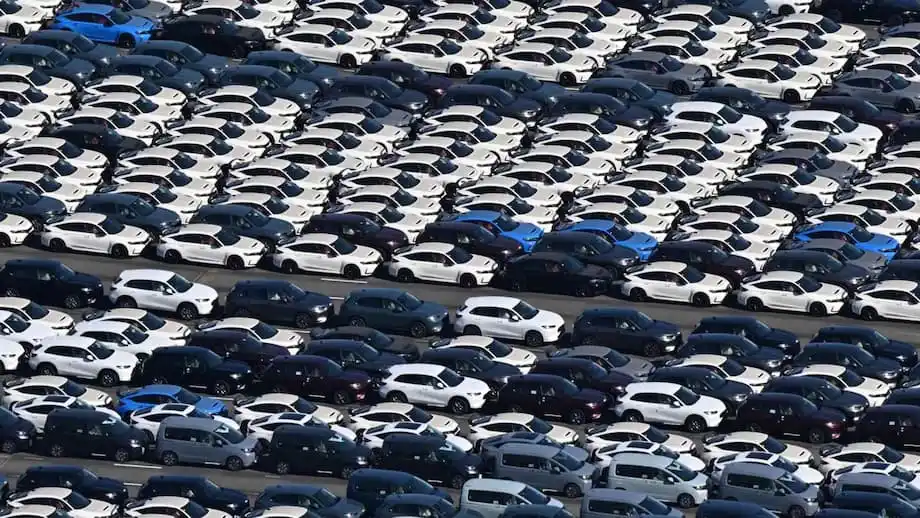
More than 80 percent of major Japanese auto parts makers have passed additional US import duties to customers or are preparing to do so, according to a survey of the industry. Their response is pushing the cost of Washington's trade policy toward automakers, with consequences for American assembly plants, repair shops and vehicle buyers.
Contents
- Suppliers move costs upstream as Japan awaits a lower US rate
- Which parts face the duty?
- Regional content determines access to relief
- Why suppliers are renegotiating prices
- North American production is taking a larger role
- How the Japan agreement reached September
- A lower rate leaves costs and competitive gaps
- Multiple duties make compliance expensive
- American plants and repair customers feel the pressure
- Automakers revise forecasts while suppliers protect margins
- Key Points
Japan shipped about $32 billion of auto parts to the United States in 2024. On May 3, 2025, the United States began enforcing a 25 percent tariff on more than 600 categories of imported automotive components, including engines, transmissions, brakes, steering equipment, electronics and battery components. The duties arrived alongside existing measures on metals and earlier automotive tariffs.
A September 5 executive order offers Japanese suppliers some relief. The White House signed the order to implement a lower 15 percent rate for Japanese vehicles and parts and clarify that the reduction would not stack with higher duties. The order applies retroactively from August 7 and takes effect seven days after publication. As of September 6, suppliers and automakers were still navigating the transition.
The lower rate leaves a substantial cost for an industry already spending heavily on electrification and software. Smaller manufacturers have especially limited room to absorb another expense or finance a rapid move abroad. Passing duties through to customers has become a way to protect their businesses while keeping production moving.
Japan's role reaches deep into American manufacturing. Industry estimates and trade data put its share of US engine imports at roughly 27 percent and its share of transmission imports at about 34 percent. Tariffs on those components affect vehicles assembled in the United States as well as cars imported fully built.
Which parts face the duty?
The May tariff covers hundreds of items needed to build and maintain vehicles. Engines and gearboxes provide power and transfer it to the wheels. Braking and steering systems control the vehicle, while electronic components manage functions across the car. Including such a broad range of parts spreads the cost through more stages of production than a duty confined to finished vehicles.
Price examples show the size of the initial increase. A 2.5 liter inline four engine priced at about $4,200 before the change now lands near $5,250. A hybrid powertrain package, which combines components for a vehicle using both fuel and electric power, rose from $6,500 to about $8,125.
An electronic control unit costing $220 increased to roughly $275 per unit. The 25 percent duty adds nearly $1,875 to an electric vehicle battery pack priced at $7,500. Japanese electronics and batteries feed about 1.2 million vehicles assembled in the United States each year, extending the pressure to American production lines.
The difference between the old and new tariff rates matters even before companies change their sourcing. On a $7,500 battery pack, a 15 percent duty would amount to $1,125, compared with $1,875 at 25 percent. That is $750 less in tariff cost, while still leaving an expense that suppliers and automakers must divide between them.
Exemptions narrow the reach of the May measures. Parts meeting United States Mexico Canada Agreement rules can avoid the full duty. Some components for classic cars older than 25 years also fall outside the new scope. Eligibility therefore depends on the component and the rules applying to it, rather than simply where the final vehicle is assembled.
Regional content determines access to relief
The United States Mexico Canada Agreement, or USMCA, provides rules for determining how much of a product comes from the three participating countries. For many parts, at least 55 percent North American content is needed to qualify for the relevant duty treatment. Manufacturers must trace their inputs and calculate whether each component meets the requirement.
Automakers assembling vehicles in the United States may also access a temporary import adjustment program, but only if they raise USMCA compliant content to about 85 percent by 2026. Analysts estimate that only about 12 percent of models assembled in the United States currently meet that level. Many shipments consequently remain exposed to the full 25 percent rate while companies change their purchasing arrangements.
A vehicle assembled in America can still contain engines, transmissions, electronics or materials imported from elsewhere. Moving the final assembly stage alone therefore leaves manufacturers with tariff exposure on components. Increasing qualifying regional content requires changes further down the production chain, including the sources of materials used by parts makers.
Companies must calculate regional content for individual part numbers, keep the supporting records and update them when suppliers change. For purchasing teams, that adds paperwork to decisions that already involve price, delivery timing and production requirements. A cheaper component can become less attractive once its duty and documentation costs are included.
Vehicles failing USMCA content rules can face the full 25 percent rate on their non US content, or the 15 percent rate applicable to Japan once the new order takes effect. These calculations complicate purchasing and production schedules across North America, where components may move between countries during manufacturing.
Why suppliers are renegotiating prices
More than four in five large Japanese parts makers surveyed said they had raised prices to cover higher duties or planned to do so. Suppliers selling directly to automakers, often called tier one suppliers, tend to act first. Pressure then spreads to smaller tier two and tier three businesses that supply components or materials further down the chain.
Automakers often accept price adjustments to keep production schedules intact, while looking for savings elsewhere. A factory needs its parts to arrive in the right sequence. Replacing a supplier involves delivery planning and validation work, meaning checks that the replacement component meets production requirements.
Brake kits previously priced at roughly $400 now cost near $500. Suspension sets rose from about $1,200 to $1,500. Those increases illustrate how duties can reach both manufacturing contracts and the replacement parts used to keep existing vehicles on the road.
A Nissan factory in Tennessee relying on Japanese continuously variable transmissions faces about $2.1 million in additional monthly costs. Managers have begun shifting orders to Mexican plants to meet USMCA content thresholds and reduce duty exposure. Those changes bring risks around delivery times and require validation work that can slow output.
Smaller suppliers operate with thin margins and often cannot finance rapid relocation or arrangements with multiple suppliers. They also face the transition to electric drive, which adds another demand on their resources. Michael Robinet, a vice president at S&P Global Mobility, described their limited choices:
Smaller players in the auto industry do not have levers they can pull to adjust to the tariffs," said Michael Robinet, a vice president at S&P Global Mobility. "Tariffs are just an accelerator.
Those constraints help explain why many suppliers reset contract prices soon after May and why others intend to follow. The move transfers some immediate financial pressure to automakers without requiring a supplier to rebuild its production network first.
North American production is taking a larger role
Denso announced about $200 million to expand capacity in Tennessee, focusing on electric and electronic modules. Aisin shifted a large share of production of automatic transmissions with eight speeds to Mexico and partnered with local steel processors. Aisin says the arrangement brings regional content to about 62 percent under USMCA rules, helping contain delivered prices for US customers.
Mexico is becoming a center for transmission production. Canada is attracting investment in battery packs and cathode materials used in batteries. Alabama and other Southern states are expanding suspension and chassis component production. These moves place more stages of manufacturing within North America.
Companies are also changing contract terms to manage cash flow. Bulk discounts can reduce purchasing costs, while consignment arrangements delay duty payments until parts are taken for production. Such measures address the timing and size of expenses as businesses reorganize their sourcing.
The exemption for some parts serving cars older than 25 years has encouraged activity in a different corner of the market. Demand and prices have risen for components for older vehicles, including popular Japanese engines from the 1990s. Collectors are paying more for sought after units such as Nissan SR20DET engines.
Startups using additive manufacturing are filling gaps with small runs of hard to find components. Additive manufacturing builds a part by adding material in successive layers. In this market, it offers a way to produce limited quantities for vehicles whose original parts may be difficult to obtain.
How the Japan agreement reached September
Japanese officials pressed Washington for clarity through the middle of the summer. In July, they said they had secured an agreement to reduce US tariffs on Japanese vehicles and parts to 15 percent. Confusion followed about whether that rate would be added to earlier levies on some products.
The September 5 executive order followed weeks of discussion and confirmed the lower rate and its treatment alongside higher duties. The order also frames a $550 billion Japanese investment program in the United States and increased purchases of American farm goods and aircraft.
The main dates show why businesses have had to revise their plans repeatedly:
- May 3, 2025: The United States began enforcing a 25 percent tariff on more than 600 categories of auto parts.
- July 2025: Japanese officials said an agreement would reduce tariffs on Japanese vehicles and parts to 15 percent.
- August 7, 2025: The date from which the September order applies retroactively.
- September 5, 2025: The White House signed the executive order implementing the lower Japanese rate, with effect seven days after publication.
- 2026: The temporary import adjustment program calls for participating automakers to raise USMCA compliant content to about 85 percent.
Nissan chief executive Ivan Espinosa described the uncertainty surrounding the coming change in recent remarks:
"It is still not clear to us what the conditions are, and when the change for tariffs from Japan to the U.S. will come into place," he said.
The September order gives Japanese businesses relief from the higher rate, but duties remain above their level at the start of the year. Suppliers still have a reason to renegotiate prices and increase regional production, even as the immediate tariff burden falls.
A lower rate leaves costs and competitive gaps
Economist Richard Katz described the limits of the relief with a stark comparison:
You threaten to cut off both my legs, but you only amputated one. So we are happy?
A 15 percent rate still raises delivered costs on many Japanese shipments unless companies change their qualifying content. For suppliers that have already adjusted contracts, the lower duty also changes the amount of expense they need to recover from customers.
South Korea, another major exporter with close ties to the American market, remained subject to a 25 percent automotive tariff as of September 6 while awaiting a similar executive order. That leaves a gap of 10 percentage points between the Korean rate and Japan's agreed rate. Even a temporary difference could affect competition and market share in key vehicle segments.
US automakers and lawmakers are watching how Japan's relief is applied. The agreement pairs tariff changes with Japanese investment commitments and assurances on purchases of American farm goods. That arrangement will influence how other trading partners, including South Korea, approach negotiations with Washington.
The next implementation step for Japan is the order's stated effective point, seven days after publication. South Korea's corresponding order was still pending on September 6. Companies therefore faced different tariff arrangements depending on the origin of the vehicle or component.
Multiple duties make compliance expensive
Tariff stacking means more than one levy applies to the same shipment. Research by the Center for Strategic and International Studies describes a system in which most favored nation rates, reciprocal tariffs and the new automotive duty can combine. Most favored nation rates are the ordinary import duties used in the trading relationship, while reciprocal tariffs are another layer of charges.
Components crossing borders several times during manufacturing can trigger charges at each crossing, multiplying the cost. A production network spread across several countries must therefore account for where goods travel as well as where they are made.
Japan's September order addresses the concern that the agreed lower rate would stack with higher duties. Manufacturers still need to understand which treatment applies to each shipment and maintain records supporting any exemption or regional content claim.
The administrative work becomes another business expense. Purchasing teams must track component origins, content calculations and policy changes while coordinating deliveries. When a supplier changes, the company may need to update both its production arrangements and the documents used for customs treatment.
American plants and repair customers feel the pressure
Several US assembly plants rely on Japanese electronics and battery modules, including plants making hybrids. Under the 25 percent tariff, the nearly $1,875 added to a $7,500 battery pack and the roughly 25 percent increase in electronic control unit prices squeeze margins on models already facing tight profitability targets.
Service departments and independent repair shops face higher replacement part costs too. Brake kits near $500 and suspension sets around $1,500 can increase insurance repair bills and payments made directly by vehicle owners. Owners maintaining older models, a growing share of an aging US fleet, may also encounter longer waits as suppliers change their sourcing.
New vehicle sticker prices may move less directly than parts prices. Many cars and components sold in the United States are already produced in North America and were already subject to substantial tariffs earlier in the year. Some recent measures filled gaps in the tariff system rather than changing every vehicle's cost at once, tempering the immediate effect on average transaction prices.
Buyers of models relying heavily on Japanese content, especially hybrids and vehicles containing many imported electronics, may face modest price pressure. The more immediate effect is appearing in service departments. Extended warranties and service plans may also adjust as the cost of replacement components changes.
Automakers revise forecasts while suppliers protect margins
Toyota cut its operating profit forecast, citing a tariff impact measured in billions of dollars. Honda estimated a hit of about $3 billion this year from tariffs on cars, parts and raw materials across the United States and other markets. Nissan reduced its estimate of the damage but still projects about $2 billion in costs tied to US tariffs.
Tetsuya Kimura, chief executive of Asahi Tekko, a longstanding parts maker supplying Lexus and Land Cruiser production lines, recalled his reaction when the 25 percent tariff arrived:
Is he actually going to do something like that?" Mr. Kimura recalled. "When it comes to how much impact these tariff rates will have, we do not have a calculus.
American manufacturers face their own cost pressures. Matt Blunt, president of the American Automotive Policy Council, which represents General Motors, Ford and Stellantis, described the position of US companies:
"US companies and workers are at a disadvantage due to a 50 percent tariff on steel and aluminum and a 25 percent tariff on parts and finished vehicles, except for some products covered under USMCA," said Matt Blunt, president of the American Automotive Policy Council, which represents General Motors, Ford and Stellantis.
Japanese suppliers are pursuing three connected responses: securing qualifying USMCA content where possible, investing in North American capacity for valuable electronics and batteries, and renegotiating contracts to reflect tariff risk. Smaller businesses have fewer resources to carry out the investment portion, making price negotiations especially urgent.
Automakers must keep factories operating at high utilization, shift sourcing where the numbers support it and pass on some expenses without weakening demand. Japan's lower rate eases that calculation, while leaving enough tariff cost to keep pressure on parts contracts and investment decisions.
The consequences for consumers will depend partly on how much of the expense manufacturers absorb and how quickly sourcing changes take effect. As of September 6, the clearest changes were higher component costs, revised corporate forecasts and a growing push to produce more parts within North America.
Key Points
- More than 80 percent of major Japanese parts makers surveyed have passed US tariff costs to customers or plan to do so.
- Japan exported about $32 billion of auto parts to the United States in 2024 and supplies roughly 27 percent of US engine imports and 34 percent of transmission imports.
- A 25 percent duty began on May 3, covering more than 600 categories of auto parts.
- The September 5 order implements a 15 percent rate for Japanese vehicles and parts, applies retroactively from August 7 and takes effect seven days after publication.
- Denso announced about $200 million for Tennessee capacity, while Aisin says its Mexican transmission arrangements bring regional content to about 62 percent.
- South Korea remained at a 25 percent automotive tariff as of September 6 while awaiting a similar order.
- Higher component costs are affecting US assembly plants and repair bills, while automakers balance sourcing changes, profit margins and consumer prices.