A record share of parents now both work
South Korea recorded its highest share of married households with two working parents in 2024, even as the number of families raising children declined. Government figures show that 58.5 percent of married households with children under 18 had two earners. Among families with children aged six or younger, the share reached 53.2 percent.
Contents
- A record share of parents now both work
- Why families depend on two paychecks
- More women work, with fewer career interruptions
- Fathers take more leave and reduce working hours
- Working from home can mean doing more care
- Commuting shapes the time left for children
- Fewer families with children, more people alone
- Gender tensions complicate the family debate
- What support can make work and care fit together?
- What to Know
The figures show how work and family life are changing together. More women are employed, fewer married women are classified as having interrupted their careers, and more fathers are receiving parental leave benefits. Housing costs, private tutoring expenses and uncertain job prospects also make two paychecks increasingly important for parents.
South Korea had 3.94 million married households with children under 18 in 2024, down 158,000 from 2023. The number of households with two working parents fell by just 22,000. Because the wider group of families with children shrank more quickly, the proportion with two earners rose.
Couples in their 30s had the highest share of households with two incomes, at 61.5 percent, followed by couples in their 40s at 59.2 percent. For families with very young children, the 53.2 percent figure means that combining paid work with early childcare is now the experience of more than half.
The changes extend beyond employment. Fathers are taking a larger role in formal care arrangements, women are gaining ground in management, and people living alone account for a growing share of households. Yet research on work at home shows that wives still carry a heavier burden of family duties and emotional strain. The shift toward two earners is moving faster than some expectations about who should provide care.
Why families depend on two paychecks
Parents in South Korea face housing expenses, long schooling hours and the cost of private tutoring alongside everyday spending. Unstable employment prospects for many young workers add another concern. Two incomes help families manage these pressures and reduce their dependence on a single job.
Couples are also changing their expectations of marriage. Surveys indicate that many Koreans in their 30s believe both spouses should contribute to household income. Rising education levels, expanded leave and greater flexibility at work are helping ease the expectation that mothers should stop working.
The expression double income no kids has entered common use to describe couples who put financial stability and career goals before starting a family. For couples who do have children, the task is to maintain those goals while finding enough time and money for care.
Fewer births and a shrinking number of households with children are changing the composition of family life. Within that smaller group, a greater share now relies on both parents working. Cost pressures and changing views about motherhood and employment are making two incomes the usual arrangement among parents in their 30s and 40s.
More women work, with fewer career interruptions
Women aged 15 to 64 reached an employment rate of 62.1 percent in 2024, a new high. The rate for men in the same age range was 73.5 percent, leaving a gap of 11.4 percentage points. An employment rate measures the proportion of people in an age group who have a job.
Women in their early 30s also recorded an employment rate of 73.5 percent, a strong increase from a decade earlier. Their growing presence at work is part of the broader move toward households in which both spouses earn.
The government classified 15.9 percent of married women as career interrupted in 2024, down from 21.7 percent in 2015. The label commonly applies to women who left employment after marriage or childbirth and then faced obstacles returning. The decline amounts to 5.8 percentage points over that period.
Women are also gaining representation in senior roles. In 2024, they held 26.3 percent of central government civil service posts at grade four or higher. Among local government officials at grade five or higher, their share reached 34.6 percent. These grades identify levels within the public service hierarchy.
Across all sectors, women made up 22.5 percent of managers. In public institutions, the figure reached 25.4 percent, an increase from a decade earlier. Progress in employment and leadership helps make the working mother a more familiar part of family and professional life.
Return to work programs, dependable childcare and predictable working hours help women stay employed through marriage and childbirth. They also reduce the career penalty associated with motherhood, including the difficulty of rebuilding a working life after an extended absence.
Fathers take more leave and reduce working hours
Men receiving parental leave benefits reached 42,000 in 2024, the first time the figure exceeded 40,000. Fathers accounted for nearly one third of all recipients, compared with 5.6 percent a decade earlier.
More fathers are also adjusting their working time. The number of men using shortened hours for childcare increased almost twentyfold over ten years. Leave provides time away from a job, while shorter hours allow a parent to remain at work and reserve part of the day for care.
South Korea is part of a wider change in attitudes toward fatherhood across East Asia. High profile stories of men taking extended leave have helped make shared childcare and housework more familiar. Evidence from many countries indicates that when fathers participate early, care duties remain more equal over time and mothers face less pressure to leave employment.
The growth starts from a low base, however, and access to time is only part of the issue. Families also have to decide who uses that time and whether taking leave is financially practical. Those decisions connect the rise in fathers receiving benefits with the wider debate over pay during leave, working hours and workplace expectations.
Working from home can mean doing more care
Daily diary studies of Korean couples during the pandemic found that working from home increased family tasks for both spouses. The burden and emotional strain nevertheless fell more heavily on wives. Diary studies track what people do and experience each day, allowing researchers to examine how work and family demands move together.
When wives worked from home, husbands reduced the family tasks they completed. The reverse pattern did not hold when husbands worked from home. Wives also reported more conflict between work and family, and more guilt toward their families on days when they concentrated on work tasks.
A home can therefore become a workplace and a place of care at the same time, with competing demands on the same hours. For a mother trying to complete paid work, being physically present can bring additional expectations about meals, children and household duties.
Husbands having flexible schedules made a difference. When husbands could adjust their hours, wives working from home completed more work tasks. The finding points to the value of giving fathers genuine flexibility alongside mothers.
Employers can respond by setting realistic expectations for output and recognizing that people working remotely may absorb extra care during the day. Flexibility works better when both parents can use it and when managers consider the workload, rather than simply expecting a worker to remain available.
Commuting shapes the time left for children
A study comparing couples with two earners in Spain, Italy, South Korea and the United Kingdom found that men spent longer commuting on average across the countries. Travel to work takes time out of the same day that must also accommodate childcare, meals and household tasks.
In South Korea, having children did not widen the commuting time gap between men and women as it did in some of the European cases. Children did, however, affect how households used transport. Women were more likely to rely on public and active transport, while men used private cars more often. Active transport means getting around through physical activity, such as walking or cycling.
Long journeys to and from work leave less room for childcare pickups, medical appointments and bedtime routines. Shorter commutes, flexible arrival times and dependable public transport near childcare centers can make it easier for parents to share those responsibilities.
Small differences in travel time build up across a working week. Housing location, transport access and childcare opening hours consequently form part of the same practical problem: whether two employed parents can reach the places their family needs them to be.
Fewer families with children, more people alone
South Korea's rise in the share of parents who both work is taking place alongside a broader change in household structure. Married households with children under 18 declined to 3.94 million in 2024, while households consisting of one person reached 8.05 million.
People living alone accounted for 36.1 percent of all households. Among men living alone, those in their 30s formed the largest group. Among women living alone, those in their 60s formed the largest group.
Retail, housing design and local services are already adjusting to a population with more people living by themselves. Older adults who live alone also need access to community care and social ties. The demands on services extend beyond helping working parents to supporting people at other stages of life.
The main dates behind the household and employment changes are:
- 2015: The share of married women classified as career interrupted stood at 21.7 percent.
- 2022: The average total fertility rate across the OECD was 1.5 children per woman.
- 2023 to 2024: Married households with children under 18 fell by 158,000, while those with two earners fell by 22,000.
- 2024: The share of married households with children under 18 and two working parents reached a record 58.5 percent. Women's employment reached 62.1 percent, and 42,000 men received parental leave benefits.
Gender tensions complicate the family debate
Research on Korean public opinion shows a widening divide between young men and young women over gender. Some men view gender policy as a struggle in which gains for women mean losses for men. Many women point to continuing inequality at home and at work as a reason to delay or avoid marriage and parenthood.
Online communities have strengthened this divide and helped spread a backlash narrative that clashes with official equality goals. The disagreement sits alongside the practical changes recorded in household data: more women working, more fathers taking leave and more families depending on two incomes.
Parents consider visible costs such as rent and childcare fees, as well as career penalties and expectations about unpaid care. Trust matters when the same policy can be interpreted very differently by men and women. Hostile interpretations can weaken participation and slow progress.
Efforts that acknowledge both young men's job insecurity and young women's motherhood penalty can help reduce the sense of competition. The shared challenge is to make employment and family life workable without assigning the financial burden to one parent and the care burden to the other.
What support can make work and care fit together?
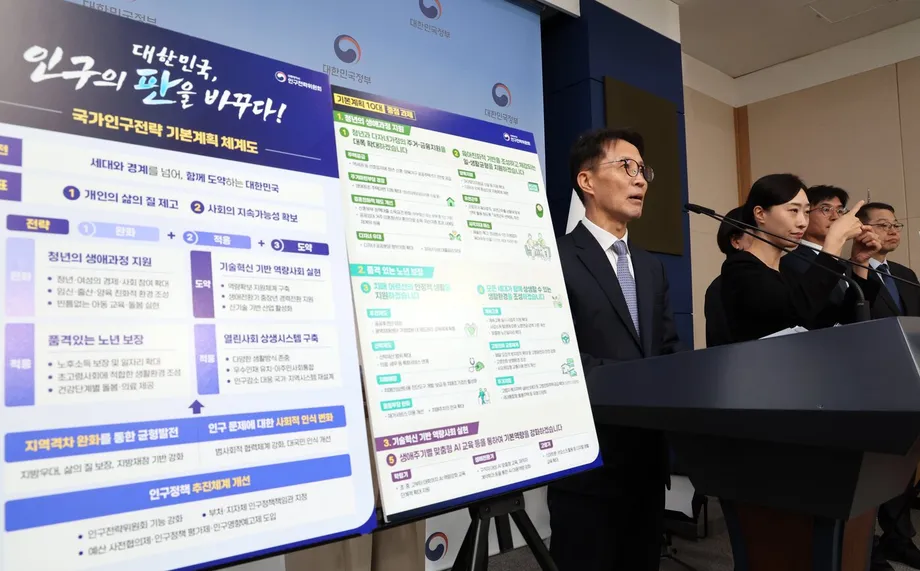
The Ministry of Gender Equality and Family says the statistics highlight social changes that require a policy response. It plans to continue tracking family structure, career interruption, the balance between work and life, and representation, while promoting programs intended to improve daily life.
The OECD's analysis of fertility trends places these pressures in an international setting. Across the OECD, the average total fertility rate fell to 1.5 in 2022, with South Korea at the bottom of the table. The rate expresses the average number of children a woman would have if the birth rates measured at different ages continued.
Countries that help parents combine work and care often sustain higher birth rates than countries with weaker support, even when fertility remains below the level needed for one generation to replace itself. Affordable early childhood education and care, paid parental leave and flexible work rights are central tools. A coordinated package addressing childcare availability, quality, cost and working time tends to produce the strongest results.
For South Korea, the practical options include replacing a greater share of earnings during parental leave for people on middle incomes, making leave more affordable for fathers. Reserving a portion for each parent that cannot be transferred to the other can also encourage men to participate.
More infant care places and opening hours matched to common work schedules would help parents remain employed. Secure options to work fewer hours during the toddler years, with benefits proportional to hours worked, could give both parents more room for care.
Workplace measures include reinforcing the right to request flexible starting and finishing times, reviewing workloads and avoiding assumptions that employees will be available late into the evening. Equal treatment for parents returning from leave, alongside publication of pay and promotion statistics by gender, would help track whether employment opportunities are becoming fairer.
Housing also belongs in family policy. High deposits and rents squeeze the period in which couples can establish a home and start a family. More affordable rental housing near employment centers and childcare could reduce long commutes and make two incomes more practical while children are young.
The ministry's stated response centers on continued monitoring and programs to improve daily life; it gives no implementation timetable for the wider measures discussed here. For parents, the immediate needs are concrete: care that is available when work requires it, leave they can afford and schedules that allow both adults to share responsibility.
What to Know
- Two working parents accounted for a record 58.5 percent of married households with children under 18 in 2024.
- Among families with children aged six or younger, the share was 53.2 percent.
- Women's employment rate reached 62.1 percent for ages 15 to 64, compared with 73.5 percent for men. Women in their early 30s also reached 73.5 percent.
- The share of married women classified as career interrupted fell from 21.7 percent in 2015 to 15.9 percent in 2024.
- Some 42,000 men received parental leave benefits in 2024, nearly one third of recipients.
- Women held 26.3 percent of senior central civil service posts and 22.5 percent of managerial jobs across sectors.
- Married households with children under 18 fell to 3.94 million. Households consisting of one person reached 8.05 million, or 36.1 percent of all households.
- Research on working from home found heavier family burdens and emotional strain for wives, while flexible schedules for husbands helped wives complete more paid work.
- South Korea has the OECD's lowest fertility rate. Childcare, affordable leave, flexible work and housing near jobs are central to helping parents combine employment and care.