Government trial puts safety and responsibility at the centre
Singapore is preparing to test autonomous artificial intelligence agents in public services, including business licensing and administrative work for social workers. Announced by Minister for Digital Development and Information Josephine Teo, the initiative brings together the Government Technology Agency (GovTech), the Cyber Security Agency of Singapore (CSA) and the Infocomm Media Development Authority (IMDA), with technology support from Google Cloud.
Contents
- Government trial puts safety and responsibility at the centre
- What makes an AI agent different?
- Business licensing and social work are early priorities
- Google Cloud expands local access to AI
- Safety, authority and accountability mean different things
- Security research shows why controls matter
- Transparency extends beyond keeping records
- Other public services offer useful comparisons
- The experiment also reaches Singapore's digital economy
- Wider adoption depends on what the trial finds
- Key Points
As of August 29, 2025, the plan is to examine how systems that can reason, plan and take action might help people complete complicated government processes. The trial will assess their effectiveness, safety and accountability before the government considers wider implementation.
A business owner seeking several licences could receive help coordinating requirements across agencies. A social worker could get assistance with the paperwork needed to secure government aid. These are practical examples of the work the trial will explore, with the aim of reducing administrative effort for both public employees and the people they serve.
Teo has placed three principles at the centre of the initiative: safety, authority and accountability. The government wants to understand how the agents operate, when a person must supervise or approve their actions, and who carries responsibility when something goes wrong.
Singapore is pursuing the experiment alongside an expansion of locally accessible Google AI services. That gives the trial two connected priorities: making government processes easier to complete and keeping sensitive information within controlled environments. The wider ambition is more responsive public services, supported by clear limits on what an automated system may do.
What makes an AI agent different?
Autonomous AI agents, also called agentic AI, are digital assistants designed to pursue an objective and carry out the tasks needed to achieve it. Traditional software follows programmed rules. An agent can use data to reason about a task, plan a sequence of steps and adapt when circumstances change.
The Singapore Government Developer Portal's Agentic AI Primer describes systems that can autonomously pursue objectives and execute tasks. Their ability to work through several connected steps makes them relevant to public services that involve multiple forms, requirements or agencies.
A conventional digital service might give a user information about an application. An agent could go further by helping gather documents, fill in forms, schedule an inspection or send a reminder. It can analyse large datasets, make decisions within its assigned task and take permitted actions without needing a person to direct every step.
Autonomy means the system has some freedom to act within boundaries set by its operators. For Singapore's trial, defining those boundaries is part of the work. The government is testing both the usefulness of that freedom and the controls needed when an action requires human judgment.
Business licensing and social work are early priorities
Business licensing is an initial focus because an application can involve requirements spread across government agencies. The proposed use of an AI agent is to help an owner move through the process, rather than leaving the person to manage each administrative step separately.
An agent could guide the owner through the licensing requirements, gather the documents needed, complete forms and schedule inspections across agencies. Those examples show the kind of connected workflow the trial aims to examine. The intended benefit is a process that is easier to navigate and takes less repetitive effort.
Social workers face a different setting but a similar administrative burden. An agent could help them navigate the paperwork required for government aid, giving them more time for direct support to clients. Within government, automating routine work could also allow employees to spend more time on counselling or policy development.
Singapore's initial priorities include improving internal government workflows alongside services used by citizens and businesses. Faster processing, greater transparency and services better suited to individual needs are the intended gains. The trial will evaluate how effectively the technology delivers them in practice.
No detailed trial timetable, results or date for wider implementation was given. The government will use the experiment to assess performance, gather user feedback and refine its approach before considering broader deployment.
Google Cloud expands local access to AI
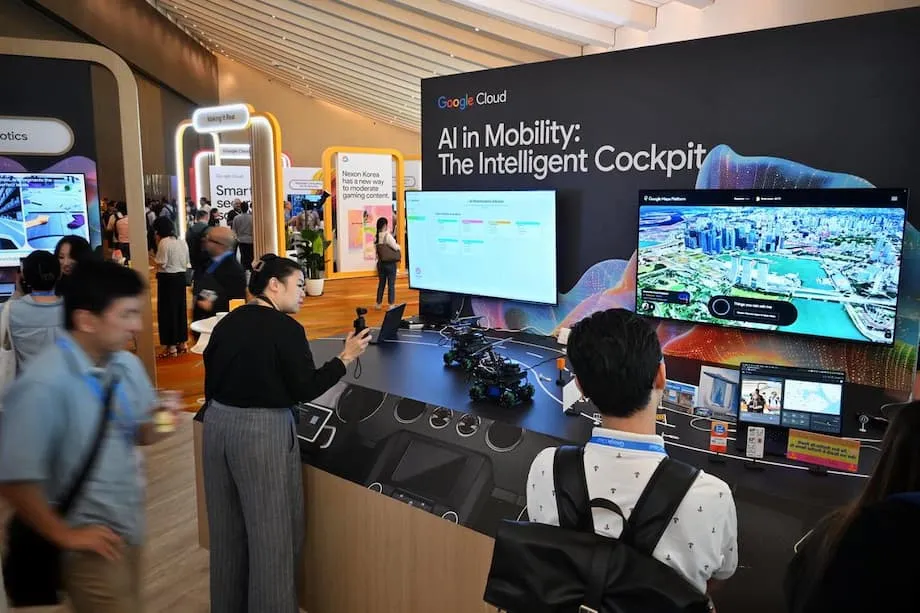
Google Cloud is the technology partner supporting the initiative. At the recent AI Asia: Building Beyond Borders conference, Google announced that Gemini 2.5 Flash and Vertex AI Search would be locally accessible in Singapore.
Local access matters because organisations handling sensitive information need to control where that information is processed. Data residency means keeping data within a specified country or location. Processing it within Singapore addresses concerns about privacy and compliance with the requirements governing its use.
GovTech is already using Google's AI models on secure internal systems, keeping sensitive information in controlled environments. The public service trial builds on that use of AI while examining systems that can take actions as well as produce information.
Banking and healthcare are among the sectors where control over sensitive data is particularly important. The approach described also includes AI development and training on premises or in air-gapped configurations. An air-gapped system is disconnected from the internet, allowing an organisation to work with data in an isolated environment.
Singapore's aim is to make use of advanced AI while retaining strict control over information. For public services, that concern sits alongside the question of what an agent is authorised to do. A system needs both an appropriate place to handle data and clear rules for acting on it.
Safety, authority and accountability mean different things
Teo's three principles address different parts of the trial. Safety concerns whether an agent can perform its work without causing harm or taking unintended actions. Authority concerns the limits of its permission to act. Accountability concerns the people or organisations responsible for the system and its decisions.
The government's stated approach is to keep agents within clearly defined boundaries and make their actions transparent and auditable. An audit allows people to review what a system did. A clear line of responsibility is intended to ensure that an automated action still has an identifiable owner.
Human oversight is especially relevant when an agent moves from preparing information to doing something with it. The trial will examine when a person needs to intervene, supervise a task or approve an action. That assessment is part of deciding how much independence an agent should have in a particular service.
Public employees may be able to delegate repetitive steps while retaining control over decisions that need their judgment. Citizens and businesses, meanwhile, need services whose actions can be explained and reviewed. Singapore's experiment brings these concerns into the same evaluation as speed and convenience.
Security research shows why controls matter
Security researchers have demonstrated that AI agents can be manipulated into overriding their programming, creating the possibility of harmful or unintended actions. The AI agent security findings illustrate a risk that becomes more consequential when a system can act on behalf of a user.
Andy Zou, an IT security researcher at Gray Swan AI, warned that current agents can be naive and easily tricked into mistakes or inappropriate actions. He described the ability researchers found to manipulate their behaviour:
We found you can essentially manipulate the AI to override its programming.
Singapore's trial will focus on guardrails intended to control such risks. These include constraints based on policy, access limited to the permissions a task requires, explicit approval for risky actions and comprehensive records of what agents do.
Least privilege is the term for giving a system only the access it needs. Approval gates require a person to authorise specified actions before they proceed. Audit logs record activity so that an action can be traced and reviewed. Together, these controls put limits around a system that otherwise has room to plan and act independently.
The agentic AI design guidance cited in the initiative highlights strong controls, integration with cloud platforms and continuing adaptation through feedback and retraining. The purpose is to keep agents aligned with organisational goals as their use develops and to reduce unexpected problems.
Transparency extends beyond keeping records
Citizens need to understand how decisions are made when AI is involved in a public service. Singapore's approach includes documenting agent actions, conducting regular audits and providing mechanisms for human intervention when necessary.
Documentation and review connect the technical operation of an agent to the responsibility of the organisation using it. An agency needs to be able to follow the steps the system took, examine a problem and identify where human involvement is required.
Developers, product managers and researchers are among the stakeholders the government is engaging to refine AI deployments. Their involvement supports continuing assessment of how the systems behave and how they fit the work of public services.
The Agentic AI Primer also provides a roadmap for possible expansion. It calls for careful assessment of use cases, evaluation of performance and compliance with data security and ethical standards. These are the checks Singapore will need as it moves from testing particular workflows to considering wider use.
Other public services offer useful comparisons
Governments elsewhere are exploring AI in service delivery, providing examples of both operational uses and approaches to transparency. Raleigh in North Carolina uses AI for weather forecasting and urban planning. Amsterdam has created an AI registry to make its use more transparent.
Italy's Ministry of Cultural Heritage deployed an AI agent to simplify access to millions of library records. That example concerns finding and accessing information, while Singapore's proposed licensing and social work applications involve helping people complete administrative processes.
The public sector AI overview describes uses including knowledge retrieval, responses to customer service queries, fraud detection and analysis to support policy decisions. Other applications include communications and recommendations tailored to citizens, tax administration and benefits eligibility.
The public services AI analysis describes potential gains in public trust, allocation of resources and the experience of people using government services. It also points to delays associated with older systems, where AI could help reduce bottlenecks.
Leadership commitment, sound data strategies and continuing staff training are lessons drawn from these examples. Singapore's trial brings those organisational needs together with the technical question of whether an agent can complete a task safely and effectively.
The experiment also reaches Singapore's digital economy
Singapore's public service trial forms part of a wider ambition to develop AI governance and innovation. The potential economic benefits include attracting investment, developing local talent and creating opportunities for businesses.
DBS Bank and FairPrice Group are already using assistants powered by AI to improve customer experience and operational efficiency. Google Cloud's expanded data residency and AI capabilities support that broader enterprise activity alongside its role in the government initiative.
The government's partnership with Google Cloud and local institutions such as the National University of Singapore (NUS) is also enabling research collaborations, including in life sciences. Those connections support Singapore's ambition to be a regional centre for AI innovation.
Public agencies and businesses share some practical concerns: protecting data, integrating AI with existing systems and deciding which actions need human approval. The government trial will examine these issues in the specific setting of public services, where people depend on clear and accountable processes.
Wider adoption depends on what the trial finds
Singapore's trial is limited in scope, with lessons intended to inform possible deployments across government. The next stage is evaluation: examining outcomes, collecting feedback and refining the systems and controls.
The ambition is to make public services more responsive and easier to use under Singapore's smart nation vision. For a business owner, that could mean less effort coordinating licences. For a social worker, it could mean less routine paperwork and more time with clients.
Safety, authority and accountability will shape the decision about expansion alongside practical performance. Singapore is seeking a way to use agents that can carry out useful work while preserving human oversight and a clear line of responsibility.
A successful trial could inform how other governments approach autonomous AI in public services. For now, Singapore's announced initiative is an experiment in combining administrative automation, secure data handling and controls over systems that can act independently.
Key Points
- Singapore plans to trial autonomous AI agents for business licensing, social services paperwork and internal government workflows.
- Josephine Teo announced the initiative, involving GovTech, CSA, IMDA and Google Cloud.
- The trial will assess effectiveness, safety, authority and accountability before wider implementation is considered.
- Google announced local access in Singapore to Gemini 2.5 Flash and Vertex AI Search.
- Planned controls include limited access permissions, approval for risky actions, audit logs and human intervention.
- No detailed trial timetable or date for wider deployment was given as of August 29, 2025.