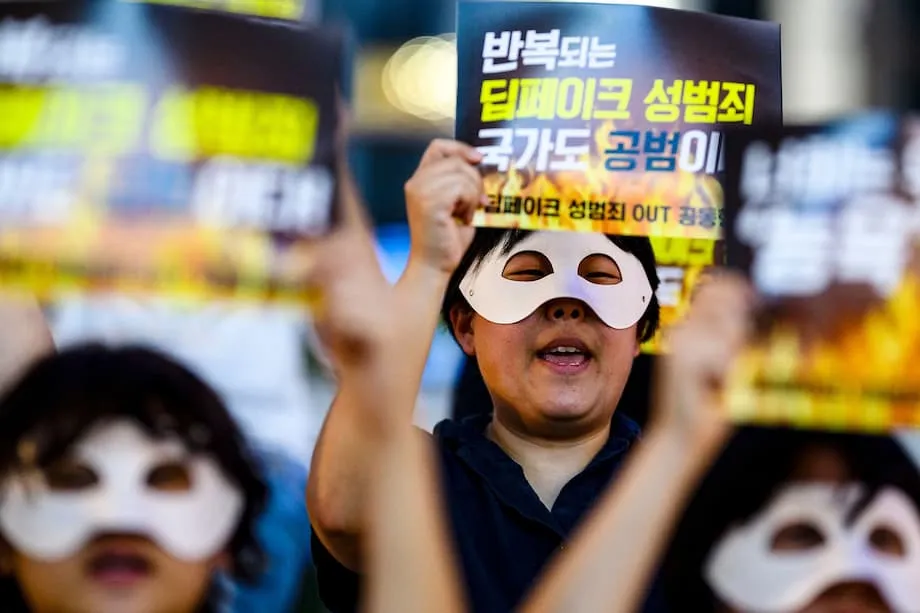
A leaked video exposes a network reaching thousands
A woman in her 20s, identified as Ms. D, discovered through a stranger that her former boyfriend had shared her intimate photographs and videos on a Chinese-language Telegram channel with more than 100,000 subscribers. The channel, Mask Park Treehole Forum, became the focus of public anger over networks distributing sexual images of women and girls without their consent.
Contents
- A leaked video exposes a network reaching thousands
- How the Telegram rooms operated
- Hidden cameras became a business
- Why evidence was difficult to preserve
- Public anger met censorship and threats
- Victims faced blame as well as exposure
- What Chinese law punished most severely
- Telegram's rules and the difficulty of enforcement
- Campaigners looked to South Korea and pressed for reform
- Key Points
By August 25, 2025, investigations had identified at least a dozen active Chinese-language Telegram groups sharing explicit material. Some associated sub-forums reportedly had as many as 900,000 members. The material included images supplied by former partners, recordings made with hidden cameras and digitally manipulated pornography.
Women were filmed in places where they expected privacy, including restrooms, fitting rooms and medical facilities. Other recordings came from shopping malls and subways. Some victims discovered what had happened only when strangers contacted them or their images appeared online.
Ms. D's decision to describe her experience on Weibo helped bring down the channel she identified. Backup groups and similar channels remained active, however, while victims and campaigners encountered censorship, threats and difficulties getting police to investigate.
The scandal has brought several connected problems into public view: an industry selling concealed cameras, networks trading images alongside personal information, and legal penalties that can depend heavily on whether offenders made money or whether authorities consider a case serious. For women seeking justice, removing one channel is only one part of stopping the abuse.
How the Telegram rooms operated
Telegram is officially blocked in China, but users can reach it through virtual private networks, or VPNs. These services allow connections through networks outside the country's restrictions. Users then enter groups, including those accessible only by invitation, where images can be shared beyond the immediate reach of Chinese authorities.
Mask Park Treehole Forum and its offshoots acted as hubs for distributing and commenting on explicit photographs and videos. Some material was sold. Other images were exchanged for personal gratification, with members circulating content involving strangers, girlfriends, wives, mothers and daughters.
Ms. D, whose former boyfriend had leaked her private material, described members trading images and identifying information about women and girls:
"Members were trading private information of their girlfriends, as well as those of strangers, a 10-year-old sister, a 20-year-old girlfriend, a 50-year-old mother-in-law," she told reporters.
Her former boyfriend had also exchanged her images with strangers and shared her social media details. That combination exposed both intimate material and information that could lead other users to her online accounts.
People responsible for supplying the material were sometimes known to the victims. They included former boyfriends, classmates, colleagues and relatives. The abuse therefore reached beyond strangers secretly filming in public: private relationships themselves became routes through which images entered the groups.
Some members also boasted about assaulting or blackmailing women. Others circulated deepfake pornography, digitally manipulated material that places a person's face onto explicit images. Alongside covert recordings and leaked private videos, these altered images widened the kinds of abuse taking place.
Hidden cameras became a business
Related Telegram groups sold cameras concealed inside objects that would attract little attention in a room. Investigations described devices disguised as screws, power sockets, incense holders, water bottles and electric toothbrushes.
The devices cost between 600 and 1,000 yuan, approximately $80 to $140. Sellers openly promoted them within the groups, creating a commercial supply of tools for people seeking to film others secretly.
Restrooms, fitting rooms and medical facilities were among the sensitive locations targeted. Recordings reportedly included footage from ultrasound rooms, extending the privacy threat to places where women receive medical care. Shopping malls and subways were also identified as locations where women were filmed.
The trade connected the sale of recording equipment with the circulation of the resulting footage. Some videos generated money, while others were shared without payment. Both routes helped sustain the networks and encouraged the production of more material.
Women responding to the revelations expressed fear that secret recording had become part of everyday life. The range of disguised devices and locations made the threat difficult to identify: an ordinary household object could contain a camera, and a recording could circulate before the person filmed knew it existed.
Why evidence was difficult to preserve
Telegram's privacy features complicated attempts to document the abuse. Groups used messages that disappeared, automatic deletion and restrictions on screenshots. Victims trying to preserve evidence could lose access to a post or recording before they had secured a copy.
The platform's overseas servers, anonymity and lack of registration under a user's real name made identifying the people behind accounts more difficult. Investigators also faced the challenge of obtaining information across national borders.
Victims often began with very little information. A stranger's message or the unexpected appearance of an image might be their first warning, leaving them to establish who uploaded it, where it had spread and whether other copies remained available.
The number of people in the groups added to that difficulty. Mask Park Treehole Forum alone had more than 100,000 subscribers, while some sub-forums reportedly reached 900,000 members. Once an image entered such a network, a victim could face many people exchanging it rather than a single person holding a private copy.
Closing a channel could interrupt access, but backup groups and replacement accounts allowed networks to continue. Ms. D's experience illustrated both the value of public exposure and the limits of a takedown when related groups were still operating.
Public anger met censorship and threats
Ms. D's Weibo post described her experience and named Mask Park Treehole Forum. It quickly spread, and the channel was shut down the following day. Hashtags about the scandal attracted hundreds of millions of views on Weibo.
Feminist activists, lawyers, students and other citizens called for action and offered support to victims. Their demands included stronger protections against covert filming and the sharing of intimate images without consent.
State media also addressed the case. Guangming Daily called it "exceptionally egregious" and urged swift regulatory action. Chinese authorities nevertheless remained largely silent about the wider scandal.
Censorship then restricted the discussion. Campaigners were muted, searches were redirected away from the scandal, and posts referring to protests or calls for reform were removed. Some people investigating the networks received anonymous threats.
Public demonstrations carry risks in China, where dissent is tightly controlled. Campaigners seeking sustained pressure faced those restrictions alongside a history of crackdowns on feminist and civil society movements.
The developments described by August 25 included the following sequence:
- In February 2025, the State Council issued new video surveillance regulations addressing illegal camera installation and inspections of sensitive areas.
- After learning that her former boyfriend had circulated her intimate material, Ms. D named Mask Park Treehole Forum in a Weibo post that went viral.
- The channel was shut down the next day, while backup groups and similar channels remained active.
- Public discussion drew hundreds of millions of Weibo views, followed by restrictions on campaigners, searches and posts about protests or reform.
Victims faced blame as well as exposure
Women who spoke publicly faced humiliation, distress and accusations directed at them rather than those sharing their images. Conservative attitudes toward sexuality and privacy contributed to skepticism and hostility when victims came forward.
Ms. C, another victim, said police opened a case only after her experience went viral online. Her account reflected the difficulty of securing an investigation before public attention put pressure on authorities.
CNN described the position of women seeking acknowledgment of the abuse:
"Victims continue to wait for recognition, with most remaining anonymous," reported CNN.
Police were often reluctant to pursue cases without overwhelming evidence. Secret filming rarely led to criminal charges unless its consequences were considered "serious," leaving victims to navigate both the collection of digital evidence and a demanding threshold for prosecution.
Lawyers and rights advocates argued that weak enforcement and lenient punishments amounted to implicit acceptance of the conduct. For victims, the practical result was limited recourse even when they knew that private images had been circulated.
The expectation that women should feel ashamed also discouraged disclosure. Campaigners sought to shift responsibility back to those who secretly recorded, distributed, traded or used the images to threaten women.
What Chinese law punished most severely
China has strict laws against producing or distributing pornography for profit, with penalties that can reach life imprisonment. Cases in which people share material without making money, including for personal pleasure, attract much lighter sentences.
Secret filming and photography were typically punishable by administrative detention of up to 10 days or a fine of 500 yuan, approximately $70, unless the material was classified as "obscene" or the case was considered "serious." Administrative detention means a person can be held as an administrative punishment rather than receive a criminal sentence.
Legal experts pointed to the absence of specific regulations covering the distribution of intimate images of adult women. Broader rules on pornography and secret filming left victims facing legal categories whose application depended on the content, circumstances and severity assigned to the case.
The difference between activity pursued for profit and activity pursued for personal gratification mattered because both occurred within the Telegram networks. A woman could suffer exposure and distress whether someone sold her images or exchanged them without payment, yet the punishment could differ sharply.
China had also carried out periodic crackdowns on illegal filming and the sale of hidden cameras. The State Council's February 2025 regulations imposed fines of up to 20,000 yuan, approximately $2,790, for illegal camera installation and required business owners to inspect sensitive areas.
Those rules addressed the equipment and locations used to obtain recordings. Enforcement remained patchy, however, and the penalties were viewed as too lenient to deter determined offenders.
Telegram's rules and the difficulty of enforcement
Telegram said its terms of service explicitly prohibited sharing pornography without consent. The company also said it removed millions of pieces of harmful content every day and would provide user data to authorities in response to valid legal requests.
Enforcement remained inconsistent, with groups reappearing under new names or accounts. The continued activity of backup channels after Mask Park Treehole Forum closed showed how a network could survive the loss of its most visible gathering place.
Chinese investigators seeking user information or legal action involving an overseas platform needed cooperation across borders. That process could be slow and complicated, and depended in part on international relations.
Telegram's encryption and privacy features provided valuable protection for legitimate users while also giving cover to people engaged in abuse. The challenge involved both protecting ordinary communications and securing evidence against those distributing intimate material without permission.
No timetable for a broader official response to the scandal had been given by August 25. Victims and campaigners were still seeking action that extended beyond the removal of individual groups.
Campaigners looked to South Korea and pressed for reform
Many campaigners compared the Chinese networks with South Korea's Nth Room case. In that case, operators of Telegram chatrooms charging for access blackmailed women into providing sexually explicit images.
The South Korean case prompted a national reckoning, major legal reforms and lengthy prison sentences for perpetrators. Chinese activists were pessimistic about the prospect of a similar response, citing political differences and restrictions on feminist and civil society organizing.
The Mask Park scandal also reflected a wider privacy crisis. Intimate images could be captured, circulated and sold faster than laws and institutions could protect the people depicted. The combination of recording devices, large online groups and overseas platforms made the abuse difficult for any one institution to address.
Activists and legal experts called for stronger laws covering all forms of covert filming and the sharing of intimate images without consent, regardless of the device used or whether money changed hands. They also sought clearer rules and enforcement for platforms operating domestically and internationally.
Other demands included better cooperation across borders on digital crimes, greater transparency and accountability from technology companies, and public education to challenge blame directed at victims and support survivors.
One victim, speaking in an interview about the abuse, urged others to seek justice and placed responsibility on the perpetrators:
Don't be afraid. Don't blame yourself. If your private images have been spread or you've been a victim of any form of sexual abuse, I hope you try to speak out and seek justice. As victims, we have nothing to be ashamed of. The ones who should be afraid are the criminals—the cockroaches hiding behind their 'masks,' doing these filthy things.
For women whose images had already circulated, the immediate needs were concrete: stopping further distribution, preserving evidence, securing recognition from police and pursuing those responsible. The survival of related groups meant those needs continued after the original channel disappeared.
Key Points
- Ms. D exposed Mask Park Treehole Forum after discovering that her former boyfriend had shared her intimate images on the Telegram channel, which had more than 100,000 subscribers.
- Investigations identified at least a dozen active Chinese-language groups sharing explicit content, with some sub-forums reportedly reaching 900,000 members.
- The networks circulated leaked images, covert recordings and deepfake pornography, while related groups sold concealed cameras for 600 to 1,000 yuan.
- The channel closed the day after Ms. D's viral Weibo post, but backup groups remained active and campaigners faced censorship and threats.
- Victims encountered blame, difficulties preserving evidence and barriers to police action. Punishment varied according to factors including profit and the seriousness assigned to a case.
- February 2025 surveillance regulations provided fines of up to 20,000 yuan for illegal camera installation and required inspections of sensitive areas.
- Telegram said it prohibited pornography shared without consent and responded to valid legal requests. Campaigners sought stronger laws, more consistent enforcement and cooperation across borders.