Four Regional Leaders Caught in a Wider Crackdown
Four senior officials from China's ethnic autonomous regions have come under investigation or faced discipline in 2025, bringing President Xi Jinping's anti-corruption campaign into a part of the political system long shaped by special arrangements for minority representation.
Contents
- Four Regional Leaders Caught in a Wider Crackdown
- Who Has Faced Action in 2025?
- Why Ethnic Status Once Offered Protection
- A Campaign Reaching Far Beyond Minority Officials
- How the Liuzhi Detention System Works
- A Shift Toward a Single National Identity
- What the Changes Mean for Minority Communities
- Fewer Minority Voices in Senior Positions
- Pressure on Officials and Uncertainty for Businesses
- International Scrutiny and the Question of Accountability
- Key Points
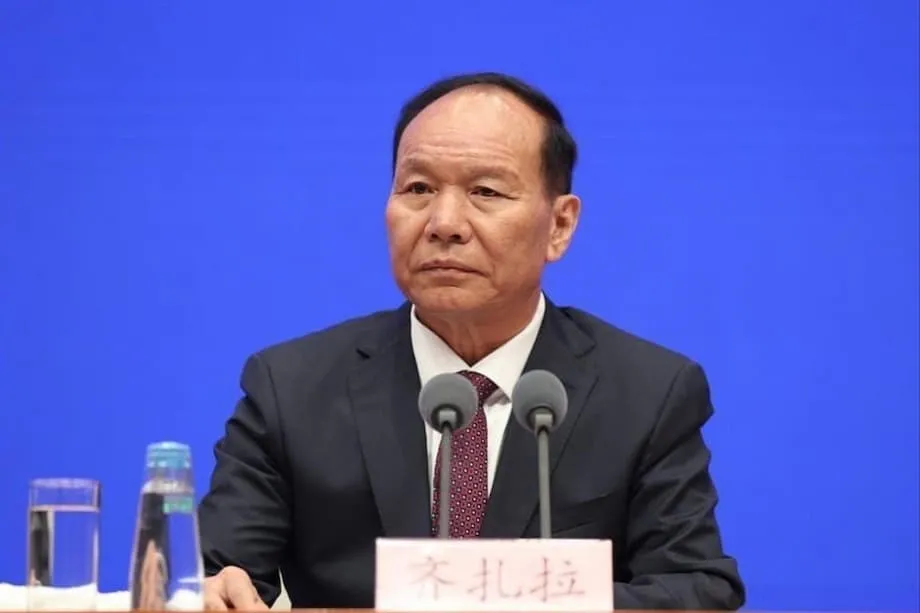
Qizhala, the former Tibetan chairman of the Tibet Autonomous Region, was investigated in January and later expelled from the Chinese Communist Party (CCP). Lan Tianli, the Zhuang chairman of Guangxi, came under scrutiny in May. Liu Hui, the former Hui chairwoman of Ningxia, was placed under investigation in July. Wang Lixia, the Mongol chairwoman of Inner Mongolia, became the fourth senior official from an autonomous region to face discipline this year.
The concentration of cases marks a departure from a much longer pattern. Since the 1980s, only five of 43 regional chairs from ethnic minorities have faced such investigations. That is roughly 12% of the group, making the cluster of four cases in 2025 striking against the longer record.
China's five autonomous regions, Tibet, Xinjiang, Inner Mongolia, Ningxia and Guangxi, have traditionally had chairpersons from non-Han ethnic groups. The arrangement was intended to support ethnic inclusion and maintain stability in places with large minority populations.
Xi's campaign is now reaching officials whose backgrounds and regional responsibilities once offered a measure of political protection. Alongside the corruption cases, the party is pressing for a more unified national identity, tighter discipline and greater central control. For minority communities, the changes affect both who holds office and how much room those officials have to defend local interests.
Who Has Faced Action in 2025?
The four cases involve leaders associated with different minority groups and different autonomous regions. Together, they show the campaign reaching across several parts of China's ethnic administration rather than remaining concentrated in one region.
The sequence of investigations and disciplinary action through August 24, 2025, is:
- January: Qizhala, an ethnic Tibetan and former chairman of the Tibet Autonomous Region, came under investigation. He was subsequently expelled from the party.
- May: Lan Tianli, an ethnic Zhuang serving as chairman of Guangxi Zhuang Autonomous Region, came under scrutiny.
- July: Liu Hui, an ethnic Hui and former chairwoman of Ningxia Hui Autonomous Region, was placed under investigation.
- By August 24: Wang Lixia, an ethnic Mongol serving as chairwoman of Inner Mongolia, had become the fourth senior official from an autonomous region to face discipline that year.
No investigation date is given for Wang, and the specific allegations and eventual legal outcomes for these cases are not detailed. Qizhala's expulsion is a party disciplinary action, while an investigation is the process of examining suspected wrongdoing.
Why Ethnic Status Once Offered Protection
Minority officials have occupied a sensitive position within the CCP. They serve the party while also representing communities with distinct languages, religions and cultural traditions. In autonomous regions, the party has historically weighed disciplinary decisions against its desire to preserve stability.
Ethnic minority leaders could sometimes seek leniency by pointing to special local circumstances. That practice sat alongside the party's founding commitments to minority rights and cultural autonomy. It also formed part of a wider framework that included affirmative action policies, regional leadership representation and exemptions from some restrictions, including the One Child Policy.
Observers interpret the recent cases as part of a broader push for political discipline and uniform standards, rather than a campaign directed exclusively at minorities. Under this interpretation, ethnicity carries less weight as a reason for different treatment within the party's senior ranks.
An analyst whose name was not given described the change in these terms:
The downfall of these officials reflects a broader push for political discipline, signaling that ethnicity-based leniency in elite politics no longer applies.
Xi's leadership has stressed the creation of a "community of the Chinese nation." In practical terms, the party is seeking stronger identification with a single national community and closer obedience to central priorities, while reducing special privileges attached to ethnic status.
A Campaign Reaching Far Beyond Minority Officials
Xi has made the fight against corruption a central part of his leadership since taking office in 2012. According to official figures, more than five million people have been punished during the campaign, and recent years have brought record numbers of investigations involving senior officials.
The crackdown has spread through government, the military, enterprises owned by the state and the private sector. Its reach helps explain why the cases involving minority regional leaders belong to a much larger effort to enforce discipline across institutions and social groups.
Senior figures in finance and business have faced scrutiny, as have members of the military leadership. Defence Minister Dong Jun and several former defence ministers have come under investigation for corruption. Prominent business leaders and "princelings," the children of senior party officials, have also been targeted.
Supporters credit the campaign with confronting entrenched corruption and cleaning up the party. Critics argue that it also gives Xi a means of consolidating power, removing political rivals and demanding loyalty. Those competing assessments concern both the campaign's stated purpose and the way disciplinary power is exercised.
How the Liuzhi Detention System Works
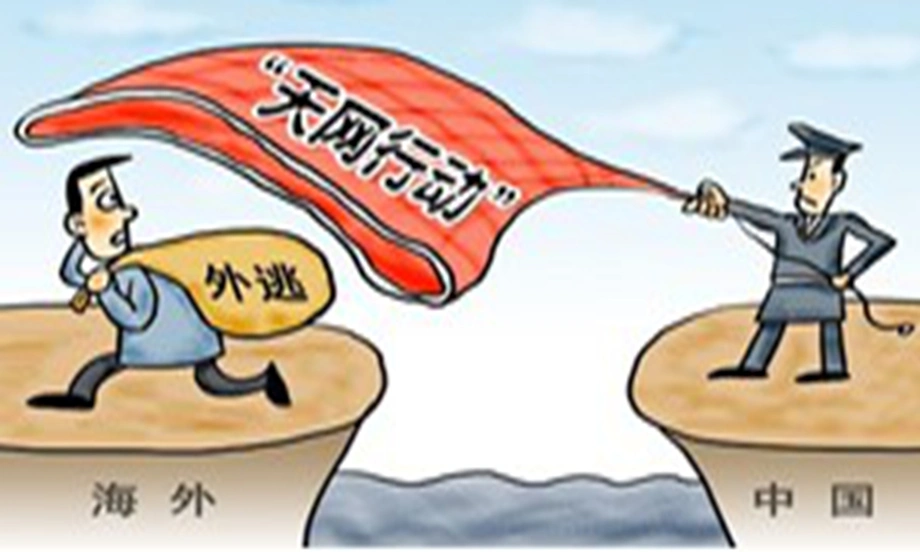
China has built or expanded more than 200 specialized detention centers to support the campaign. Known as liuzhi facilities, they allow the National Supervisory Commission (NSC) to hold suspects for up to six months without access to lawyers or family members.
Liuzhi is a form of detention used during corruption investigations outside the traditional judicial system. For a person held there, the immediate consequence is prolonged isolation from the people who would normally provide legal advice, personal contact or help challenging their treatment.
Authorities argue that these powers are necessary to root out graft. Human rights groups have raised concerns about abuse, limited transparency and the potential for political persecution. Secretive detention, harsh interrogation and a lack of legal oversight have drawn condemnation from rights advocates and legal experts.
Safeguard Defenders has documented physical and psychological pressure on detainees, forced confessions and a lack of legal protections in the liuzhi system. Those concerns place the conditions of investigation at the center of the debate, alongside the corruption allegations themselves.
The expanding system reaches beyond senior party figures. Public sector workers, entrepreneurs and foreign business executives have also been drawn into the campaign, widening the number of people exposed to its methods.
A Shift Toward a Single National Identity
The investigations of minority leaders are taking place alongside a broader change in ethnic policy. The CCP has moved from a stronger public emphasis on multiculturalism and regional autonomy toward closer integration and the blending of ethnic differences.
A 2021 party resolution on history endorsed the current approach to "nationalities work," the party's term for policies concerning ethnic groups. It called for extensive contact, interaction and blending among nationalities. The same resolution reaffirmed Xi's agenda and secured his position in the party's account of its own history.
For ordinary readers, the central policy change is straightforward: the leadership wants ethnic communities to place greater weight on a shared Chinese national identity. Distinct regional or cultural interests have less room when they conflict with that priority.
The party continues to state its commitment to regional autonomy and minority rights. In practice, central control and assimilation have gained ground as protections for cultural and political differences have weakened. The anti-corruption drive adds another source of pressure on officials working within that changing system.
What the Changes Mean for Minority Communities
Xinjiang, Inner Mongolia and Tibet illustrate how the shift in ethnic policy reaches beyond appointments and investigations. Policies affecting language, religion, family life and employment shape the daily experience of minority communities.
In Xinjiang, Uyghur Muslims and other groups have faced mass internment and re-education campaigns. Inner Mongolia has seen restrictions on the use of minority languages. Efforts to "China-ify" religion have brought tighter controls on Tibetan Buddhism and Christianity, seeking to bring religious life more closely into line with the party's national priorities.
Freedom House, which assesses political rights and civil liberties, says ethnic, religious and other minority groups in China have "no meaningful political representation." The policies described across Xinjiang, Tibet and Inner Mongolia include demographic engineering, forced labor, restrictions on language and religion, and the separation of children from their families.
Demographic engineering means policies intended to change the population makeup of a place. Restrictions on language and religion affect how people study, worship and pass their culture to their children. Family separation can interrupt that transmission at its most personal level.
Minority communities therefore face pressures on several fronts at once. Changes in cultural policy affect everyday life, while tighter political control and the disciplining of regional leaders leave communities with fewer routes to seek protection or challenge decisions.
Fewer Minority Voices in Senior Positions
Ethnic minority representation has declined in top political bodies and important ministerial positions. At the same time, more Han officials have taken responsibility for overseeing ethnic affairs.
The change matters because a regional chair's ethnic identity has traditionally been one visible part of the system's promise of inclusion. When fewer minority officials hold influential posts, there are fewer people from those communities in positions where policies are discussed and implemented.
Minority leaders also face stronger pressure to demonstrate loyalty to the center. The removal of informal leniency means that their regional responsibilities offer less protection when the party decides to investigate or punish them.
Taken together, reduced representation, greater Han oversight and tighter discipline narrow the space for advocacy within the party. Communities already facing restrictions on language, religion or family life have less political influence through which to defend their interests.
Pressure on Officials and Uncertainty for Businesses
The campaign's reach has helped create a climate of fear among officials. Some have adopted what is described as a "lying flat" attitude, doing the minimum required to avoid attracting scrutiny or taking responsibility for a risky decision.
Such caution can affect governance in concrete ways. Officials who fear investigation may be less willing to attempt unfamiliar projects, exercise judgment or take decisions that could later be criticized. Concerns about reduced creativity, willingness to take risks and effective administration sit alongside the campaign's stated goal of cleaner government.
Public cynicism has also grown. Despite the large number of punishments, many Chinese citizens question whether the crackdown addresses the causes of corruption. The absence of independent oversight, transparency and broader institutional reform leaves the party policing itself with limited accountability to the public.
Foreign businesses and investors are watching the campaign because several foreign executives have been implicated in corruption investigations. Its unpredictability and opaque procedures add uncertainty for companies assessing the risks of operating in China.
International Scrutiny and the Question of Accountability
China's treatment of ethnic minorities and its methods of investigating corruption have attracted international criticism. Rights groups have focused on detention conditions, selective enforcement, the use of discipline as a political instrument and the lack of legal protections.
Due process means procedures that give a person a fair chance to understand and answer allegations. Detention without access to a lawyer or family, combined with allegations of forced confessions, makes that issue central to scrutiny of the liuzhi system.
The cases involving Qizhala, Lan Tianli, Liu Hui and Wang Lixia bring these concerns into the administration of autonomous regions. They sit at the meeting point of two developments under Xi: an extensive campaign to discipline officials and a drive to bring ethnic affairs under more uniform central direction.
For minority communities, the concrete stakes are representation, cultural protections and access to officials able to argue for local needs. For the wider administration, the challenge is to punish corruption while maintaining effective decision making and public confidence in how power is used.
Key Points
- Qizhala, Lan Tianli, Liu Hui and Wang Lixia faced investigation or discipline in 2025, bringing four senior minority regional leaders under scrutiny.
- Since the 1980s, five of 43 regional chairs from ethnic minorities have faced such probes.
- Xi's anti-corruption campaign has punished more than five million people, according to official figures, and reaches government, the military and business.
- More than 200 specialized detention centers have been built or expanded. Liuzhi permits detention for up to six months without access to lawyers or family.
- The crackdown accompanies declining minority representation, greater Han oversight of ethnic affairs and policies favoring a unified national identity.
- Rights groups have raised concerns about detention abuses, forced confessions, cultural restrictions and limited public accountability.