A record in money sent home as Japan's workforce changes
Foreign nationals living and working in Japan are expected to send more than 1 trillion yen, approximately $6.8 billion, to their home countries in 2025. As of August 22, that would mark the first time annual remittances had crossed that threshold, reflecting the growing importance of migrant earnings to families abroad and of foreign workers to Japan.
Contents
- A record in money sent home as Japan's workforce changes
- Why employers are looking overseas
- What remittances mean for a household budget
- How Japan's immigration rules have changed
- A global flow larger than individual pay packets
- What the latest country figures show
- Asian workers are seeking different destinations
- Transfer safety and protection at work
- The family cost behind the financial gains
- Key Points
The amount sent overseas has more than doubled over the past decade. Japan now has a record 2.3 million foreign workers, compared with about 700,000 a decade ago. That is more than three times as many people, a faster increase than the reported growth in money sent home.
Vietnam, China, the Philippines, Bangladesh, Sri Lanka and Indonesia are among the countries whose citizens work in Japan. Many arrive through temporary work visas or technical intern programs and send a substantial part of their earnings to relatives. Their wages help pay for food, education, healthcare and housing far beyond Japan's borders.
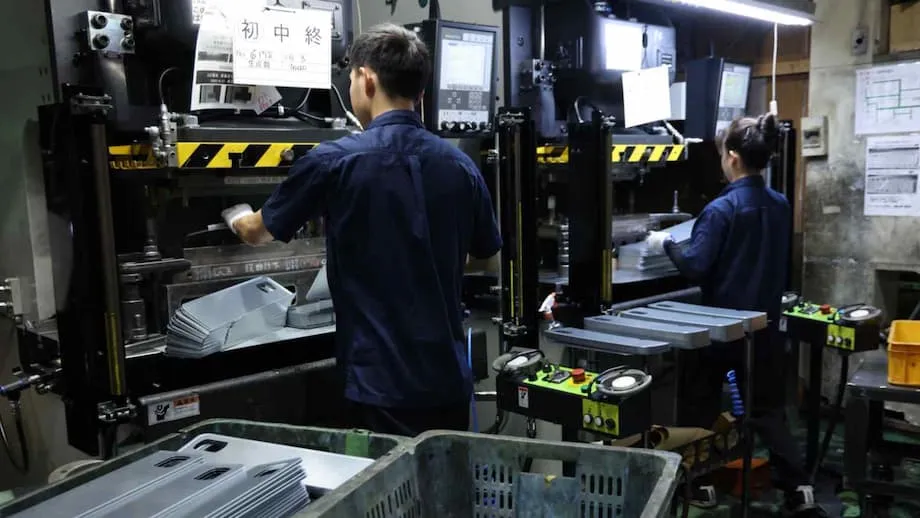
Japan needs these workers because its population is aging and employers struggle to fill vacancies. Factories, construction sites, hospitals, restaurants and hotels increasingly depend on people recruited from abroad. The same pay packet can therefore support two economies: it pays someone to keep a Japanese business operating and provides money for a household in another country.
The projected 2025 total is still a forecast, rather than a completed annual count. Its significance lies in the scale of the change already under way, as Japan's demand for workers becomes more closely connected to the financial needs of families across Asia and beyond.
Why employers are looking overseas
Japan's working-age population peaked in 1990 and has been shrinking ever since. A smaller pool of potential employees creates pressure across industries, from manufacturing and construction to healthcare and hospitality. An aging society also needs people to provide care, making recruitment especially important in services that depend on direct human attention.
Foreign workers help employers fill those gaps. Their contribution extends beyond taking vacant jobs: migrants bring skills, perspectives and ideas that can support innovation. For businesses struggling to find staff, their presence helps keep production and services running.
Research cited in the August 2025 assessment suggests Japan may need as many as 4.19 million migrant workers by 2030 to sustain economic growth. Compared with the current 2.3 million, that would mean roughly 1.89 million more workers, an increase of about 82%. A shortfall is expected unless migration pathways expand further.
Major economies worldwide lose an estimated $1.3 trillion in gross domestic product each year because of labor shortages. Gross domestic product, or GDP, measures the value of goods and services produced in an economy. For Japan, population aging and a declining birthrate make the challenge particularly pressing.
What remittances mean for a household budget
Remittances are money that people working away from home send to relatives or others in their country of origin. A transfer may cover a recurring expense, such as groceries or school fees, or help a family meet a larger bill for medical care or housing.
Japan's rising remittance total is closely connected to its expanding foreign workforce. More workers earning wages means more people potentially able to support households abroad. Many migrants on temporary visas or in technical intern programs send a significant share of what they earn rather than keeping all of it for spending in Japan.
The yen's weakness is also part of the financial picture, although the direction of the exchange rate matters. A weaker yen generally buys less foreign currency, reducing the value of a fixed yen transfer in the recipient's currency. Workers seeking to maintain the same level of support may need to send more yen. The amount transferred and the purchasing power received are therefore separate parts of a family's budget.
How Japan's immigration rules have changed
Japan has traditionally maintained a restrictive approach to immigration. Historically, most migrants held temporary visas with strict renewal conditions, routes to permanent settlement were limited and access to citizenship was rare. Economic necessity has gradually pushed policy toward a wider role for foreign workers.
The changes have unfolded over several years:
- 1990: Japan's working-age population reached its peak before beginning its long decline.
- 2017: Japan introduced faster access to permanent residency for skilled workers.
- 2018: New laws expanded visas for blue-collar work and provided a route toward permanent residency for workers who wished to stay.
- 2025: The foreign workforce stands at a record 2.3 million, while annual remittances are expected to exceed 1 trillion yen.
- 2030: Research projects a potential need for as many as 4.19 million migrant workers to sustain economic growth.
Permanent residency allows a person to settle for the long term, while a temporary visa comes with limits on how long they can stay and conditions they must meet. The reforms mark a gradual move away from relying mainly on workers expected to leave after a limited period.
Japan's immigration system still contains multiple visa categories with different rights and conditions. Most foreign workers remain on temporary contracts, and social integration continues to be difficult. A larger workforce and higher remittances are developing alongside continuing restrictions on settlement and the practical challenges of building a life in Japan.
A global flow larger than individual pay packets
Migrant workers worldwide sent $905 billion in remittances in 2023, according to World Bank figures cited in the August 2025 assessment. Remittances were described as exceeding foreign direct investment and development aid, illustrating how money transferred by individuals has become a major source of support across borders.
Foreign direct investment is money invested in businesses in another country, while development aid generally comes from governments or institutions. Remittances reach recipients through a different route: people earning abroad transfer money directly to households, where it can support daily spending, education, healthcare and efforts to escape poverty.
The Philippines, Bangladesh, Sri Lanka and Indonesia depend on remittances as a source of foreign exchange as well as household income. Foreign exchange means currencies received from abroad, which help a country pay for purchases from other economies. Money sent home can therefore support both a family's immediate needs and the wider economy.
The Philippines received $33.5 billion from overseas workers in 2022, when remittances accounted for 8.9% of GDP. That share shows why changes in overseas employment matter nationally, not just to individual recipients. Japan is among the country's top five sources of remittances.
Bangladesh received more than $30 billion in the fiscal year 2024–25, an increase of 24% from the previous year. Sri Lanka and Indonesia have also recorded growing inflows, helping support their economies during global uncertainty. These are receipts from workers across overseas destinations, rather than transfers from Japan alone.
What the latest country figures show
Several Asian countries have reported large remittance inflows, although their figures cover different periods. Monthly receipts, totals for part of a year and annual figures each describe a different slice of the money reaching households.
- Pakistan received $3.21 billion in July 2025 alone. Annual inflows were expected to remain high as more than 2 million Pakistanis worked abroad, mainly in the Gulf, Europe and East Asia.
- Indonesia received Rp253.3 trillion, approximately $16.5 billion, from migrant workers in 2024. Further growth was projected as more workers took jobs overseas.
- Sri Lanka received $3.73 billion in the first half of 2025, while more of its workers were seeking employment in Japan and South Korea.
- The Philippines recorded remittance growth of 3.5% in November 2024, with receipts totaling $34.61 billion from January through November.
Japan's projected $6.8 billion in outward remittances represents money leaving one destination for migrant labor. The figures for Pakistan, Indonesia, Sri Lanka and the Philippines describe money arriving from workers employed across multiple destinations. Together, they show the connection between labor demand in wealthier economies and household finances in countries of origin.
Families experience those flows as individual transfers rather than national totals. A rise in receipts may mean more money available for essential bills, while the national figures reveal how widely overseas employment supports domestic spending and economic stability.
Asian workers are seeking different destinations
Bangladesh and Sri Lanka are placing greater attention on skilled employment in Japan, South Korea and Europe, moving beyond a traditional focus on jobs requiring fewer skills and paying lower wages in the Middle East. The shift reflects both changing recruitment needs and workers' hopes for better pay and conditions.
Governments are investing in language teaching and skills training to prepare people for those opportunities. A worker may need both the ability to perform a job and enough knowledge of the destination's language to understand instructions, communicate at work and manage daily life.
Bangladesh has signed agreements with Japan to send 100,000 workers over the next five years. Sri Lanka is also seeing more citizens seek work in East Asia. For Japan, these connections can help address vacancies; for countries sending workers, they can create employment opportunities and a continuing flow of money home.
The results depend on more than the number of people recruited. Wages, working conditions, training and the ability to remain employed all shape how much a migrant can save and send. A recruitment agreement connects employers and workers, while the experience of the job determines what that connection means for a family.
Transfer safety and protection at work
Unapproved or informal money transfer services are a concern as remittances grow. These services operate outside government oversight, creating risks involving money laundering, tax evasion and the exploitation of workers who may have limited knowledge of financial systems in Japan.
Money laundering means disguising the origin of money obtained through crime. Oversight of transfer services is intended to make financial flows more transparent and secure. Japanese authorities are tightening regulations and encouraging workers to use approved remittance services.
Foreign workers also face problems at work and in the communities where they live. Precarious employment, limited legal protections and barriers to social integration can make it difficult to secure stable incomes or seek help. These problems matter directly to relatives who depend on regular transfers.
The International Organization for Migration, or IOM, works with governments and businesses to promote fair treatment and support migrants. Its activities include resources, training and initiatives such as health handbooks that help migrants navigate services and daily needs.
Lower transfer costs, fair treatment at work and access to useful information all affect how much of a wage reaches a household. Recruitment and remittance growth therefore sit alongside questions of protection, including whether workers can understand their rights and find support when something goes wrong.
The family cost behind the financial gains
Migrant workers often leave home because they need to support relatives. The money they send can improve access to food, schooling, healthcare and housing, but earning it may require long periods away from partners, children and parents.
An analysis of the Philippines' remittance economy captured the emotional cost in these words:
Remittances may buy a modicum of happiness, but do not lessen the attendant emotional pain.
Women working overseas as nannies or caregivers may spend their days caring for other people while being unable to raise their own children at home. Missed family milestones and prolonged separation can create psychological strain for both migrants and relatives.
Support systems and opportunities for family reunification are therefore part of the migration debate. The financial benefits are substantial, yet the people earning the money also need a workable life where they are employed and ways to maintain their family relationships.
Japan's policy choices connect these human concerns to its economic needs. Investing in skills, reducing remittance costs, protecting workers and creating routes to permanent settlement can help people build more stable lives while supplying labor that employers need.
The expected remittance record in 2025 captures a larger change: foreign workers are becoming more important to Japan's businesses while their wages sustain households overseas. Managing that relationship requires attention to employment, integration and family life, alongside the money crossing borders.
Key Points
- Foreign workers in Japan are expected to send more than 1 trillion yen, approximately $6.8 billion, abroad in 2025.
- Japan has a record 2.3 million foreign workers, compared with about 700,000 a decade ago.
- Research projects a potential need for 4.19 million migrant workers by 2030, with a shortfall expected unless migration pathways expand.
- Remittances support household spending and provide foreign exchange for countries including the Philippines, Bangladesh, Sri Lanka and Indonesia.
- Japan has expanded some migration and settlement routes, while temporary employment and integration challenges persist.
- Safe money transfers, worker protection, training and family support remain central to the benefits of overseas employment.