A 94.64 Score Meets Questions About Accountability
Thailand's State Audit Office (SAO) received the highest transparency ranking among the country's independent public agencies in August 2025, scoring 94.64 out of 100. The recognition came months after its new headquarters collapsed during an earthquake, killing at least 47 people and bringing allegations of unsafe construction, procurement failures and questionable spending into public view.
Contents
- A 94.64 Score Meets Questions About Accountability
- How the Transparency Assessment Works
- The Agency Defends a Process It Once Questioned
- Why the Result Triggered Ridicule
- The Collapse Behind the Controversy
- Steel Quality and the Construction Contract
- Furniture Spending Adds to Public Anger
- Investigators Examine Documents and Other Projects
- Why Trust in Oversight Is Already Fragile
- What Calls for Reform Actually Involve
- Key Points
The award has put the agency in an uncomfortable position. Its job is to scrutinize how public money is spent. Now, the construction of its own headquarters is under investigation, while its transparency score has become a target of public anger and ridicule.
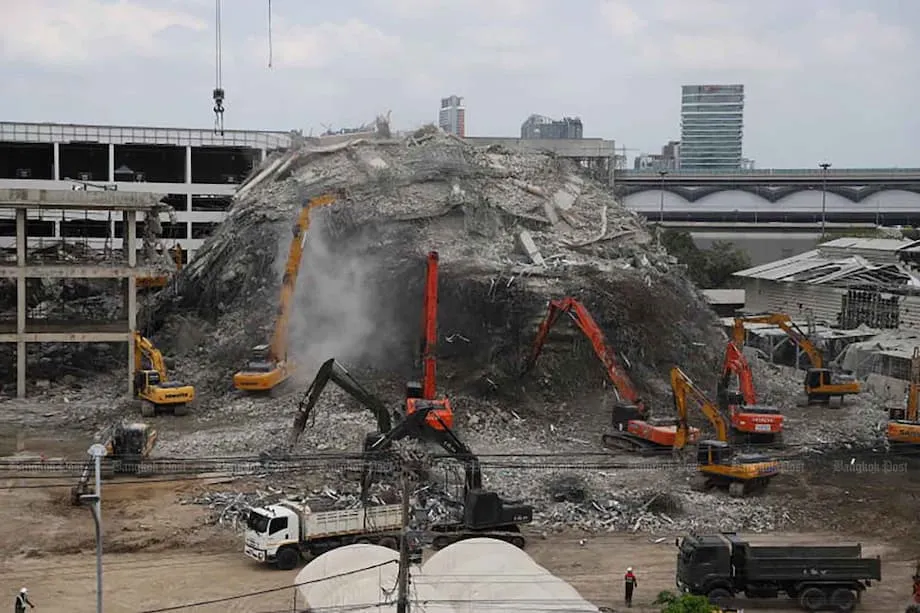
The 30-storey tower was still being built in Bangkok's Chatuchak district when it fell during a magnitude 7.7 earthquake centered in Myanmar in March 2025. It was the only building in Bangkok to collapse during the earthquake. Nine people were injured, and those affected included migrant workers and vocational students working at the site.
By August 20, the dispute had grown beyond the building itself. Investigators were examining construction materials, engineering documents, company ownership and financial transactions. Citizens and opposition politicians were asking how an agency facing such serious questions could receive a leading transparency award.
The controversy brings together two different processes: an annual assessment of public agencies and investigations into a deadly construction project. Understanding how the assessment works, what investigators are examining and what the public wants disclosed helps explain why the award has generated such a strong response.
How the Transparency Assessment Works
The National Anti-Corruption Commission (NACC), Thailand's main body responsible for fighting corruption, conducts the annual Integrity and Transparency Assessment (ITA). In 2025, the exercise surveyed more than 1.35 million stakeholders across more than 8,300 government agencies.
The assessment is intended to support national strategies against corruption and improve Thailand's standing in the global Corruption Perceptions Index (CPI). It also aims to encourage public bodies to put preventive measures in place before misconduct occurs.
The ITA examines three areas, combining views from inside and outside an agency with checks on information made available to the public:
- Internal Integrity and Transparency: agency employees assess ethics, procedures and internal controls.
- External Integrity and Transparency: people dealing with the agency, including contractors and citizens, give feedback on fairness and openness.
- Open Data Integrity and Transparency: assessors examine how much information the agency publishes and how accessible it is.
Internal controls are the rules and checks an organisation uses to manage its work and spending. Public disclosure gives people outside that organisation access to information they can examine for themselves. The ITA brings these measures together in a numerical score.
The SAO finished first in the independent agency category, narrowly ahead of the Election Commission and the NACC itself. Agencies are compared within their own categories, a feature that became central to criticism of the result.
The Agency Defends a Process It Once Questioned
The SAO defended the assessment as rigorous and covering several dimensions of public administration. It said the process used academic and statistical methods to ensure fairness.
The agency also acknowledged a weakness. It scored below the benchmark in "system improvement" and pledged to address that area. Its leading position within the independent agency category therefore came alongside an admitted need to improve part of its performance.
The SAO had previously criticized the ITA itself, saying its tools failed to measure genuine transparency. That earlier position has added to the dispute over its acceptance of the 2025 recognition.
Critics argue that a system built around agency assessments, stakeholder surveys and checks on published information can be manipulated. Their concern is that an organisation can satisfy assessment requirements while serious questions about its spending or oversight remain unresolved.
The ITA's purpose is preventive: it encourages procedures intended to reduce opportunities for corruption. Public demands after the collapse are more concrete, including access to contracts, explanations of spending decisions and consequences for anyone found responsible.
Why the Result Triggered Ridicule
Rukchanok Srinork, a Bangkok MP from the People's Party, mocked the ranking on Facebook, writing that the public must have "had a good laugh" at the result. She criticized the practice of comparing agencies only within their own categories, arguing that it can skew results and limit meaningful comparisons.
Social media users also questioned how the agency responsible for auditing government spending could receive the distinction while facing scrutiny over its own construction project. One frustrated taxpayer expressed that reaction online:
This is the agency that audits government spending, yet they need to audit themselves first,
Many citizens said they rarely felt included in the assessment process or saw tangible benefits from high scores. Their criticism focused on the distance between an institutional rating and their experience of public accountability.
The NACC and the ITA had already faced controversy over awards in previous years. The SAO result renewed questions about whether the assessment gives the public a useful picture of how agencies actually operate.
An unnamed civic group also challenged the assessment's credibility:
The ITA is supposed to measure transparency, but when the agencies themselves question its validity, it's clear that reforms are needed.
The Collapse Behind the Controversy
The earthquake in March turned a government construction project into a national tragedy. The SAO's unfinished headquarters in Chatuchak collapsed, killing at least 47 people and injuring nine.
The deaths included people working on the site, among them migrant workers and vocational students. Their presence places workers and their families at the center of a controversy often discussed through agency scores, procurement rules and corporate arrangements.
The sequence of events explains why the August recognition prompted such anger:
- March 2025: a magnitude 7.7 earthquake centered in Myanmar struck, and the SAO's headquarters under construction in Bangkok collapsed.
- After the collapse: investigations examined construction materials, procurement, engineering signatures, project changes and company arrangements.
- August 2025: the SAO received a score of 94.64 out of 100 in the ITA, placing first among independent agencies and prompting renewed criticism.
The building's collapse was particularly striking because it was the only building in Bangkok to fall during the earthquake. Investigators began examining how it had been designed, built, supplied and supervised.
The construction scandal has since become a symbol of wider concerns about public procurement. Procurement is the process government bodies use to select suppliers and contractors and pay for goods or services. In a major building project, those decisions affect both public spending and the safety of people working on the structure.
Steel Quality and the Construction Contract
Tests found that steel bars supplied by Xin Ke Yuan, a Chinese manufacturer, failed Thailand's national safety standards. The steel did not meet the required specifications, raising concerns about checks on material quality and regulatory supervision.
The construction contract had been awarded to a joint venture between Italian-Thai Development and China Railway No.10 (Thailand) Co., Ltd. A joint venture allows companies to work together on a project, sharing responsibilities under their agreement.
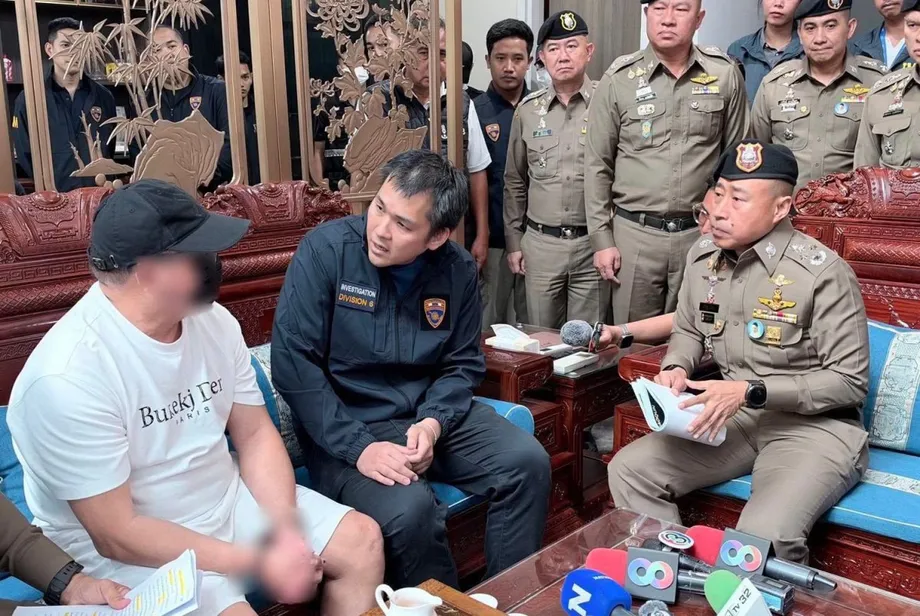
Authorities later arrested Zhang Chuanling, a director of the Chinese company, on charges involving bid rigging, foreign ownership violations and construction malpractice. Bid rigging involves interference with the competitive process through which a contract is awarded.
Financial records also revealed more than 2 billion baht in suspicious transactions linked to the project. Those transactions became another part of the scrutiny surrounding how the headquarters was financed and built.
The investigation brought together questions about the quality of physical materials and the arrangements behind the contract. For the public, the central demand is an explanation of how a project belonging to the government's spending watchdog reached this point.
Furniture Spending Adds to Public Anger
Civic groups exposed plans for expensive furniture and fittings for the headquarters. These included conference chairs costing nearly 100,000 baht each and carpets priced at more than 100,000 baht apiece.
The figures intensified anger over the apparent misuse of taxpayer money. They also widened the focus from construction safety to the choices made about furnishing a public building.
The SAO's responsibility for checking spending across government makes its own purchasing decisions especially sensitive. Citizens expect the agency to apply scrutiny to its own budgets and contracts as well as to those of other public bodies.
The furniture disclosures reinforced demands for accessible financial records and procurement documents. Publishing those records would allow people to examine what was ordered, how prices were set and who approved the purchases.
Investigators Examine Documents and Other Projects
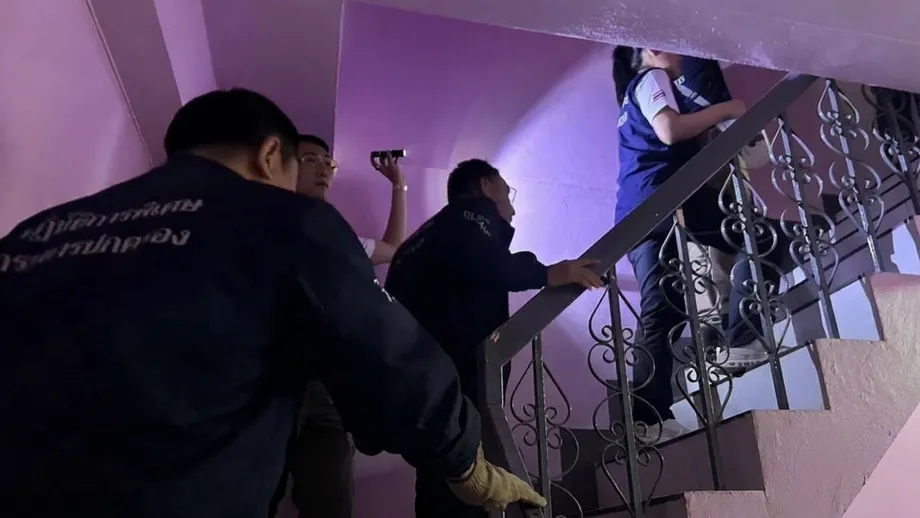
Thailand's Department of Special Investigation (DSI) is examining allegations of forged engineering signatures, the use of substandard materials and repeated modifications to the project. Engineering signatures identify the professionals taking responsibility for technical documents, making their authenticity an important part of the inquiry.
The arrest of the Chinese executive and a raid on the steel supplier's factory expanded scrutiny beyond the SAO building. Investigators began looking at other government projects that might have received inferior materials.
Authorities seized hundreds of millions of baht worth of inferior steel intended for infrastructure projects. The future of certain steel production technologies was also under review.
The scandal prompted demands for stricter regulation of foreign contractors and closer examination of what critics call "zero-coin industries", companies accused of cutting corners and compromising public safety for profit.
Justice Minister Tawee Sodsong said the investigation would cover anyone responsible:
The case is being handled seriously and fairly, with no individuals above scrutiny. The Thai government has committed to full transparency, asserting that all culpable parties, corporate or individual, will be held accountable.
As of August 20, the investigations were continuing. No date was given for their completion or for a final determination of responsibility.
Why Trust in Oversight Is Already Fragile
Thailand ranks 109th out of 180 countries in Transparency International's Corruption Perceptions Index. The ranking reflects persistent concerns about governance and accountability that extend beyond the SAO project.
Major procurement decisions, particularly in defense and infrastructure, are often exempt from independent scrutiny. The military's political influence has weakened legislative oversight, while legal loopholes permit opaque spending and limited disclosure.
Financial scandals involving Buddhist temples have also damaged trust. Misuse of funds and a lack of financial transparency have brought demands for accountability into religious institutions as well as government agencies.
The NACC faces credibility problems of its own. Its "No Gift Policy" was undermined when one of its executives was arrested for bribery, adding to public doubts about the institutions charged with preventing corruption.
The SAO award has brought those concerns together in a highly visible dispute. A high score offers an agency public recognition, while citizens affected by a scandal are looking for records, explanations and enforceable consequences.
What Calls for Reform Actually Involve
Civic groups, journalists and citizens have called for independent audits, fuller public disclosure, stricter oversight and accountability for wrongdoing. Each demand addresses a different part of how public money is controlled.
Independent audits would bring in reviewers outside the agency whose spending is being examined. Public disclosure would make financial records, contracts and project documents accessible, giving citizens more information than a final assessment score alone.
Stricter oversight would involve closing legal loopholes that permit exemptions from scrutiny, especially in sectors where spending decisions carry substantial financial or safety risks. Accountability would mean consequences for individuals and companies found responsible for corruption or negligence.
International comparisons have also entered the debate. Sovereign wealth funds and enterprises owned by the state can become vehicles for corruption when reporting is limited and oversight is weak. A sovereign wealth fund manages investments on behalf of a state, making rules about disclosure and supervision central to public accountability.
Some experts have suggested international practices such as the Santiago Principles for sovereign wealth funds, paired with enforceable requirements and independent monitoring. Others have argued for a wider cultural change in which transparency and integrity are valued and rewarded.
The immediate demands remain tied to the SAO case: explain the procurement decisions, examine the construction failures, disclose the relevant records and hold responsible parties accountable. The agency's 94.64 score has made those demands more urgent in public debate, while the investigations must still answer how the headquarters project went so badly wrong.
Key Points
- The SAO scored 94.64 out of 100 in the 2025 ITA, ranking first among independent agencies ahead of the Election Commission and the NACC.
- Its headquarters under construction collapsed during the March earthquake, killing at least 47 people and injuring nine.
- Investigations cover steel quality, procurement, engineering signatures, project modifications and more than 2 billion baht in suspicious transactions.
- Expensive furniture purchases, including conference chairs costing nearly 100,000 baht each, added to public anger.
- Authorities arrested a Chinese company director, raided a steel supplier's factory and expanded scrutiny to other government projects.
- Critics want independent audits, accessible contracts and financial records, stronger oversight and consequences for wrongdoing.