Rice Imports to Stop During the Philippine Harvest
The Philippines will suspend rice imports from September 1 to October 30, 2025, after the Department of Agriculture reported that traders were buying palay, or unmilled rice, for just 8 to 10 pesos per kilogram. Farmers were spending 12 to 14 pesos to produce the same amount, leaving them selling their harvest for less than it cost to grow.
Contents
- Rice Imports to Stop During the Philippine Harvest
- Why Farmers Are Selling Below Their Costs
- What the Suspension Covers
- Traders Rush to Beat September 1
- What Households Could Pay
- Farmers Seek More Than a Temporary Pause
- Thailand Looks for Other Buyers
- Vietnam Faces Greater Exposure
- A Smaller Import Forecast, but Still the Largest Buyer
- Officials Weigh the End of the Suspension
- Key Points
President Ferdinand Marcos Jr. ordered the 60-day suspension following a Cabinet meeting and a proposal from Agriculture Secretary Francisco Tiu Laurel Jr. The government wants to lift the prices farmers receive during the harvest season by temporarily reducing competition from cheap imported rice.
The decision reaches well beyond Philippine farms. The country is the world's largest rice importer, making it an important customer for exporters in Vietnam and Thailand. Traders are rushing to deliver shipments before September 1, while Filipino households face the possibility that some of the increase in farm prices will reach their grocery bills.
As of August 18, the suspension is scheduled to end on October 30. Agriculture officials have left open the possibility of shortening or extending it according to prices, supplies and harvest results, although finance officials consider an extension unlikely.
The central challenge is straightforward: farmers need enough income to keep growing rice, while consumers need an affordable staple. The temporary import stop seeks to help the first group without placing too much pressure on the second.
Why Farmers Are Selling Below Their Costs
The Department of Agriculture attributes the collapse in palay prices largely to a surge of cheap rice imports. When traders can buy imported rice at low prices, local farmers have less room to negotiate what they receive for their own harvest.
A farmgate price is the amount paid to a farmer before the crop passes through the rest of the supply chain. Palay still has to be milled before it becomes the rice sold for cooking. A low price at the farm can therefore exist alongside a much higher price in a shop.
The government's figures show the pressure on growers: even the highest reported buying price of 10 pesos per kilogram falls below the lowest reported production cost of 12 pesos. At the other end of those figures, a farmer receiving 8 pesos faces production costs of as much as 14 pesos.
The Federation of Free Farmers says low prices have pushed many producers into debt, with some questioning whether planting rice is still worthwhile. The suspension is intended to prevent further losses and give domestic growers a better chance of benefiting from the coming harvest.
Farmers also face high input costs, limited access to credit and exposure to climate shocks. Those problems help explain why some farmer groups regard a pause of two months as insufficient, even if it succeeds in raising prices temporarily.
What the Suspension Covers
The ban covers regular milled and well-milled rice, which account for the bulk of Philippine imports. Specialty varieties, including basmati, Japanese rice and black rice, are exempt because they serve smaller markets and have a limited effect on local farmers.
The Bureau of Customs will enforce the suspension at ports, increase surveillance and watch for smuggling or misdeclaration. Misdeclaration involves describing goods incorrectly in import paperwork, a concern when some rice varieties are prohibited and others remain eligible to enter.
Customs Commissioner Ariel F. Nepomuceno said the agency would enforce the order and prevent illegal imports from weakening its effect:
The BOC will leave no room for violations and will ensure that this ban is fully enforced. We are committed to upholding the integrity of the rice market and preventing any illegal importation that undermines the President's decision.
President Marcos described the situation as an "urgent national concern." The customs operation forms part of the government's effort to protect agricultural producers while keeping the rice market stable.
The Bureau of Customs has already seized more than PHP 354 million worth of smuggled agricultural goods this year. That figure covers agricultural goods, while the coming rice suspension adds a specific restriction for officials to enforce. The government is also urging agencies to act against rice hoarding and price manipulation during the pause.
Traders Rush to Beat September 1
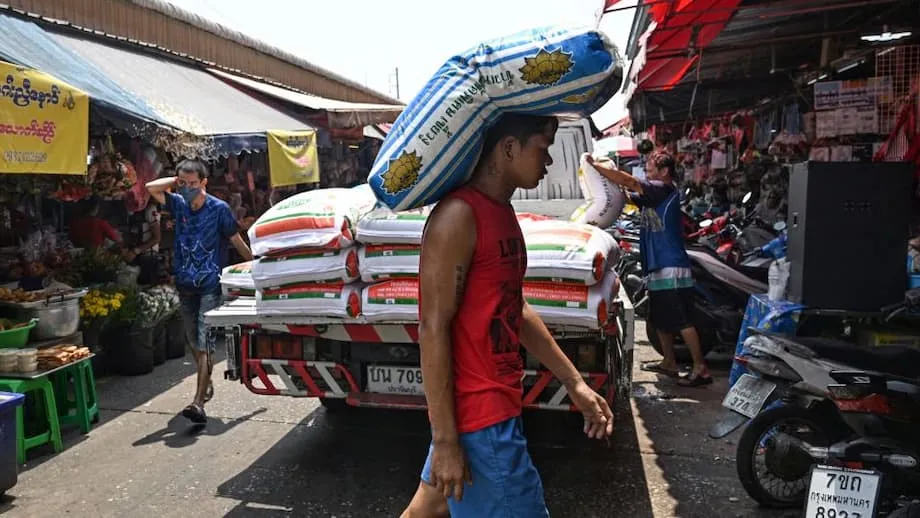
Rice importers are trying to bring in as much stock as possible before the suspension begins. Shipping companies are accelerating deliveries, and warehouses are preparing for a temporary glut as traders seek to get cargo into the country before the deadline.
The rush could concentrate arrivals into a short period, disrupting the usual timing of deliveries. Importers and exporters also face uncertainty over orders that may not reach the Philippines by September 1.
Industry observers warn of possible supply shortages and price volatility if the suspension lasts longer than planned or the domestic harvest falls short of expectations. Businesses are asking the government to clarify the policy's duration and scope so they can plan purchases, deliveries and storage.
The key dates and policy changes are:
- 2019: The Rice Tariffication Law replaces import quotas with tariffs and opens rice imports more widely.
- June 2024: The government cuts the rice import tariff from 35% to 15% to combat inflation.
- August 18, 2025: Traders and shipping companies are preparing for the announced suspension.
- September 1, 2025: The 60-day suspension is scheduled to begin.
- October 30, 2025: The suspension is scheduled to end, subject to government review of market conditions.
The Department of Agriculture says the period can be adjusted. For traders, that means planning around the stated dates while allowing for the possibility that the government changes them.
What Households Could Pay
Industry estimates suggest that both farmgate and retail rice prices could rise by 1 to 2 pesos per kilogram during the suspension. A higher farmgate price would help growers recover their expenses, but a higher retail price would increase the cost of rice for households.
The domestic harvest is expected to add local rice to the market during the pause. The question is whether that supply, together with existing stocks, will be enough to contain retail price increases while imported deliveries are stopped.
Socioeconomic Planning Secretary Arsenio Balisacan has downplayed fears that the suspension will cause a sharp acceleration in inflation. He points to adequate inventories, a record harvest and lower international rice prices:
The 60-day suspension of rice imports is unlikely to hasten inflation due to lower prices in the world market and an adequate inventory.
Philippine Statistics Authority figures show that average regular milled rice prices fell from P50.90 per kilogram in July 2024 to P41.31 in July 2025. That is a decline of P9.59 per kilogram, or about 18.8%, over the year.
Rice inflation has been negative in recent months, meaning rice prices have been lower than in the corresponding period a year earlier. That helps explain why officials believe there is some room to support farmers without setting off a rapid increase in food costs.
The government has also set a maximum suggested retail price for imported rice to discourage price gouging. The suggested price, existing inventories and the harvest are all part of its effort to limit the burden on consumers while giving producers some relief.
Farmers Seek More Than a Temporary Pause
Farmer groups are divided over how much the suspension can achieve. Some welcome the reduction in import competition, while others say 60 days will not allow growers to recover their losses or resolve the costs that make local production difficult.
Groups seeking stronger protection want the rice tariff restored to 35% from the 15% rate introduced in June 2024. They also want a review of the Rice Tariffication Law, which changed the way the Philippines manages rice imports in 2019.
A tariff is a tax charged on an imported product. A quota limits how much can enter. By replacing quotas with tariffs, the law allowed rice imports more freely while retaining a tax on them, with the aim of lowering prices and maintaining food security.
Critics argue that the arrangement has left farmers exposed to import surges and changes in international prices. The 2024 tariff reduction intensified that argument because it lowered the tax on imported rice at a time when the government was trying to bring inflation under control.
Restoring the earlier tariff would increase protection for local growers, but officials and other participants in the debate warn that a higher import tax could also push consumer prices upward. The disagreement concerns who bears the cost of keeping rice affordable and local production viable.
For growers already carrying debt, the practical concern is what happens when imports resume. A temporary recovery in palay prices would provide relief, while the wider problems of production costs, credit and weather exposure would still need attention.
Thailand Looks for Other Buyers
Thai rice exporters face the possibility of delayed or cancelled orders after shipments to the Philippines rose by nearly 59% in 2024. Pending cargoes that miss the September 1 deadline could be affected by the suspension.
Arada Fuangtong, director general of Thailand's Department of Foreign Trade, described the concern among exporters and the timing problem facing suppliers:
Thai rice exporters had reported that the Philippine government's decision to suspend rice imports would affect exports. Other rice-exporting countries would also face similar impacts, as pending orders might not be delivered before the September 1, 2025, deadline.
Thailand's Ministry of Commerce is seeking alternative markets, accelerating sales between governments and promoting Thai rice at international trade fairs. Those efforts include a major contract with China.
Thailand is also organising trade missions to Japan and Hong Kong. Farmers are being encouraged to grow rice varieties that match international demand, linking the search for new buyers with decisions about what to plant.
The nearly 59% increase in shipments to the Philippines in 2024 shows why the interruption matters to Thai suppliers. A market that had expanded rapidly is about to stop accepting the main categories of imported rice for two months.
Vietnam Faces Greater Exposure
Vietnam, the Philippines' largest rice supplier, is particularly exposed. The Philippine market accounted for 44.3% of Vietnam's total rice exports in the first seven months of 2025, meaning more than four out of every ten units of rice exported went to that destination.
The Vietnam Food Association has asked the country's trade ministry to challenge the suspension. It warns that losing access to such a large customer could hurt domestic production and push export prices lower.
Vietnamese traders say the price of rice with 5% broken grains has already fallen by nearly 30% from a year earlier. The term describes a rice grade in which a limited share of the grains are broken, making it a useful reference for export prices.
The timing is sensitive because Vietnam and the Philippines recently signed a memorandum of understanding on rice trade. Vietnamese harvests are also vulnerable to flooding and typhoons, adding uncertainty for producers already facing weaker prices.
Vietnam and Thailand share a commercial problem: rice intended for the Philippines may need to wait or find another buyer. Vietnam's much larger share of sales going to the Philippine market makes the interruption especially consequential for its exporters and farmers.
A Smaller Import Forecast, but Still the Largest Buyer
The United States Department of Agriculture has reduced its forecast for Philippine rice imports in 2025 by 500,000 metric tons. It now projects 4.9 million metric tons, compared with an earlier estimate of 5.4 million.
The reduction is about 9.3% of the earlier forecast. Even at the lower figure, the USDA expects the Philippines to remain the world's largest rice importer, showing the country's continuing importance to international suppliers despite the temporary stop.
A pause by such a large buyer could place downward pressure on world rice prices in the short term. Exporters with rice to sell would have to compete for other customers while the Philippine market is closed.
The direction could change if the Philippine harvest disappoints or the suspension is extended. The country could later return with large purchase orders, potentially pushing prices upward again.
For exporters, the uncertainty concerns both the amount of rice the Philippines will ultimately buy and when those purchases will occur. For Philippine officials, the same uncertainty makes harvest results and stock levels central to decisions about reopening imports.
Officials Weigh the End of the Suspension
Finance Secretary Ralph Recto has indicated that the government is unlikely to extend the suspension beyond October or raise rice tariffs in the near term. That position points toward imports resuming after the harvest rather than the temporary stop becoming a lasting restriction.
Balisacan has called the pause a "quick fix" and urged attention to fair tariffs, better buffer stocking and stronger support for local production. Buffer stocks are rice reserves held so supplies can be released when needed.
Agriculture Secretary Tiu Laurel has nevertheless said the suspension could be shortened or extended depending on price movements and harvest outcomes. The Department of Agriculture plans to monitor supply and demand among retailers, wholesalers and importers to maintain market discipline.
The government's working expectation is that the suspension will end as scheduled on October 30, allowing imports to resume to meet demand after the harvest. A final adjustment will depend on market conditions, so the duration remains open to review.
The next two months will test whether a temporary restriction can raise farm incomes while keeping food affordable. The immediate measures are concrete: watch harvest volumes, monitor prices, police illegal imports and assess whether inventories can cover demand.
The episode also connects Philippine farm policy with regional trade. Climate change, volatile global prices and shifting consumption patterns complicate food supply decisions across Asia. For Thailand and Vietnam, the suspension adds urgency to finding a wider range of buyers rather than relying heavily on one market.
Rice occupies an economic, political and cultural place in the Philippines and across the region. Decisions about its price affect the income of growers, the spending of households and the businesses that move it between countries.
Key Points
- The Philippines plans to suspend regular milled and well-milled rice imports from September 1 to October 30, 2025, while exempting specialty varieties.
- The Department of Agriculture reports palay buying prices of 8 to 10 pesos per kilogram against production costs of 12 to 14 pesos.
- Industry estimates suggest farmgate and retail prices could rise by 1 to 2 pesos per kilogram during the pause.
- Officials cite adequate inventories, a record harvest and falling world prices as reasons to expect limited inflation pressure.
- Vietnam sent 44.3% of its rice exports to the Philippines in the first seven months of 2025, while Thai shipments to the country grew nearly 59% in 2024.
- The USDA lowered its Philippine import forecast from 5.4 million to 4.9 million metric tons for 2025, still the world's largest total.
- Farmer groups seek a return to the 35% tariff, but finance officials indicate that a tariff increase and an extension beyond October are unlikely.
- The government can adjust the suspension according to prices, supplies and harvest results, with October 30 remaining the scheduled end date.