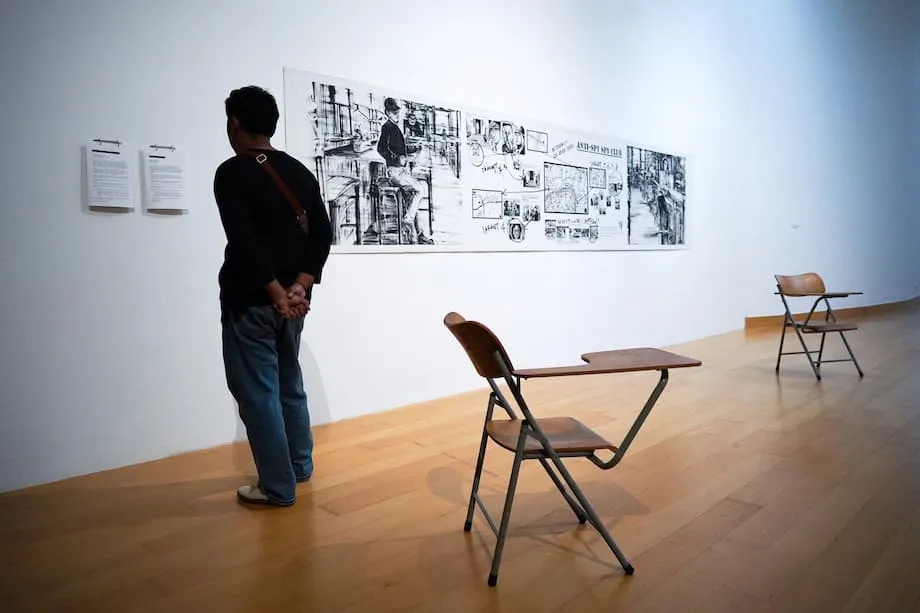
Art About Repression Becomes a Target
Chinese embassy pressure has forced Bangkok's Arts and Cultural Centre (BACC) to remove artworks, obscure artists' names and black out references to Hong Kong, Tibet and Uyghurs from an exhibition about how authoritarian governments support one another. The show opened on July 24, 2025. Chinese embassy staff arrived with Bangkok city officials three days later and demanded its closure.
Contents
- Art About Repression Becomes a Target
- How Pressure Reached the Gallery
- What the Exhibition Set Out to Show
- China Defends Thailand's Intervention
- The Artists Whose Work Was Changed
- Paldron and Sai Challenge the Censorship
- Why Thailand's Role Matters
- Pressure Beyond China's Borders
- Artistic Freedom and the Exhibition's Future
- Key Points
As of August 18, the exhibition, Constellation of Complicity: Visualising the Global Machinery of Authoritarian Solidarity, remained scheduled to run until October, but with substantial parts removed or altered. Video monitors that had displayed some of the targeted works showed black screens during visits by journalists. Some films by Uyghur artists continued playing with their creators' names obscured.
The Myanmar Peace Museum curated the exhibition, bringing together artists from China, Hong Kong, Tibet, Xinjiang, Iran, Russia and Syria, including people living in exile. Their work examined state violence, resistance and connections among authoritarian governments. The intervention turned that subject into an immediate problem for the people organising and exhibiting the work.
Co-curator Sai, a Myanmar artist and activist, said the exhibition sought to "map global authoritarian networks", including the ways China, Russia and Iran reinforce one another's repressive tactics. Sai called the censorship "tragically ironic": a show about governments working together to suppress dissent had itself come under pressure across national borders.
The consequences reached beyond the gallery walls. Sai left Thailand after Thai police reportedly sought to locate the curators. Several participating artists also left the country, fearing for their safety. The episode has fuelled debate about foreign influence over cultural institutions and the security of political exiles in Southeast Asia.
How Pressure Reached the Gallery
Chinese embassy officials visited BACC accompanied by Thai city authorities and sought the removal or alteration of material concerning China's treatment of ethnic minorities and political dissent. Tibet, Xinjiang, home to the Uyghur minority, and Hong Kong were central targets.
Emails and communications described in the account of gallery removals showed that the institution was warned the exhibition could cause diplomatic tensions between Thailand and China. Pressure passed through Thailand's Ministry of Foreign Affairs and the Bangkok Metropolitan Administration, the exhibition's main sponsor.
BACC initially tried to keep the show open by blacking out artists' names and the words "Hong Kong", "Tibet" and "Uyghur". Further demands led to the removal of entire installations, including all video works by Tibetan artist Tenzin Mingyur Paldron and material featuring Chinese President Xi Jinping.
Embassy officials subsequently returned to request more removals and remind the institution to comply with the "One China policy". That diplomatic principle recognises the People's Republic of China as the sole legitimate government of China. Beijing also invokes sovereignty claims concerning Taiwan, Tibet and Xinjiang. Thailand, like most countries, observes a One China policy in its official dealings with Beijing.
The sequence extended from the exhibition's opening into August:
- July 24, 2025: Constellation of Complicity opened at BACC in Bangkok.
- July 27: Chinese embassy staff and Bangkok city officials visited and demanded that the exhibition close.
- After the visit: Names and place references were obscured, followed by the removal of installations and further requests from embassy officials.
- August 18: The exhibition remained scheduled to continue until October 2025 in a heavily censored form.
What the Exhibition Set Out to Show
The Myanmar Peace Museum assembled multimedia installations, films and graphics to explore how authoritarian states maintain power and assist one another. The exhibition connected repression within individual countries with relationships that cross borders, including political support and shared methods of control.
For visitors, the subject was presented through specific images and personal perspectives. Works addressed state violence and resistance, while artists living in exile brought experiences of displacement and political pressure into the gallery. China, Russia and Iran featured in the curators' examination of governments reinforcing one another's practices.
Several pieces touched directly on issues Beijing treats as matters of sovereignty and political authority. They included postcards depicting Xi Jinping, flags representing Tibet and the Uyghur region, and graphics linking China and Israel through surveillance and repression of Muslim communities.
Paldron's multimedia installation included footage of Tibetans carrying Palestinian flags and calling for accountability for genocide. The work connected Tibetan concerns with struggles elsewhere, matching the exhibition's focus on relationships across borders.
Removing names and geographical references changed how visitors could understand those connections. An artist's identity and the place addressed by a film help explain why the work was made. With those details obscured, viewers were left with less of the context the exhibition had been designed to provide.
China Defends Thailand's Intervention
China's foreign ministry accused the organisers of "distorting its policies on Tibet, Xinjiang and Hong Kong" and promoting "fallacies" about independence movements and state repression. Its response presented the exhibition as political interference carried out through a cultural event.
In the foreign ministry's response, the ministry stated:
China opposes anyone using cultural and artistic exchange as a guise for political manipulation and interference in China's internal affairs.
The ministry neither confirmed nor denied direct involvement by the Chinese embassy. It praised Thailand for taking "timely measures" to prevent the exhibition from undermining China's "core interests and political dignity".
Beijing's position placed its claims of sovereignty at the centre of the dispute. The artists and curators focused instead on their freedom to discuss repression, identity and relationships between governments. The clash had concrete results: works disappeared from a Bangkok venue, names were covered and the exhibition continued with a narrower range of material.
The Artists Whose Work Was Changed
Tenzin Mingyur Paldron's removed works included a film titled Listen to Indigenous People. The installation explored the roots of a controversial viral video involving the Dalai Lama, alongside broader questions of indigenous rights and state violence. All of Paldron's video works were removed following the demands.
Uyghur artist Mukaddas Mijit's name was blacked out, and work addressing the repression of Uyghurs in Xinjiang was heavily edited. Hong Kong artists Clara Cheung and Gum Cheng Yee Man also had their names obscured or removed, references to Hong Kong redacted and their work altered.
The changes affected both the physical exhibition and its online presentation. The exhibition website came to identify the affected artists only by their countries of residence, removing the identities and geographical context that had helped explain their work.
Other targeted material included flags representing Tibet and the Uyghur region, postcards showing Xi and graphics about China, Israel, surveillance and Muslim communities. The censorship therefore covered several forms of expression: moving images, written information, portraits, symbols and the names of the people who made the art.
Many of the participating artists had already spent years in exile because of their activism or political views. For them, an overseas exhibition offered a place to show work that addressed subjects they could not freely discuss at home. Pressure on the Bangkok venue reached into that space as well.
Paldron and Sai Challenge the Censorship
Paldron condemned the removal of the installation, arguing that it restricted connections between Tibetans and people elsewhere. Describing the Chinese government's actions, the artist said:
By forcing the gallery to remove significant parts of my work, the Chinese government has once again demonstrated that it wishes to cut Tibetans off from the rest of the world and does not want its complicity in other colonialisms and genocides to be recognized.
Paldron also challenged the role cultural institutions should play when governments object to their exhibitions:
Museums should be for the people, not for dictators of any ideology.
Sai linked the intervention to Thailand's position as a refuge for political dissidents. The co-curator described it as a "chilling signal to all exiled artists and activists in the region".
Gallery staff and curators declined to comment publicly because they feared repercussions. Their reluctance, together with the departure of Sai and several artists, showed how the dispute affected the people behind the exhibition as well as the work on display.
Why Thailand's Role Matters
Thailand has long provided refuge for dissidents from neighbouring countries. A Bangkok exhibition could therefore bring together people whose political views or artistic work had made remaining at home difficult or dangerous. The intervention challenged that sense of relative openness.
The Bangkok Metropolitan Administration occupied a particularly important position. It was the exhibition's main sponsor, while city authorities also accompanied the Chinese embassy visit and helped transmit pressure to the institution. The gallery faced demands involving both a foreign government and the local administration supporting the show.
Thailand's response also sits within its wider relationship with Beijing. Governments in Southeast Asia balance trade, investment, cultural diplomacy and security cooperation with China against concerns about their own political independence and freedom of expression. At BACC, those competing interests reached an institution displaying work critical of the Chinese state.
Earlier in 2025, Thailand quietly deported 40 Uyghurs to China despite United Nations warnings that they faced a high risk of torture and ill-treatment. China has consistently rejected allegations of abuse in Xinjiang, describing them as politically motivated.
The deportations and the exhibition censorship affected different people in different circumstances, but both involved Thailand's response to issues Beijing considers sensitive. For exiled artists and activists, the gallery dispute added a cultural dimension to existing concerns about their safety and freedom to speak.
Pressure Beyond China's Borders
Rights groups and international observers have long accused China of harassing and suppressing critics overseas. The methods they describe include diplomatic pressure, economic pressure and transnational repression, meaning efforts by a government to intimidate or silence people outside its own territory.
Beijing denies those allegations and says it is defending its sovereignty and internal affairs. Its response to the Bangkok exhibition followed that position, portraying artistic discussion of Tibet, Xinjiang and Hong Kong as interference in Chinese affairs.
The BACC dispute came amid other reported attempts by China to stop critical material from reaching audiences abroad. Those included efforts to block screenings in New Zealand and the Philippines of documentaries about the South China Sea.
Bangkok's case shows how pressure can move through diplomatic and local administrative channels before reaching a gallery wall. Embassy objections were followed by warnings about relations between countries, then by redactions and removals inside a Thai cultural venue.
Cultural institutions that depend on government funding or sponsorship may face pressure to avoid controversial subjects. At BACC, that dependence was part of the immediate setting: the city administration sponsoring the exhibition was also involved in the demands surrounding it. Artists lost a place to show parts of their work, while visitors lost access to the full exhibition.
Artistic Freedom and the Exhibition's Future
Artists, activists and rights groups in Thailand and internationally condemned the censorship. Responses to the art centre censorship focused on the pressure facing artists in exile and the prospect that institutions elsewhere might avoid similar work.
The removal of artworks also drew attention to the responsibilities of museums and galleries when diplomatic officials object to an exhibition. The Human Rights Foundation and other advocacy organisations called for stronger protection of artistic freedom and resistance to outside pressure that undermines fundamental rights.
Some Thai commentators warned that the country's reputation as a haven for dissent was at risk. Others expressed concern about self-censorship: institutions or artists choosing not to present work because they anticipate political consequences, even before receiving a direct demand.
As of August 18, BACC had not commented publicly, and the eventual fate of the exhibition remained uncertain. Its announced schedule extended to October 2025, with major elements already removed or obscured. The curators and several artists had left Thailand because of fears for their safety.
The dispute leaves immediate responsibilities with the institutions and authorities involved. The gallery must manage an exhibition whose central material has been altered, while the artists face the loss of both visibility and context. Visitors encounter a show about authoritarian cooperation that has itself been reshaped by pressure involving officials from two countries.
Key Points
- Constellation of Complicity opened at Bangkok's Arts and Cultural Centre on July 24, 2025. Chinese embassy staff and Bangkok officials visited three days later and demanded its closure.
- The Myanmar Peace Museum exhibition examined authoritarian cooperation through work by artists from China, Hong Kong, Tibet, Xinjiang, Iran, Russia and Syria, including artists in exile.
- The gallery removed installations, obscured artists' names and blacked out references to Hong Kong, Tibet and Uyghurs following pressure involving Chinese and Thai authorities.
- Affected artists included Tenzin Mingyur Paldron, Mukaddas Mijit, Clara Cheung and Gum Cheng Yee Man.
- China's foreign ministry accused the organisers of political interference and praised Thailand's intervention, without confirming or denying the embassy's involvement.
- Sai and several artists left Thailand amid safety fears. Rights advocates called for protection of artistic expression.
- As of August 18, the censored exhibition remained scheduled to run until October 2025, and BACC had not commented publicly.