Eighty Years After Surrender, a Struggle Over the Lessons
Japan marked the 80th anniversary of its surrender in World War II with solemn remembrance and a growing argument over what the country should remember. At Tokyo's Budokan Hall, thousands of officials and bereaved relatives observed a moment of silence. Prime Minister Shigeru Ishiba expressed "remorse," while Emperor Naruhito urged the country to pass the tragedy of war to younger generations.
Contents
- Eighty Years After Surrender, a Struggle Over the Lessons
- How Pacifism Became Central to Postwar Japan
- A Rival Narrative Reaches Back to the 1950s
- A Generational Divide Enters Electoral Politics
- Remembrance Ceremonies Reveal a Delicate Balance
- Shrine Visits and Disputes Over Atrocities
- The Dates Behind the Debate
- China Connects War Memory With National Power
- Russia and the United States Shape the Regional Argument
- Military Ambitions Meet a Long Record of Peace
- What the Debate Means for East Asia
- Key Points
Outside those ceremonies, competing interpretations of Japan's past are shaping its politics and relations with its neighbors. One places the rejection of war at the center of Japan's identity. Another presents Japan more sympathetically as a country responding to Western imperialism and argues that restrictions on its military have outlived their purpose.
The political stakes are visible in the rise of Sanseitō. The ultranationalist party, which glorifies Japan's imperial past and advocates revoking Article 9 of the constitution, secured more than 12% of the national vote in the latest upper house elections, compared with 3.33% two years earlier. That is more than three times its earlier share.
For China, South Korea and other countries affected by Japan's wartime expansion, such developments touch memories of occupation and suffering. Within Japan, they expose a divide between people who see constitutional pacifism as protection against another disaster and those who want the country to take a more assertive role in regional security.
Japan's anniversary therefore concerns more than remembrance. It brings together questions about military power, political responsibility and the trust required for countries that once fought each other to live peacefully as neighbors.
How Pacifism Became Central to Postwar Japan
The Allied occupation, led by the United States, sought after Japan's defeat to dismantle militarism and prevent a return to the aggressive nationalism that had helped drive the war. The constitution that took effect in 1947 became the foundation of that effort.
Article 9 renounces war as a means of settling international disputes. In Japan's postwar political order, it has anchored restrictions that confine the military to defensive roles. For supporters, the provision is a practical barrier against leaders taking the country back into aggressive warfare.
Schools reinforced that commitment through peace education. Lessons stressed the horrors of war and the danger of unchecked nationalism. A common narrative presented ordinary Japanese people as victims who had been misled by military elites, while also encouraging reflection on atrocities committed by Japan.
Those crimes included the Nanjing Massacre and the suffering of the women known as "comfort women," who were subjected to sexual exploitation for the Japanese military. Public discussion of these subjects was often muted. Survivors and defenders of the postwar pacifist tradition spoke especially forcefully when they believed militarist ideas were returning.
Many older Japanese people, including those who experienced the war or its immediate aftermath, retain a deep attachment to this outlook. They see Article 9 as a safeguard against repeating the past. For decades, the same caution helped keep Japan from participating even in roles without combat in international peacekeeping missions.
A Rival Narrative Reaches Back to the 1950s
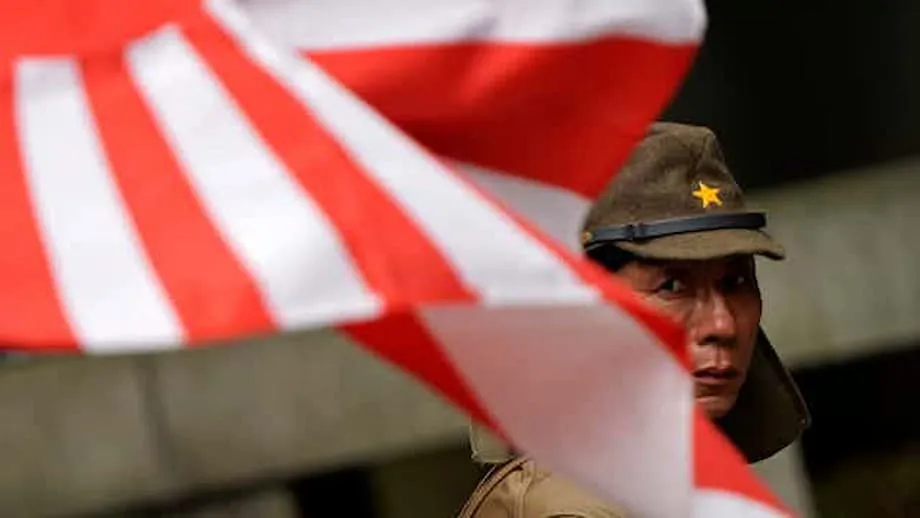
Revisionist interpretations have gained ground since the 1950s. Historical revisionism in this debate means reinterpreting Japan's wartime conduct in ways that soften responsibility for aggression or challenge the central lessons of postwar pacifism.
Supporters argue that Japan acted, at least partly, in response to Western imperialism. They place particular weight on Japanese suffering, especially the atomic bombings of Hiroshima and Nagasaki. Some describe the war as a misguided but morally justified effort to free Asia from Western domination, while downplaying or rationalizing Japanese aggression and atrocities.
General Ishiwara Kanji, a wartime leader, expressed this argument at the Tokyo War Crimes Tribunal. He portrayed Japan's aggression as something learned from other powers:
When Japan did open its doors and tried dealing with other countries, it learned that all those countries were a fearfully aggressive lot. And so for its own defence it took your own country as its teacher and set about learning how to be aggressive. You might say we became your disciples.
This interpretation connects directly to contemporary policy. By avoiding an unequivocal rejection of militarism, it creates room for demands to rebuild military capabilities and revise the constitution. Those who favor that approach often regard Article 9 as an outdated limit on Japan's ability to act in regional affairs.
A Generational Divide Enters Electoral Politics
Japan's wartime generation is shrinking, leaving fewer people able to describe the conflict from personal experience. Younger Japanese people have grown up further removed from its destruction and are increasingly exposed to revisionist arguments in political messaging and the media.
Sanseitō's electoral advance reflects that changing environment. Its rise from 3.33% to more than 12% of the national vote in the latest upper house elections points to a growing audience for an assertive national identity. The party has made gains particularly among younger voters.
Its position on Article 9 links historical interpretation to a specific political demand. Revoking the provision would remove a central symbol and constraint of Japan's postwar pacifist settlement. The wider revisionist movement similarly argues that Japan should restore its military capabilities and assume greater responsibility for regional security.
Older defenders of pacifism approach the same question through memories of wartime suffering and the belief that military power needs firm restraints. The disagreement therefore reaches beyond how a history lesson is written. It concerns what powers a future Japanese government should have and how it should use them.
Remembrance Ceremonies Reveal a Delicate Balance
Ishiba's anniversary remarks brought the word "remorse" back into a prime minister's address after an absence of more than a decade. He stopped short of directly apologizing for Japan's aggression across Asia.
His choice of language reflected the pressure on Japanese leaders to acknowledge wartime responsibility while responding to nationalist constituencies at home. For people seeking a fuller reckoning with Japan's imperial conduct, the absence of a direct apology remained consequential.
At Budokan Hall, Naruhito placed the passing of memory at the center of his message. The emperor expressed hope that the devastation experienced during the war would never return:
ravages of war will never be repeated.
Naruhito also stressed the need to transmit the tragic history to younger generations. As survivors die, that responsibility increasingly falls to schools, public institutions, political leaders and families rather than to people speaking from direct experience.
The ceremonies affirmed peace as an official national commitment. At the same time, arguments over apologies, education and military policy showed how differently that commitment can be understood.
Shrine Visits and Disputes Over Atrocities
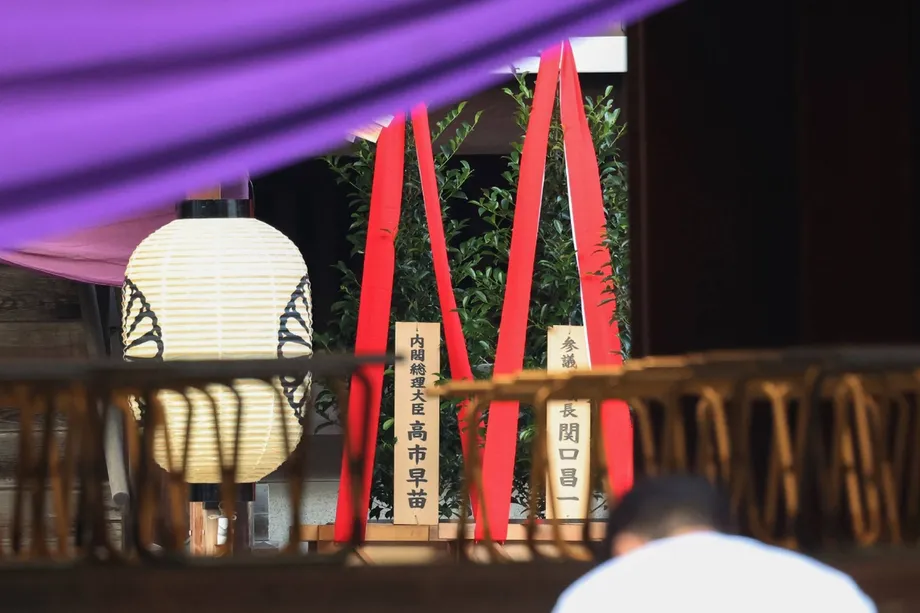
Yasukuni Shrine remains one of the most contentious places in Japan's public remembrance. It honors the country's war dead, including convicted war criminals. Visits by politicians on the right continue to provoke outrage in China and the Koreas.
Critics view those visits as a tacit endorsement of Japan's militarist past and evidence of insufficient remorse. The controversy connects a domestic act of commemoration with the memories of people whose countries suffered under Japanese expansion.
Disputes also extend to the historical record. Some lawmakers have denied Japan's responsibility for atrocities such as the Nanjing Massacre or the mass civilian deaths in Okinawa. Such statements fuel arguments about which events children should learn and how responsibility should be explained.
Editorial appeals in Japan have urged the country to work with Asian neighbors as equal partners and present a vision of a world without war grounded in honest reflection on its own history. That approach connects remembrance with a concrete diplomatic task: building relationships in which acknowledgment of past suffering supports cooperation today.
The Dates Behind the Debate
Japan's present argument has developed over decades. Its central milestones connect the end of the war, the creation of constitutional restraints and the growth of a competing interpretation of national history.
- 1945: Japan's defeat and surrender were followed by an Allied occupation led by the United States, with demilitarization among its central aims.
- 1947: The postwar constitution established Article 9 as the foundation of Japan's renunciation of war.
- Since the 1950s: Revisionist narratives have challenged the pacifist interpretation of Japan's wartime experience.
- The latest upper house elections: Sanseitō secured more than 12% of the national vote, compared with 3.33% two years earlier.
- August 2025: The 80th anniversary of surrender brought renewed debate over remorse, remembrance and Japan's military role.
Across those periods, Japan's memory of the war has never been uniform. Pacifism and revisionism have existed alongside one another, with changes in political influence determining which arguments receive the greatest attention.
China Connects War Memory With National Power
China's response is shaped by the devastating losses it suffered during Japan's wartime occupation. Beijing has repeatedly condemned attempts to whitewash that history and moves to revise Article 9.
Under President Xi Jinping, commemorations of the "War of Resistance Against Japanese Aggression" have become more prominent. The official narrative stresses national unity and the Communist Party's leadership in achieving victory. It presents resistance to foreign aggression as part of the story of China's rise.
That account serves contemporary political purposes. It strengthens patriotic feeling and supports the government's claim to lead a powerful country capable of defending itself. Anti-Japanese sentiment remains strong, and perceived attempts to minimize Japanese wartime conduct can trigger large protests.
Chinese officials argue that Japanese rearmament and constitutional revision threaten regional stability and violate the international order established after the war. South Korea and other countries in the region also view Japan's movement to the right with suspicion, fearing the return of militarism that once devastated East Asia.
Russia and the United States Shape the Regional Argument
Russia also uses World War II memory to serve current political goals. President Vladimir Putin's government promotes an official patriotic narrative centered on Soviet victory, including victory over militarist Japan.
Russian textbooks and commemorations increasingly portray Japan as a historical aggressor. Moscow and Beijing have pledged to defend the "correct historical memory" of the war, an alignment that has prompted concern about coordinated efforts to shape public understanding for strategic advantage.
The United States occupies a different position. Washington helped construct Japan's pacifist order after the war, but has gradually accepted a more assertive Tokyo as a counterbalance to China's rise.
American leaders have joined Japanese officials in commemorations that stress the alliance's role in promoting peace and democracy. Beijing criticizes that approach, accusing Washington of enabling Japanese revisionism and weakening regional reconciliation.
Historical memory therefore operates alongside present security interests. China and Russia highlight the defeat of Japanese militarism, while the United States places greater weight on its contemporary partnership with Japan. Each approach influences how governments explain their current alliances and concerns.
Military Ambitions Meet a Long Record of Peace
Japan's experience since 1945 includes its longest uninterrupted period of peace, the development of a vibrant democracy and its emergence as a global economic powerhouse. The pacifist constitution and strong public opposition to war remain checks on efforts to expand military power.
Even modest proposals to revise Article 9 encounter substantial political and public resistance. No date for a constitutional decision was given. The contest between advocates of change and defenders of the existing settlement remains part of Japan's domestic politics.
Critics argue that the country's reckoning with empire is still incomplete. Japan has issued numerous apologies and paid reparations, yet those critics say governments have too often handled wartime responsibility as a diplomatic problem rather than a matter requiring sustained national reflection.
Reluctance to acknowledge atrocities fully or teach younger generations about them has left wounds unhealed. Those disputes complicate Japan's effort to gain acceptance for what supporters describe as the role of a "normal" great power, with greater freedom to use its military and influence international security.
Another interpretation sees modern Japanese nationalism as largely defensive, driven by a feeling that the country is being unfairly maligned rather than by ambitions to recover lost territories or rebuild an empire. Even so, revisionist parties and weakening pacifist norms among younger generations are feeding concern about Japan's future direction.
What the Debate Means for East Asia
East Asia already faces tensions over Taiwan, North Korean missile tests and Russia's growing influence. Concern about a Japan less restrained by the lessons of its imperial past adds uncertainty to those existing pressures.
For Japanese citizens, the debate affects military policy, the teaching of history and the meaning of the constitution. For neighboring countries, it concerns whether a stronger Japanese security role will be accompanied by an acknowledgment of the suffering caused by its earlier expansion.
Japan faces the task of balancing a desire for greater international influence with the trust needed for reconciliation. Its neighbors also use historical memory to support political goals, making the past part of today's strategic competition.
The anniversary brought those tensions into view without resolving them. Peaceful postwar achievements, persistent historical grievances and demands for greater military freedom now sit together at the center of Japan's regional role.
Key Points
- Japan's 80th anniversary of surrender exposed competing views of wartime responsibility and postwar pacifism.
- Article 9 of the 1947 constitution remains central to resistance against a larger military role.
- Sanseitō won more than 12% of the national vote in the latest upper house elections, up from 3.33% two years earlier.
- Ishiba expressed remorse but stopped short of directly apologizing for Japan's aggression across Asia.
- Yasukuni Shrine visits and disputes over atrocities continue to strain relations with neighboring countries.
- China, Russia and the United States connect wartime remembrance with their current strategic priorities.
- Japan's long record of peace coexists with unresolved arguments over historical responsibility and military power.