Singapore's travel caution stands out in a regional survey
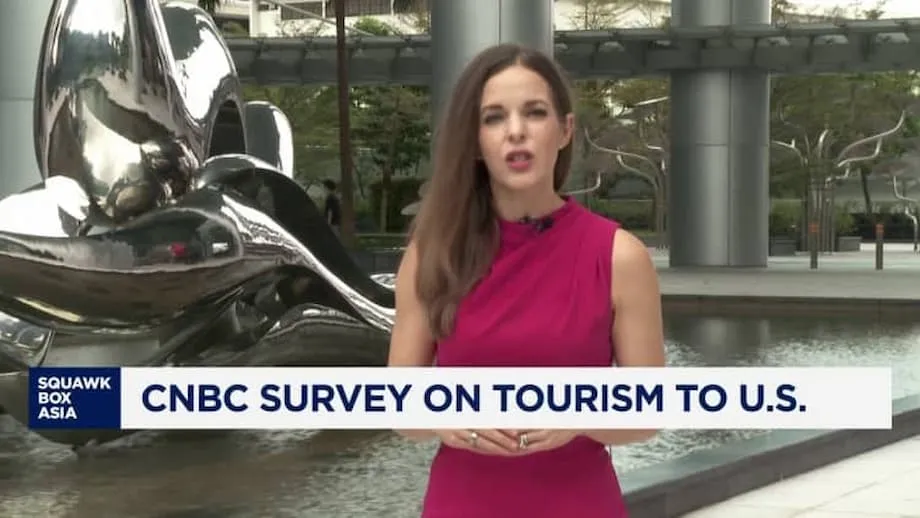
Only 7% of Singaporeans said they had become more interested in visiting the United States in 2025, while 55% said their interest had declined, according to a Milieu Insight survey of 6,000 travelers across Southeast Asia conducted between May and June. Concerns about personal safety, discrimination, American politics and immigration checks weighed on their willingness to go.
Contents
- Singapore's travel caution stands out in a regional survey
- What is making Singaporeans hesitate?
- Gun violence and racial attacks shape perceptions
- A strong passport does not remove border anxiety
- How American politics enters the travel decision
- Singapore's wider culture of travel caution
- Conflict and geopolitical tensions affect other journeys
- Health standards and emergency planning matter too
- What the shift could mean for travel and exchanges
- Key Points
The regional picture was very different. Across Southeast Asia, 44% of respondents reported increased interest in U.S. travel, while 18% reported a decline. Singapore's share reporting less interest was therefore more than three times the regional figure, at 55% against 18%.
Singaporeans were the most cautious group among respondents from Singapore, Indonesia, Vietnam, Thailand, the Philippines and Malaysia. The survey, conducted by Milieu Insight for CNBC Travel, showed a sharp divide between Singapore and its neighbors, even though travelers across these countries share access to international travel and, in many cases, comparable financial means.
Singapore's exceptionally low crime rates, strict gun controls and strong rule of law help explain the contrast. Residents accustomed to a high level of everyday security may place greater weight on reports of shootings, racial attacks and political unrest when choosing a holiday destination.
For these travelers, the decision involves more than the attractions they might visit. It also includes whether they expect to feel safe on the street, receive fair treatment and pass through the border without an upsetting encounter. Those concerns run through the survey findings and the wider discussion about travel to the United States.
What is making Singaporeans hesitate?
Singaporean respondents identified several connected reasons for avoiding U.S. travel. Their concerns ranged from violence in American cities to uncertainty about the country's political direction and the treatment they might receive on arrival.
- Personal safety, including crime, gun violence and security in cities.
- Discrimination, hate crimes and the possibility of being targeted because of their race.
- The political climate, including policies and rhetoric associated with President Donald Trump's administration.
- Border detentions, immigration scrutiny and uncertainty about entry procedures.
News about attacks on Asians and mass shootings has made these risks feel immediate to some prospective visitors. Stories shared through social media and travel forums also describe difficult encounters at immigration checkpoints and negative experiences in American cities.
A Singaporean traveler described how concern about violence and racial treatment had changed the appeal of visiting the country:
I used to love visiting the U.S., but now I worry about random violence and whether I'll be treated differently because I'm Asian. It's just not worth the stress.
The comment brings together two concerns that travelers may consider at the same time: the possibility of being caught in random violence and the fear of being singled out. For someone planning a discretionary trip, the stress associated with either can influence the destination they choose.
Gun violence and racial attacks shape perceptions
The United States has far higher rates of gun related deaths than other countries with high incomes. Mass shootings and firearm homicides regularly attract international attention, creating a stark contrast with Singapore, where private gun ownership is virtually nonexistent and gun violence is almost entirely absent.
Singapore is consistently ranked among the world's safest countries, with extremely low levels of violent crime. Travelers leaving that environment may experience the presence of firearms and the possibility of gun violence as a substantial change in their surroundings.
Reported hate crimes against Asians in the United States have also increased since the COVID-19 pandemic. For Singaporeans concerned about racial targeting abroad, accounts of these incidents add another layer of anxiety to the question of personal safety.
Singapore's population lives in a society that is both ethnically diverse and generally harmonious. Stories of people being attacked or mistreated because they are Asian can therefore weigh heavily when residents assess whether they would feel comfortable visiting another country.
Earlier findings cited in the article indicated that nearly 80% of Southeast Asian travelers felt the United States was losing its appeal as a destination, with discrimination and gun violence among their leading concerns. That finding concerns the country's perceived appeal, while the May and June survey asked about changes in respondents' interest in visiting.
The two measures capture different parts of a travel decision. Someone may see a destination as less welcoming or less attractive than before while still wanting to visit it. Singapore's results show a particularly strong movement away from interest in making the trip.
A strong passport does not remove border anxiety
Only 60% of Singaporeans felt confident that they would pass smoothly through U.S. immigration, compared with 78% of other Southeast Asians. The gap was 18 percentage points, showing that concern about arrival procedures extended beyond the question of whether a traveler could arrange a trip.
Singaporeans hold the world's most powerful passport, with access without a visa or with a visa on arrival to more countries than any other nationality. That broad freedom to travel creates an expectation that international journeys should be relatively straightforward.
Stories of lengthy questioning, additional screening and detention at U.S. ports of entry have weakened that confidence. These experiences can affect travelers of different nationalities, but the possibility of an unpredictable or unpleasant encounter is part of Singaporeans' assessment of whether to go.
Singapore's Ministry of Foreign Affairs advises travelers to the United States to keep informed about entry requirements, prepare for additional screening and carry emergency contact details. Its guidance also covers protecting belongings, understanding local laws and preparing for emergencies, including natural disasters and civil unrest.
How American politics enters the travel decision
Donald Trump's return to office has coincided with a decline in interest in U.S. travel among some Southeast Asians, particularly Singaporeans. Respondents cited the administration's actions and rhetoric as reasons for feeling uncertain or uneasy about a visit.
One in four Southeast Asian travelers said their interest in visiting the United States had declined specifically during the preceding six months. That period aligned with the months since Trump took office, placing immigration policy, border security and international relations within the immediate context of their answers.
Travelers considering a holiday may experience political uncertainty through practical concerns: how entry rules are applied, what questions they might face at the border and whether the public atmosphere will feel welcoming. In the survey, politics appeared alongside safety and discrimination rather than as an isolated concern.
A YouGov report published in March 2025 also indicated that global impressions of the United States as a travel destination had deteriorated since the beginning of the year. Canadian travelers were avoiding the country in large numbers amid similar concerns.
The developments described in the article span several months:
- March 2025: YouGov published findings indicating a decline in global impressions of the United States as a travel destination since the start of the year.
- May to June 2025: Milieu Insight surveyed 6,000 travelers across six Southeast Asian countries about U.S. travel.
- August 7, 2025: Singaporeans' concerns about safety, discrimination, politics and immigration formed the picture described here.
Singapore's wider culture of travel caution
Singapore's approach to overseas safety extends beyond the United States. The government regularly issues travel advisories for places experiencing conflict, instability or heightened security risks, and residents are accustomed to considering those warnings when making plans.
Recent examples included advice against nonessential travel to Jammu and Kashmir in India, Pakistan and several other parts of South Asia amid rising tensions and violence. Such guidance asks travelers to consider conditions at their destination before deciding whether a journey is necessary.
The Ministry of Foreign Affairs commonly urges Singaporeans in affected areas to avoid large gatherings, monitor local news and follow instructions from local authorities. It also encourages registration with the ministry so officials can communicate with citizens during an emergency.
Travel agencies in Singapore respond to heightened risks by suspending tours and offering refunds or alternative itineraries. For customers, a security warning can therefore lead directly to a canceled departure, a different destination or a revised route.
The United States, United Kingdom, Canada, Australia and Israel also issue travel advisories for their citizens. Singapore's small size, organized government and strong focus on public safety make official warnings and assessments a familiar part of how residents think about overseas travel.
Conflict and geopolitical tensions affect other journeys
Security concerns have also disrupted travel in South Asia and the Middle East. Military tensions and terrorism threats have prompted governments to revise advisories and airlines to suspend services or change routes.
Singapore Airlines has rerouted flights to avoid conflict zones, while the Ministry of Foreign Affairs has advised against travel to regions affected by military tensions or terrorism risks. These changes show how safety conditions can alter a journey before a passenger reaches the destination.
China has also advised leading artificial intelligence researchers and entrepreneurs to avoid U.S. travel because of concerns that they could be detained or pressured to disclose sensitive information. For people working with valuable technology, geopolitical tensions add concerns connected to their professional roles.
Singaporean tourists' worries sit within this wider environment of security conscious travel decisions. The reasons vary, from armed conflict along a flight route to anxiety about border questioning, but each can influence whether a journey feels worthwhile.
Social media and immediate news coverage make accounts of these risks circulate quickly. Travelers can encounter reports of an incident, descriptions of immigration questioning and government warnings while they are still comparing destinations or deciding whether to book.
Health standards and emergency planning matter too
Singaporeans also travel with expectations shaped by their country's health and safety standards. The Centers for Disease Control and Prevention highlights Singapore's robust public health infrastructure, low rates of infectious disease and strong food and water safety standards.
Residents accustomed to those protections may be sensitive to perceived risks abroad, whether they concern illness, crime or environmental hazards. Travel planning can involve several kinds of safety at once, rather than a single judgment about whether a country is dangerous.
Official advice for Singaporeans visiting the United States includes keeping vaccinations current, securing belongings and preparing for natural disasters or civil unrest. Emergency contacts and familiarity with local rules are part of that preparation.
The Ministry of Foreign Affairs also warns about scams aimed at travelers. It advises people to verify distress messages received from abroad, so that a claim that someone needs urgent help does not automatically lead to money being sent or personal information being shared.
These practical measures reflect the same preference for preparation visible in Singaporeans' broader travel habits. A decision to visit the United States may still involve careful planning around health, belongings, entry procedures and emergency assistance.
What the shift could mean for travel and exchanges
The United States has long attracted Singaporean tourists, students and professionals. A sustained decline in interest could affect more than holiday bookings, reaching business travel, educational choices and the personal connections built through visits.
American cities and institutions could receive fewer visitors from Singapore if the trend continues, with possible effects on local spending and cultural exchanges. The survey records changes in interest; it gives no figure for how many Singaporeans ultimately canceled, booked or completed U.S. trips.
Travel businesses face a concrete challenge in understanding what potential customers are weighing. Attractions and convenience compete with concern about safety, fair treatment and the experience of entering the country.
Efforts to improve safety and make visitors feel welcome, simplify immigration procedures and address negative perceptions could help rebuild confidence. For Singaporeans expressing hesitation, the quality of the journey includes both what happens at the destination and how they are treated along the way.
Singapore's contrast with the regional figures is central to the story. Across Southeast Asia, more respondents reported growing interest in the United States than declining interest, at 44% against 18%. In Singapore, the balance ran in the opposite direction, with 7% more interested and 55% less interested.
Safety, security and political stability have become important considerations in those decisions. Destinations that give travelers confidence on those points may have an advantage among people accustomed to the protections and predictability of life in Singapore.
Key Points
- Milieu Insight surveyed 6,000 Southeast Asian travelers between May and June 2025.
- In Singapore, 55% reported declining interest in U.S. travel and 7% reported increased interest, compared with regional figures of 18% and 44% respectively.
- Leading concerns included gun violence, racial discrimination, the Trump administration's political climate and uncertainty at immigration checkpoints.
- Confidence in smooth U.S. immigration processing stood at 60% among Singaporeans, compared with 78% among other Southeast Asians.
- Singapore's low crime rates, health standards and established approach to travel advisories help explain residents' expectations abroad.
- A prolonged decline in interest could affect tourism, business visits, education and exchanges between Singapore and the United States.