A Halt to Fighting, but No Easy Return Home
About 20,000 residents of Thailand's Ubon Ratchathani province remain unable to return home after five days of fighting along the disputed border with Cambodia. Some have lost their houses to artillery and rocket fire. Others are waiting in temporary shelters, uncertain whether a ceasefire agreed on July 28, 2025, will last.
Contents
- A Halt to Fighting, but No Easy Return Home
- How the Confrontation Escalated
- A Disputed Border and a Temple at Its Center
- Political Pressure Behind the Military Crisis
- How Malaysia Helped Secure the Ceasefire
- Accusations Keep the Truce Under Strain
- Displaced Families Face Loss and Fear
- Why the United States and China Are Involved
- Military Talks Turn Toward Lasting Peace
- Key Points
At least 43 people have been killed, most of them civilians, and more than 300,000 people have been displaced across the two countries. The fighting, the deadliest between Thailand and Cambodia in more than a decade, has left border communities facing damaged homes, interrupted lives and the fear of another evacuation.
By August 7, the ceasefire brokered in Malaysia had largely stopped the worst violence. Military commanders had met to reaffirm their commitments, and diplomatic efforts were continuing. Yet accusations of violations, reports of reinforcements and troops positioned sometimes just 50 meters apart have kept residents on alert.
For families living near the border, peace means more than an agreement between governments. It means being able to sleep at home, repair damaged buildings and resume ordinary routines without listening for the next explosion. Those conditions remain uncertain even as leaders promise to rebuild trust.
How the Confrontation Escalated
A border skirmish in late May 2025, in which a Cambodian soldier was killed, began the latest escalation. A landmine explosion in July then killed five Thai soldiers. Thailand downgraded diplomatic relations and recalled its ambassador as relations deteriorated.
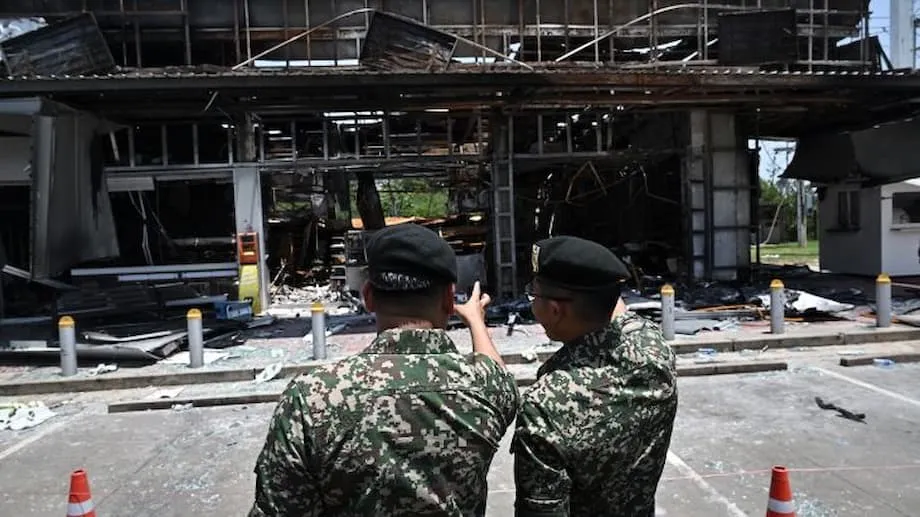
Both countries accused the other of aggression. Artillery, rockets and airstrikes followed, and by July 24, full fighting had erupted. The confrontation spread danger beyond military positions, forcing civilians on both sides to leave their homes.
The main events unfolded over several weeks:
- Late May 2025: A Cambodian soldier was killed in a border skirmish.
- July 2025: A landmine explosion killed five Thai soldiers, after which Thailand downgraded diplomatic relations and recalled its ambassador.
- July 24: Full fighting had erupted, bringing artillery, rocket and air attacks.
- July 28: Thai and Cambodian leaders agreed in Malaysia to an immediate and unconditional ceasefire.
- After the agreement: Military commanders and defense ministers held talks on enforcing the truce and preventing renewed clashes.
The five days of intense fighting left dozens dead and displaced more than 300,000 people. The ceasefire stopped much of that immediate violence, while leaving the territorial dispute and the military presence along the border unresolved.
A Disputed Border and a Temple at Its Center
The Thailand-Cambodia border stretches for more than 800 kilometers and passes ancient temples and villages. Much of it was drawn by French colonial authorities in the early 20th century. Treaties from that period and areas that were never clearly marked on the ground have left the two countries with competing territorial claims.
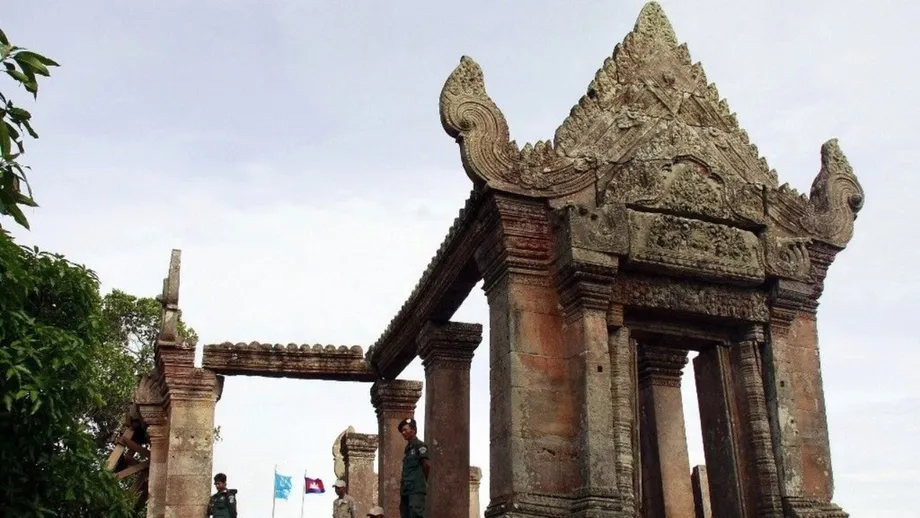
Preah Vihear Temple is among the most contentious places. The Hindu monument, built in the 11th century, stands atop a cliff and carries deep historical and national importance. The International Court of Justice ruled in 1962 that the temple belongs to Cambodia and reaffirmed that decision in 2013.
Thailand has never fully accepted the decision, and nationalist feeling in both countries has helped keep the dispute alive. The temple is therefore both a place of cultural importance and a focus for arguments about sovereignty, meaning a country's authority over its territory.
Clashes have broken out periodically, most notably in 2011. The 2025 conflict is the deadliest in more than a decade. Valuable natural resources and strategic military positions along the border further complicate efforts to settle competing claims.
Marking a boundary requires agreement about exactly where one country's territory ends and the other's begins. Along this border, that practical task is entangled with historical grievances and political pressure, making compromise difficult for both governments.
Political Pressure Behind the Military Crisis
Thailand's domestic political turmoil added another layer to the confrontation. A leaked phone call between Prime Minister Paetongtarn Shinawatra and Cambodia's former leader Hun Sen caused an uproar after she appeared to criticize her own military's actions.
The controversy led to Paetongtarn's suspension and intensified nationalist anger. The dispute over the border became bound up with arguments inside Thailand about leadership, the military and the protection of national territory.
Cambodia has also used the border dispute to rally public support and assert sovereignty, particularly around Preah Vihear Temple. Both governments face political pressure over how they defend territorial claims, which makes concessions harder to explain at home.
Residents near the fighting bear the immediate consequences of those pressures. Decisions made in national capitals affect whether families can return to their villages, while political anger makes the negotiations needed for their return more difficult.
How Malaysia Helped Secure the Ceasefire
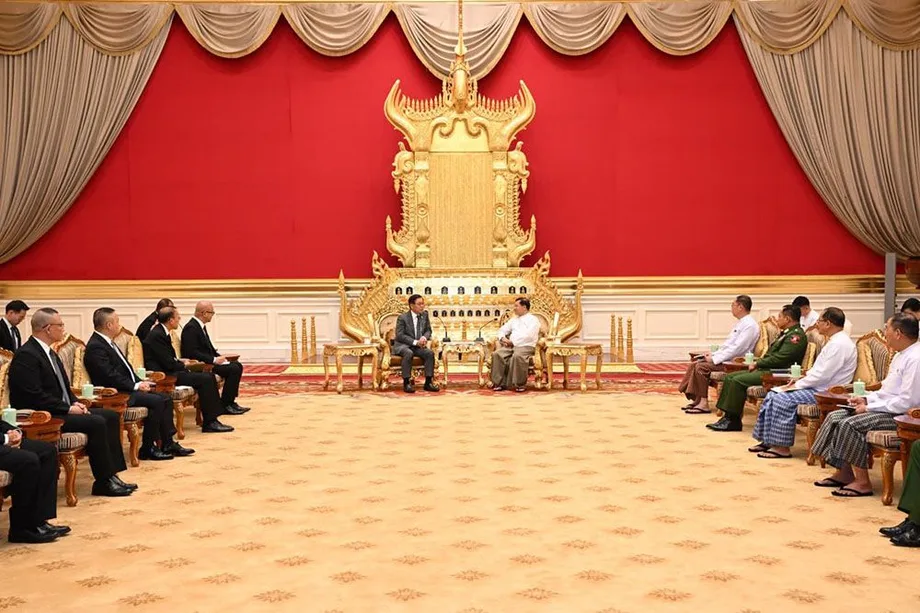
Malaysia, serving as chair of the Association of Southeast Asian Nations, or ASEAN, hosted emergency talks in Kuala Lumpur as violence and civilian casualties mounted. The United States and China also participated in efforts to bring the fighting to a halt.
U.S. President Donald Trump applied direct economic pressure, threatening to stop trade negotiations with both countries unless they accepted a truce. Chinese officials urged restraint and offered support for peacekeeping efforts. Days of shuttle diplomacy culminated in the July 28 agreement.
Malaysian Prime Minister Anwar Ibrahim announced the immediate and unconditional ceasefire and described its purpose:
vital first step towards de-escalation and the restoration of peace and security.
The agreement called for an end to hostilities, restrictions on military movements and direct contact between commanders. Those measures address several immediate risks: troops advancing toward one another, heavier weapons arriving near disputed positions and misunderstandings turning into renewed fighting.
The ceasefire commitments included:
- An immediate halt to all hostilities along the border.
- No reinforcement or movement of troops and heavy weapons in disputed areas.
- Direct communication between military commanders to prevent misunderstandings.
- International monitoring by ASEAN defense attaches, led by Malaysia.
- Plans to establish a Cambodian-Thai General Boundary Committee to address longer term border issues.
A ceasefire is an agreement to stop fighting. Settling who controls disputed land requires further negotiations. The July agreement therefore provided an immediate way to reduce violence while leaving the countries with more difficult territorial questions to resolve.
Accusations Keep the Truce Under Strain
Thailand reported overnight attacks by Cambodian troops in Sisaket province after the ceasefire, describing them as "flagrant violations" of the agreement. Cambodia denied the allegations and said its forces were holding their positions.
Thai government spokesperson Jirayu Huangsab described the continuing risk despite the reduction in violence:
The situation is still fragile. We are maintaining control, but the risk of renewed clashes remains.
Military commanders from both countries met along the border to reaffirm the ceasefire and agree on steps to reduce tension. These included a ban on firing at civilians and a halt to troop reinforcements. International observers from Malaysia, China and the United States are monitoring the situation.
District officials nevertheless confirm that both sides are still reinforcing positions in some areas. Troops sometimes stand only 50 meters apart, leaving little physical distance between forces that have recently fought each other. Mutual distrust continues despite the meetings and promises.
Direct communication between commanders is especially relevant in those conditions. A channel for checking what the other side is doing gives officers a way to address incidents before they trigger another exchange of fire. Whether the ceasefire can last depends in part on the commitments being followed at those closely spaced positions.
Displaced Families Face Loss and Fear
Ubon Ratchathani's approximately 20,000 residents still unable to go home are part of a much larger displacement across both countries. Cambodian provinces bordering Thailand have also experienced mass evacuations and widespread destruction.
Temporary shelters provide somewhere to stay, but many evacuees remain traumatized by the violence and anxious about what comes next. The presence of troops and the possibility of renewed fighting continue to obstruct a return to normal life, even where the heaviest attacks have stopped.
Phian Somsri, a Thai villager, fled as bombs fell and lost a close friend to a rocket strike. She described the ordinary life she wants to recover and the fear that prevents her from feeling secure:
I just want to go home and live a normal life again. We are tired of running and afraid of what might happen if the fighting starts again.
Netagit, a janitor, lost his house entirely and faces an uncertain future. His experience shows the practical burden awaiting some families after the immediate danger eases: returning to a village may still leave them without a home.
Thai officials are assessing damage to civilian houses and considering compensation. That process is slow and complicated by continued distrust between the two militaries. No date has been given for when all displaced residents can safely return.
Wasawat Puangpornsri, a Thai parliament member from Ubon Ratchathani, described the mood among people waiting for the ceasefire to become dependable:
The situation remains unstable. People want peace, but they are afraid to believe it will last.
Why the United States and China Are Involved
The United States has longstanding military ties with Thailand and sees Southeast Asia as a bulwark against Chinese influence. China is Cambodia's largest trading partner and has invested heavily in its infrastructure and military.
Both powers have strategic interests in the region, which helps explain why a border confrontation between two neighbors drew their attention. Their calls for restraint and participation in mediation also take place within a broader competition for influence in Southeast Asia.
Trump's threat to suspend trade negotiations connected the ceasefire effort directly to the economic interests of both countries. China's support for restraint and peacekeeping provided another channel of diplomatic pressure and assistance.
ASEAN's role placed a regional organization at the center of the response, with Malaysia hosting negotiations and leading the proposed monitoring by defense attaches. The involvement of ASEAN, Washington and Beijing shows how the conflict has become a test of regional diplomacy and stability.
The immediate shared aim is to keep a local border war from expanding into a broader crisis. For displaced civilians, the value of that international attention depends on whether it helps preserve the halt to fighting and makes a return home possible.
Military Talks Turn Toward Lasting Peace
Thai and Cambodian defense ministers met in Kuala Lumpur after the ceasefire to finalize guidelines for a permanent end to hostilities. The General Border Committee, with observers from Malaysia, China and the United States, agreed on measures to enforce the truce strictly, prevent troop movements and protect civilians.
Both sides pledged to restore trust and work toward a lasting resolution of their border disputes. Cambodian Prime Minister Hun Manet thanked the international mediators and set out the next task:
It is time to start rebuilding trust and confidence going forward between Cambodia and Thailand.
Thailand's acting Prime Minister Phumtham Wechayachai also called for a peaceful resolution that protects national sovereignty and the lives of citizens. Those goals link the diplomatic negotiations to the immediate needs of people living beside the disputed boundary.
The first priority remains maintaining the ceasefire and preventing another escalation. International monitoring and the General Border Committee provide ways to pursue that goal, while the territorial claims, nationalist pressures and historical grievances remain unresolved.
A lasting settlement will require continued dialogue and mutual trust, with possible new approaches to marking the border and sharing resources. The meetings have created channels for that work, but military proximity and reports of reinforcement continue to make daily conditions uncertain.
Residents on both sides are waiting for those commitments to change life on the ground. Their hope is concrete: to return home, recover from loss and live without another flight to safety. The ceasefire has brought relief, while the work of making that relief durable continues.
Key Points
- Thailand and Cambodia agreed to an immediate and unconditional ceasefire on July 28, 2025, after five days of intense fighting.
- At least 43 people have been killed, most of them civilians, and more than 300,000 people have been displaced.
- About 20,000 residents of Thailand's Ubon Ratchathani province remain unable to return home.
- Malaysia hosted the talks, with the United States and China participating in diplomatic efforts.
- Thailand has alleged ceasefire violations in Sisaket province; Cambodia denies the accusations.
- Military talks have produced commitments to protect civilians, stop reinforcements and maintain direct communication, but district officials report continued reinforcement in some areas.
- Troops sometimes remain only 50 meters apart, while unresolved territorial claims and domestic political pressures complicate negotiations.
- Defense ministers and the General Border Committee are pursuing measures to enforce the truce and work toward a lasting settlement.