A million pulses a second brings Dalian closer to a new research laser
Chinese researchers in Dalian, Liaoning province, have achieved stable electron beam operation at a repetition rate of one megahertz, or one million cycles per second, in a major development for the Dalian Advanced Light Source (DALS). Announced as a world first, the achievement addresses a central technical challenge in building the next generation of extreme ultraviolet free-electron lasers.
Contents
- A million pulses a second brings Dalian closer to a new research laser
- How electrons become a scientific light source
- What Dalian's earlier laser already provides
- The equipment behind the repetition rate
- Following chemical reactions and biological molecules
- Where DALS fits among international facilities
- Why semiconductor and energy researchers are interested
- China's targets and the people needed to reach them
- What the next stage requires
- Key Points
As of August 4, 2025, the milestone marks progress toward a facility intended to produce exceptionally bright, coherent light for research in physics, chemistry, biology and materials science. Coherent light has waves that move in step, a property that helps scientists make precise measurements of very small objects and rapid changes.
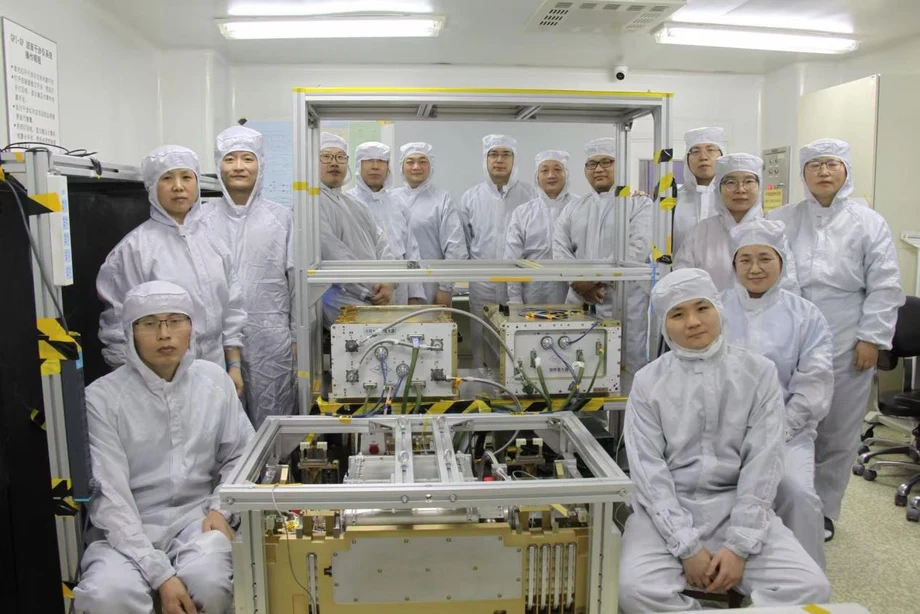
Academician Yang Xueming and researcher Zhang Weiqing, both from the Dalian Institute of Chemical Physics (DICP) of the Chinese Academy of Sciences, lead the project. Their team has been working with the Institute of Advanced Light Source Facilities in Shenzhen to develop the equipment needed to generate, accelerate and control the electron beams.
DALS is being developed as an extreme ultraviolet (EUV) free-electron laser (FEL) facility. Its intended combination of continuous operation and rapid repetition would give researchers a powerful tool for examining how electrons move, how molecules change and how materials respond under different conditions.
The immediate achievement concerns the electron beam that will drive the laser. Construction, integration and stable operation of the complete facility remain the next tasks, with no completion date given.
How electrons become a scientific light source
Free-electron lasers use electrons accelerated to speeds close to the speed of light. The electrons travel through magnetic structures called undulators, where their motion produces light. Unlike conventional lasers, which depend on particular materials to generate their beams, FELs use the moving electron stream.
That approach allows the light to be tuned across a broad range of wavelengths, from infrared to X-rays. Wavelength describes the distance between successive peaks of a light wave. Changing it allows scientists to choose light suited to the substance or process they want to investigate.
FELs are often called the fourth generation of advanced light sources. Their combination of very high brightness, short pulses and adjustable wavelengths makes them useful for investigating structures at the scale of atoms and following processes that happen too quickly for ordinary instruments to capture.
DALS focuses on the EUV region. The project is described as China's first FEL user facility and the only facility worldwide operating exclusively in that region. A user facility provides scientific equipment for researchers conducting experiments, making access and the organisation of research time part of its eventual operation.
What Dalian's earlier laser already provides
The Dalian Coherent Light Source (DCLS), a precursor to DALS, already delivers optical beams with wavelengths of 50 to 150 nanometres. Its pulses can be as short as 100 femtoseconds. A femtosecond is one quadrillionth of a second, so even a pulse lasting 100 of them occupies an extraordinarily brief interval.
Those short flashes allow researchers to follow electronic dynamics, molecular evolution and material phase transitions. In simpler terms, they can investigate how electrons move, how molecules change and how a material shifts from one physical state to another.
DCLS provides an existing base of experience for the new project. DALS is intended to extend the possibilities of research with EUV light through high repetition rates and continuous operation, while retaining the precision that makes FELs valuable scientific instruments.
The equipment behind the repetition rate
The DALS collaboration began in 2020. Since then, DICP and its partner in Shenzhen have developed several connected technologies needed for a working FEL. Producing a suitable electron beam requires each part of that chain to perform reliably.
- A photocathode electron gun generates electron beams of the required quality.
- Ultrafast laser systems provide precise timing and control.
- Solid state radio frequency power sources support stable acceleration.
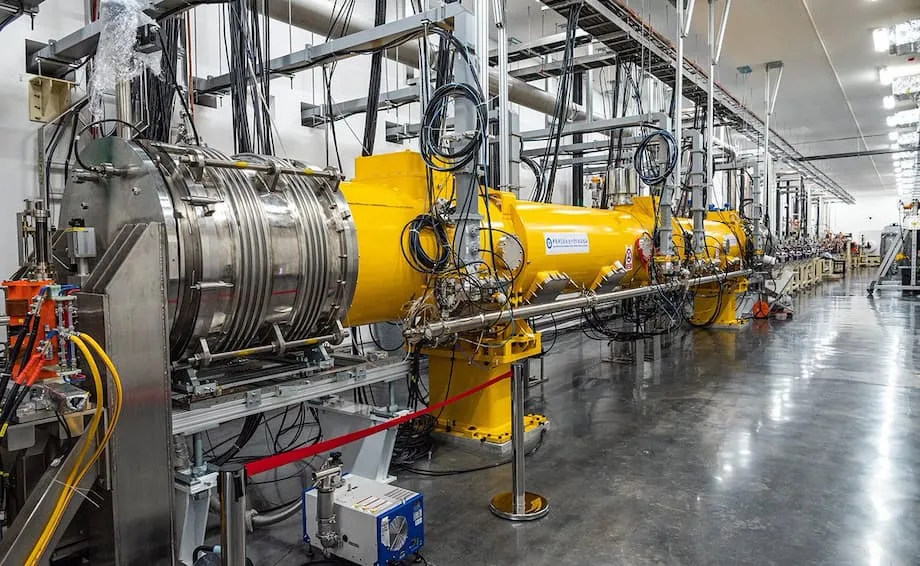
- Superconducting accelerator modules enable continuous wave operation.
- Cryogenic helium refrigeration systems maintain the cold conditions needed for superconductivity.
The repetition rate measures how frequently electron pulses are produced. At one megahertz, the equipment must repeatedly generate and handle a million pulses each second while keeping the beam stable and maintaining its quality. Reaching a high count alone is insufficient for a useful research instrument; the pulses also need to remain suitable for producing precisely controlled light.
Superconducting accelerator modules and helium refrigeration are closely connected parts of that task. Superconductivity allows the accelerator system to operate with very low electrical resistance, while the refrigeration equipment maintains the conditions it needs. The power sources, laser timing and electron gun must work alongside them.
The research team described the successful electron beam operation as a foundation for the next stage of DALS construction. The team said the achievement:
lays a strong foundation for the project's future construction
The result demonstrates progress across the core technologies needed for the project, including the challenge of combining beam quality with rapid repetition. It also advances China's wider effort to develop more capable FEL facilities.
Following chemical reactions and biological molecules
Scientists use FELs to investigate both structure and motion. A structural measurement asks how the parts of a molecule or material are arranged. A measurement of dynamics asks how that arrangement changes, including during a chemical reaction or a rapid response to light.
Bright, coherent and tunable beams in the EUV and X-ray regions allow researchers to probe molecules and materials at atomic resolution. Very short pulses provide a way to examine ultrafast chemical reactions and biological processes as they unfold. Advanced imaging for medicine and materials science is another intended area of use.
DCLS has already supported molecular photochemistry, aerosol mass spectrometry and biological mass spectrometry. Molecular photochemistry examines changes driven by light. Mass spectrometry helps identify and investigate substances by measuring charged particles produced from them.
Introducing EUV laser beams into mass spectrometry with high resolution allows researchers to break apart complex biological molecules efficiently and obtain detailed structural information. The resulting measurements can support proteomics, the study of proteins, and work toward drug discovery.
DALS is intended to broaden that scientific capacity. Its rapid repetition would provide frequent light pulses for experiments, while its focus on EUV light makes it particularly relevant to processes involving valence electrons, the electrons involved in chemical bonding.
Where DALS fits among international facilities
Advanced light sources elsewhere already support major research programmes in structural biology, materials science and chemistry. The Swiss Light Source and SwissFEL in Switzerland are examples, enabling detailed studies of large biological molecules and the processing of many measurements.
Most FEL facilities worldwide operate in the X-ray or soft X-ray regions. DALS occupies a different position through its focus on coherent EUV light, combined with a design for continuous wave operation at high repetition rates.
That specialisation is intended to complement existing synchrotron and FEL facilities. Researchers need different wavelengths and operating conditions for different experiments. DALS would provide another set of capabilities, particularly for examining valence electrons and following rapid molecular processes with precise measurements of time and position.
The comparison also explains why the electron beam milestone matters beyond its numerical record. A research facility needs a dependable way to deliver the kind of light its experiments require. Stable operation at one million cycles per second is a step toward making the planned EUV capability usable.
Why semiconductor and energy researchers are interested
EUV lithography is among the industrial applications connected to FEL development. Lithography uses light to form the fine patterns needed in semiconductor manufacturing. As chipmakers seek smaller components, EUV light has become essential to producing smaller, faster and more energy efficient integrated circuits.
FEL technology forms part of China's effort to develop EUV light sources for that work. Mastering the equipment behind these lasers is intended to strengthen the country's position in the semiconductor supply chain, alongside the scientific uses of the facilities.
The Dalian project also connects with research strengths at DICP in catalysis, chemical engineering, laser technology and energy storage. Catalysts help chemical reactions proceed more efficiently. A light source capable of following molecular changes can help researchers investigate how those reactions work.
For clean energy and environmental technology, DALS is expected to support studies of energy conversion, more efficient catalysts and new materials for sustainable technologies. The practical aim is to connect detailed knowledge of molecular behaviour with the design of better materials and processes.
Those applications link fundamental research with possible industrial uses. The same ability to observe a rapid change in matter can help answer a basic scientific question or support work on a manufacturing process, depending on the experiment being conducted.
China's targets and the people needed to reach them
China has identified FEL technology as a strategic scientific and technological priority. Its national development strategies call for breakthroughs by 2035 in long wavelength FELs, X-ray FELs and EUV lithography light sources based on FEL technology.
Those goals are supported by increased investment in fundamental research, cooperation among multiple organisations and a focus on developing technology independently. DICP's leadership of DALS draws on its established work in chemistry, energy and lasers.
The main stages and targets described for the programme are:
- 2020: The DALS project began, with DICP and the Institute of Advanced Light Source Facilities in Shenzhen collaborating on core technologies.
- By August 4, 2025: Researchers had achieved stable electron beam operation at a repetition rate of one megahertz.
- 2035: China's national strategies target breakthroughs across several FEL technologies, including sources for EUV lithography.
Large scientific facilities also provide practical training. Students and researchers at the start of their careers can gain experience in accelerator equipment, lasers, refrigeration systems, experimental design and the operation of complex instruments.
That experience can prepare them for later roles in universities, industry and government. For DALS, developing the people who can build, maintain and use the facility is part of sustaining its scientific value beyond the initial construction effort.
What the next stage requires
DALS still faces the task of maintaining stable electron beams of high quality at megahertz repetition rates as the project moves toward full operation. Accelerator technology, cryogenics and control systems all need continuing development and reliable integration.
The facility's scientific usefulness will also depend on how researchers gain access. Bringing DALS into the wider scientific community and ensuring open access are important operational tasks alongside the engineering work. A completed instrument needs an organised programme of experiments to turn its capabilities into research results.
Sustained investment, cooperation among institutions and the conversion of scientific achievements into practical applications remain central to China's FEL strategy. The transition from prototype work to a full facility will test how those commitments work together in Dalian.
The electron beam milestone gives the project a firmer technical foundation. The next stage is to bring its connected systems together into a dependable EUV research facility, with potential uses ranging from molecular chemistry and biological analysis to materials, energy and semiconductor technology.
Key Points
- Researchers in Dalian achieved stable electron beam operation at one megahertz, equivalent to one million cycles per second, in an achievement announced as a world first.
- Yang Xueming and Zhang Weiqing of DICP lead DALS, with core technology development involving a partner institute in Shenzhen.
- The project began in 2020 and combines electron guns, ultrafast lasers, radio frequency power, superconducting accelerators and helium refrigeration.
- The precursor DCLS delivers light at wavelengths of 50 to 150 nanometres, with pulses as short as 100 femtoseconds.
- DALS is intended to support research in chemistry, biology, physics and materials, alongside potential energy and semiconductor applications.
- China's FEL strategy sets technology targets for 2035, while DALS still requires further construction, integration and preparation for researchers.