A New Steel for China's Fusion Ambitions
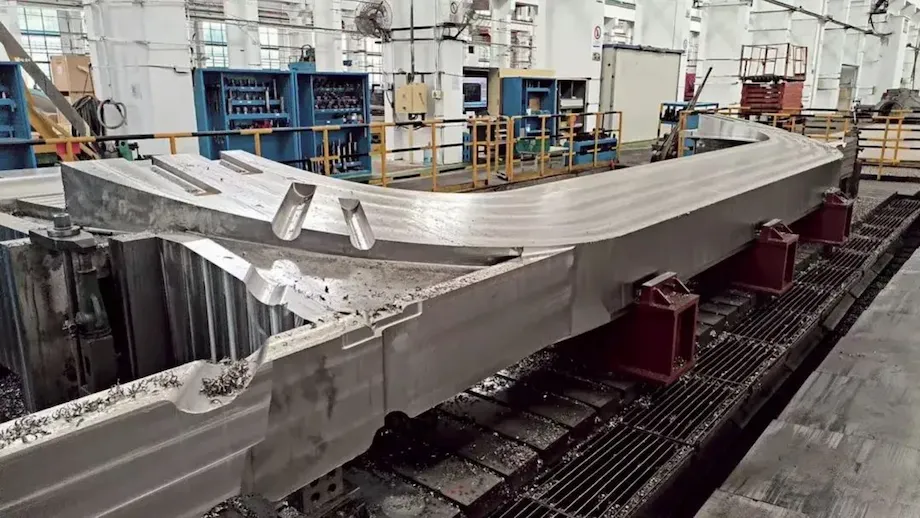
China's BEST fusion project is being built with 500 tonnes of conductor jackets made from CHSN01, a domestically developed steel designed to stay strong in extreme cold. The jackets surround superconducting cables, helping them withstand the enormous forces generated by the magnets that control a fusion reaction.
Contents
- A New Steel for China's Fusion Ambitions
- Why the Magnets Need Such Strong Protection
- A Research Effort That Began More Than a Decade Ago
- What the New Standards Required
- How CHSN01 Was Engineered
- Why Repeated Plasma Pulses Matter
- From Material Tests to BEST Components
- Where the Steel Could Go Next
- Key Points
CHSN01, short for China high-strength low-temperature steel No 1, emerged from more than a decade of research. Its development and deployment were announced in 2023. By August that year, it had met key requirements for use with magnetic fields of 20 Tesla, including resistance to stress of 1,300 MPa and repeated mechanical loading.
The material is now part of the Breakthrough Experimental Superconducting Tokamak, or BEST. Assembly began in May 2023, with completion scheduled for 2027. As of August 4, 2025, the reactor remains under construction, with years of testing and refinement still needed before fusion can become a commercial source of electricity.
BEST is intended to advance toward fusion power generation. Its steel jackets address one practical part of that ambition: keeping the equipment surrounding powerful magnets intact while the magnets operate close to absolute zero.
Fusion seeks to reproduce the process that powers stars by joining atomic nuclei and releasing energy. The promise is a virtually limitless supply of clean energy, with no greenhouse gas emissions from the fusion reaction and minimal radioactive waste. Turning that promise into a dependable power plant requires progress in materials, plasma physics, superconducting technology and engineering on a large scale.
Why the Magnets Need Such Strong Protection
Fusion reactors combine extraordinary heat with extraordinary cold. Their plasma, the hot material in which fusion takes place, can be hotter than the sun's core. Nearby superconducting magnets must operate at temperatures as low as minus 269 degrees Celsius.
The magnets generate the fields that contain and control the plasma. Fields of up to 20 Tesla are nearly 400,000 times stronger than Earth's magnetic field. The structures around the magnets must cope with the forces associated with those fields while enduring repeated loading at temperatures close to absolute zero.
Many conventional materials become brittle or lose strength in such conditions. A material that performs well at ordinary temperatures may therefore be unsuitable for the cold machinery supporting a fusion experiment.
For decades, 316LN stainless steel has been a standard material for fusion projects, including the International Thermonuclear Experimental Reactor, or ITER, in France. It was engineered to combine strength with ductility at cryogenic temperatures. Ductility means a material can stretch or change shape before breaking, an important property when structures face heavy loads.
Li Laifeng, a researcher at the Chinese Academy of Sciences' Technical Institute of Physics and Chemistry, identified a growing gap between existing materials and the demands of future reactors. ITER's magnets were designed for 11.8 Tesla, while later machines would require stronger fields. A field of 20 Tesla is about 1.7 times 11.8 Tesla, illustrating the scale of the change engineers were preparing for.
ITER is a research facility rather than a plant intended to generate electricity. China's ambitions extend to a working fusion power plant, making the development of stronger supporting materials part of a broader effort to move beyond experimental research.
A Research Effort That Began More Than a Decade Ago
Chinese scientists began pursuing improved materials after recognizing that existing options would fall short of the requirements for the next generation of fusion reactors. In 2011, a Chinese Academy of Sciences team developed an initial viable material solution for fusion magnets, although further improvement was needed for future machines.
By 2017, researchers were adjusting their steel's composition, adding vanadium and changing its carbon and nitrogen content to improve strength and toughness. Those changes brought progress, yet the material still fell short of the demanding performance standards sought for fusion applications.
Some international specialists doubted that 316LN could be surpassed under these conditions. One foreign scientist, whose name was not given, expressed that skepticism in direct terms:
It's absolutely impossible to do better than 316LN for these conditions.
In 2020, Zhao Zhongxian joined the project. A physicist specializing in cryogenic physics and a winner of China's top science award, Zhao helped guide the team through a critical stage of development.
The work then moved toward a coordinated national effort. In 2021, Li Laifeng led the launch of a research alliance bringing together institutes, companies and welding specialists to develop a domestic steel for extremely cold conditions.
The main stages of development were:
- 2011: A Chinese Academy of Sciences team developed an initial material solution for fusion reactor magnets.
- 2017: Researchers added vanadium and adjusted carbon and nitrogen levels to improve performance.
- 2020: Cryogenic physicist Zhao Zhongxian joined the project.
- 2021: China set new material targets, and Li Laifeng led the launch of a national research alliance.
- May 2023: Assembly of BEST began.
- August 2023: CHSN01 was confirmed to meet key requirements for its intended application.
- 2027: BEST is scheduled for completion.
What the New Standards Required
China's 2021 targets called for a yield strength of 1,500 MPa and elongation of more than 25% at cryogenic temperatures. Fusion specialist Li Jiangang described the development of advanced steel as essential to the future of fusion energy.
Yield strength is the stress a material can withstand before it begins to change shape permanently. MPa stands for megapascals, a unit used to measure pressure or mechanical stress. A higher yield strength allows a structure to carry greater loads before permanent deformation begins.
Elongation measures how far a test sample stretches before breaking. A requirement above 25% means the steel must retain considerable ability to stretch even while resisting very high forces. Engineers were seeking strength and the capacity to deform without suddenly snapping.
The combination was demanding because increasing a metal's strength can make it harder to preserve its ability to stretch. The new targets went beyond the performance available from existing materials and helped define the task for the research alliance.
Welding expertise was also part of that effort. The alliance's membership reflected the need to turn a successful material into usable reactor components, bringing together research knowledge, industrial production and the skills needed to join metal structures.
How CHSN01 Was Engineered
CHSN01 was developed from a modified N50 stainless steel base. Its composition combines very low carbon content, increased nickel content and low oxygen content, adjustments intended to deliver strength and durability in the cold environment around superconducting magnets.
Mechanical tests showed yield strength above 1,500 MPa at 4.2 kelvin, a temperature just above absolute zero. The material also retained high ductility and resistance to fatigue, giving engineers a combination of properties suited to repeated loading.
Researchers examined the steel using scanning electron microscopy and energy-dispersive spectroscopy. The first technique allows close inspection of a material's structure, while the second helps identify the elements present. The examinations showed an even distribution of elements, supporting consistent performance throughout the material.
That consistency matters in a conductor jacket. The component must protect the superconducting cables while resisting forces across its structure. Local weaknesses would complicate the task of maintaining reliable performance through repeated operation.
The development therefore involved more than reaching a single strength figure. The steel also had to retain its ability to stretch, resist repeated stress and provide dependable properties across the manufactured material.
Why Repeated Plasma Pulses Matter
The central solenoid, or CS, magnet is a particular concern for fatigue. This magnet helps heat the plasma, operates with alternating current and experiences repeated cycles of stress.
Fatigue is the gradual damage that can develop when a material is loaded again and again. A small defect can grow over successive cycles, eventually becoming a crack large enough to threaten a component. In a fusion magnet structure, that process could lead to catastrophic failure.
CHSN01 was developed to endure the repeated loading associated with as many as 60,000 plasma pulses without cracking or losing structural integrity. Evaluating that capability required researchers to examine how defects might behave over the operating life of a jacket.
Researchers used modeling and experimental tests to determine the maximum allowable defect size in CHSN01 jackets. Their results indicated that the material could meet the expected operating demands even when small initial defects were present.
A peer-reviewed study published in the journal Applied Sciences found that CHSN01 jackets could tolerate larger defects and provide greater safety margins than the materials used in ITER. That gives engineers more room to accommodate small imperfections while meeting the structural requirements examined in the study.
The strength and fatigue figures describe different aspects of the steel's performance. Tests showing yield strength above 1,500 MPa address when permanent deformation begins, while the August 2023 qualification included the ability to withstand 1,300 MPa of stress with high fatigue resistance in the intended application.
From Material Tests to BEST Components
CHSN01 moved into use in BEST after meeting its key requirements in August 2023. Its role is to form conductor jackets around the superconducting cables that produce the reactor's powerful magnetic fields.
The reactor assembly involves more than 6,000 tonnes of parts. Of that total, 500 tonnes are conductor jackets made from domestically produced CHSN01. Those figures put the jacket material at less than one twelfth of the stated component mass, while placing it in a crucial supporting role around the magnets.
The jackets help maintain structural integrity and operating safety. Their job is especially demanding because the cables inside them must function at extremely low temperatures while the surrounding assembly carries large mechanical loads.
BEST's planned completion in 2027 is the next major date in the project's schedule. Construction will be followed by the testing and refinement needed to assess the reactor's performance and its contribution to the development of fusion electricity.
China's material development also sits within an international effort. ITER in France and SPARC in the United States are pursuing advances in fusion engineering and materials. Developing a domestic steel gives China a way to reduce reliance on foreign technology as it works toward a fusion power plant.
Where the Steel Could Go Next
CHSN01 was designed for fusion equipment, but its combination of strength, performance at very low temperatures and fatigue resistance has attracted interest beyond that application. Aerospace, cryogenics and advanced manufacturing are among the fields that could benefit from those properties.
Chinese researchers have begun exploring its use in other advanced technology projects, and international partners have shown growing interest. Its potential value lies in applications where materials must remain dependable under severe cold and repeated mechanical stress.
Fusion remains the central test of its purpose. BEST brings together the steel, superconducting magnets, plasma control and construction on a large scale. Success will require all of those parts to work together through demanding operating conditions.
The material's deployment marks progress on one of the engineering problems facing practical fusion. An international news outlet described that step in these words:
The deployment of this advanced steel is seen as a significant step forward in the global race to achieve practical nuclear fusion energy.
BEST's goals connect the material work to a much larger ambition: developing commercial fusion power plants. If the reactor achieves those goals, its experience could support future projects elsewhere. For now, the concrete achievement is a domestically produced steel that has passed demanding tests and entered the construction of a major fusion experiment.
China's decade of research also shows the breadth of work needed to turn a laboratory result into reactor hardware. Scientists adjusted the alloy, tested its properties, studied defects and brought industrial and welding specialists into the effort. The next stage is to put that engineering to work as BEST moves toward completion.
Key Points
- CHSN01 is a Chinese steel developed for the extremely cold structures surrounding fusion reactor magnets.
- Tests showed yield strength above 1,500 MPa at 4.2 kelvin, alongside high ductility and fatigue resistance.
- The development effort progressed through research in 2011 and 2017, Zhao Zhongxian's involvement in 2020 and a national research alliance in 2021.
- CHSN01 met key application requirements in August 2023, including use with fields of 20 Tesla and resistance to stress of 1,300 MPa.
- BEST uses 500 tonnes of CHSN01 conductor jackets within an assembly involving more than 6,000 tonnes of parts.
- BEST began assembly in May 2023 and is scheduled for completion in 2027. It remains under construction as of August 4, 2025.
- Researchers are exploring other applications, while commercial fusion still requires further progress in plasma physics, superconducting technology and engineering.