A 1,318 Kilometre Railway Reshapes Travel Between Two Megacities
More than 52 million passengers used the Beijing–Shanghai high-speed railway in 2024, compared with 8.6 million who flew between the two cities. The railway also generated 42 billion yuan, nearly $5.9 billion, in revenue and 12.8 billion yuan, about $1.79 billion, in net profit, making it one of the world's most profitable railways.
Contents
- A 1,318 Kilometre Railway Reshapes Travel Between Two Megacities
- Why the Whole Journey Matters More Than Flying Time
- Comfort Helps Rail Win Families and Business Passengers
- What the Railway's Revenue and Profit Show
- Airlines Respond With Discounts and Premium Services
- Pets Become Another Area of Competition
- Faster Trains Move Through Testing
- Maglev Projects Promise Much Shorter Journeys
- A Global Benchmark With Environmental Benefits
- Key Points
The figures put rail passenger numbers at more than six times the aviation total on a corridor once dominated by airlines. Across 1,318 kilometres, bullet trains have changed how business passengers, tourists and families weigh the time, price and comfort of a journey between China's political and financial centres.
The fastest services without intermediate stops take just over four hours. Other high-speed train journeys take roughly 4.5 to six hours, depending on the service. Flights spend about two to 2.5 hours in the air, but airport transfers, check-in, security and possible delays can bring the complete journey close to, or beyond, the time spent travelling by train.
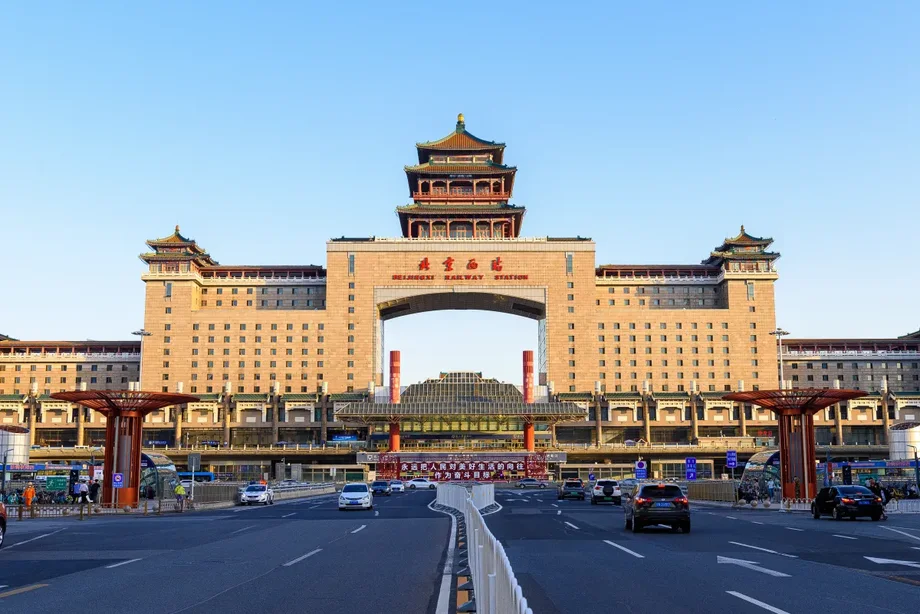
Beijing South and Shanghai Hongqiao stations offer convenient connections within their cities, helping passengers reduce transfer time and expense. More than 100 daily departures in each direction also give travellers a wide choice of departure times, with trains running as often as every five minutes during peak periods.
For airlines, the challenge extends beyond a faster train timetable. Rail combines frequent departures, reliable arrival times and room to work or move around. Airlines are responding with cheaper tickets, premium services and more flexible booking arrangements, while railway operators are adding services that include transport for pets.
Why the Whole Journey Matters More Than Flying Time
A flight's time in the air is only one part of a passenger's journey. Travellers also need to reach the airport, complete departure procedures and travel onward after landing. Beijing–Shanghai trains offer connections between urban centres that can reduce those additional stages and their costs.
Trains are less affected by weather and airspace congestion, a persistent difficulty for Chinese airlines. For a passenger travelling to a meeting, a predictable arrival can matter as much as the advertised journey time.
Tong Lijun, a senior official at Shanghai Hongqiao Station, described the priorities of passengers travelling for work:
Business travelers value good punctuality, downtown connections, and the ability to stay connected.
Onboard internet access, power outlets and space to use a laptop allow passengers to work during the journey. Travellers can also use mobile devices, watch the scenery or rest without facing the same concerns about flight delays and cancellations.
Rail tickets are generally more affordable and their prices less volatile than airfares, although airline discounts can sometimes make flying cheaper. Passengers therefore have a choice that depends on the departure time, the fare available and how easily they can reach a station or airport.
Comfort Helps Rail Win Families and Business Passengers
Modern trains on the route offer spacious seating and room to move around, qualities that appeal to families with children as well as passengers travelling for work. Business class cabins include fully reclining seats, adjustable laptop tables and multiple charging outlets.
Onboard Wi-Fi and stable internet access help passengers remain connected through the journey. Together with frequent departures and dependable schedules, those facilities make the train useful as a place to work, rather than simply time spent getting somewhere.
One traveller discussing the journey on a public forum described the appeal for a family:
With three young children, the train is less stressful and more comfortable than flying, even if the total time is similar.
Families can value the freedom to move through a carriage, while business passengers may place more weight on a reclining seat, a working table or an arrival time they can plan around. The railway's appeal rests on this combination of practical benefits, rather than speed alone.
What the Railway's Revenue and Profit Show
The railway's 42 billion yuan in revenue and 12.8 billion yuan in net profit in 2024 demonstrate the financial strength of this heavily used corridor. Revenue is the money a business brings in; net profit is what remains after its expenses and other charges.
Using those figures, net profit was about 30.5% of revenue. That means roughly 30 yuan remained as net profit for every 100 yuan in revenue. The line's profitability supports continued upgrades, expanded services and investment in new technology.
Beijing and Shanghai together generate more than 10 trillion yuan in annual economic output. A reliable connection between them supports business trips, tourism and closer economic links across the regions served by the railway.
The route also illustrates how passenger convenience and railway finances can reinforce each other. Frequent services and comfortable trains attract passengers, while strong earnings support improvements that help the railway remain competitive.
Airlines Respond With Discounts and Premium Services
The introduction of the Beijing–Shanghai high-speed railway reduced demand for flights on the route by as much as 34%, according to academic studies. Research found declines in both economy and business class air travel, with demand for business class falling more sharply.
Airlines have responded with measures aimed at price, convenience and customer loyalty:
- Cutting fares, sometimes below train ticket prices.
- Offering limousine pickups to make airport transfers easier.
- Strengthening premium frequent flyer programmes.
- Introducing flexible ticketing and partnerships between carriers.
Peer reviewed research also found that airfares became more stable and more similar across airlines. The findings suggest stronger competitive pressure and the possibility of tacit collusion, meaning airlines could follow similar pricing patterns without an explicit agreement.
Carriers serving the corridor have had to reconsider their business models, paying more attention to service improvements and operating efficiency. Cheaper tickets can attract passengers, while premium transport and loyalty benefits seek to preserve the appeal of flying for customers who value those services.
The China Air Transport Association has warned that airlines risk losing more ground as high-speed rail improves. Rail's punctuality, comfort and convenient connections remain difficult for airlines to match, even when flights offer a shorter scheduled journey.
Pets Become Another Area of Competition
A pilot programme began in 2024 allowing pets to travel on selected high-speed trains. The pet consignment service on the Beijing–Shanghai railway is a first for China's rail system and remains in its trial phase.
Passengers can reserve transport for a cat or dog in a specially designed container with temperature control, monitoring in real time and strict safety procedures. Owners must book in advance, provide health and quarantine certificates, and follow the service's guidelines.
Pet consignment means the animal travels under a transport arrangement rather than simply occupying a seat beside its owner. Some owners welcome the convenience and lower cost compared with air transport. Others have concerns about animal welfare, prices and their limited ability to visit their pets during the journey.
Railway officials say the service will be adjusted in response to passenger feedback. Dedicated carriages for pets are a possibility for the future, although no date has been given.
Airlines are competing for the same customers. Hainan Airlines and China Southern have expanded services allowing pets in the cabin, with dedicated pet lounges and simpler check-in procedures among the changes.
The railway trial reflects the growing influence of China's pet economy, the spending associated with owning and caring for animals. For some passengers, the ability to bring a pet can be an important part of choosing between a flight and a train.
Faster Trains Move Through Testing
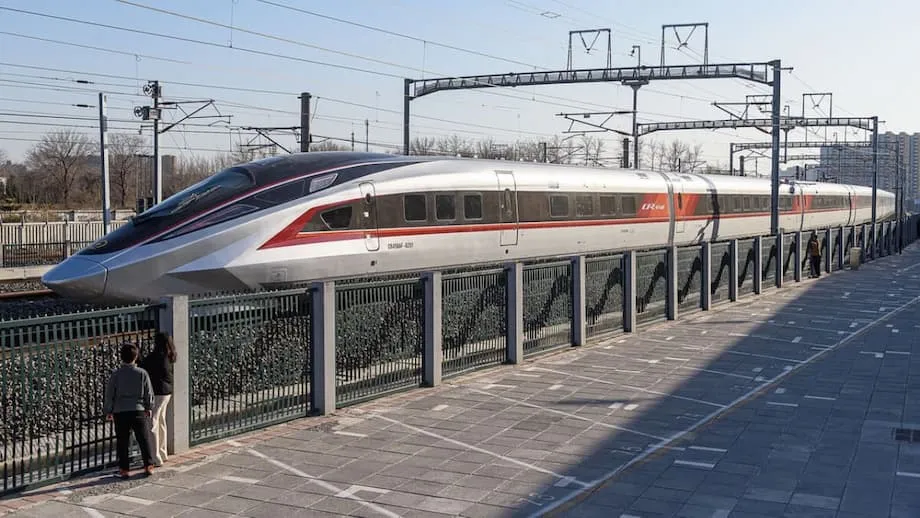
China's next generation of high-speed trains could put further pressure on airlines. The CR450AF prototype reached 453 km/h during testing in late 2024 and is expected to enter trial operations at 400 km/h in 2025.
Engineers have described the prototype as a "nuclear power bank" because of advanced passive safety systems that can cool critical components without an external power supply. Passive cooling refers to arrangements that continue removing heat without depending on powered equipment.
The development timetable places today's passenger services alongside a sequence of network expansion and technology trials:
- By the end of 2023, China had more than 45,000 kilometres of high-speed railway in operation.
- In 2024, the Beijing–Shanghai railway carried more than 52 million passengers and began a trial service for transporting pets.
- In late 2024, the CR450AF prototype was tested at 453 km/h.
- In 2025, the prototype is expected to begin trial operations at 400 km/h.
For passengers, the intended benefit of faster operation is straightforward: less time travelling between cities while retaining the station connections, seating and onboard facilities that already make rail attractive.
Maglev Projects Promise Much Shorter Journeys
China has also unveiled a magnetic levitation train capable of reaching 600 km/h, or 373 mph. Known as maglev, the technology uses magnetic forces to suspend a train above its track, removing contact friction between wheels and rails.
A system operating at that speed could reduce the Beijing–Shanghai journey to about 2.5 hours. That would bring the train journey close to the time a direct flight currently spends in the air, before airport transfers and departure procedures are included.
China's more ambitious Hyperloop maglev project aims for speeds comparable with aircraft and a journey between Beijing and Shanghai of as little as 90 minutes. The project remains in testing.
These technologies point toward rail competing over longer distances, as well as on routes where it already attracts large passenger numbers. The current Beijing–Shanghai service has built its position with journeys lasting several hours; much shorter trips would give travellers another reason to reconsider flying.
A Global Benchmark With Environmental Benefits
China's high-speed railway network exceeded 45,000 kilometres by the end of 2023, making it the world's largest and putting it far ahead of the networks in France, Japan and Spain. The Beijing–Shanghai corridor has become a model for safe rail travel that combines large passenger capacity with profitability.
Japan's Tokaido Shinkansen provides a comparison for service frequency. It operates nearly 150 daily trains in each direction, against more than 100 on the Beijing–Shanghai route. Experts have pointed to the Japanese line as a benchmark for further expansion.
China is expected to increase train frequency as demand for efficient travel between cities grows, while continuing investment in new train technology. More departures would give passengers additional choices and help the railway carry more people.
High-speed rail also produces lower carbon emissions per passenger kilometre than air travel. That measure compares the emissions associated with moving one passenger over one kilometre, allowing transport modes to be compared over the same distance.
As Chinese cities expand and economic connections deepen, the railway's role extends beyond the individual passenger. Reliable transport supports business, tourism and regional integration, while the shift from air to rail offers environmental benefits.
Travellers are weighing a broader set of priorities than speed alone: convenience, comfort, reliability, cost and the ability to travel with pets. Competition between trains and airlines is pushing both sectors to adjust their services to those needs.
Key Points
- The Beijing–Shanghai high-speed railway carried more than 52 million passengers in 2024, compared with 8.6 million airline passengers, a ratio of more than six to one.
- The 1,318 kilometre railway generated 42 billion yuan in revenue and 12.8 billion yuan in net profit in 2024.
- The fastest services take just over four hours, while frequent departures, convenient station connections and onboard facilities help rail compete with flying.
- Academic studies found that the railway's introduction reduced air travel demand on the route by as much as 34%.
- Airlines are responding with fare discounts, premium services, flexible tickets and expanded options for passengers with pets.
- A railway pet transport trial began in 2024, with advance bookings, health documentation and monitored containers.
- The CR450AF prototype reached 453 km/h in testing in late 2024, with trial operations at 400 km/h expected in 2025.
- Maglev developments include a train capable of 600 km/h and a Hyperloop project aiming for a Beijing–Shanghai journey of as little as 90 minutes.